 Lower East Side Hidden Speakeasy Bar Picker for a Solo Night
Bars & Nights Out
NYC Acoustic Live Music Spot: Choose a Seated Set
Find an acoustic live music spot in Downtown East NYC by comparing seated sets, artist bills and admission terms, then shape the evening around the show.
An acoustic live music spot is a useful choice for a downtown New York evening when the performance matters more than the size of the room. Start with the kind of listening you want: a seated songwriter set, a standing bill with several acts, or a bar where songs share space with conversation. Those are different nights. For a Downtown East search, use the Lower East Side and East Village as areas to investigate, rather than treating the word acoustic as a promise of quiet, seating, or an unamplified performance.
Choose what you want to hear
Imagine two friends meeting after separate workdays. One wants to hear every lyric. The other wants somewhere they can catch up. Their disagreement begins before they choose a venue, and a list of nearby music rooms will not solve it. They first need to decide whether the songs or the conversation take priority. A ticketed listening set can suit the first person. A social bar with background entertainment might suit the second. Neither label tells you what is happening on a particular date.
A useful opening request in the Karpo APP is specific about that tradeoff: “Help me find an acoustic live music spot around the East Village for two people who want to sit and listen.” Add your evening and the latest time you can stay. This gives the search a purpose without suggesting that the app has already checked ticket inventory or reserved a chair. Treat any proposed room as a candidate, then use the organiser's event page to establish the actual performance arrangement.
Read the bill before choosing the room
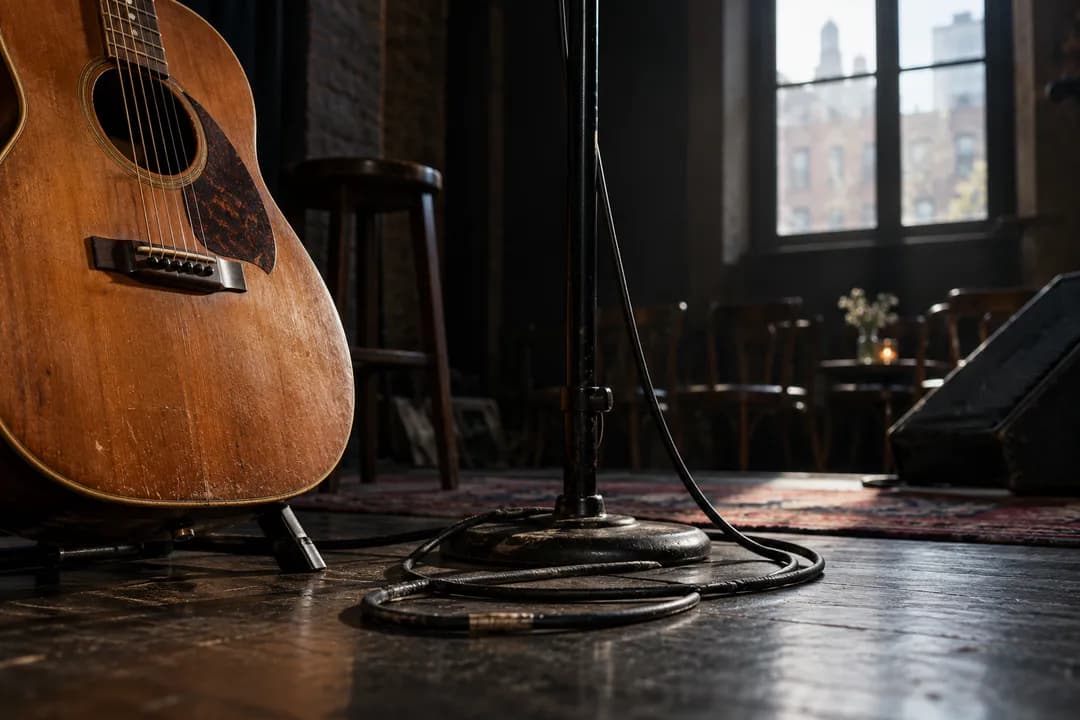
Acoustic can describe an instrument, a performer’s approach, or a special version of an otherwise amplified band. A guitar photograph does not establish which one applies. Look for wording about the bill itself: solo, duo, songwriter showcase, seated concert, or a named acoustic set. An artist’s recordings can also help you decide whether the material is what you wanted. A delicate studio track, however, is not evidence that the live audience will remain silent.
Separate the artist from the evening’s format. A showcase may put several short performances on one bill, whereas a headline concert can centre on a longer set. Write down which artist you are actually interested in and whether their appearance is identified separately. If the event description leaves the order unstated, do not build an itinerary around an assumed opening or closing slot. Choosing the full programme is more reliable than planning to arrive for one unnamed segment.
Seating is a decision of its own
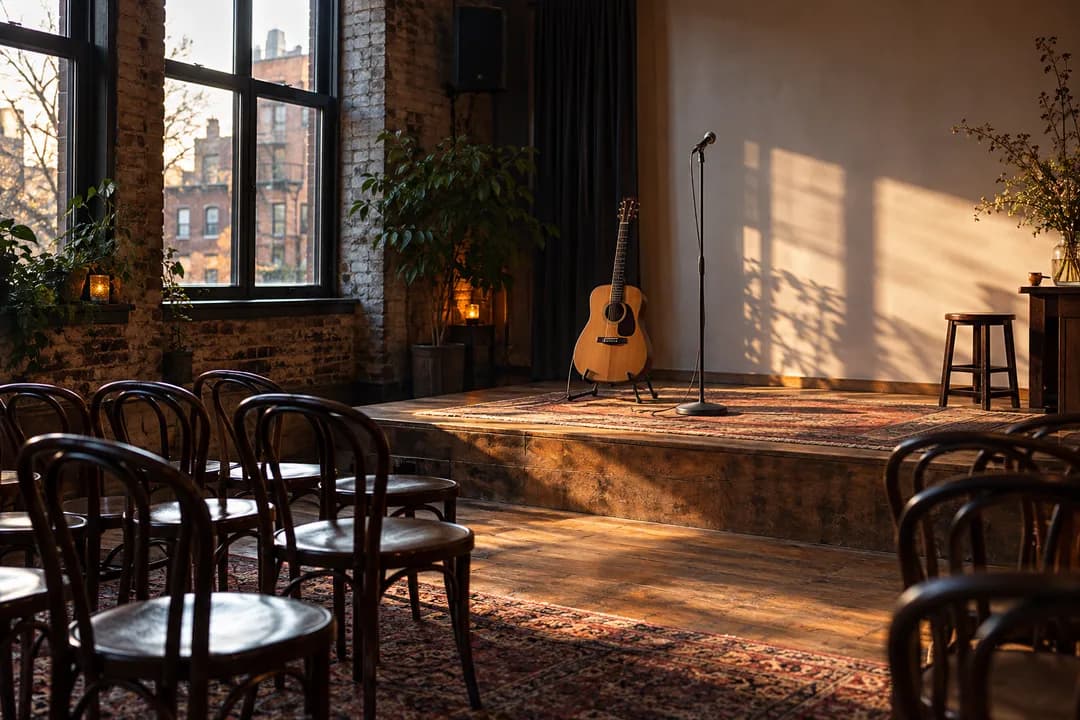
“Seated” and “a seat for every ticket” are not interchangeable statements. A room can contain stools while selling general admission, or offer tables under a separate arrangement. Read the ticket category and any seating explanation together. For a date where standing would spoil the evening, look for an explicit seated ticket or a clear allocation policy. A photograph of an empty room is useful visual context, but it cannot tell you what your admission includes.
If someone in your party needs accessible entry or a particular seating arrangement, put that requirement near the beginning of your search. Venue access information and a direct response from the operator are better foundations than an inference from the size of the stage. Ask about the route from the entrance to the performance space and the arrangement for the specific event. That keeps the question practical and avoids turning “intimate” into an unsupported claim about easy access.
Build a comparison you can act on
Keep the shortlist small enough to compare attentively. For each candidate, record the act, the date, the kind of ticket, what the listing says about seating, and the source page. Add your personal reason for choosing it: distinctive songwriting, an instrument you want to hear, or a programme that fits your available evening. A row full of adjectives such as cosy and authentic tells you less than a sentence explaining why you would enjoy that particular performance.
Cost comparison works best when you use the complete displayed checkout rather than a headline figure copied into a note. Ticket charges, optional extras, or a separate venue policy can affect what you are agreeing to. Do not assume every room applies the same conditions. If one option has not supplied enough information for a confident purchase, keep it as unresolved and compare the other candidates on what their own pages actually state. There is no need to invent a budget estimate.
Give the show a little breathing room
For the wider evening, choose one pre-show activity that you would enjoy even if it becomes shorter than expected. A modest walk through the East Village’s street grid is easier to trim than a second booked event. Keep your chosen music room as the anchor and decide the walking direction only after you have its location. The Lower East Side and East Village are adjacent areas, but the names alone do not establish the distance between two particular doors.
Place your conversation before the listening portion. If the purpose of the show is hearing words clearly, planning a long catch-up over the performance works against that purpose. A meal or a short walk can provide that social space, leaving the set free of competing expectations. This is an itinerary choice rather than a claim about a venue’s rules. Where the organiser does publish audience guidance, follow that guidance as well as your own plan.
Arrive with the right expectations
Distinguish doors from the performance start. The two labels serve different purposes, and substituting one for the other can leave you waiting or arriving after the part you wanted. Use the event’s stated terms when arranging your meeting. Discuss what you will do if one person is delayed before buying tickets, especially when the listing describes entry restrictions. Your friend should know whether you intend to enter together or whether each person has their own admission.
During the performance, let the room’s published rules and the performers’ requests guide recording and conversation. Keep a phone out of sight unless you need it for a practical reason. Save a long discussion of the songs for afterwards. Avoid promising a silent room in advance: the audience is part of a live event, and even an acoustic bill can be lively. The useful aim is finding an evening whose format fits your expectations, not controlling everybody else’s.
Practical Notes
Before purchasing, you should be able to name the event, the correct date, your ticket category, your seating expectation, and the way you will get home. Save the organiser’s page with your booking information so the source of each decision stays clear. Keep one alternative programme in mind for the same evening, but buy only the option you intend to attend. A backup is a decision aid, not a reason to accumulate conflicting reservations.
Skip a performance if its appeal depends entirely on an assumption the listing does not support, such as guaranteed seats or a specific artist appearing late in the bill. Use the Karpo APP to frame another request around the requirement that remains unmet. A successful Downtown East night need not include several stops or the most famous stage. It needs a performance you want to hear, admission you understand, and an evening arranged so you can actually enjoy listening.
Ask Karpo for more information.
Keep reading
- Lower East Side Hidden Speakeasy Bar Picker for a Solo Night
 West Village Hidden Speakeasy Bar Picker for Out-of-Towners
 Carroll Gardens Hidden Speakeasy Bar Picker for a Nightcap