 Lower East Side Hidden Speakeasy Bar Picker for a Solo Night
Bars & Nights Out
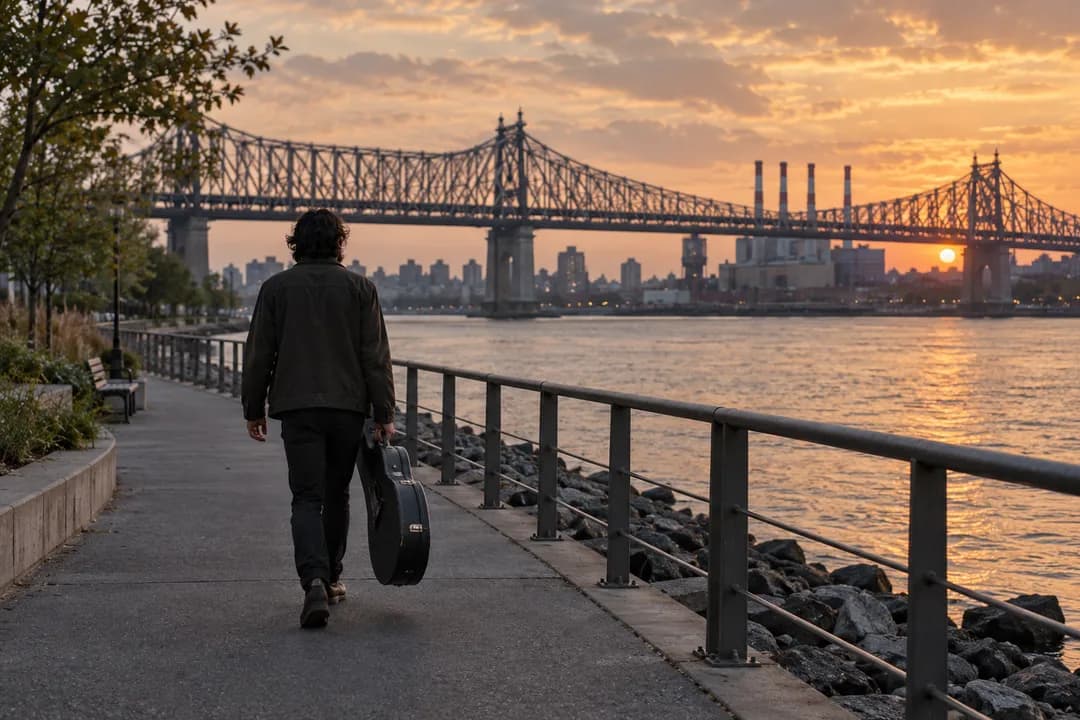
Astoria Acoustic Live Music Spot: Make a Solo Evening
Find an Astoria acoustic live music spot for a solo evening. Match the bill to your interests and keep the waterfront walk separate from the performance plan.
An Astoria acoustic live music spot can anchor a solo evening without turning it into a test of how sociable you feel. Decide whether you want to concentrate on a performance, spend time in a shared room or make music the endpoint of a walk. Those aims lead to different choices. The waterfront can be one part of the evening, but it is not evidence that a live set is nearby. Find the actual programme first, then decide whether an outdoor loop helps you arrive in the mood you wanted.
Give yourself a reason that belongs to you
Going alone frees you from finding a programme that pleases a whole group. You can choose a musician because of one recording, an instrument you rarely hear live or a format you have wanted to try. Write that reason down in ordinary language. “I want to hear a fingerstyle guitarist from a seat” is easier to act on than “I should do something cultural.” The aim is a rewarding evening, not collecting evidence that you have made enough plans.
You also get to decide how much social interaction you want. A dedicated performance can provide a shared activity without requiring you to start conversations. A bar setting may leave more room for casual exchanges, but it does not promise them. Neither choice makes the evening more successful than the other. If you mainly want to listen, choose for the programme and let any conversation be an addition rather than a condition the night must fulfil.
Use a solo brief in your search
A useful Karpo APP request might describe starting in Astoria, looking for acoustic music on a particular evening and preferring a seated event suitable for attending alone. Include any limit on how far you want to travel or how late you want to be out. These are your preferences, rather than facts about available inventory. A suggestion is the beginning of a shortlist; the provider’s event page is where the act, date and admission terms need to be established.
Look beyond the word solo when reading descriptions. You are attending alone, but the programme could be a duo, ensemble or showcase. Conversely, a solo performer does not tell you anything about whether guests are seated at individual places or shared tables. Keep those questions apart. What matters is whether you are interested in the performance and comfortable with the event’s actual arrangement. A label that sounds personally welcoming can still leave the practical details unresolved.
Understand the room without inventing a vibe
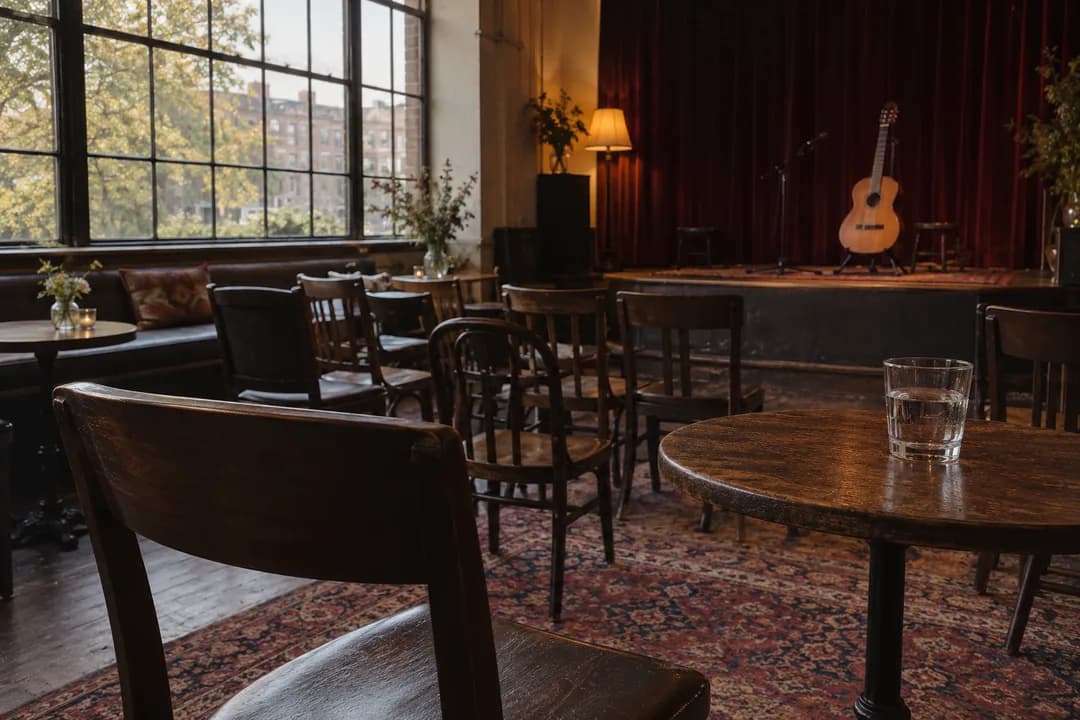
Promotional photographs can help you picture a space, but they are selective. An empty chair beside a stage does not prove that chair is included in every ticket. A photograph of a smiling group does not mean an individual attendee will be out of place. Use the pictures as context while reading the written admission information. If sitting is essential, choose a category or policy that supports that need instead of trusting the mood created by a photograph.
Acoustic instrumentation can still be amplified. If your concern is sensory comfort, put that concern into the brief separately from the musical genre. Ear protection can be a useful item to bring to live events, but it does not replace choosing an environment that works for you. For specific access needs, rely on the operator’s guidance and direct responses about the performance space. Avoid using intimate, small or local as shortcuts for accessible, quiet or easy to navigate.
Keep the purchase decision simple
Attending alone can make a convoluted package particularly unappealing. Read what the admission category buys and whether any other commitment is attached. A named seat, general entry, table arrangement and hospitality package are different products even when they lead to the same programme. Compare only what the provider actually displays. If one option asks you to make a commitment that does not fit a solo plan, you can leave it off the shortlist without treating it as a bad event.
Do your cost comparison at the point where the complete terms are visible. A headline ticket figure can leave out conditions that matter to the decision. Rather than guessing, keep the provider’s checkout and the event description together. You should know what you are buying before paying. A personal spending limit can guide which options you investigate, but it should not become an invented price range attributed to a neighbourhood or a type of music room.
Place the waterfront loop where it helps
Astoria’s waterfront can offer an outdoor transition in a solo plan. Whether that transition belongs before or after the music depends on the actual venue and your route home. Use the performance location to decide, rather than trying to connect a vague waterfront pin to a vague acoustic bar pin. You do not owe yourself a complete loop if a shorter walk would leave you more relaxed. An optional outdoor section should stay optional.
Think about weather, daylight and your own appetite for walking alone. These are planning inputs, not inconveniences to push through because a route looks elegant on a screen. If the outdoor portion no longer feels appealing, replace it with an activity you would genuinely enjoy or go directly to the event. The musical plan can remain intact. A solo evening is especially well suited to changing the nonessential pieces without negotiating a new consensus with several friends.
Make admission and departure easy on yourself
Keep your ticket and the event information accessible before approaching the entrance. Identify the correct venue from the provider’s own location information, particularly if a search result has shown several similarly named events. Read any identification or arrival requirements as part of preparing for the visit. There is no need to project a universal door policy onto all rooms. The relevant conditions are the ones attached to the programme and ticket you chose.
Plan the journey home while you still have the attention to compare routes comfortably. Your outward walk does not have to be your return route, and finishing an event does not obligate you to extend the night. Decide on a reasonable departure point for yourself, taking any stated performance structure into account. If the bill is longer than you want, it may be better to choose a different programme than to rely on an unstated running order.
Listening alone can have its own rhythm
Once the set starts, let your attention move toward the music rather than toward how you appear to the room. You do not need to fill the intervals by looking busy on a phone. Follow published recording rules and requests from staff or performers. You can enjoy a shared silence without introducing yourself to anybody. If a conversation happens naturally and you want it, that can be pleasant, but the ticket has not purchased a social obligation.
Afterwards, write down one impression that would make another search more specific. Perhaps you liked the sound of a duo more than a solo guitar, or discovered that a showcase suited your attention better than a long headline set. Keep a useful observation rather than a compulsory review. That note can inform your next request in the Karpo APP and help the next outing begin with what you learned, instead of another unfocused search for atmosphere.
Practical Notes
For this solo plan, the essentials are an event you can identify, admission conditions you understand, a seating arrangement that meets your needs and a comfortable way home. Attach the original source to your own planning note. Leave the waterfront walk as a separate choice until the programme’s location makes the connection sensible. No named merchant, fixed performance schedule or ticket price is implied by using Astoria as your starting area.
Skip a listing when the main reason to attend is a promise you have supplied yourself, such as an assured quiet room or guaranteed social company. There will be other programmes to explore. A successful solo acoustic evening can be modest: you heard something new, travelled in a way that suited you and gave yourself permission to leave with the experience complete. That is a useful standard for choosing the next one too.
Ask Karpo for more information.
Keep reading
- Lower East Side Hidden Speakeasy Bar Picker for a Solo Night
 West Village Hidden Speakeasy Bar Picker for Out-of-Towners
 Carroll Gardens Hidden Speakeasy Bar Picker for a Nightcap