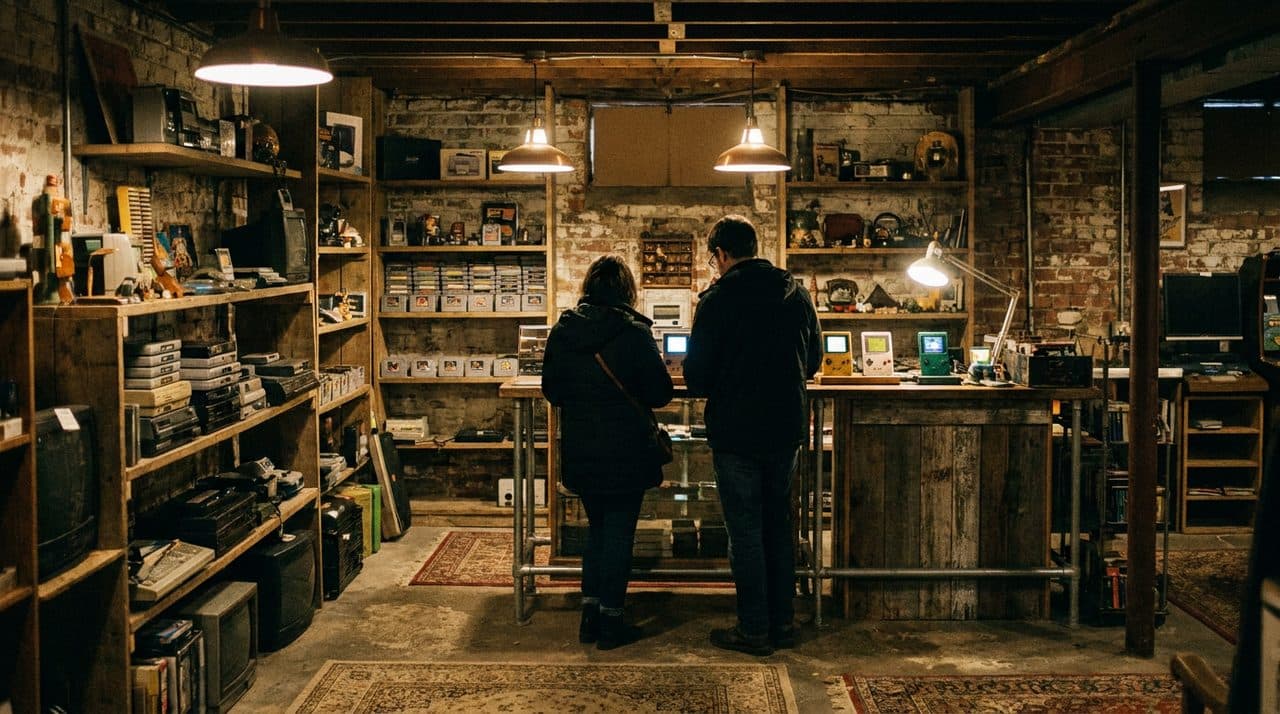
You're not hunting the Nintendo Switch 2 at a Best Buy in Times Square. You're descending narrow staircases in the East Village where the air smells like soldered circuit boards and old carpet, or ducking into Chinatown storefronts where gaming hardware shares shelf space with imported snacks you can't read. The console might not even be out yet, but the spots where you'll actually find it — and the culture around scoring hard-to-get tech — exist right now, humming along after most tourists have gone to bed.
The Basement on St. Marks Where Controllers Outnumber Customers
Walk east on St. Marks past the piercing shops and ramen joints until the foot traffic thins. You'll know the place by the faded decal in the window and the staircase that angles down like a throat. The basement sells used games, repair parts, modded consoles, and whatever limited-edition hardware the owner's supply chain coughs up. Fluorescent tubes flicker over glass cases crammed with Joy-Cons in colors Nintendo never released officially. The floor's that industrial carpet tile that muffles sound, so conversations stay low and transactional. You hear the click of cartridge cases, the rustle of bubble wrap.
On launch nights for anything scarce, a small line forms around nine PM — not a spectacle, just eight or ten people who know. They don't camp. They show up, get a numbered ticket from a clipboard, and vanish into the bars next door until their number gets called via text. The guy running the counter barely looks up. He's seen every hustle, every reseller script. If you're buying to play, not flip, he'll remember you. Next time there's a restock, you might get the text an hour early.
Mott Street's Second-Floor Tech Shrines

Chinatown's gaming spots hide above street level, up staircases next to seafood markets or between wholesale fabric suppliers. You climb past Cantonese pop posters and emerge into rooms that feel like someone's very organized garage. Metal shelving units hold import games still wrapped in Japanese or Korean plastic. A small TV in the corner runs tournament footage on mute. The smell is specific: a mix of new electronics, the faint sweet funk of bubble tea from downstairs, and that particular dust that settles on older game boxes.
These shops don't advertise. Their Instagram accounts have two hundred followers and haven't posted since last October. But they're plugged into import channels that move faster than official retail. When a console drops in Japan or Hong Kong before the US launch, this is where it surfaces a week later, region-unlocked and priced with a markup that's annoying but not predatory. You pay in cash. The receipt is handwritten. The owner's cousin might be playing *Splatoon* in the back room, and if you ask the right question about a specific mod or accessory, he'll pause mid-match and pull something from a drawer you didn't know existed.
The Repair Guy Who Knows What's Coming
There's a repair kiosk — not quite a shop, more like a permanent booth — tucked into a small arcade space near the Bowery. The guy who runs it has been fixing handhelds since the Game Boy Micro. His workbench is a nest of tiny screwdrivers, solder, and replacement screens. He doesn't take appointments. You show up, he quotes you a timeline, you come back. While you wait, he'll talk about supply chains with the casual fluency of someone who tracks shipping manifests for fun.
He usually knows about hardware revisions before press releases go live. Not through leaks — through part orders. When manufacturers start producing new components, repair suppliers get wind of it. He'll mention, offhand, that a certain type of rail connector is suddenly backordered, or that a factory in Shenzhen just ramped up production on a specific battery size. If you're trying to figure out when something's actually launching, his educated guesses beat most tech blogs. He won't sell you a console, but he'll tell you which neighborhood shop just texted him about incoming stock. That information is worth more than the repair you came in for.
The Late-Night Rhythm of Restock Hunters
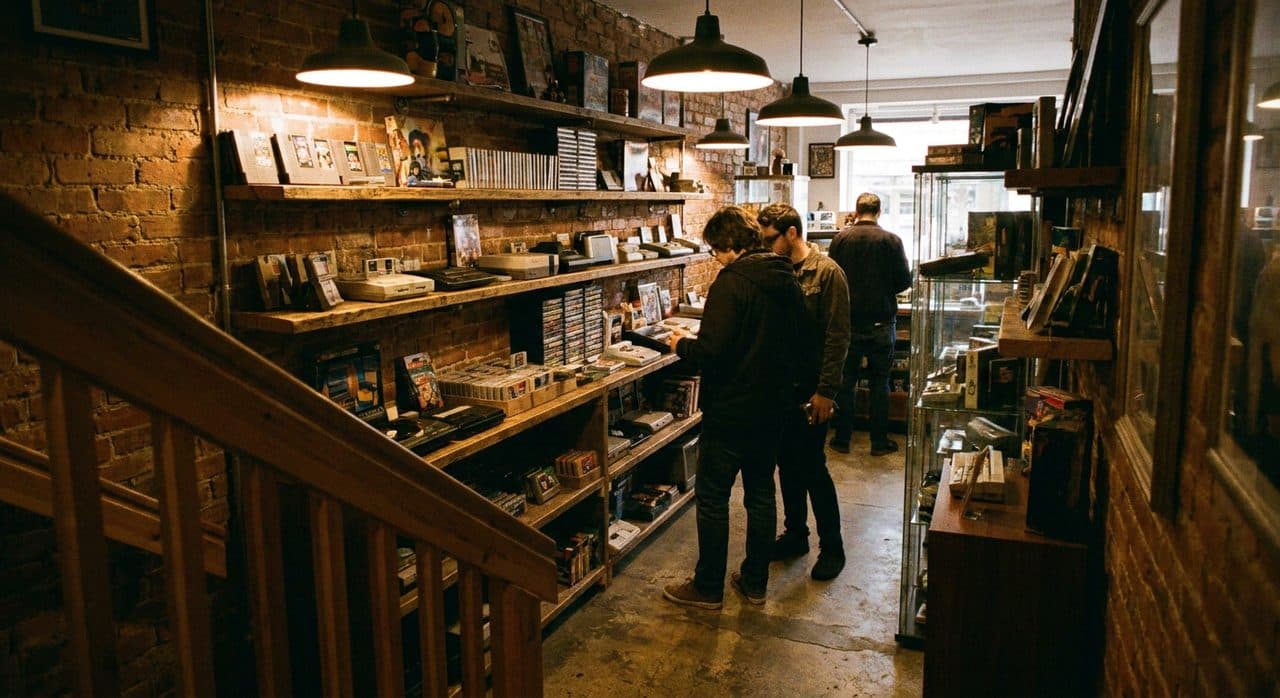
After eleven PM, a specific type of night walk emerges. You're not bar-hopping. You're checking storefronts, looking for lights still on in back rooms, trying to catch the moment when a shipment gets unboxed. Some shops do midnight reveals — not events, just the practical reality of when their supplier delivers. You learn to read the signs: a propped-open door in February, voices speaking Mandarin or Korean in quick bursts, the silhouette of someone moving boxes behind security gates.
The crowd that does this isn't one community. It's students who flip consoles to cover textbooks, collectors who need every regional variant, parents who promised their kid the impossible, and people who just like the hunt more than the prize. You'll see the same faces across different launches, different neighborhoods. No one's camping on sidewalks with lawn chairs. It's quieter than that — more like fishing. You cast your line at multiple spots and wait for a bite. Sometimes you go home empty-handed but with a good recommendation for soup dumplings that stay open until two AM.
The WhatsApp Groups You Can't Google Your Way Into
The real information doesn't live on Reddit or Twitter. It circulates through encrypted group chats, neighborhood WeChat threads, and Discord servers with fewer than fifty members. Someone's cousin works logistics at a distributor. Someone else is friends with a manager at a chain store who knows when the truck arrives. The messages are terse: "Delancey spot, tomorrow, maybe 6." You confirm you're coming. You show up. Sometimes the tip is good. Sometimes fifteen people are already in line and the stock is gone.
Getting into these groups requires the same social proof as any underground economy: you need a vouch. You demonstrate you're not a bot, not a journalist, not writing an exposé. You buy a game, you come back, you chat about frame rates or import taxes. Eventually someone asks if you want the link. The group chat itself is boring most of the time — people asking about HDMI cables or selling old controllers. But when a launch happens, it lights up with real-time intelligence that's more accurate than any retailer's website. You learn which stores break street dates, which ones hold stock for regulars, and which manager at which location is cool if you bring him a coffee.
Practical Notes
Most of these spots operate late afternoon into evening, with some staying open past midnight depending on foot traffic and shipments. Cash remains king, though some accept Venmo or WeChat Pay. Getting to the East Village or Chinatown is straightforward via the F, M, J, Z, or 6 trains — the neighborhood's compact enough that you'll cover ground on foot once you arrive. For actual console launches, showing up on a weeknight tends to be calmer than weekends. If you're hunting specific import versions or modded hardware, bring a photo of exactly what you want — language barriers dissolve when you can point at a screen. Don't expect websites or phone numbers that work. These shops exist in the physical world first.
Tags: #NintendoSwitch2 #EastVillageNYC #ChinatownNYC #GamingCulture #ConsoleHunting #RetroGaming #NYCNightlife #ImportGames #TechCulture #GamerLife #HiddenNYC #UrbanExploration #TheOddEdit #NYCInsider #NicheRetail
Sources consulted: atlasobscura.com · timeout.com · nytimes.com
All trademarks are the property of their respective owners.


