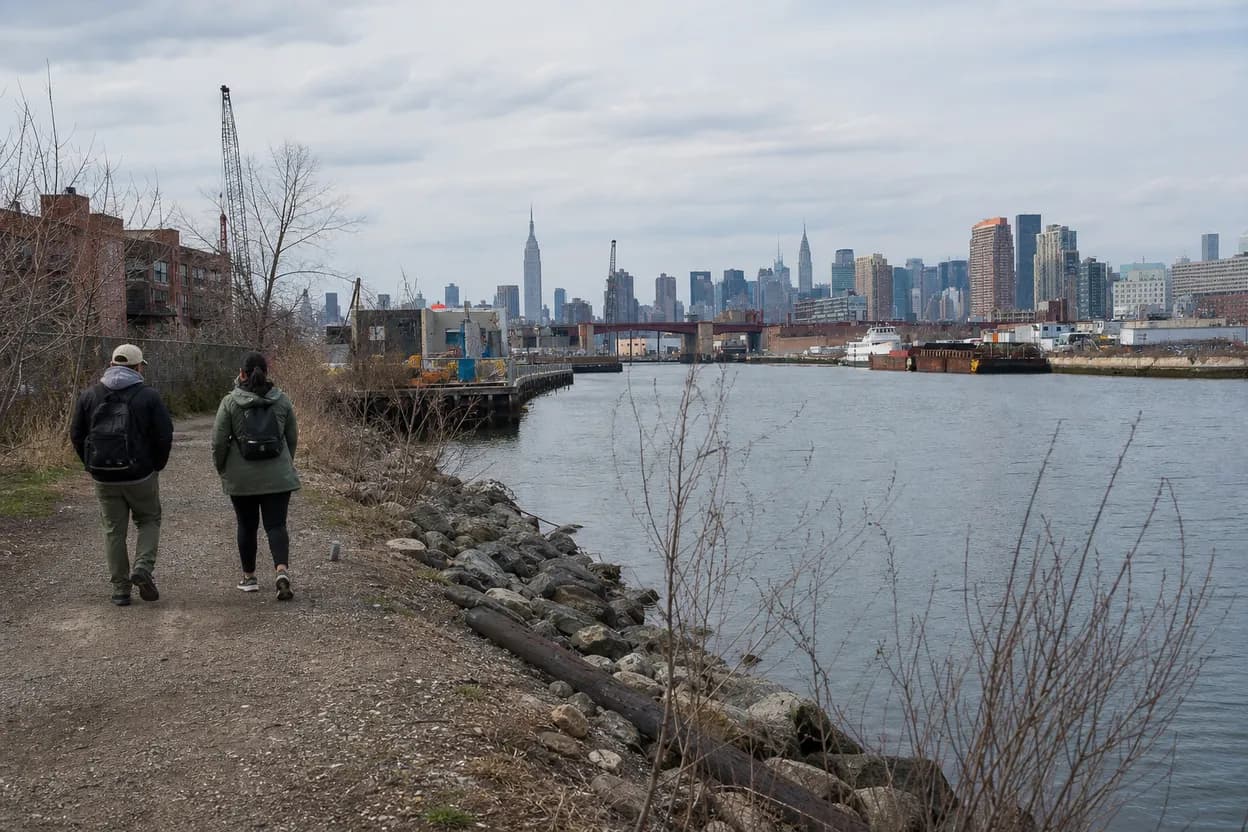
Newtown Creek Nature Walk works because it does not feel like a standard park assignment. DEP describes a self-guided waterfront path in Greenpoint along Newtown Creek and Whale Creek, beside the Newtown Creek Wastewater Resource Recovery Facility. The route revives a formerly long-inaccessible industrial shoreline as public promenade space, with native trees, shrubs, and other plantings. Treat it as a free, compact reset for people who like infrastructure, working water, odd civic edges, and short walks with rules. The practical catch matters: official sources list no onsite restrooms, no pets, no water entry, no skating, and no bike riding.
Want a free Brooklyn waterfront plan that feels specific rather than overdone? Text Karpo before you go for access rules, timing, and nearby transit reality checks.
Know What This Place Is
DEP describes Newtown Creek Nature Walk as a self-guided waterfront nature walk in Greenpoint, Brooklyn, along Newtown Creek and Whale Creek. It sits next to the Newtown Creek Wastewater Resource Recovery Facility, so the industrial setting is not background noise; it is the point. Go for the contrast between public access, planted edges, creek views, and visible infrastructure sharing one compact shoreline without pretending the site is a conventional lawn park.
NYC311 calls the route nearly half a mile, which sets expectations correctly. This is not a long hike, broad waterfront afternoon, or substitute for a large recreation field. The payoff comes from slowing down, reading the shoreline, and noticing how a working industrial creek can also hold designed public space. Build the visit around observation, not distance, and the short length starts to feel intentional rather than limited.
Use The Official Rules
DEP and NYC311 give the rules that should govern the plan. Opening hours are dawn to dusk, weather permitting, and DEP says the walk may close during inclement weather. Official sources describe it as accessible for people with disabilities, but visitors who rely on specific surface, gate, seating, or route conditions should verify current access before making the trip, especially after storms, construction, or maintenance interruptions.
The same official sources say restrooms are not onsite, pets are not allowed, and guests may not enter the water, skateboard, roller-blade, or ride bikes. DEP notes bike racks on Kingsland Avenue, so cyclists should plan to lock up before entering. Those limits make the walk better for a brief reset than a loose group hang, dog outing, rolling waterfront route, or flexible plan with uncertain bathroom needs.
Find The Entrance Carefully
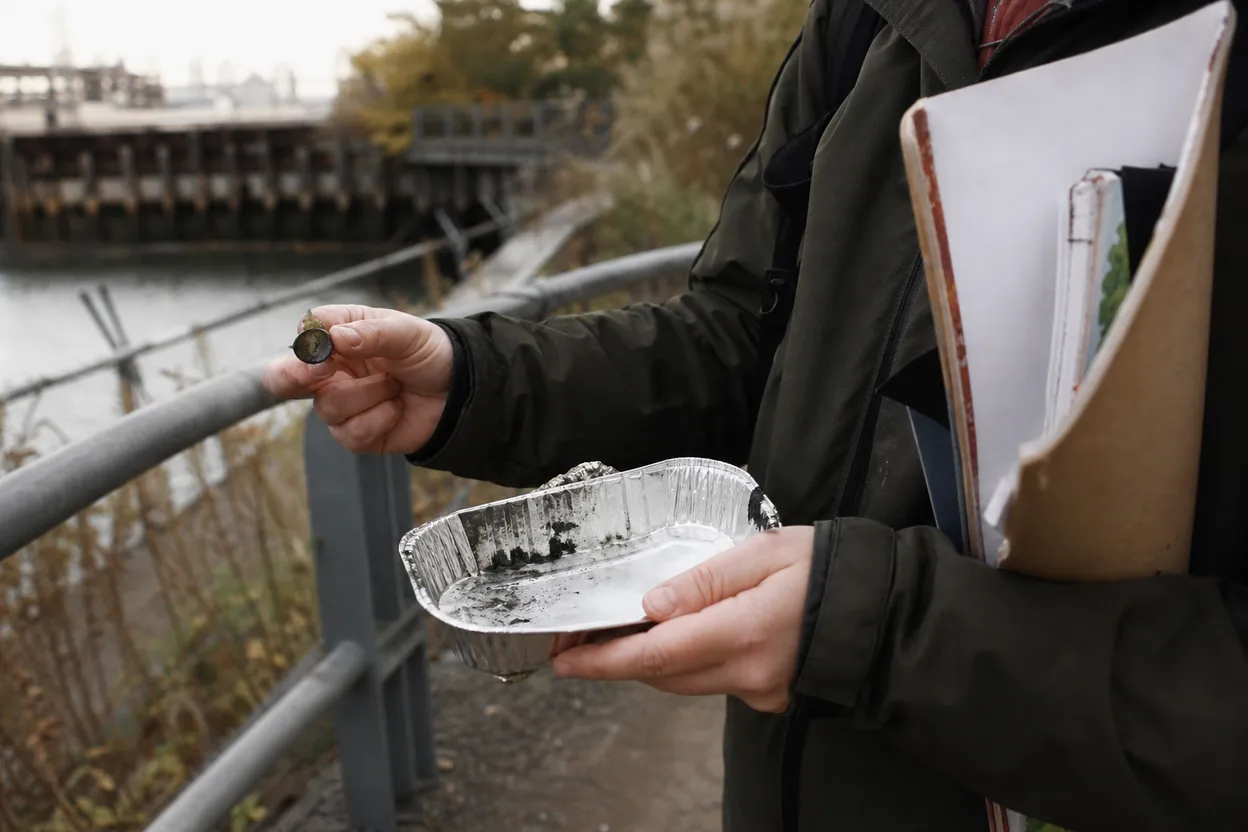
DEP locates the Nature Walk at the corner of Provost Street and Paidge Avenue in Greenpoint. North Brooklyn Parks Alliance also lists 329 Greenpoint Avenue and notes that the entrance is tucked away on a dead-end street. Treat arrival as part of the outing, especially if someone in the group dislikes uncertain wayfinding, industrial blocks, or the feeling of approaching a public space through an unexpected edge.
Because the surrounding context is industrial, do not expect a grand park gateway, staffed welcome point, or tourist-style arrival sequence. Save official directions before leaving, confirm transit or rideshare drop-off points, and build in a small buffer for the final approach. If biking nearby, do not assume the route works as a through-ride. The official restriction is no bike riding inside, and that should shape the plan before arrival.
Look For The Design
DEP points visitors to a virtual tour with George Trakas, the artist who created the Nature Walk. That detail matters because the place is not just a planted path beside water. It is a designed waterfront experience shaped around a difficult site, where movement, views, materials, and civic infrastructure are part of the composition. A stronger visit treats stairs, railings, corridors, plantings, and sightlines as deliberate choices.
North Brooklyn Parks Alliance captions mention long corridors made to mimic a ship interior, decorative portholes, and worn shiplap. Use those as visual prompts, not as access guidance, because the page also contains obvious placeholder and error text. The more reliable approach is to notice design details while letting DEP and NYC311 control practical decisions about hours, closures, accessibility, restrooms, pets, bikes, skating, and water restrictions.
Read The Shoreline Slowly
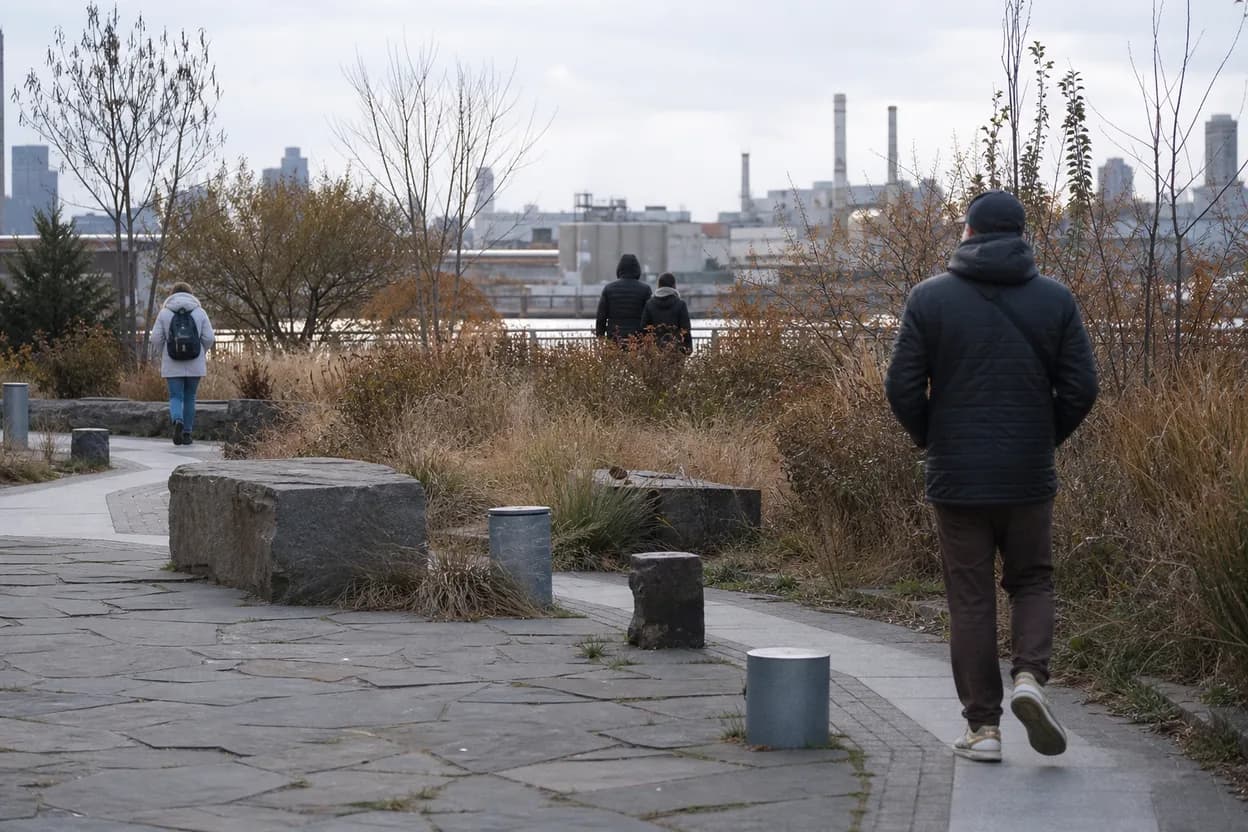
The walk rewards attention more than speed. DEP emphasizes native trees, shrubs, and other flora, while NYC311 repeats that the promenade revives a long-inaccessible shoreline for public use. Those facts make the route a small lesson in waterfront reclamation, showing how public access can be inserted into a working industrial edge. Move slowly enough to compare planted areas, creek views, hard surfaces, and the adjacent facility.
The adjacent facility and creek setting may include industrial sights, sounds, or odors. A third-party review source reports smell, but that is a visitor report rather than an official condition or guarantee. If odor sensitivity, heat, air quality, or sensory overload matters for your group, choose mild weather, keep the visit short, and have an easy exit plan. This is a place where backup logic improves the experience.
Keep The Plan Short
Because the walk is nearly half a mile and has no onsite restrooms, it works best as a precise stop. Pair it with a Greenpoint errand, a nearby meal, or another verified public space only after checking current distances, hours, and access details. The visit can be satisfying without becoming the entire afternoon. Its best pacing is arrive, walk slowly, sit briefly if conditions allow, then continue elsewhere.
Do not build the outing around unsupported extras. NYC311 mentions a Visitor Center that explains New York City’s water and wastewater systems, but the supplied extracts do not provide current public hours, tour rules, or reservation requirements. Verify any visitor center access directly before making it part of a plan for friends, students, visitors, or anyone expecting an indoor component. Without confirmation, treat the Nature Walk itself as the visit.
Final Fit Check
Newtown Creek Nature Walk fits people who want a free NYC outing that feels quieter, stranger, and more infrastructure-minded than a standard waterfront list. It is especially good for urban design fans, native-plant watchers, photographers who respect rules, and walkers who like seeing the working city without needing a long route. It also suits solo resets and small groups comfortable with a compact, rule-bound public space.
Before you go, verify dawn-to-dusk access, weather-related closure risk, accessibility needs, restroom plans, pet restrictions, bike lockup, and the no-water-entry rule through DEP or NYC311. Skip it for dog walks, skating, biking through, restroom-dependent plans, or anyone expecting lawns and open-ended recreation. The best version respects posted restrictions and lets the creek, plantings, and industrial adjacency provide the reset without forcing a bigger itinerary.
Tags: #NewtownCreekNatureWalk #Greenpoint #BrooklynWalks #FreeNYC #NYCDEP #NewtownCreek #WhaleCreek #IndustrialWaterfront #UrbanNature #WaterfrontWalk #NativePlants #NYCWalks #AskKarpo #BeforeYouGo
Sources consulted: Source 1: nyc.gov · Source 2: portal.311.nyc.gov · Source 3: nbkparks.org · Source 4: waterfrontplan.nyc · Source 5: businessyab.com
All trademarks are the property of their respective owners.
Ask Karpo first
Tell Karpo your date, group size, budget, and starting neighborhood. We’ll check current access, timing, transit, and the cleanest plan for Newtown Creek Nature Walk before you head out.