
Los Angeles rewards the person who plans around movement, not just ambition. If newsweek is what brought you here, treat it as a search cue, not a promise: the city still asks the same practical questions about distance, transit, timing, and crowd tolerance. The safest way to use a neighborhood guide in LA is to start with the job you actually need to do, then test the route against official information. Discover Los Angeles presents the city through neighborhoods, itineraries, beaches, museums, dining, and car-free ideas, while Metro gives the day-of tools you need to keep the trip workable. That combination is the point: pick the area, verify the access, and keep a backup before you cross town.
Want a cleaner LA plan? Text Karpo for a transit-first neighborhood route with timing checks, crowd awareness, and a backup stop ready.

Translate the headline into a neighborhood question
A headline like newsweek sounds broad, but Los Angeles works better when you narrow it down to a neighborhood question: where is the actual errand, meal, museum block, shoreline, or evening stop? That shift matters because the city is spread out, and the wrong starting point can add time before the day even starts. Discover Los Angeles frames the city through vibrant multicultural neighborhoods, and that is the right lens. The guide is not asking you to admire LA from a distance; it is asking you to choose a district that fits the task in front of you.
That is also why a generic best-of list is less useful than a plan. The official LA Tourism site points to neighborhoods such as Little Tokyo, Historic Core, Griffith Park, Venice, Silver Lake, Larchmont Village, Exposition Park, and Universal City, but the better move is to match the area to what you want to do there. If the purpose is dining, museums, or open-air time, start there and work backward to the route.
Choose the area by the actual task
Los Angeles Tourism says the city is home to renowned museums, unique hotels, diverse experiences, and 75 miles of sunny coastline. That range can make the choice feel endless, so the simplest method is to choose by use case. For art and culture, lean toward the official Arts & Culture itinerary; for food, use the Dining itinerary; for a day outdoors, use the Great Outdoors plan; and if you want a more specific angle, the site also offers Film Locations and Vintage LA guides. Each one is a task filter, not a hype machine.
That approach is especially helpful when you are trying to keep a day realistic. A museum day does not need to become a citywide tour. A beach day does not need to be paired with three inland stops. The guide to Los Angeles works best when it respects the scale of the city and the limits of your schedule. Choose the neighborhood that supports the day you can actually finish, not the one that looks best in a feed.
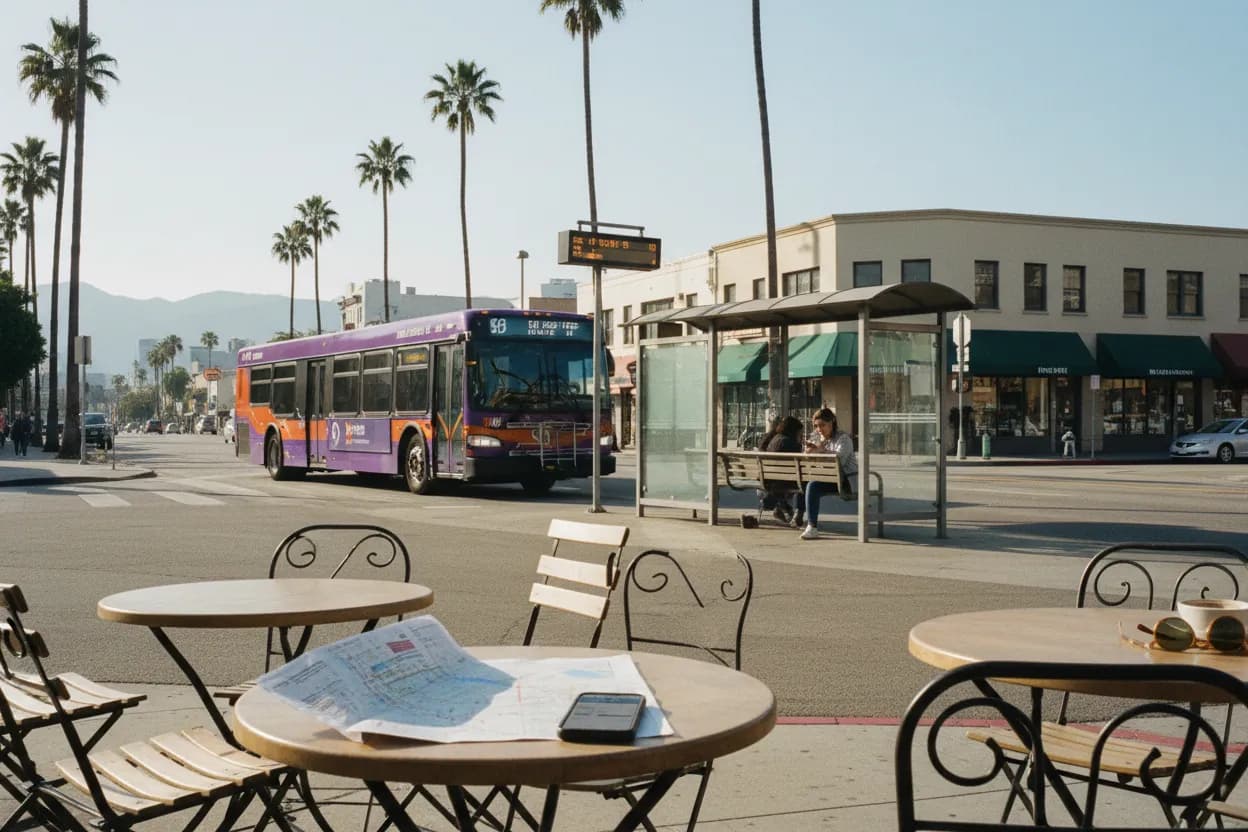
Use transit exits as planning anchors
Metro gives you the practical pieces that neighborhood guides often skip. The official LA Metro app is built for real-time arrivals, step-by-step directions, and service alerts, which means the trip can be planned around actual conditions instead of guesses. Metro also says riders can now pay fare with a credit or debit card, in plastic or digital form, by tapping on buses or at train stations. That makes transit planning more flexible, but it does not remove the need to verify the exact station or line you expect to use.
The current D Line Extension update is the kind of detail that changes a route. Metro says new stations at La Brea, Fairfax, and La Cienega connect the cultural energy of Mid-Wilshire with Koreatown and Downtown LA. If your day depends on one of those corridors, make the station your anchor point and build the rest of the plan around it. Do not assume a neighborhood is easy because it sounds central; confirm the exit, the line, and the latest alert before you leave.
Add one indoor and one outdoor backup
A good LA plan always has a second move. Weather, crowds, and service changes can all flatten a day that looked solid online. Discover Los Angeles makes it easy to think in layers: if your primary idea is indoors, keep an outdoor backup that is still worth the trip; if your primary idea is open air, keep a sheltered option that does not feel like a downgrade. The city has enough official content for both, from museums and dining to beaches and outdoor itineraries.
That backup should be chosen before you start the drive or board the train. If the main stop turns crowded, move to the alternate neighborhood instead of waiting for the perfect moment that never comes. If you are planning around a dining window, check whether a current event page or restaurant-week listing is still active before you build the rest of the evening around it. The rule is simple: one indoor anchor, one outdoor fallback, both verified.
Avoid treating online attention as a local promise
An attention-grabbing search term does not guarantee local ease. newsweek may bring readers to the page, but online visibility is not the same thing as access, seating, fast entry, or a stress-free route. In Los Angeles, a place can be worth visiting and still require patience, planning, and a backup exit. That is why official sources matter more than chatter. Discover Los Angeles gives neighborhood and itinerary context; Metro gives transit status, fare tools, and alerting. Together they are more reliable than any sudden burst of attention.
This is the skeptical part of the guide, and it is the part that saves time. If a neighborhood is trending, that can mean more demand, not more convenience. If an event is listed on an official site, that means it exists on the calendar, not that every detail will stay the same by the time you arrive. Treat online interest as a signal to verify, not as a guarantee that the city will be easy that day.

Verify conditions before crossing the city
Before you leave, run a short checklist against the official pages. Confirm the neighborhood or itinerary, look at Metro’s real-time arrivals and service alerts, and check whether the D Line station you want is the one that actually fits your route. If you expect to use tap payment, make sure your card or digital wallet is ready. If the trip depends on an offer or program, verify eligibility on the source page rather than assuming it applies to you. Metro’s LIFE program note, for example, says LA County residents can get 20 free rides every month if they are eligible and sign up online.
That same habit applies to timing. If you are planning around a public event, restaurant period, or museum day, verify the current date and hours on the official site right before you go. The city moves quickly, but the reliable way through it is not to chase certainty; it is to build a plan that can survive a change. In Los Angeles, that usually means a correct station, a realistic neighborhood, and one backup that you would still be happy to use.
Tags: #AskKarpo #BeforeYouGo #LosAngeles #NeighborhoodGuide #TransitSmart #MetroLA #LAItinerary #DiscoverLosAngeles #MuseumDay #BeachBackup #CrowdCheck #TripPlanner #DLine #Karpo
Sources consulted: discoverlosangeles.com · metro.net · laparks.org
All trademarks are the property of their respective owners.
Ask Karpo first
Ask Karpo first if your Los Angeles day depends on one train, one neighborhood, or one dinner window. I can turn a loose idea into a verified route with transit timing, crowd-aware alternatives, and a backup that still fits the city you actually want.


