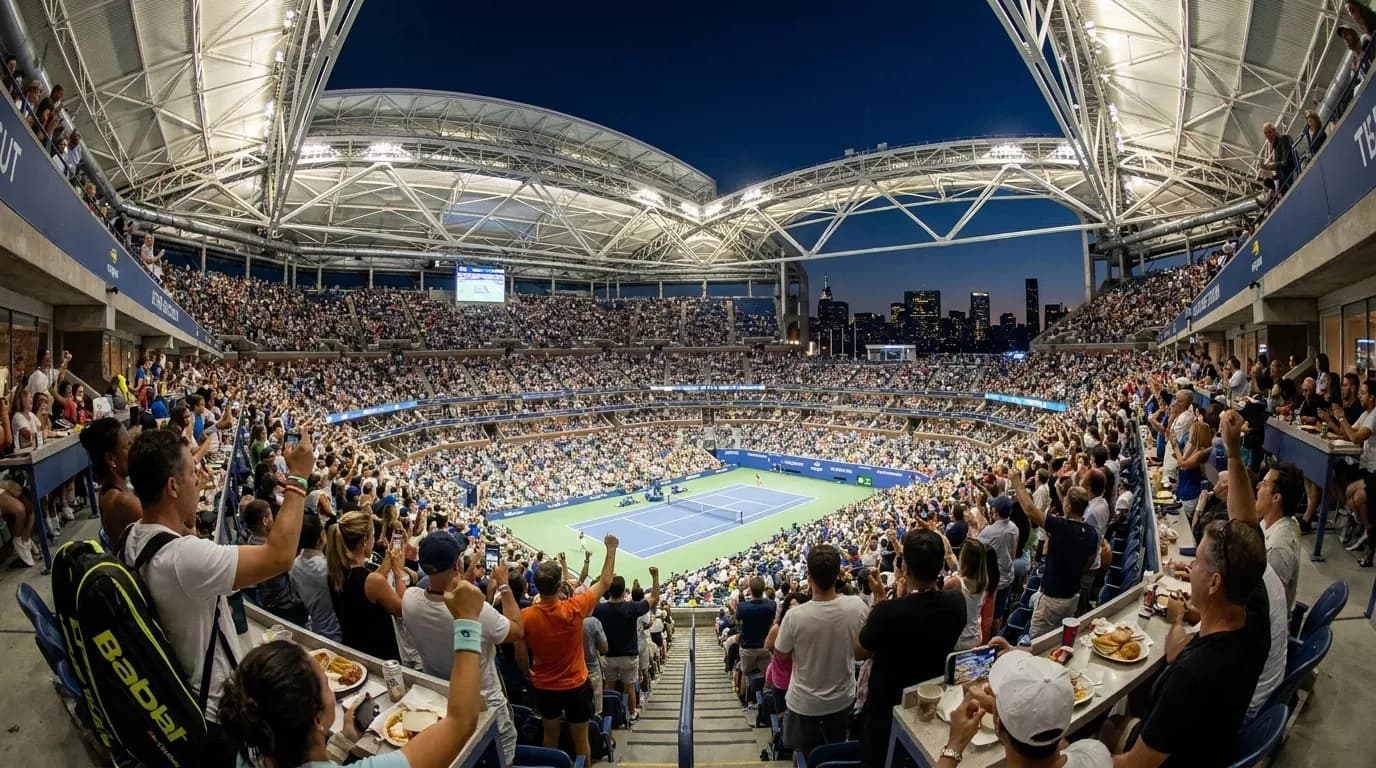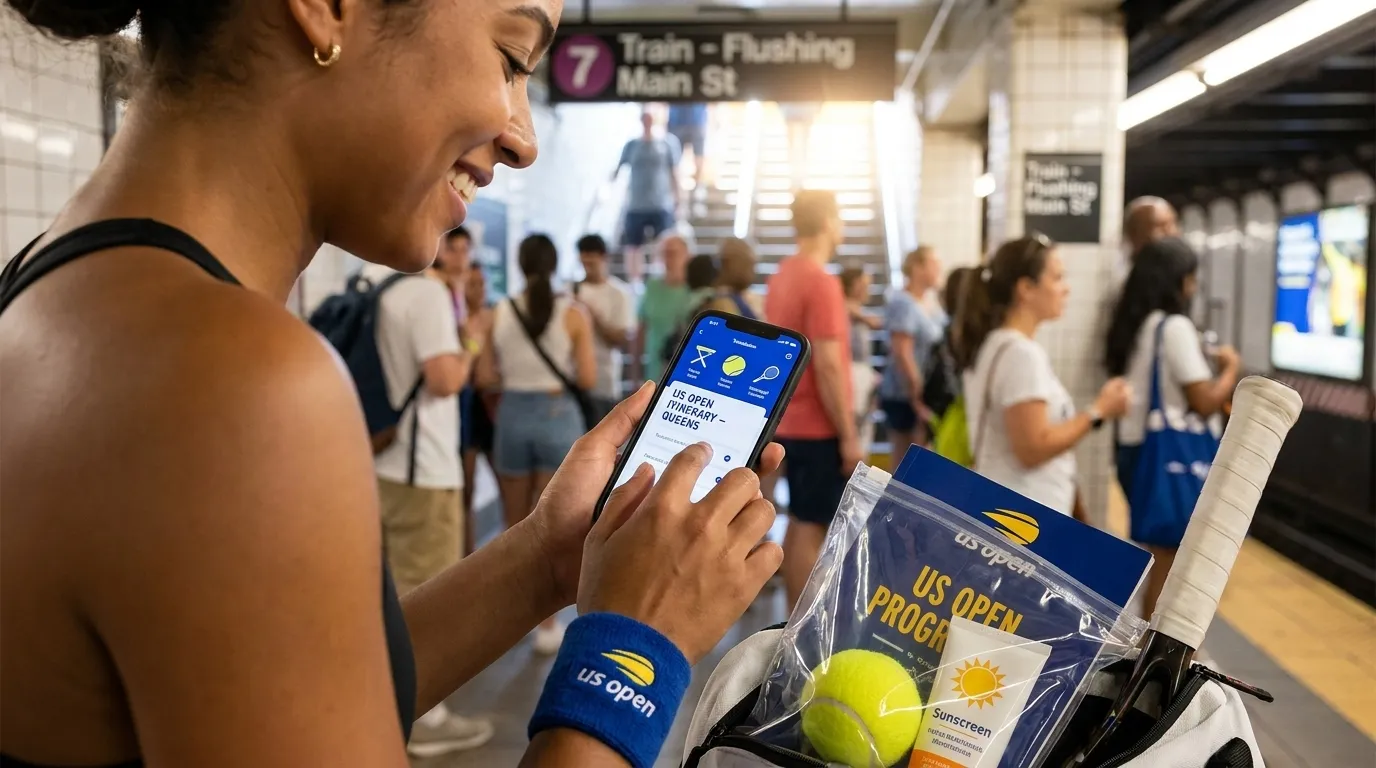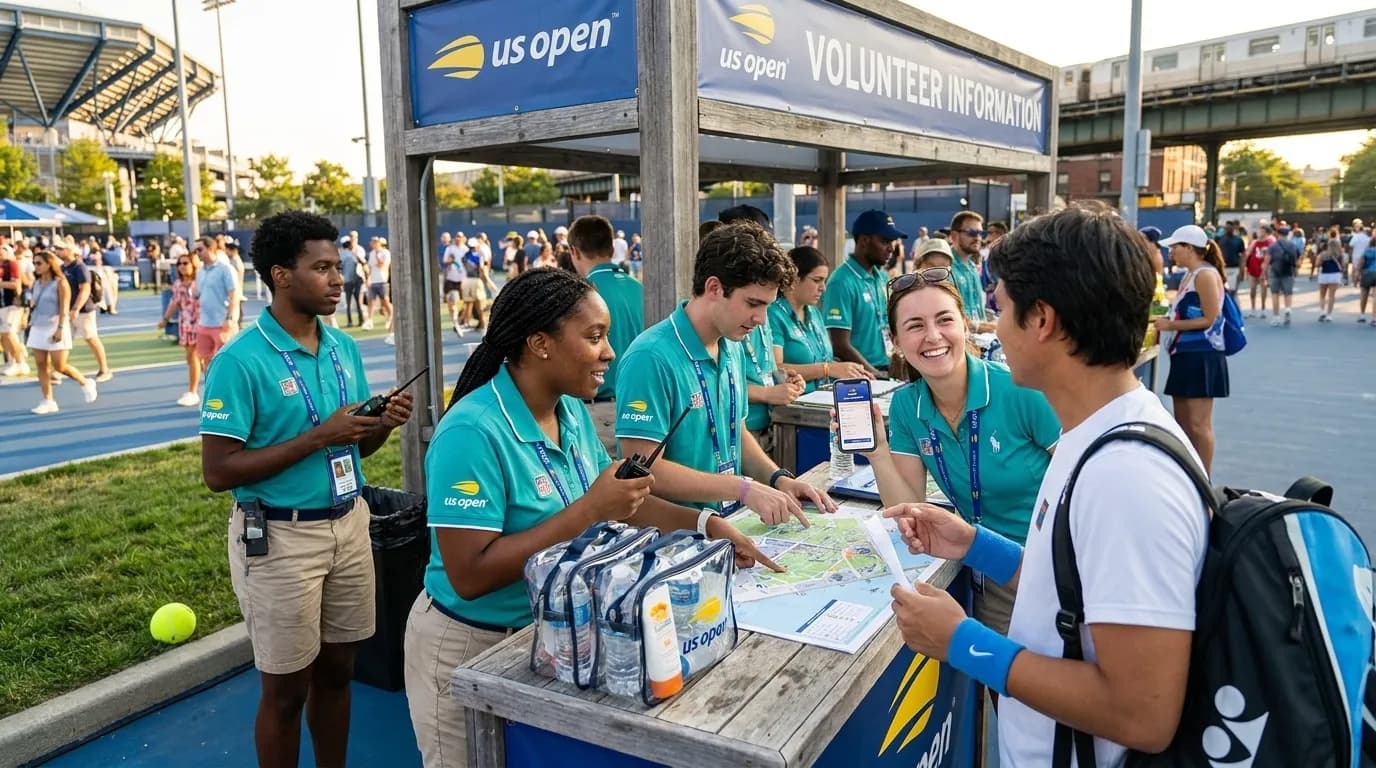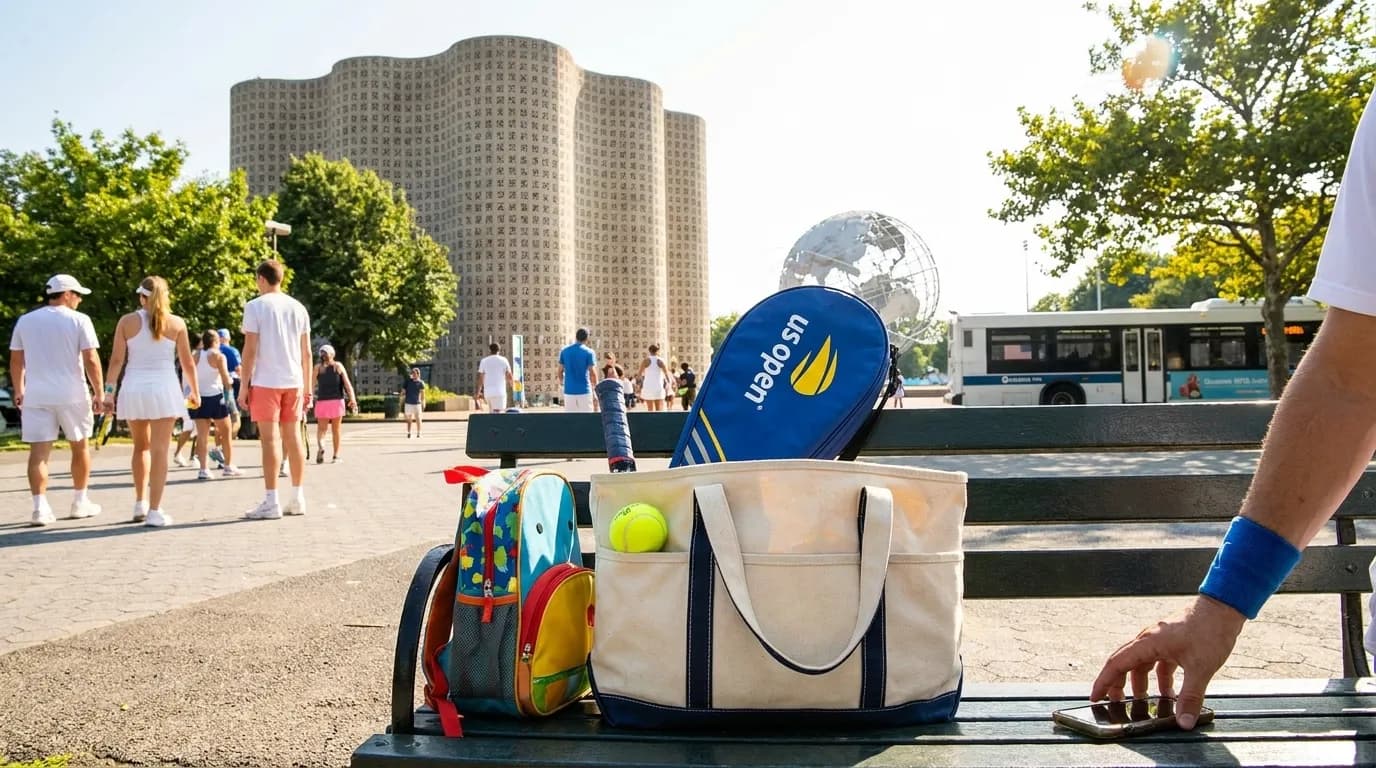
If you are holding tickets for separate US Open sessions, the New York Hall of Science side of Flushing Meadows Corona Park can work as a useful pressure valve: close enough to feel connected to the tournament district, but different enough to give children, grandparents, and overstimulated fans a change of pace. Treat it as a flexible reset, not a guaranteed museum stop or dining plan. Before you leave your seat, check the official US Open schedule, gate information, transportation page, and prohibited-items list, then verify current park and museum details separately. The 2026 US Open calendar currently runs August 23 through September 13, with singles main-draw play scheduled to begin August 30, but daily timing, weather, lines, security flow, and local availability can shift. The best use of this area is simple: decompress, regroup, eat or hydrate where permitted, and return with enough margin.
Text Karpo to fit a New York Hall of Science break between your US Open sessions.

Why This Corner Works for a Between-Session Reset
A two-session tennis day can be harder than it looks. The first session may end later than expected, the evening session may require a fresh entry rhythm, and family energy does not always match the match schedule. The area around the New York Hall of Science gives you a nearby alternative to standing in a concourse, wandering without a plan, or committing to a long detour across Queens. It is especially useful when your group needs a mental reset rather than a full excursion.
Think of this as a staging zone. You can step into the broader park environment, make a calmer decision about food, shade, bathrooms, transit, or timing, and then decide whether to return to the tennis grounds, continue toward another part of Flushing Meadows Corona Park, or head home. The value is not that it solves every problem. The value is that it gives your group a nearby place to pause before the next decision.
Build the Gap Around the Tennis Clock, Not the Map
The official tournament calendar is only the first layer of planning. Match lengths can vary, day sessions can run long, and gate procedures can feel different depending on crowd size, weather, and the specific ticketed session. For 2026, the published event window runs from August 23 through September 13, and singles main-draw play is set to start August 30. Use that as a date framework, then recheck the official daily schedule close to your visit.
When deciding whether to walk toward the New York Hall of Science area, ask a practical question: how much usable time do you really have after accounting for exiting, moving through the park, resting, returning, screening, finding seats, and handling one small surprise? If the answer is under an hour, a brief park-side reset may be wiser than trying to add a museum visit or a meal. If you have a longer gap, you can consider a more deliberate break, while still keeping return time conservative.
A Family-Friendly Reset Without Overplanning
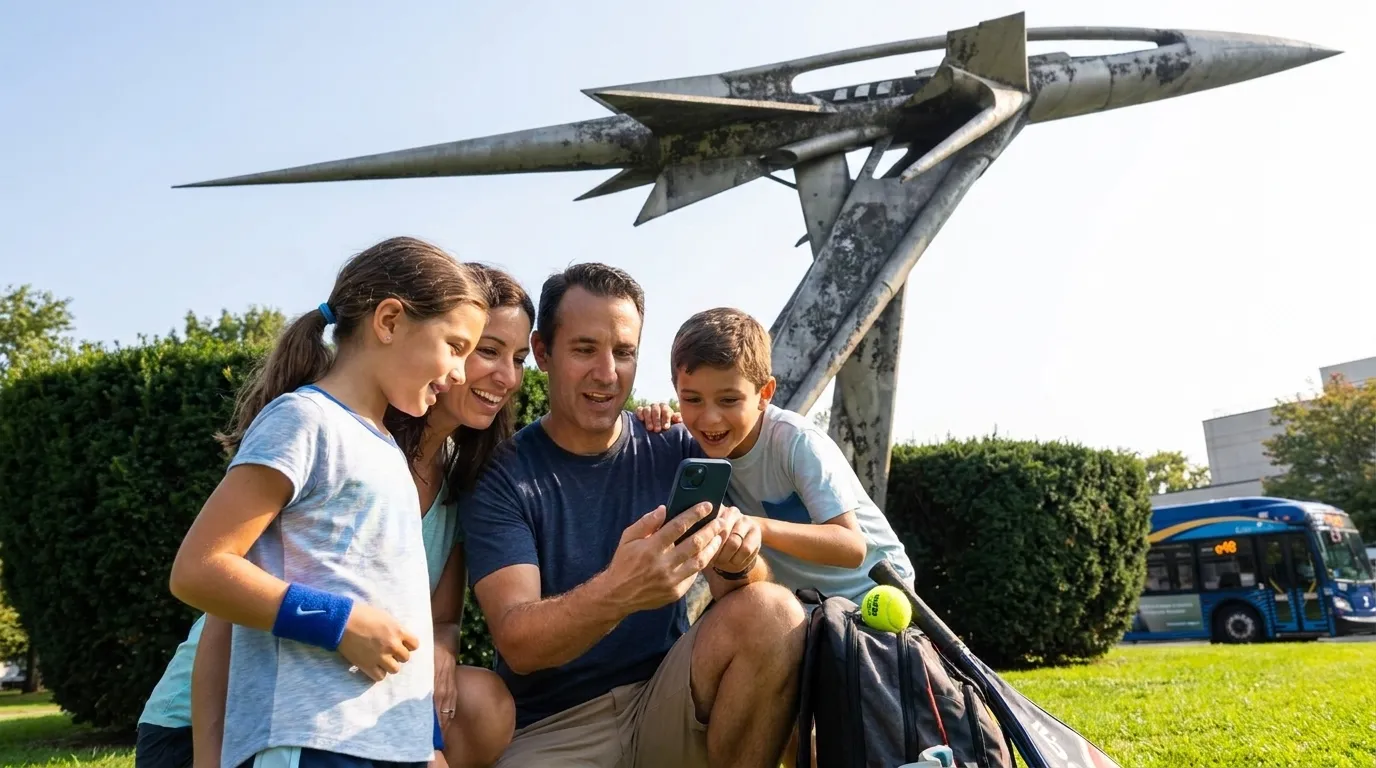
Families often need a different kind of break than solo fans. Children may need movement after sitting, quieter adults may need less noise, and everyone may need a snack decision that does not become a debate in a crowd. The New York Hall of Science area can help because it sits in a park context rather than inside the stadium atmosphere. That shift matters on hot afternoons, after a close match, or before a night session that may run late.
Keep the plan intentionally light. You do not need to fill every minute. A successful reset might be as modest as finding a calmer place to stand, checking the next session’s timing, adjusting sunscreen or layers, and letting everyone say what they need before re-entering tournament mode. If you are considering the museum itself, verify its current hours, admission procedures, programming, and any capacity or service updates directly before relying on it. Do not assume same-day availability simply because it appears convenient on a map.
- Use the first five minutes after exiting to check the official US Open schedule and any session-specific timing updates.
- Give each person one clear priority: bathroom, shade, food, quiet, walking, or transit.
- Avoid buying or carrying anything during the break that could create a problem at security when you return.
- Set a return alarm that includes walking time, screening time, and a buffer for crowds or weather.
- Have a short version of the plan ready in case the previous match runs long.
Bags, Security, and the Cost of a Casual Detour
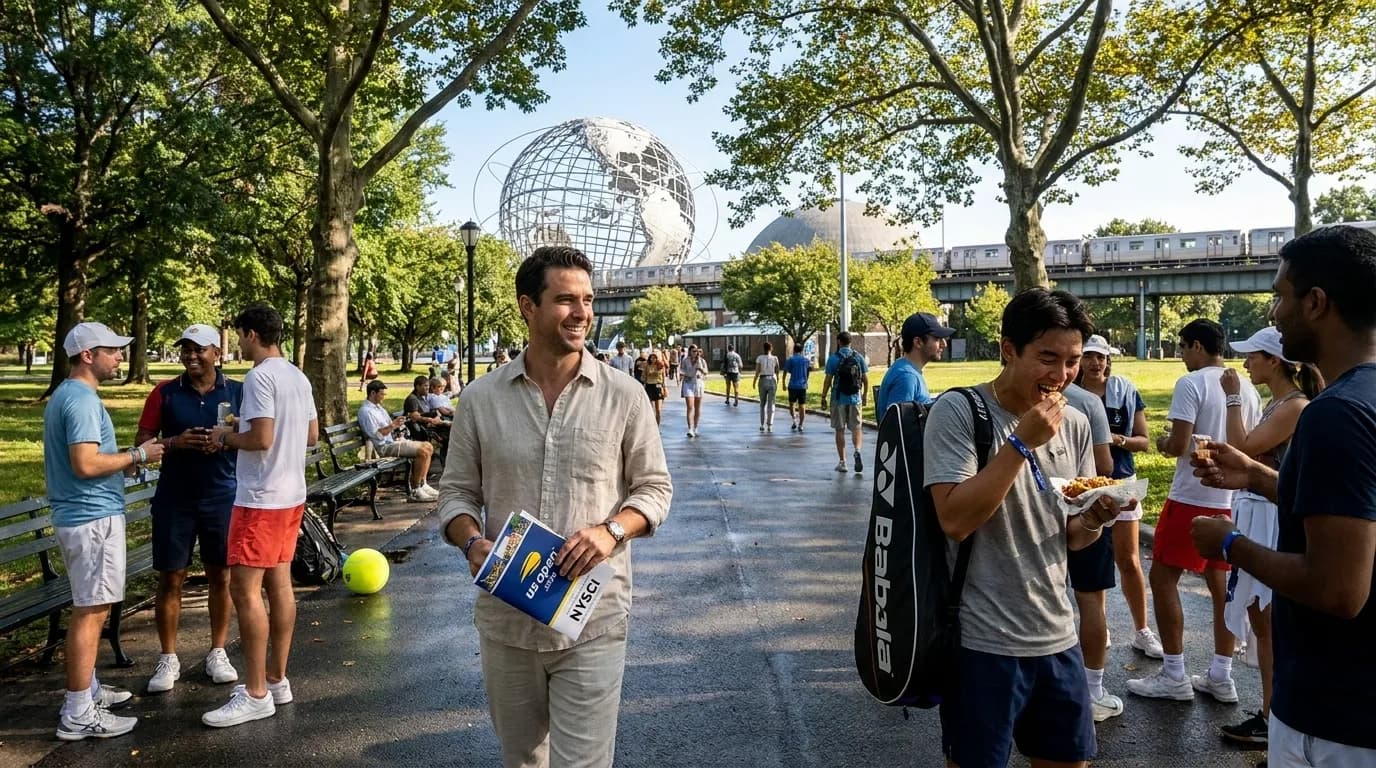
The most common between-session mistake is treating the break like a normal neighborhood outing. A casual purchase, an extra bag, or a forgotten item can complicate your return. Before leaving the tennis grounds or heading toward the park, review the official US Open prohibited-items page and the A-to-Z visitor information. Those pages are the right place to confirm current rules on bags, outside items, umbrellas, bottles, cameras, strollers, and anything else your group may carry.
This matters more when families split responsibilities. One adult may take a child for a walk while another keeps the tickets; someone may pick up supplies; another person may carry the backpack without knowing what is inside. Make one person the bag captain for the break. That person’s job is not glamorous, but it prevents the group from discovering a rule problem only when it is time to re-enter. If an item is questionable, do not rely on memory or past-year habits. Check the current official page.
Transit and Weather Should Shape the Break
A between-session reset is only relaxing if it does not trap you. Check the official US Open transportation and directions page before choosing how far to wander, especially if you are coordinating with relatives, rideshare, public transit, or a later dinner. The tournament area can feel different at arrival, midafternoon, and post-session departure. A plan that works at noon may feel less appealing after dark, in rain, or with tired children.
Weather deserves the same respect. Late-summer conditions in New York can change the value of every option: a short walk may feel refreshing on a mild day and draining in heat, humidity, heavy rain, or poor air. Use current forecasts and official venue updates to decide whether the New York Hall of Science area is a good break or whether you should stay closer to your next point of entry. If storms or extreme conditions are possible, prioritize shelter, transit clarity, and communication over sightseeing.
How to Use Flushing Meadows Corona Park as a Soft Landing
Flushing Meadows Corona Park is the larger setting that makes this reset possible. The New York City Parks page is the sensible place to confirm current park information before relying on any specific path, feature, or facility. During the US Open period, the surrounding area can be busy, and park conditions, access patterns, and services may vary. Treat the park as a flexible environment, not a controlled waiting room.
For curious fans, the appeal is that the park broadens the day beyond tennis without pulling you too far away from the tournament mood. You can talk through the morning’s matches, let children shift their attention, or give visitors a more rounded sense of Queens. The trick is to resist turning the break into a checklist. Pick one purpose: rest, walk, snack, museum possibility, or transit positioning. One purpose keeps the break useful. Three purposes can make it brittle.
If your group includes people with limited mobility, sensory sensitivities, or a low tolerance for heat, decide in advance what would make you abandon the park-side plan. That might be a long line, a delayed match, a closed facility, a weather alert, or simply a tired child. A good reset is allowed to be short.
Practical Notes
Before your US Open day, save the official event schedule, A-to-Z guide, transportation page, prohibited-items page, and NYC Parks page on your phone. Close to travel, recheck them along with any museum information you plan to use. On the day itself, decide whether the New York Hall of Science area is a true break or just an attractive distraction.
- Confirm your session timing and leave a conservative return buffer.
- Review current bag and prohibited-item rules before buying or carrying anything new.
- Check transportation details for both arrival and departure, not just the first leg.
- Verify current park and museum conditions if your plan depends on access, hours, or services.
- Use weather, group energy, and mobility needs to decide how far from the tennis grounds to go.
- Keep the break simple enough that you can change course without losing the next session.
Tags: #USOpen2026 #Tennis #NewYork #Queens #FlushingMeadows #KarpoFinds #Karpo #NYSCI #USOpenBreaks #QueensCulture
Sources consulted: usopen.org — Official reference · usopen.org — Official reference · usopen.org — Official reference · usopen.org — Official reference · nycgovparks.org — Official reference
All trademarks are the property of their respective owners.
Ask Karpo first
Ask Karpo to balance museum energy, walking distance, official hours to verify, and your next match window.