A food crawl usually falls apart on cost. Five stops at eleven dollars each is fifty-five dollars and a long afternoon, which is a normal dinner spent worse. Cuban eating in New York happens to be structured in a way that defeats this - the units are small, the coffee is under two dollars, and the good stuff is sold through windows with no seating and therefore no service charge. Here is a route that comes in under thirty for one person, with the running total kept honest.
Prices drift and windows close for a fortnight without warning, which is how a planned route turns into a walk. Tell Karpo the block you are starting from and it will tell you which of these stops is actually open before you commit the afternoon to it.
Stop one: cafecito and a croqueta. Running total $4
Start at a ventanita around eleven in the morning, before the lunch queue forms. A cafecito is a dollar fifty to two dollars at most windows uptown. A ham croqueta is about a dollar fifty. That is the entire first stop and it takes four minutes standing on the pavement.
The reason to start here rather than sit down somewhere is calibration. The croqueta tells you immediately whether this particular window is cooking today or reheating, and if it is reheating you have lost three dollars rather than an entire lunch.
Stop two: a pastelito, eaten walking. Running total $7
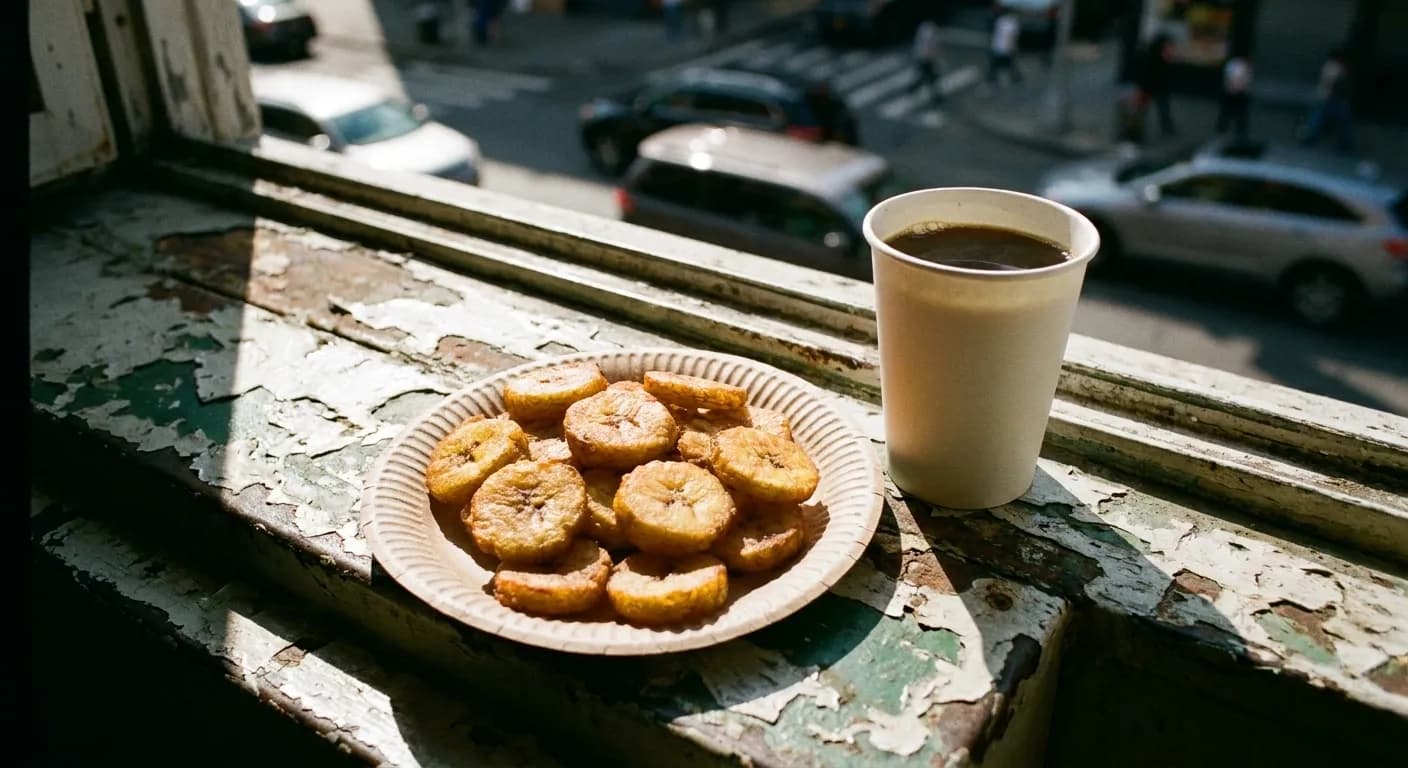
Two or three blocks on, another bakery case. Guava and cheese if both are there, guava alone if not, carne if you want something savoury and have decided to skip lunch. Around two dollars fifty, sometimes three.
Buy one, not two. The pastry is rich and the whole crawl depends on not filling up in the first half hour, which is the failure mode that ends most food crawls before the interesting stop.
Stop three: the vaca frita, and the only place you sit. Running total $22
This is the anchor and where the budget goes. A lunch-special plate of vaca frita with rice, beans and plantains runs about thirteen to fifteen dollars at a counter uptown between noon and two, which is the window when it is being cooked to order rather than held. Sit down for this one.
It is worth understanding what you are paying for. The dish is flank steak boiled to shreds, then fried hard in a dry pan until the edges char, then hit with lime and raw onion at the last second. It is labour rather than ingredient cost, which is why the special exists at lunch and disappears in the evening.
Why the arithmetic works here and not elsewhere
Almost every food crawl in New York fails on the same point: the minimum viable transaction is too large. A restaurant will not sell you three dollars of food, so five stops means five near-meals, and by the third one you are full and out of money. Cuban service in this city is built around a walk-up window with no seating, no table service and no tipping expectation, which drops the minimum transaction to about a dollar fifty.
That single structural difference is what makes a five-stop afternoon cost less than one sit-down dinner. It also changes the shape of the day - you are eating small amounts continuously while covering forty blocks on foot, rather than making four separate commitments to a chair. The neighbourhood is the point as much as the food is.
Stop four: a batido to reset. Running total $28
A batido is a thick fruit milkshake, usually mamey, guanabana or trigo, and it costs five to six dollars from the same kind of counter that sold you the coffee. After a plate of fried beef and rice it functions less as a dessert than as a palate reset, and mamey in particular tastes like nothing else available in the city.
If you are over budget by this point, this is the stop to cut. It is the most skippable of the five and the one most people would not miss.
Stop five: a colada for whoever you go back to. Running total $30
Finish where you started, or at whichever window is nearest. A colada is about two to three dollars - a styrofoam cup of the same sweet espresso with a stack of thimble cups balanced on the lid, and it is explicitly built to be shared between three or four people. It is the correct way to end an afternoon that you did alone.
That closes the loop at roughly thirty dollars for five stops, one sit-down plate, two coffees and a milkshake. Doing the same number of stops in a neighbourhood built around restaurants would be double it.
Practical notes on running the route
Do it on a weekday between eleven and three. That is the only window where the vaca frita is a live special and the bakery cases have not been picked over, and it is also when the pavements are walkable. Weekend afternoons uptown are considerably slower going.
Carry cash. Several of the smallest windows are cash-only or have a card minimum that makes a two-dollar coffee awkward. The route works best above 155th Street in Manhattan, where the density is high enough that no two stops are more than four or five blocks apart.
Two variations if you have company
For two people the total does not double. The vaca frita plate is generous enough to split if you add an order of tostones for four dollars, the colada is designed for sharing in the first place, and only the coffee and croquetas scale one-to-one. Two people can run the same route for about forty-five dollars rather than sixty.
For a group of four, invert the order: send one person for a colada at the start so everyone has coffee for the walk, then treat the vaca frita stop as the only sit-down and order two plates plus extra plantains between four. It comes in around fifteen dollars a head and is a considerably better afternoon than the equivalent brunch.
Tags: #CubanFoodCrawl #NewYorkCity #VacaFrita #CheapEatsNYC #NYCFood #FoodCrawl #UptownManhattan #Cafecito #BudgetEats #NYCUnder30
All trademarks are the property of their respective owners.
Ask Karpo first
A crawl only works if the stops are open and the specials are running. Ask Karpo what is serving right now on the blocks you are walking, and it will keep the route from turning into an expensive detour.