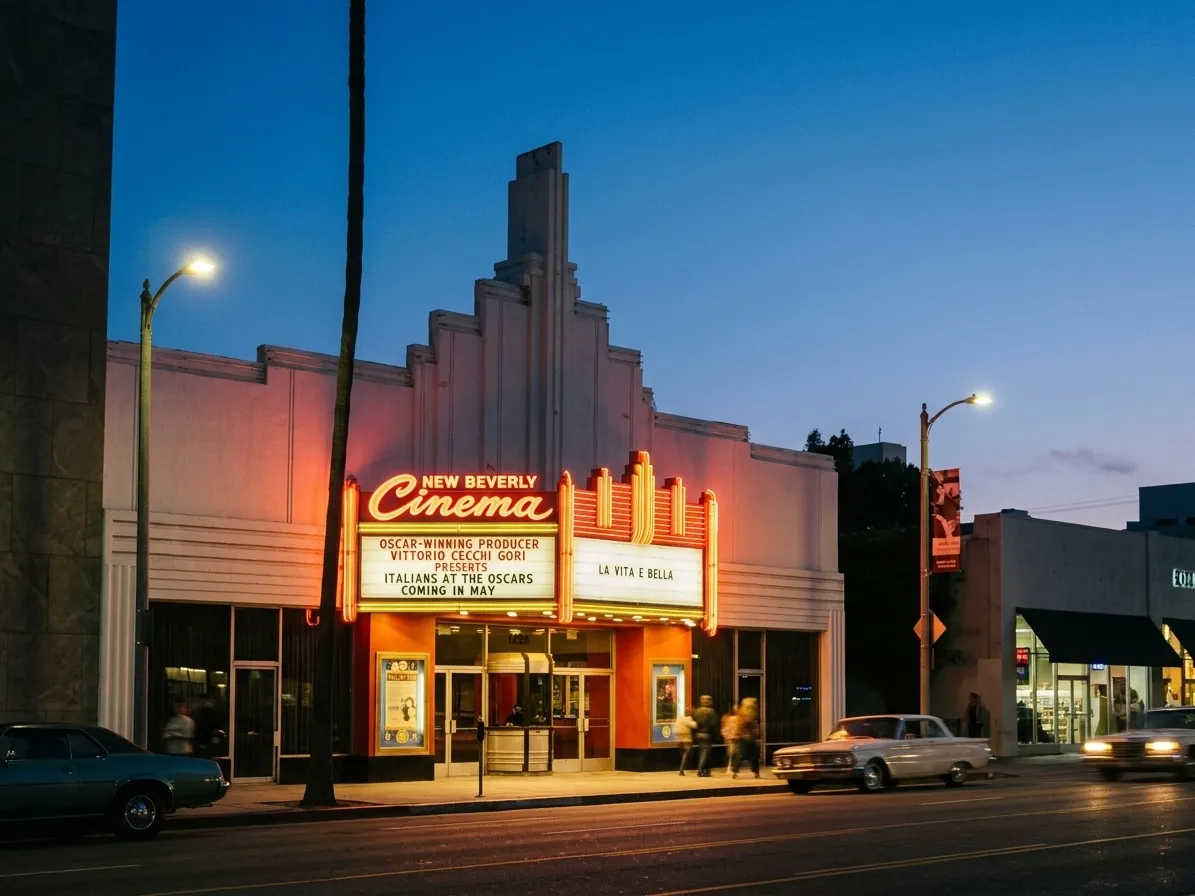
The week *Insidious: Out of the Further* opened across Los Angeles multiplexes, the New Beverly Cinema on Beverly Boulevard was screening *To Live and Die in L.A.* on 35mm film, no digital projection, no compromise. Quentin Tarantino's rep house doesn't chase new releases. It programs the films that taught contemporary horror how to scare people, back when practical effects and celluloid grain were the only tools available. While franchise sequels dominate August box office, a growing slice of LA's audience is driving to the Fairfax District to watch movies the way they looked in 1985, complete with film scratches, reel-change marks, and a projectionist who actually knows how to thread a platter system.
Karpo tracks real-time showtimes and ticket availability at the New Beverly, plus parking intel for Beverly Boulevard's trickiest blocks.
The analog answer to franchise horror
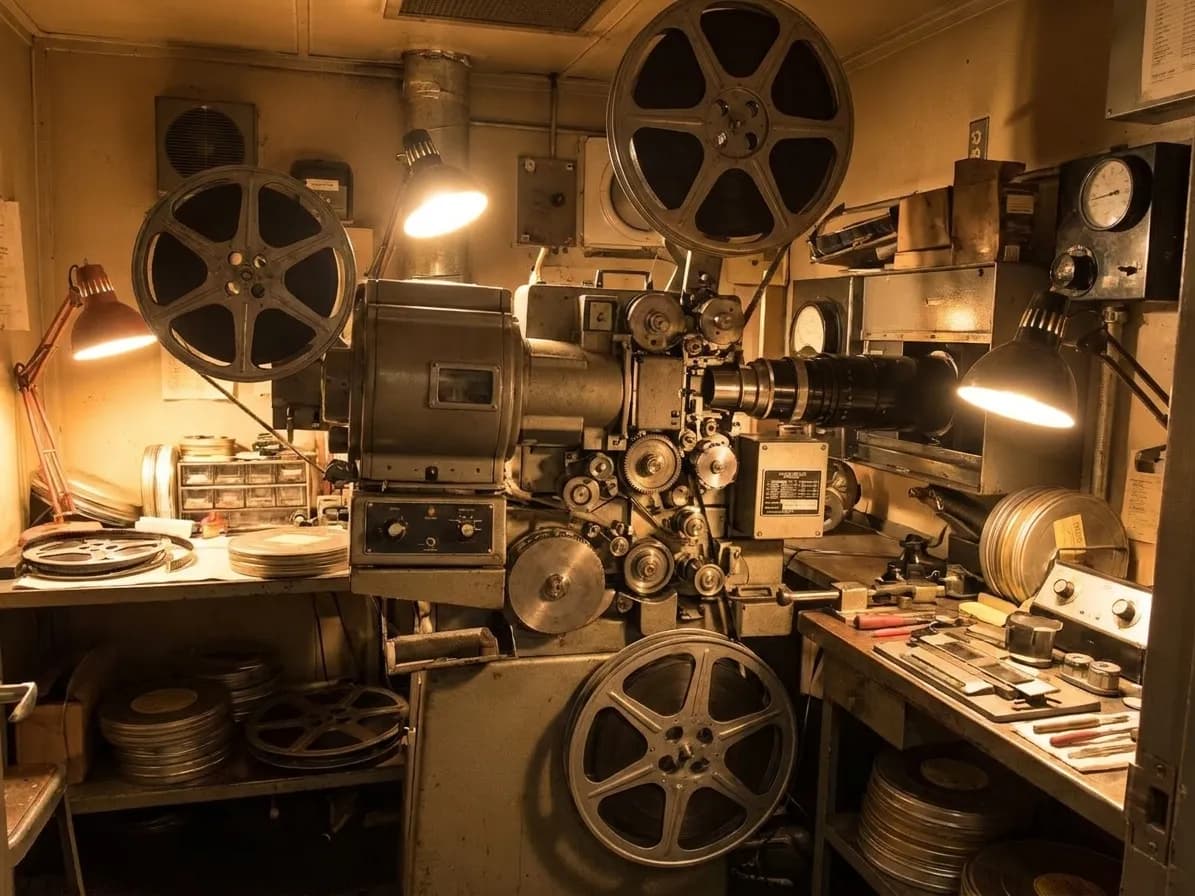
While *Insidious: Out of the Further* pulls audiences into multiplexes with Dolby Atmos and laser projection, the New Beverly Cinema at 7165 Beverly Boulevard offers a different proposition: watch horror the way it looked when practical effects and film grain were the only tools available. Quentin Tarantino's rep house runs exclusively on 35mm film stock, no digital exceptions, which means every frame of *Pulp Fiction* or *To Live and Die in L.A.* passes through an actual projector operated by an actual projectionist in the booth.
The timing creates an odd cultural moment. Blumhouse's latest Insidious chapter arrives in theaters with all the modern horror machinery—jump scares calibrated for surround sound, CGI demons, a release timed to late August when genre fans are hungry for something before Halloween. Meanwhile, a ten-minute drive west, the New Beverly programs double bills of 1970s giallo, Hammer gothics, and American exploitation that defined what scared people before digital effects smoothed out every edge. The contrast isn't accidental. As franchise horror leans harder into spectacle, a growing slice of LA's film audience wants to see what terror looked like when filmmakers had to build it in-camera.
The New Beverly's August schedule runs *To Live and Die in L.A.* on the 25th and 26th at 7:30 p.m., with midnight shows hitting 11:59 p.m. on the 28th—tickets run $12 for late-night slots, no passes or discounts honored. Kiddee matinees land at 2:00 p.m. on the 29th for $10, free popcorn included for anyone twelve or younger. Every screening uses 35mm prints unless specifically noted as 16mm, a detail the New Beverly states up front because their audience cares deeply about film gauge.
What Tarantino's ownership actually changed
Tarantino bought the theater years ago after founder Sherman Torgan died, but he took over programming in fall 2014, and the shift was immediate. Gone were the occasional digital bookings that had crept in during the late 2000s. The New Beverly became a 35mm-only house, drawing prints from Tarantino's personal archive and from studio vaults that still maintain film elements. The director doesn't program every week himself, but his aesthetic governs the calendar: double features, thematic retrospectives, midnight cult screenings, and a bias toward prints that show their age honestly rather than digitally scrubbed restorations.
The physical space hasn't changed much since its 1920s origins as a single-screen neighborhood house. It seats 228, the lobby remains postage-stamp small, and the concession stand sells old-fashioned hot dogs, real-butter popcorn, and sarsaparilla sodas in glass bottles. What changed was the curation and the audience it attracted. Film students, industry workers who spend their days editing digitally, and a older generation who remember when every theater ran film—they all converge here because the New Beverly offers something genuinely rare in 2026: a chance to watch movies the way they were chemically designed to be seen.
The projectionist role matters more here than at any multiplex. Film breaks, splices fail, focus drifts if the operator isn't paying attention. On Tuesday double features, which run around $8 for two films, audiences sit through vintage trailers and a cartoon reel between features, the kind of program structure that disappeared from commercial cinemas forty years ago. Regulars know to arrive early not just for seats but because the pre-show material—often as scratched and faded as the features—is part of the experience.
The parking problem nobody solved
The New Beverly sits on a stretch of Beverly Boulevard in the Fairfax District with no dedicated lot, no valet, and metered street parking that ends at 8 p.m. on weekdays but remains enforced later on weekends. For a 7:30 p.m. show, you're threading residential blocks north and south of Beverly, hunting for spots that don't require feeding a meter or moving your car before the second feature ends. Weekend midnight screenings make this worse—by 11:30 p.m. most nearby curbs are full, and you're walking four or five blocks in the dark.
Regulars develop strategies. Some park in the residential grid between Beverly and Melrose, accepting a ten-minute walk. Others use the paid lots near The Grove, a half-mile west, then Uber the final stretch, figuring $8 for parking plus a short ride beats circling for thirty minutes. The lack of secure adjacent parking explains why many locals won't attend solo evening shows—there's a safety calculation involved when you're walking back to your car after midnight through neighborhoods you don't know well.
UCLA's film archive, by comparison, offers attended parking steps from the theater entrance, which gives it a structural advantage for single attendees. The New Beverly's audience skews toward pairs and groups partly because of logistics. Tarantino hasn't solved this, and probably can't without bulldozing adjacent buildings for a lot, which would destroy the old-Hollywood character that makes the theater worth visiting in the first place.
Why 35mm still matters to some audiences
Digital projection offers perfect consistency—no scratches, no color fading, no focus issues, every screening identical to the last. Film projection offers none of that. A 35mm print of *Ramrod* from 1947, even a well-maintained one, will show wear. Colors shift slightly as the film stock ages. Splices are visible if you know where to look. The grain structure is pronounced on faces and in shadows, especially in black-and-white prints shot by cinematographers like Russell Harlan, whose Utah location work for *Ramrod* looked extraordinary on a recent New Beverly screening.
For a certain kind of viewer, those imperfections are the point. They're evidence that the film existed as a physical object, that it traveled through projectors in other cities, that it carries a history. Digital files don't age or scar; they either work or they corrupt. Film wears down gracefully, and watching a print that's been screened a hundred times connects you to every audience that saw it before. This sounds romantic until you sit in the New Beverly's 228-seat house and realize the image actually does look different—richer contrast in the blacks, a warmth in skin tones that digital rarely captures, a sense of depth that comes from light passing through celluloid rather than being generated by a laser.
The New Beverly's audience includes plenty of industry professionals who work in digital all week and come here specifically for the analog break. Grips, gaffers, second-unit directors—they sit through credits because they know those names, or because they are those names. The theater draws people who understand what's being preserved and why it matters that at least one Los Angeles venue refuses to compromise on format.
What the schedule looks like in practice
A typical week mixes studio classics, exploitation oddities, and director retrospectives. August 2026 programming included William Friedkin's *To Live and Die in L.A.* on a weeknight, *Pulp Fiction* at midnight on the 28th, and a kiddee matinee on the 29th—presumably something family-friendly, though the New Beverly's definition of that can be generous. Double-feature Tuesdays remain the best value: $8 buys two films, both on 35mm, with trailers and shorts between them. Midnight shows cost $12 and don't honor any discounts or passes, a policy designed to keep those screenings from selling out instantly to members and comp-ticket holders.
The calendar doesn't follow current releases except by coincidence. If *Insidious: Out of the Further* is packing multiplexes with contemporary scares, the New Beverly counters by programming the films that taught Blumhouse how to build dread—Italian horror from the giallo era, British Hammer gothics, American slashers from the late 1970s when practical gore effects were an art form. The juxtaposition is educational if you care about genre history. You can watch the new Insidious film at an AMC with reserved recliners and then drive to the New Beverly to see what Lin Shaye's career looked like before she became the franchise's emotional anchor.
Showtimes are limited because it's a single-screen house. A 7:30 p.m. start means the feature ends around 9:30 or 10:00, and if it's a double bill you're there until nearly midnight. Plan accordingly. The theater sells tickets online but reserves a chunk for walk-ups, rewarding people who show up early and queue. If the website says sold out, it's worth trying the box office an hour before showtime—this is a stated policy, not a rumor.
Practical notes
The New Beverly Cinema is at 7165 Beverly Boulevard in the Fairfax District, a ten-minute drive from The Grove and fifteen from Hollywood. No parking lot; expect to hunt residential streets or pay for a nearby commercial lot. Tickets run $8 for regular double features, $10 for kiddee matinees (with free popcorn for kids twelve and under), $12 for midnight shows. Showtimes and current programming are posted at [thenewbev.com](https://thenewbev.com/). Every film screens on 35mm unless noted as 16mm. The concession stand takes cash and cards; prices are lower than multiplex rates. Seats are first-come within your ticket tier—no reserved seating. Arrive thirty minutes early for popular shows, especially Tarantino titles and midnight cult screenings. The theater holds back walk-up tickets even when online sales close, so queuing can work if you're flexible.
Tags: #NewBeverlyCinema #InsidiousOutOfTheFurther #ThirtyFiveMillimeter #RepHouseCinema #QuentinTarantino #FilmNotDigital #BeverlyGrove #ClassicHorror #MidnightMovies #DoubleFeature #LAFilmScene #AnalogCinema #CultFilms #MovieTheater #LosAngelesCinema
All trademarks are the property of their respective owners.
Ask Karpo first
Need to know which nights the New Beverly runs horror doubles, or whether that midnight Tarantino screening still has seats? Ask Karpo to check live schedules, compare ticket windows across LA rep houses, or map the nearest meter-free parking on residential streets behind Beverly Boulevard.