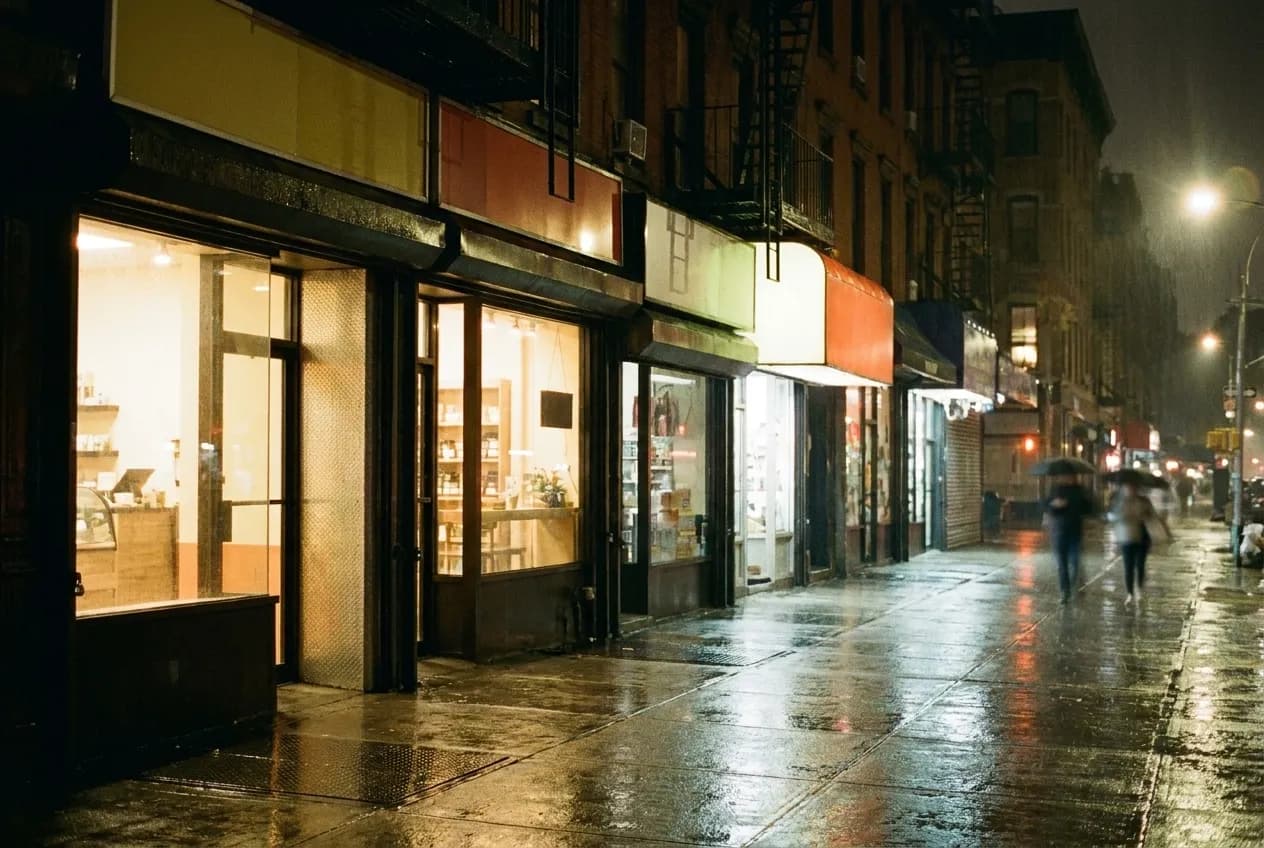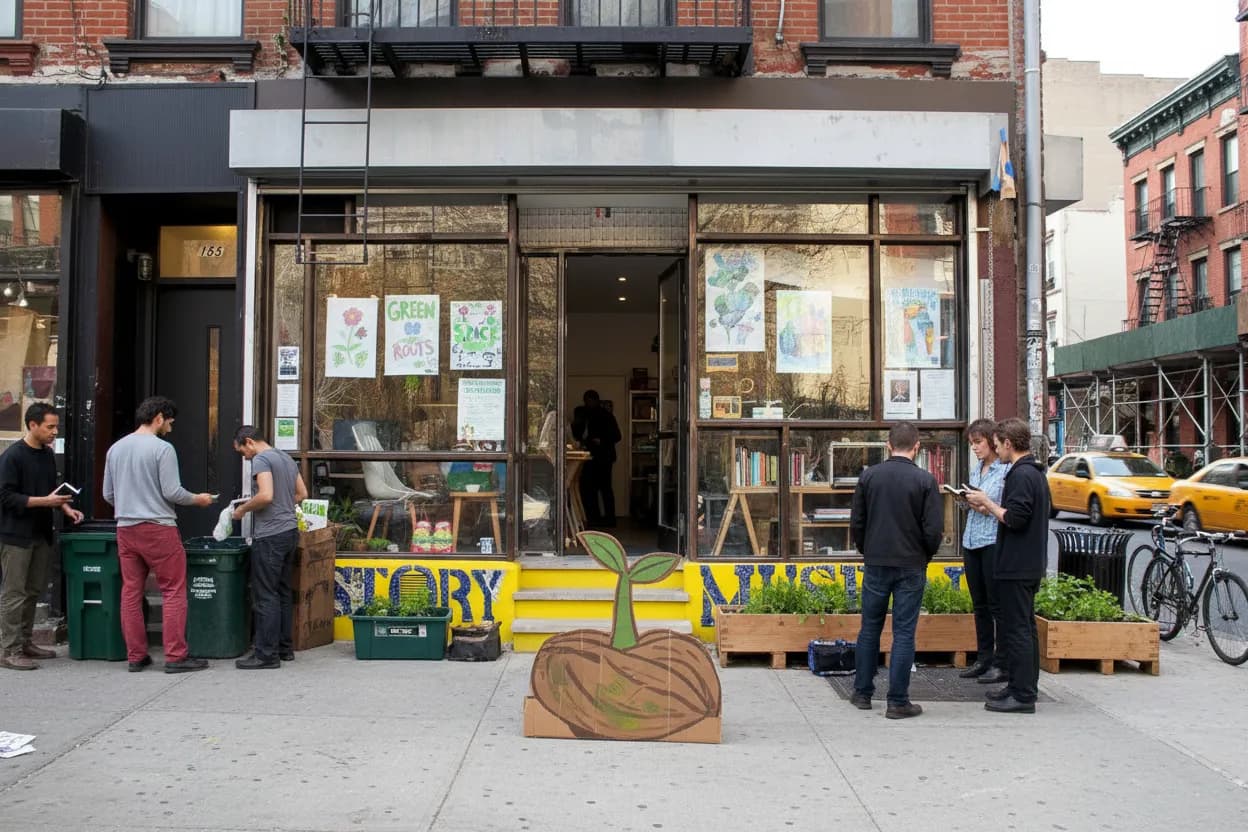
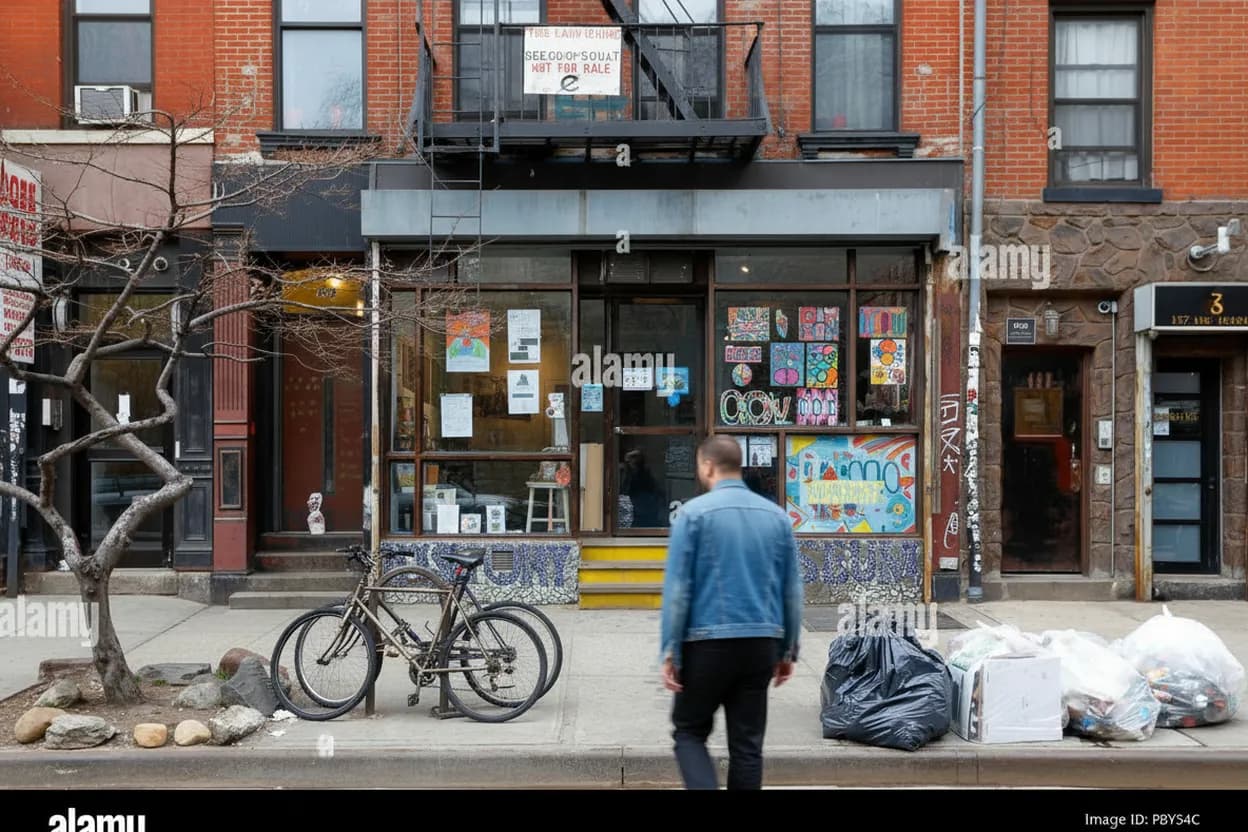
The Museum of Reclaimed Urban Space is not the East Village stop for someone who wants polished wall text, climate-controlled scale, and a predictable big-museum rhythm. It is a small, volunteer-run archive and exhibition space at 155 Avenue C, rooted in Lower East Side and East Village histories of squats, community gardens, cycling, recycling, and grassroots urban activism. That makes it useful when a sticky late afternoon threatens to flatten your downtown plans: you can duck into a specific neighborhood story, then decide whether to add the outdoor Radical History Walking Tour or save your energy for dinner. The key is checking the day’s details first, because MoRUS’s own pages currently show conflicting public-hour language.
Want a scrappier East Village stop matched to your timing, weather, and dinner plans? Text Karpo before you go, and we’ll help decide whether MoRUS fits today’s route.
Use MoRUS When the East Village Needs a Sharper Backstory
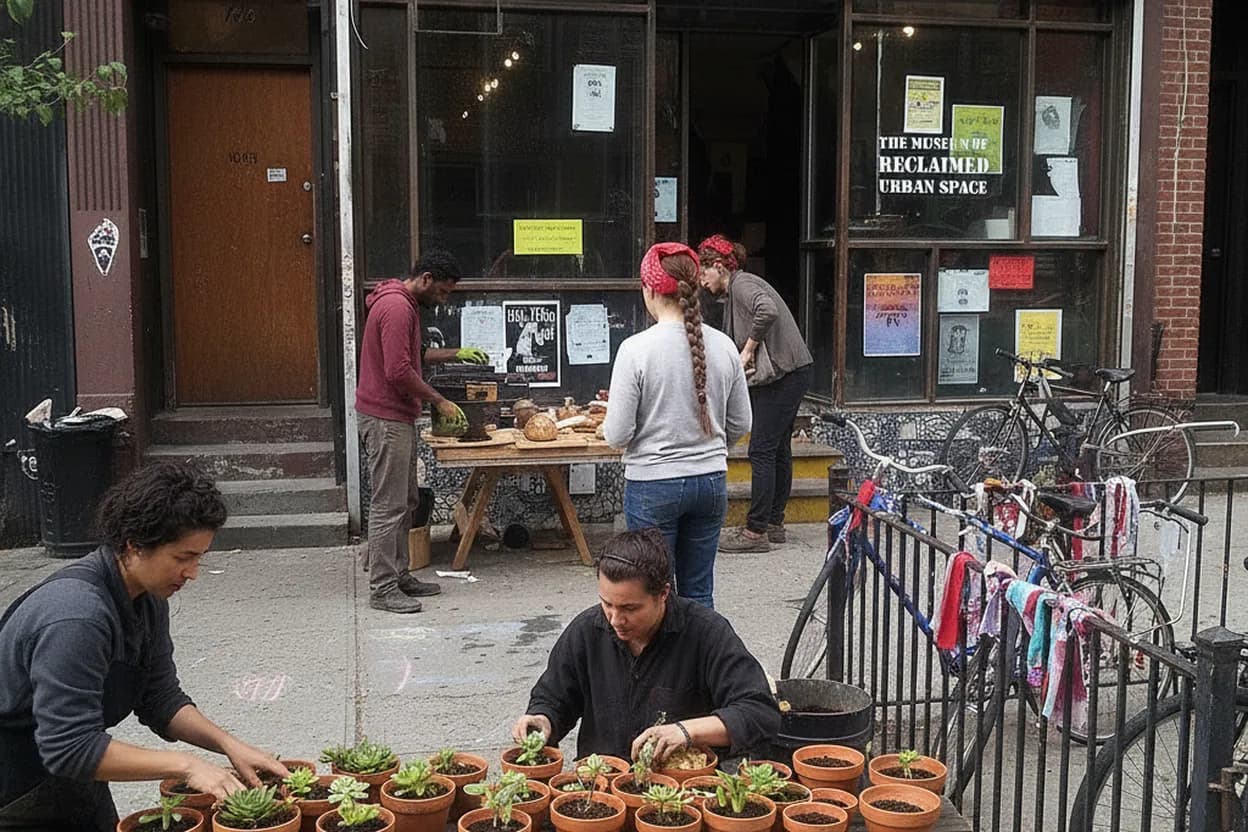
MoRUS works best as a focused detour, not a full afternoon anchor. The museum says it preserves Lower East Side grassroots activism and community-based urban ecology, with exhibitions and tours tied to squats, gardens, bikes, recycling, and neighborhood organizing. If you have already done the polished gallery circuit, this gives the East Village a different frame: storefront scale, local archive logic, and street-level memory rather than a generalized downtown vibe.
The fit is strongest for a history-curious visitor with one friend, especially between food stops on Avenue C, Tompkins Square Park, or the wider East Village. It is less ideal for anyone seeking a broad NYC overview, a quiet design museum, or a guaranteed long visit. The museum’s FAQ says the exhibition space includes a storefront and basement, and can take anything from a few minutes to a few hours.
Check MoRUS Hours Before Building the Afternoon Around It
The practical wrinkle is that MoRUS’s current official pages do not all say the same thing. Its tour-pricing page lists museum hours as Thursday through Sunday, 11:00 AM to 5:00 PM. Its FAQ page says Wednesday through Sunday, 12:00 PM to 5:00 PM. Because this is a small volunteer-run organization, treat the website as the starting point and verify directly before you cross town, especially on Wednesday, early noon arrivals, or stormy days.
That verification step should shape the decision. If you are already nearby, the risk is modest: check the door, call, or email, then pivot into Tompkins Square Park, coffee, bookstores, or dinner if it is closed. If you are coming from another borough with a tight schedule, do not make MoRUS the single load-bearing plan unless you have same-day confirmation. Small museums are often rewarding precisely because they are personal, but that can mean lighter operating redundancy.
Choose the Exhibit for a Short Stop or the Radical History Tour for Depth
For a short late-afternoon visit, the indoor exhibition is the lower-commitment choice. The museum requests a $5 suggested donation for the exhibition space, according to its FAQ, while its tour-pricing page lists regularly scheduled outdoor Radical History Walking Tours on Saturday and Sunday at 3:00 PM, with no reservations needed and tickets at $25 per person. Those tours start at the museum and head outdoors for about 90 minutes.
The tour changes the outing from a quick archive stop into a neighborhood walk through community gardens, squatted buildings, Tompkins Square Park, and other sites MoRUS identifies as part of Lower East Side history. That is the better choice if your curiosity is high and your shoes, weather tolerance, and dinner timing cooperate. Skip the tour if storms are building, heat feels draining, or your companion is only lightly interested; the indoor visit will ask less from both of you.
Plan the Avenue C Approach, Not Just the Subway Stop
MoRUS is at 155 Avenue C, between East 9th and East 10th Streets. That address matters because the nearest subway ride usually still leaves you with an eastward walk or a bus connection, depending on where you start. The L train’s First Avenue station is a common approach, but the museum sits farther east in Alphabet City, so build in sidewalk time rather than treating it like a station-adjacent museum.
For accessibility planning, use the MTA’s current elevator and escalator status page before departure. The MTA says elevator status can change and provides outage checks and alerts; that is more reliable than assuming a station will work because it appeared accessible on a past trip. Also consider the museum’s own physical setup: the FAQ describes a storefront and basement, so visitors who avoid stairs should contact MoRUS directly before relying on full access to every part of the exhibition.
Treat Storms and Heat as MoRUS Decision Points
The dynamic sweet spot is a restless, sticky afternoon before dinner: enough time to learn something specific, not enough appetite for a giant institution. The indoor exhibition can absorb a short weather delay, but the walking tour is different. Because MoRUS describes its standard tours as outdoor walks of about 90 minutes, possible storms should push you toward same-day verification and a backup plan rather than hopeful improvisation.
MoRUS’s tour-pricing page notes that weather-related rescheduling can be part of the tour process, so do not assume a Saturday or Sunday 3:00 PM walk will feel comfortable just because it is listed. If radar looks messy, choose the exhibit, stay close to dinner, and keep the tour for a clearer day. The point is not to overplan a tiny museum; it is to avoid turning a good odd-find into a wet, rushed obligation.
Know What MoRUS Is Not Trying to Be
The main tradeoff is scale. MoRUS is not built like the Met, the New Museum, or the Tenement Museum, and judging it by those expectations will miss the point. Its value is specificity: Lower East Side squatting history, community gardens, cycling advocacy, recycling efforts, and the politics of reclaimed urban space. The New York Public Library has also described MoRUS as volunteer-run and donation-reliant, which helps explain the intimate, archive-driven feel.
That same specificity creates failure modes. Some visitors will find it too small, too text-and-artifact based, or too dependent on prior interest in neighborhood history. Others may want more institutional framing than a storefront archive provides. Bring the friend who likes urban change, DIY spaces, and the backstory behind ordinary blocks. Do not bring someone expecting a breezy pre-dinner attraction unless they are genuinely open to a compact, sometimes rough-edged local history stop.
Make the Final MoRUS Call From the Sidewalk
Before leaving, run a quick three-part check: confirm MoRUS is open that day, decide whether you want only the exhibit or the 3:00 PM weekend tour, and check MTA elevator or service conditions if access or timing matters. If any one of those pieces is uncertain, keep the plan flexible. The museum is most satisfying when treated as a precise East Village layer, not as an immovable reservation.
At the door, give yourself permission to keep the visit small. A $5 suggested-donation exhibition stop can be enough if dinner is soon or the room is crowded. If the staff confirms the tour, the sky is stable, and both of you still have energy, upgrade the outing into the outdoor walk. Either way, MoRUS earns its place when you want the city’s scrappier backstory to interrupt a familiar downtown route.
Tags: #MuseumOfReclaimedUrbanSpace #MoRUSNYC #EastVillageNYC #LowerEastSide #Loisaida #NYCHiddenGems #OddFindsNYC #NYCMuseums #CommunityGardens #TompkinsSquarePark #DowntownManhattan #AskKarpo #BeforeYouGo #KarpoNYC
Sources consulted: Source 1: morusnyc.org · Source 2: morusnyc.org · Source 3: morusnyc.org · Source 4: morusnyc.org · Source 5: mta.info · Source 6: nypl.org
All trademarks are the property of their respective owners.
Ask Karpo first
Tell Karpo your date, group size, budget, and starting neighborhood. We’ll check current access, timing, transit, and the cleanest plan for Museum of Reclaimed Urban Space before you head out.