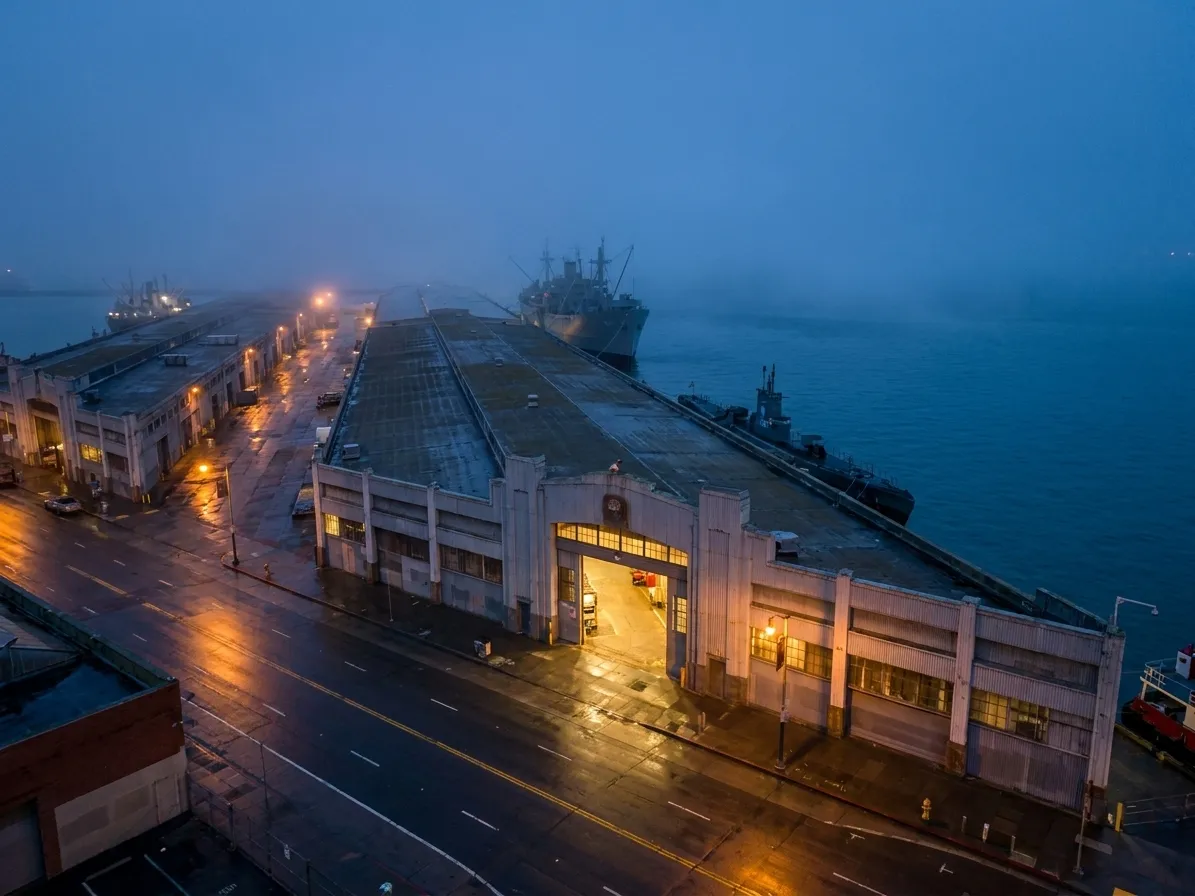
Fisherman's Wharf is a gauntlet of souvenir shops, chain restaurants, and staged sea-lion photo ops, but buried in a warehouse at Pier 45 is a museum that charges nothing and delivers exactly what it promises: three hundred coin-operated machines from the last century and a half, most of them still working. The Musée Mécanique is part arcade, part mechanical-engineering exhibit, and part time capsule of San Francisco's vanished amusement-park culture. You can spend two dollars or twenty, stay ten minutes or two hours, and leave with a paper fortune, a Skeeball high score, or just the memory of watching a diorama Ferris wheel spin under century-old incandescent bulbs.
Karpo tracks current hours, machine availability, and the best low-crowd windows at Musée Mécanique and every other free attraction across San Francisco.
The collection that Playland built
Edward Galland Zelinsky started collecting coin-operated machines at age eleven. By the time Playland at the Beach closed in 1972, he'd amassed enough automata, music boxes, and arcade oddities to fill a small warehouse. The National Park Service gave him basement space at Cliff House that same year, and the Musée Mécanique became a dimly lit repository of San Francisco's vanished amusement-park culture. Laffing Sal, the six-foot cackling mannequin that once greeted Playland visitors, found a new home there. So did Susie the Can-Can Dancer, the Carnival diorama with its working Ferris wheel, and hundreds of other machines that would have been scrapped or sold off piecemeal.
In 2002, Cliff House renovations forced the museum out. Despite a petition with twelve thousand signatures and widespread local outcry, the collection moved north to Pier 45 at Fisherman's Wharf. The new space is brighter, drier, and three times larger than the Cliff House basement. Dan Zelinsky, Ed's son, manages the collection today. He runs it as a for-profit operation, charging nothing at the door but relying on the quarters visitors feed into the machines. More than a hundred thousand people walk through each year, and the constant coin drop funds the endless maintenance required to keep century-old mechanisms running.
The term 'cyberleek' might suggest digital espionage or data breaches, but here it's a playful nod to the mechanical ingenuity that predated the internet age. These machines leaked no data, tracked no users, and required no updates. They simply took your quarter and delivered a fortune, a tune, or a glimpse of a miniature world in motion. The Musée Mécanique preserves that analog purity, even as modern video-game cabinets share the floor with hand-cranked music boxes from the 1880s.
What you'll actually play
The collection spans more than three hundred machines, with about two hundred on display at any given time. The oldest is an 1884 Praxinoscope, a spinning-drum animation device that predates cinema. You'll find Mutoscopes—peep-show viewers that flip through photo cards—alongside player pianos, fortune tellers, and love testers. The Royal Court diorama, which debuted at the 1915 Panama–Pacific International Exposition, still spins couples around a ballroom dance floor when you drop in two quarters. The Carnival diorama dominates the center of the room, its Ferris wheel and rides moving in synchronized loops, powered by motors that have been running for decades.
Pinball fans will recognize The Addams Family table, one of the best-selling machines ever made, and Robotron: 2084, a twin-stick shooter that defined early-eighties arcade culture. Skeeball lanes line one wall. A barber-shop diorama shows a haircut gone wrong. The toothpick constructions made by San Quentin inmates occupy a corner case, intricate and unsettling in equal measure. Most games cost a quarter or fifty cents, and the change machine near the entrance converts bills into coins—when it's stocked. On crowded weekend afternoons, it often runs dry, so arrive with rolls of quarters if you plan to spend an hour feeding the machines.
Laffing Sal stands near the back, her mechanical cackle looping endlessly. She's been described as famously creepy, and the description holds. Children either love her or refuse to walk past. The steam-powered motorcycle, built in Sacramento in 1912, sits behind a low barrier. It's the only known example of its kind, and while it no longer runs, the boiler and drive mechanism are intact. Dan Zelinsky occasionally fires it up for special events, but most days it rests as a static exhibit, a reminder that not every machine needs to move to earn its place.
When to go and what to skip
The museum opens at ten every morning and closes at eight every night, including holidays. If crowds are heavy, Dan Zelinsky keeps the doors open later—summer weekends often stretch to nine or ten. Weekday mornings before noon are the quietest windows. By two in the afternoon, especially on Saturdays, the floor is packed with families, tourists, and school groups. The noise level rises, the change machine empties, and popular machines draw lines. If you want elbow room and a chance to play the Carnival diorama without waiting, aim for a Tuesday or Wednesday before lunch.
The museum doesn't allow food or drink anywhere inside. The machines are delicate, and spilled soda or crumbs can jam mechanisms that took weeks to restore. There are no private rooms, no party rentals, and no exceptions. Groups are welcome, but the space stays open to the public during all posted hours. If you're planning a birthday outing or a corporate event, understand that you'll be sharing the floor with everyone else who walked in off the wharf.
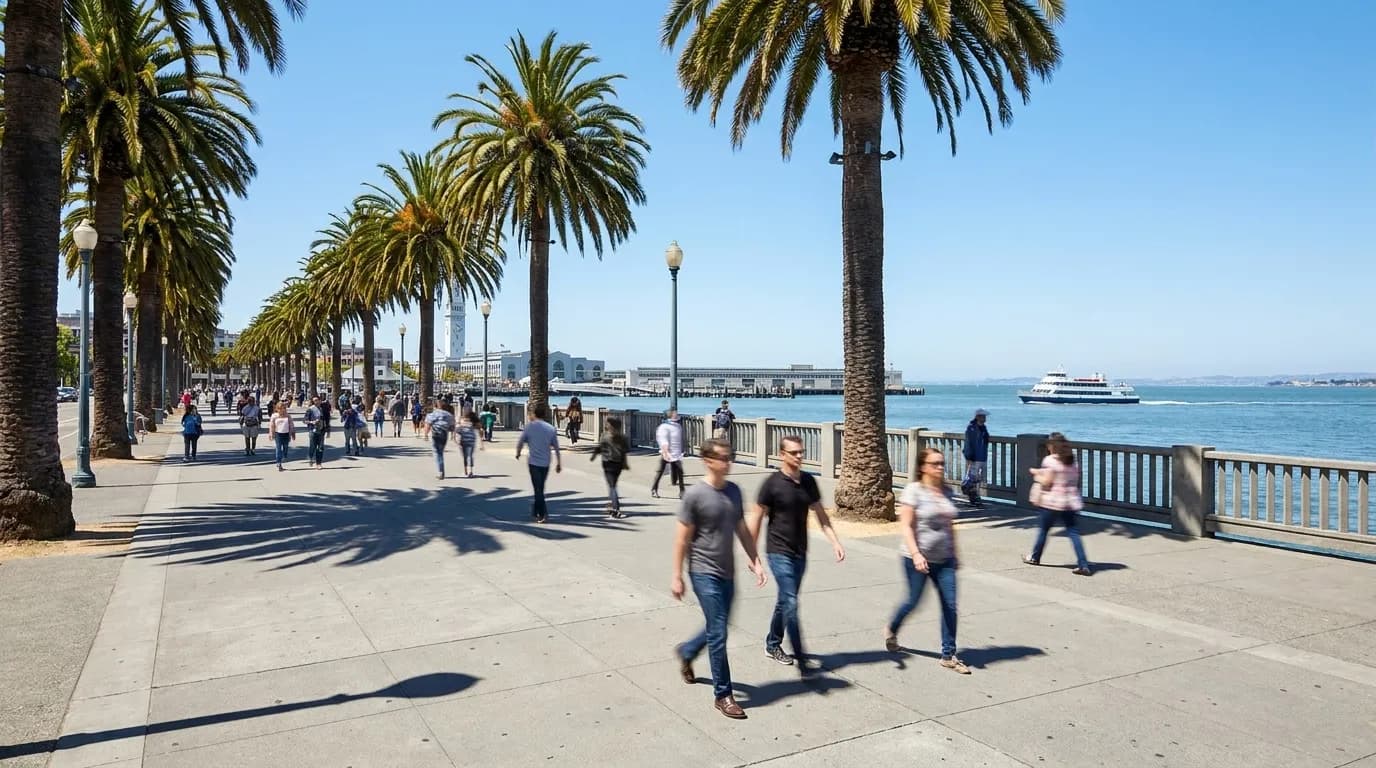
Skip the Fisherman's Wharf tourist traps that surround the museum. You don't need the overpriced clam chowder bread bowls or the sea-lion photo ops to justify the trip. The Musée Mécanique is the destination. Spend your time and quarters here, then walk east along the Embarcadero toward the Ferry Building if you want food that doesn't taste like a cruise-ship buffet.
The Playland ghosts
Playland at the Beach ran from 1928 to 1972 on the western edge of the city, where the Great Highway meets the Pacific. It was San Francisco's answer to Coney Island: roller coasters, funhouses, arcade halls, and enough neon to light up the fog. When the land became part of the Golden Gate National Recreation Area, the rides were dismantled, the buildings demolished, and the games scattered. The Musée Mécanique saved a fraction of that history, but the rest is gone. If you grew up in the Bay Area before 1972, this museum is the closest you'll get to walking back through Playland's doors.
Locals who remember the Cliff House location still grumble about the move to Fisherman's Wharf. The basement was cramped, damp, and poorly lit, but it felt like a secret. The Pier 45 space is bright and accessible, which makes it easier to see the machines but harder to feel like you've discovered something hidden. Dan Zelinsky understands the nostalgia but has no plans to move back. The Wharf location brings in more visitors, more quarters, and more funding for the restorations that keep the collection alive.
The machines themselves are the real ghosts. They're relics of an entertainment industry that relied on gears, springs, and pneumatic pumps instead of processors and pixels. They break down constantly. Dan Zelinsky and his small team spend hours each week repairing motors, replacing worn belts, and recalibrating timers. Some machines have been rebuilt so many times that almost no original parts remain. Others sit in storage, waiting for the time and money required to bring them back online. The collection you see today is a snapshot, not a static archive. It changes every time a machine fails or a restoration finishes.
Practical notes
Musée Mécanique is at Pier 45, Shed A, at the end of Taylor Street on Fisherman's Wharf. The nearest Muni stops are Jefferson & Taylor and The Embarcadero & Stockton, served by the 8, 24, 27, 39, 47, and other lines. The F Market streetcar stops a block away at Jefferson & Powell. Admission is free. Machines take quarters and half-dollars; most games cost twenty-five or fifty cents. The change machine near the entrance accepts ones, fives, tens, and twenties, but it empties fast on weekends. Bring cash. Hours are 10am to 8pm every day, including holidays, with later closings when crowds demand it. No food, no drink, no exceptions. Phone (415) 346-2000 or check [museemecanique.com](https://museemecanique.com) for updates.
Tags: #MuseeMecanique #FishermansWharf #AntiqueArcade #PennyArcade #SanFranciscoFree #PlaylandAtTheBeach #LaffingSal #CoinOpGames #GamingHistory #Pier45 #SFMuseums #VintageArcade #MechanicalGames #FreeThingsSF #ArcadeNostalgia
All trademarks are the property of their respective owners.
Ask Karpo first
Ask Karpo which machines at Musée Mécanique are working right now, when the next low-crowd window opens, or where else along the Embarcadero you can kill an hour without spending a dime. Real answers, live conditions, every time you ask.