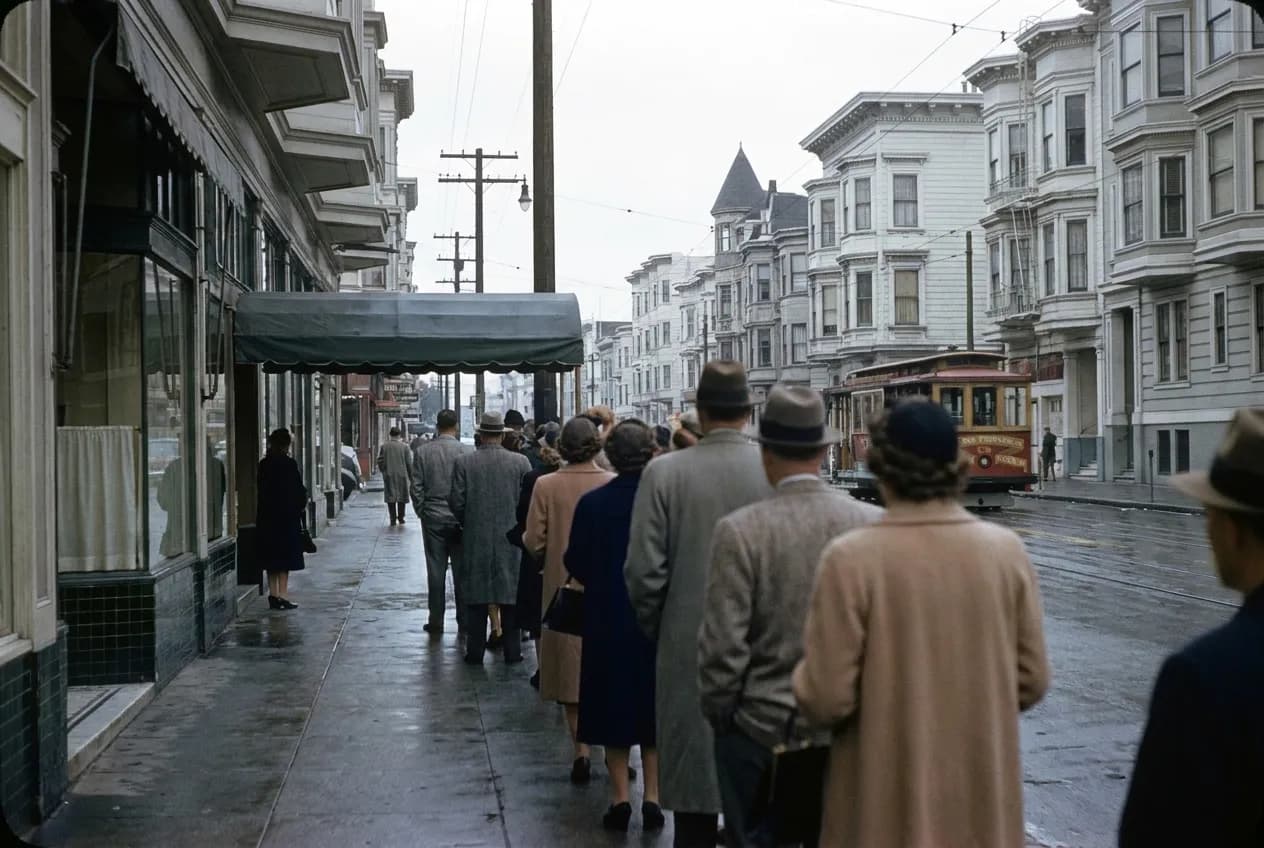
A queue is a price, and it should be assessed the way you assess any other price: against what you get and against what else the same time could buy. San Francisco has a strong queue culture — a legacy of small rooms, a no-reservations tradition and a population willing to stand — and a meaningful proportion of its most-photographed waits are not worth standing in. Telling the two apart is a learnable skill rather than a matter of taste.
A ninety-minute queue is a price and it is often the wrong one. Ask Karpo what the wait actually is near you right now before you join it.
Structural waits versus manufactured ones
A structural wait comes from arithmetic. A room with twenty-four seats, a two-hour average table and a hundred people who want to eat there will produce a queue no matter how well it is run, and there is nothing cynical about it. Small rooms, counters and kitchens that cook everything to order generate genuine waits.
A manufactured wait comes from a room that could seat more people, turn tables faster or take bookings, and has chosen not to because the queue itself is marketing. The tell is a restaurant with substantial capacity and a permanent line, or one where the wait time bears no relationship to how full the room actually is. If you can see empty tables from the pavement, you are in a manufactured queue.
The four questions to ask from the back of the line
How many seats does the room have. You can usually see this. Under about thirty and the wait is structural; over about eighty and it is not.
How long does a table take. A counter turning in twenty-five minutes clears a queue fast. A room with a two-hour tasting format does not, and a twelve-person queue at a place like that is a two-hour wait rather than a forty-minute one.
Is there a virtual waitlist. Many San Francisco restaurants now let you join from a phone before leaving home, which converts standing into walking around a neighbourhood. Not using it when it exists is simply an error.
And is this the only time it is like this. Almost every famous queue in this city is a weekend phenomenon. The same kitchen on a Tuesday at nine in the morning or two in the afternoon is frequently a twenty-minute experience with identical food.
The waits that are generally worth it
Waits are usually worth it when the thing being made cannot be got elsewhere — a specific bread, a specific sandwich, a technique nobody else in the city is doing. They are worth it when the room is genuinely tiny and the cooking is genuinely exceptional. And they are worth it when the queue is short in absolute terms, because twenty minutes is not really a wait.
They are generally not worth it when the category has good substitutes within walking distance, which in San Francisco is most categories. The city's density means there is almost always a comparable option four blocks away with no line, and the marginal quality difference is rarely worth ninety minutes.
Timing beats everything
The single most effective tactic is to go at the wrong time on purpose. Weekend brunch queues in San Francisco peak between about ten and half past twelve; before nine and after one-thirty the same restaurants are half empty. Dinner queues peak between seven and half past eight; a 5:45pm arrival at a no-reservations room usually walks straight in.
And weekdays are a different city. The famous breakfast on a Tuesday, the famous dinner on a Monday — same kitchen, same food, no line. If you are visiting for several days, put every queue restaurant on a weekday and use the weekend for things that do not have one. That single scheduling decision will save you more time than every other tactic combined.
Being honest about what the queue buys
One last thing worth saying plainly. Part of what a famous queue delivers is the experience of having been there — the photograph, the story, the box ticked — and that is a legitimate thing to want. It is just worth knowing that is what you are buying, because it changes the calculation. If the goal is a genuinely great meal, San Francisco will give you one with no wait at all in almost any neighbourhood. If the goal is the specific thing everyone is talking about, then the queue is the product and ninety minutes is the price. Both are fine. Confusing them is what produces a bad afternoon.
Practical notes
Distinguish structural waits, produced by small rooms, slow table turns and cook-to-order kitchens, from manufactured ones, where a large room keeps a permanent line and empty tables are visible from outside. Four checks from the back of the queue: seat count, under about 30 means structural and over about 80 does not; table duration, since a counter turning in 25 minutes clears far faster than a two-hour format; whether a virtual waitlist exists that you can join before leaving home; and whether the queue is a weekend-only phenomenon. Waits are usually justified when the item cannot be got elsewhere, when the room is genuinely tiny, or when the queue is under about 20 minutes. Weekend brunch queues peak 10am to 12:30pm and dinner queues 7pm to 8:30pm; arriving before 9am, after 1:30pm or at 5:45pm usually walks in. Weekdays remove the queue entirely at almost every famous San Francisco restaurant.
Tags: #RestaurantsNearMe #SanFrancisco #Queues #Waitlist #BrunchSF #NoReservations #SFEats #DiningTips #Timing #WeekdayDining #HypedRestaurants #MissionDistrict #NorthBeach #FoodCulture
All trademarks are the property of their respective owners.
Ask Karpo first
A queue is only worth it if you know how long it actually is and what it is buying. Ask Karpo what the current wait is at the place you had in mind, whether there is a virtual list you can join from here, and what comparable option four blocks away has no line at all.