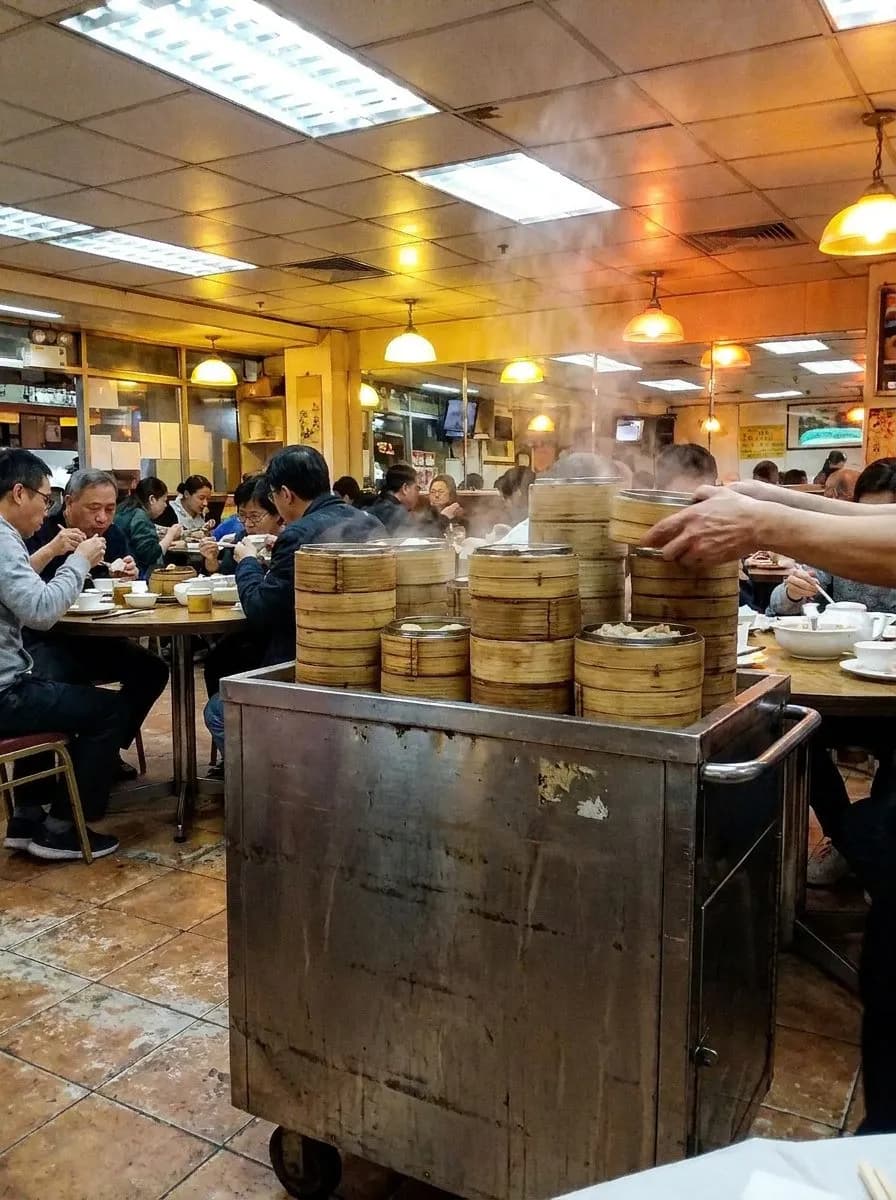
The dining rooms are nearly empty at 11:30pm. Waiters fold napkins into fans. The fluorescent chandeliers hum. Then the kitchen doors swing open and the carts begin to roll—bamboo steamers stacked three high, rice noodle rolls glistening under heat lamps, the particular clatter of porcelain on metal that signals the start of something unexpectedly civilized at an hour when most of the city has surrendered to pizza or halal. Two banquet halls in Chinatown have quietly resurrected late night dim sum service, and by midnight on Friday and Saturday, the rooms fill with an improbable mix: theater-goers still in blazers, club kids on pre-game pause, night-shift workers, insomniacs, and a cadre of regulars who've been waiting for this ritual to return.
The Return of the Rolling Cart
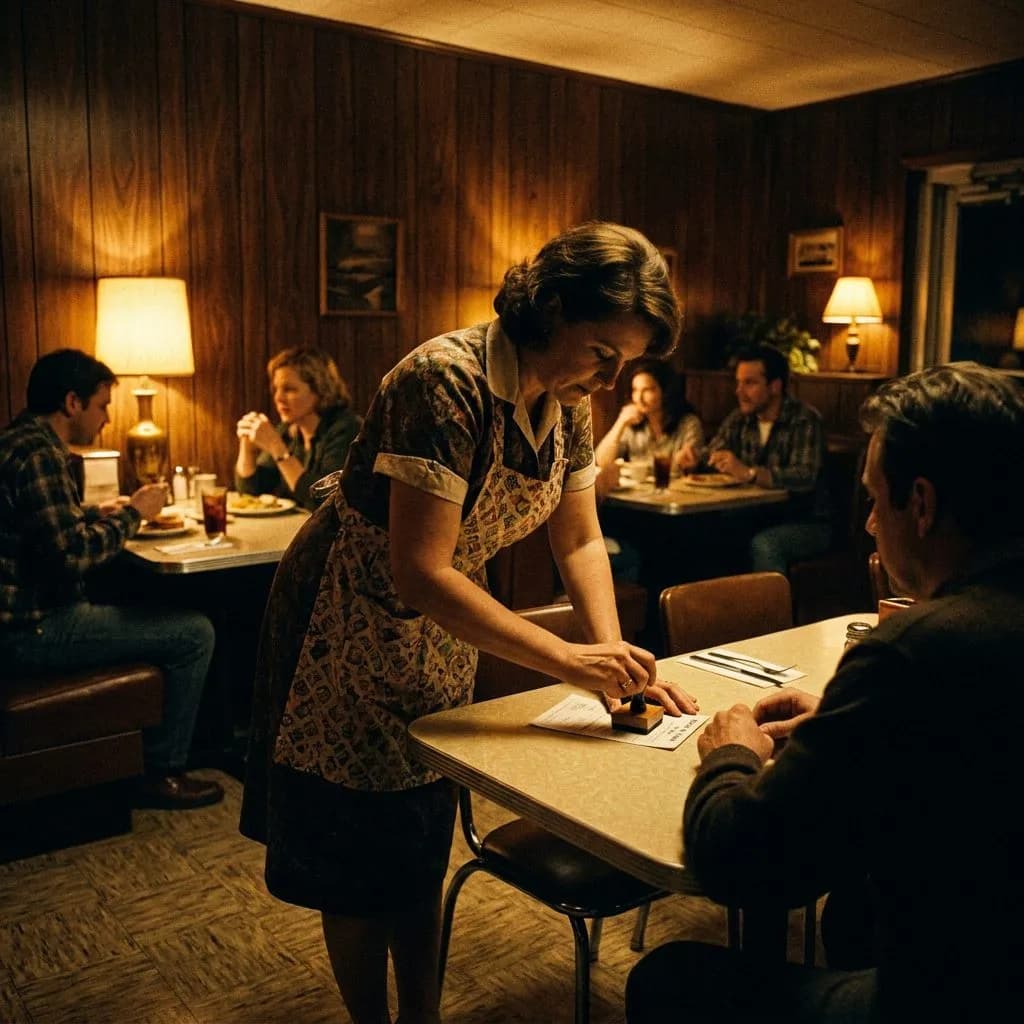
Dim sum after dark isn't new—older generations remember when Chinatown's dining rooms stayed open until three or four in the morning, feeding restaurant workers and market vendors as they clocked out. That tradition faded over the past two decades as rents climbed and staffing thinned. But this summer a pair of banquet halls decided the city was ready again. The format is defiantly analog: no tablets, no call buttons, just carts making slow laps around the room while servers mark your choices on color-coded paper cards with red ink stamps.
The night menu stamp card is a different color—yellow instead of the daytime pink—and includes three items not available before 10pm. One is a sticky rice tamale wrapped in lotus leaf, dense and laced with lap cheong. Another is a cumin-flecked turnip cake that tastes faintly of the grill. The third is a custard bun with black sesame filling, served warm enough that the center threatens to spill. These aren't radical reinventions, just small variations that reward the people who show up when most of the neighborhood has gone dark.
The Geography of First Pick
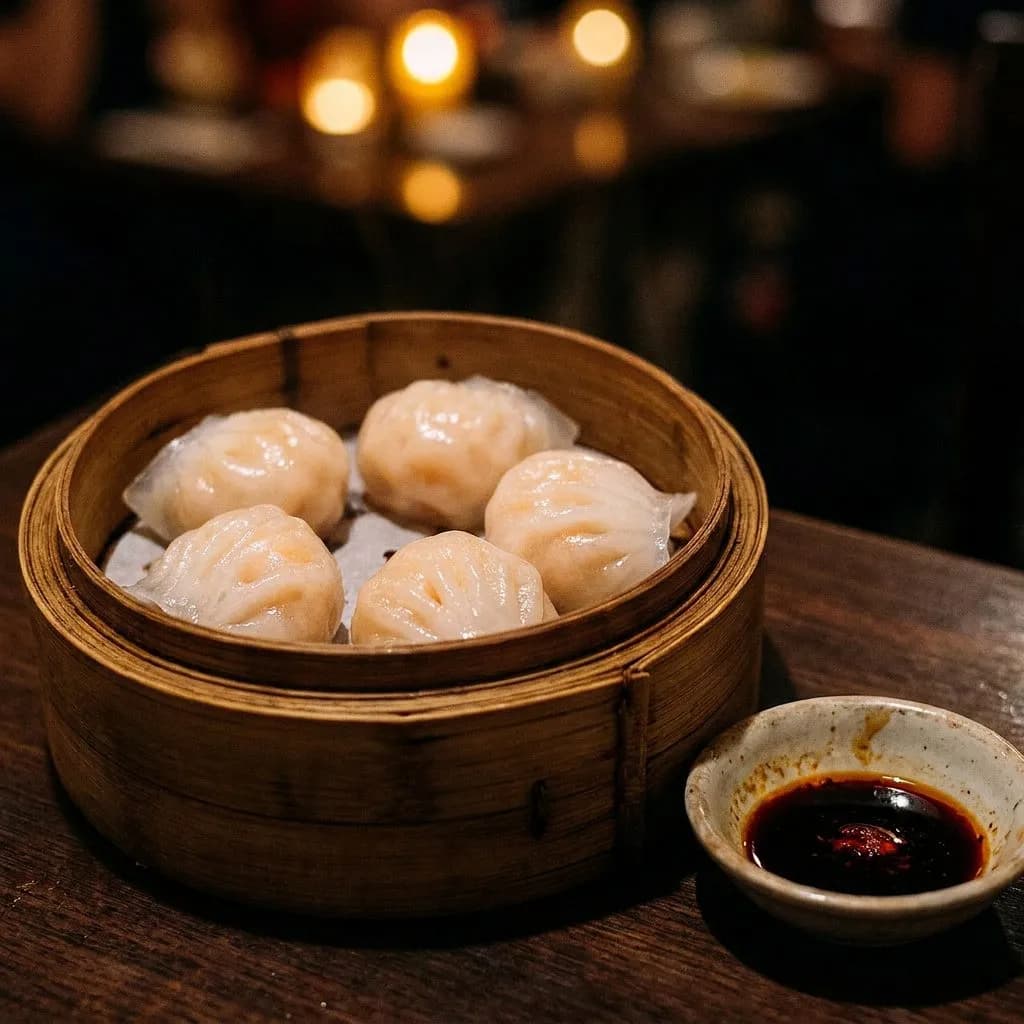
Seating strategy matters. Table 18, positioned near the kitchen door, gets first pick when the carts emerge at 11:45pm. It's a small two-top with a wobbly leg and a view of nothing in particular, but it's become a coveted perch among regulars who know that the har gow are best in the first fifteen minutes, when the pleats are still taut and the shrimp filling hasn't had time to steam itself into mush. By 12:15am, the carts have made a full circuit and the tactical advantage fades, but there's a brief window when proximity to the kitchen doors is everything.
The dining rooms themselves are relics of another era—round tables dressed in white poly-cotton, mirrored columns, red and gold trim that catches the light in a way that feels festive rather than tired. At midnight, under softer lighting than the daytime glare, the spaces take on an oddly glamorous quality. The acoustics are terrible, which means the room fills with the pleasant din of conversation and the rhythmic squeak of cart wheels on linoleum.
Wait for the Second Wave
Patience is rewarded. The shrimp rice noodle rolls only come out on the second cart rotation around 12:30am—regulars know to wait. These aren't the room-temperature rolls you sometimes encounter at brunch service; they arrive warm and slippery, draped with sweet soy and scattered with scallions and sesame. The kitchen makes them to order in small batches, which explains the delay. If you arrive at midnight expecting immediate noodle roll gratification, you'll be disappointed. Settle in with a pot of pu-erh and a plate of siu mai, and let the rhythm of the room dictate the pace.
This is part of the appeal—there's no rushing a cart-service meal. Items appear when they appear. You flag down what looks good and trust that what you missed on this lap will come around again. It's the opposite of the algorithmic efficiency that governs the rest of late-night dining in the city, and by the summer of 2026, that inefficiency has started to feel like a feature rather than a bug.
The Late-Night Crowd
The clientele shifts as the night progresses. The earlier wave—11:45pm to 12:30am—skews toward people who've just left a theater or a dinner that ended too early. They're still buttoned-up, still operating on a schedule. After 1am, the energy changes. The room fills with industry workers, DJs, bartenders, people for whom this hour is the middle of the day. There's a regular who arrives every Saturday at 1:15am, orders a pot of jasmine tea, and works her way through a rotation of char siu bao, chicken feet, and whatever's on special. She reads a paperback between bites and never looks at her phone.
By 2am, the mood is contemplative. Conversations get quieter. The carts slow down. The kitchen is beginning to wind down, and the selection narrows to whatever's left in the steamers. There's something gently melancholy about the final half-hour, the way the room empties in waves and the servers start stacking chairs at the far tables. But until the last cart rolls back through the kitchen doors at 2:30am, the ritual holds.
What to Order
Stick to the classics. Har gow, siu mai, char siu bao—these are the benchmarks, and both halls execute them cleanly. The spare ribs in black bean sauce arrive sticky and pleasantly aggressive. The taro puffs shatter on contact. The pan-fried turnip cake has a golden crust that gives way to soft, savory interior. Avoid anything that seems overly ambitious or fusion-adjacent; the kitchens aren't trying to reinvent the form, and the menu's strength lies in its straightforwardness.
Don't sleep on the congee, which appears on a separate cart around 1am. It's silky, restorative, and exactly what you want at that hour. The preserved egg and pork version is particularly good—just funky enough, with ribbons of ginger that cut through the richness. Order it alongside something fried for textural contrast, and you'll understand why this chinatown nyc tradition has endured.
Practical notes
Two banquet halls in Chinatown are reportedly located near Mott Street and East Broadway south of Canal. Nearest subway stops are Canal Street (J/Z/N/Q/R/W/6) and East Broadway (F). Street parking is scarce; plan to walk from a nearby garage or take the train. Service runs late on Friday and Saturday nights; call ahead to confirm as schedules occasionally shift. The dining rooms are on the second floor, accessible by stairs—verify accessibility accommodations directly with each venue. Bring cash; card minimums are high and occasionally enforced. Expect prices to vary depending on appetite.
Tags: #MidnightDimSum #ChinatownNYC #LateNightEats #DimSumCarts #RightOnTime #NYCFood #SummerInTheCity #AfterHours #OldSchoolService #NightOwls #DowntownDining #SteamerBaskets #WeekendRituals #Summer2026 #CityThatNeverSleeps
Sources consulted: Dim sum · Chinatown, Manhattan · NYC Chinatown · Dim Sum in NYC
All trademarks are the property of their respective owners.