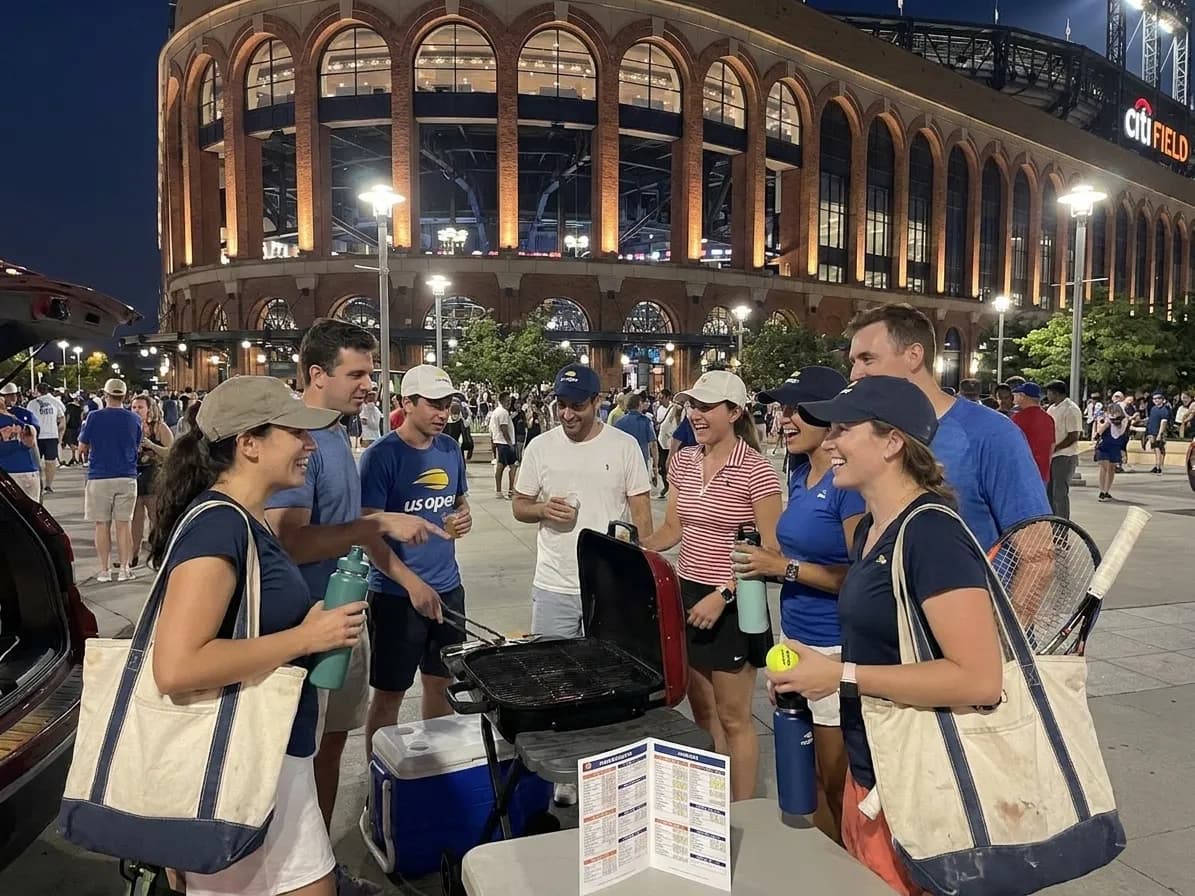
Michael Strahan built a career on reading the field, coordinating eleven players, and executing a game plan under pressure. That same energy—group texts flying, arrival times synced, everyone knowing their role—translates beautifully to getting a crew of friends or family through Queens and into the US Open on a busy day session. The 2026 tournament runs late August through early September at the USTA Billie Jean King National Tennis Center in Flushing Meadows Corona Park, and if you're planning to attend with more than two people, the logistics start to look a lot like a tailgate: Who's taking the 7 train from Manhattan? Who's driving and needs to know about parking? Who's grabbing food in Flushing first, and who's meeting at the gate? This article walks through how to coordinate your group's arrival, timing, and movement so everyone gets there ready to enjoy the tennis without the chaos of missed connections or scattered entrances.
Text Karpo with your US Open session time and Queens starting point, and we’ll turn this football-style group coordination before tennis into a practical local plan.
Why Group Coordination Matters for US Open Day Sessions
Day sessions at the US Open typically start at 11 a.m., and the grounds open an hour earlier. If you're coming with a group, the window between gates opening and first serve is tight—especially if people are arriving from different parts of the city or beyond. One person might be taking the 7 train from Times Square, another driving in from Long Island, and a third walking over from a hotel in Flushing. Without a clear rally point and timeline, you risk spending the first hour of your session hunting for each other instead of watching tennis. The official US Open visitor guide and transportation page on usopen.org lay out entry points, transit options, and prohibited items, but they don't solve the human problem of getting six people to the same gate at the same time. That's where football-style coordination—clear roles, backup plans, and a shared timeline—becomes essential.
Choosing Your Rally Point in Flushing Meadows
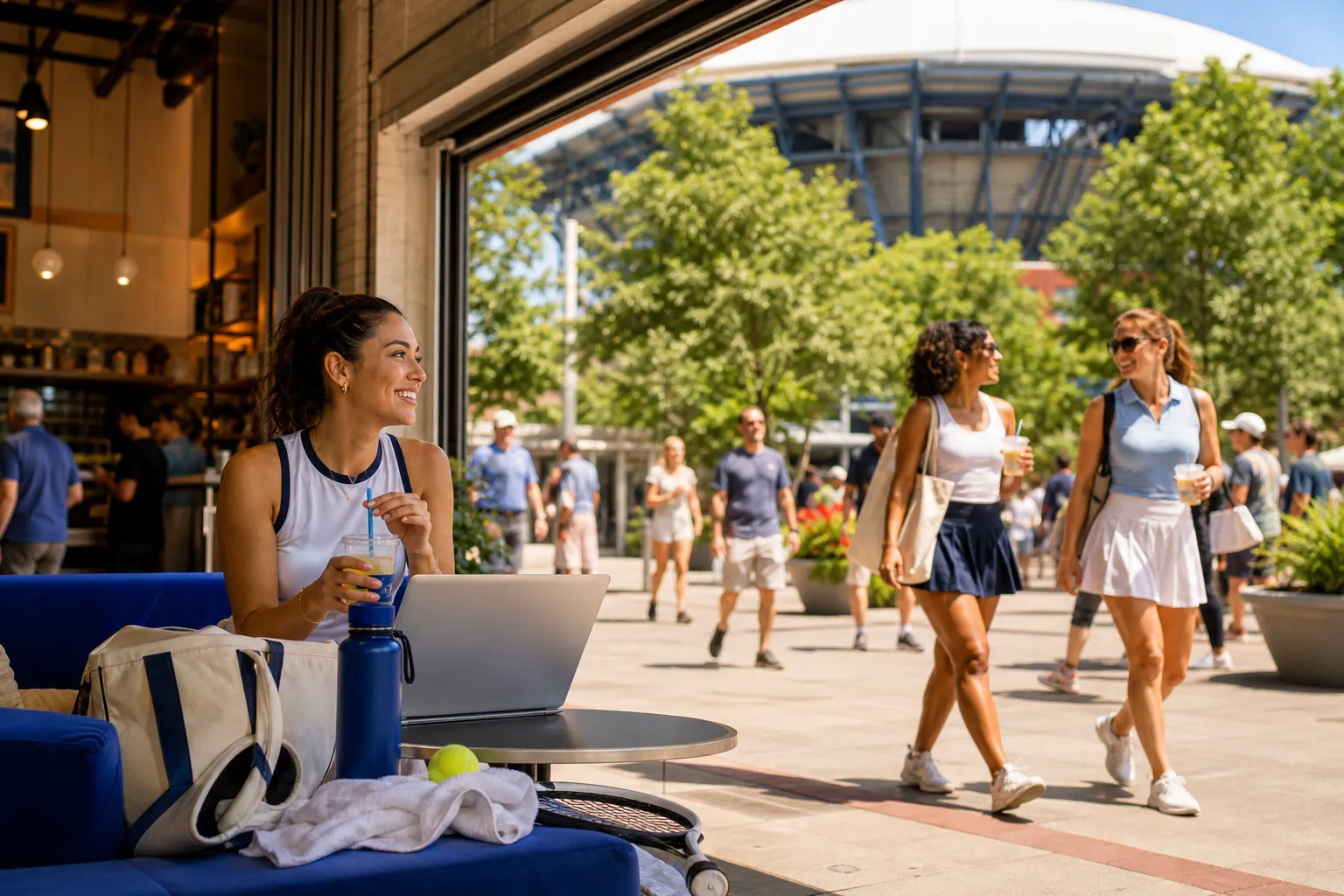
The USTA Billie Jean King National Tennis Center has multiple entry gates, and the one you use depends on how you're arriving. If your group is taking the 7 train, the Mets–Willets Point station drops you a short walk from the main entrance on the north side of the grounds. If someone is driving, parking lots are on the south and west sides, which means they'll enter from a different direction. The key is to pick one specific, easy-to-describe spot—ideally outside the security checkpoint—and make sure everyone has it saved in their phone. The MTA's official US Open transit guide confirms that the 7 train is the primary public transit route, and the walk from the platform to the gates is well-signed. For groups splitting between transit and car, consider rallying at the Unisphere in Flushing Meadows Corona Park, a short walk from both the train station and the parking areas, before heading to the gates together.
Timing the 7 Train and Building in Buffer
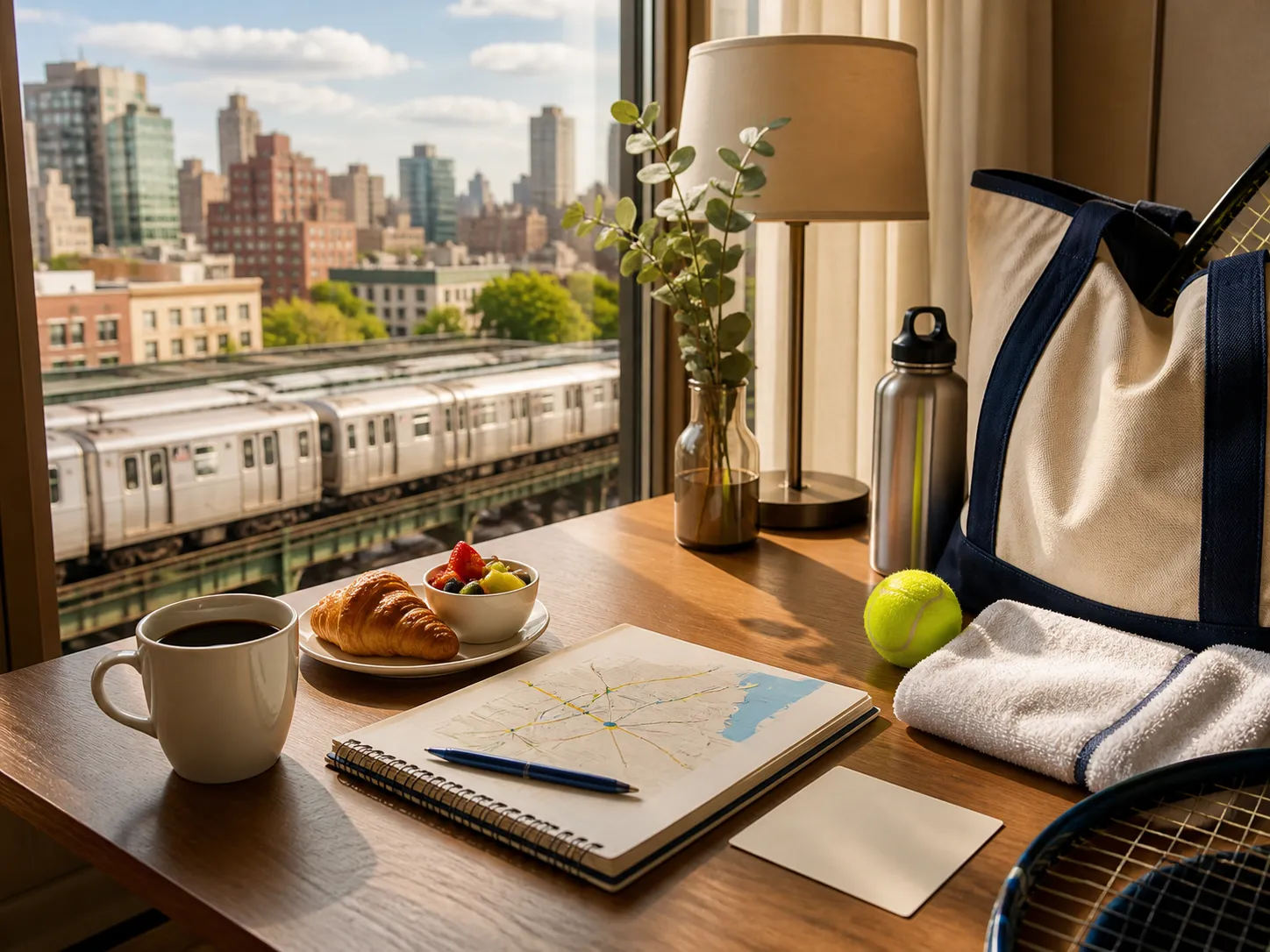
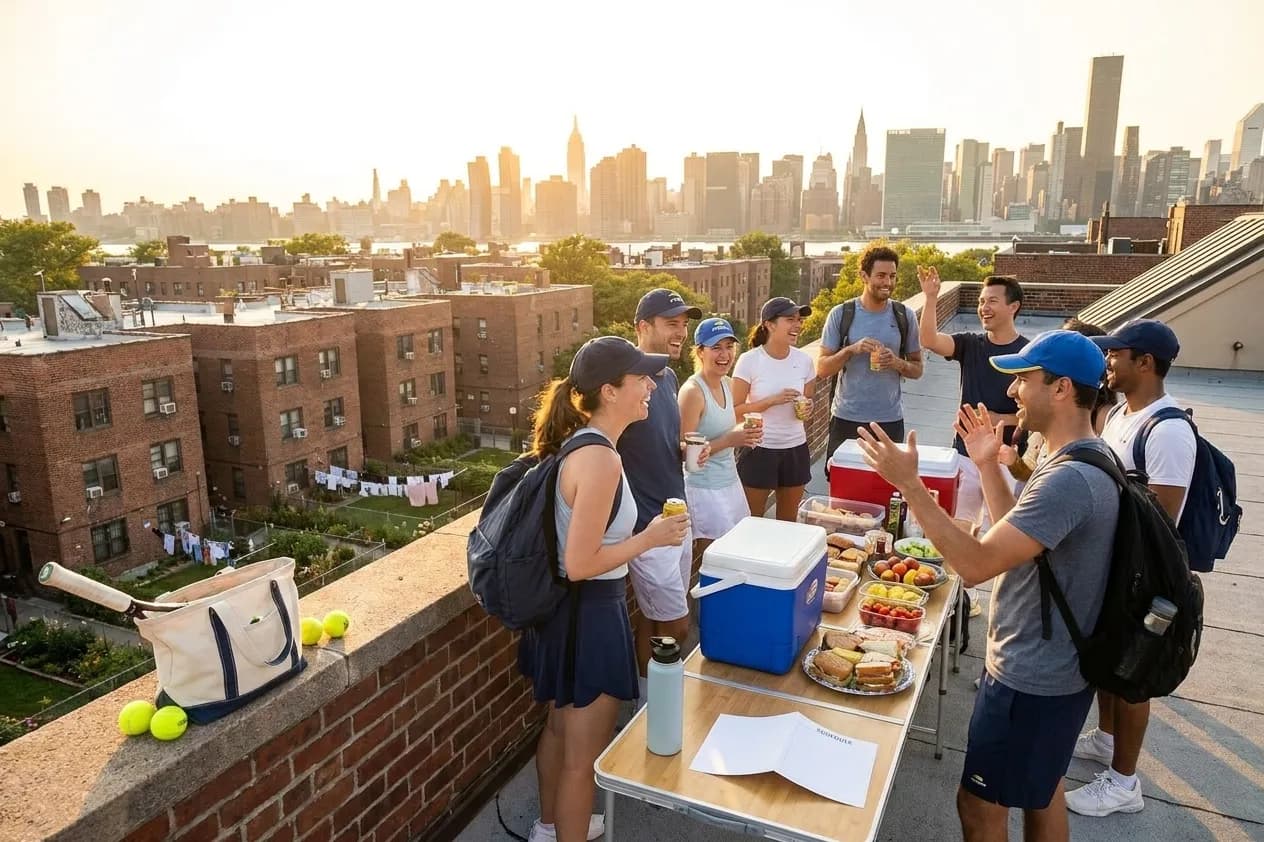
The 7 train is the backbone of US Open transit, running express and local service between Manhattan and Queens. During the tournament, the MTA typically adds extra trains and staff, but crowding is still common, especially in the hour before day sessions start. If your group is meeting at the gates at 10 a.m., plan to board the 7 train in Manhattan by 9 a.m. at the latest, and earlier if you're coming from farther west. The ride from Times Square to Mets–Willets Point takes about 30 minutes on an express train, longer on a local, and you'll want buffer time for platform waits, crowded cars, and the walk from the station. For groups coming from different neighborhoods—say, one person in Astoria, another in Long Island City—coordinate which train each person will catch and share live locations as you board. The MTA's real-time service updates and the official transit guide at new.mta.info/guides/stadiums/us-open are useful for checking status close to your travel day.
Pre-Game Fuel in Flushing or Corona
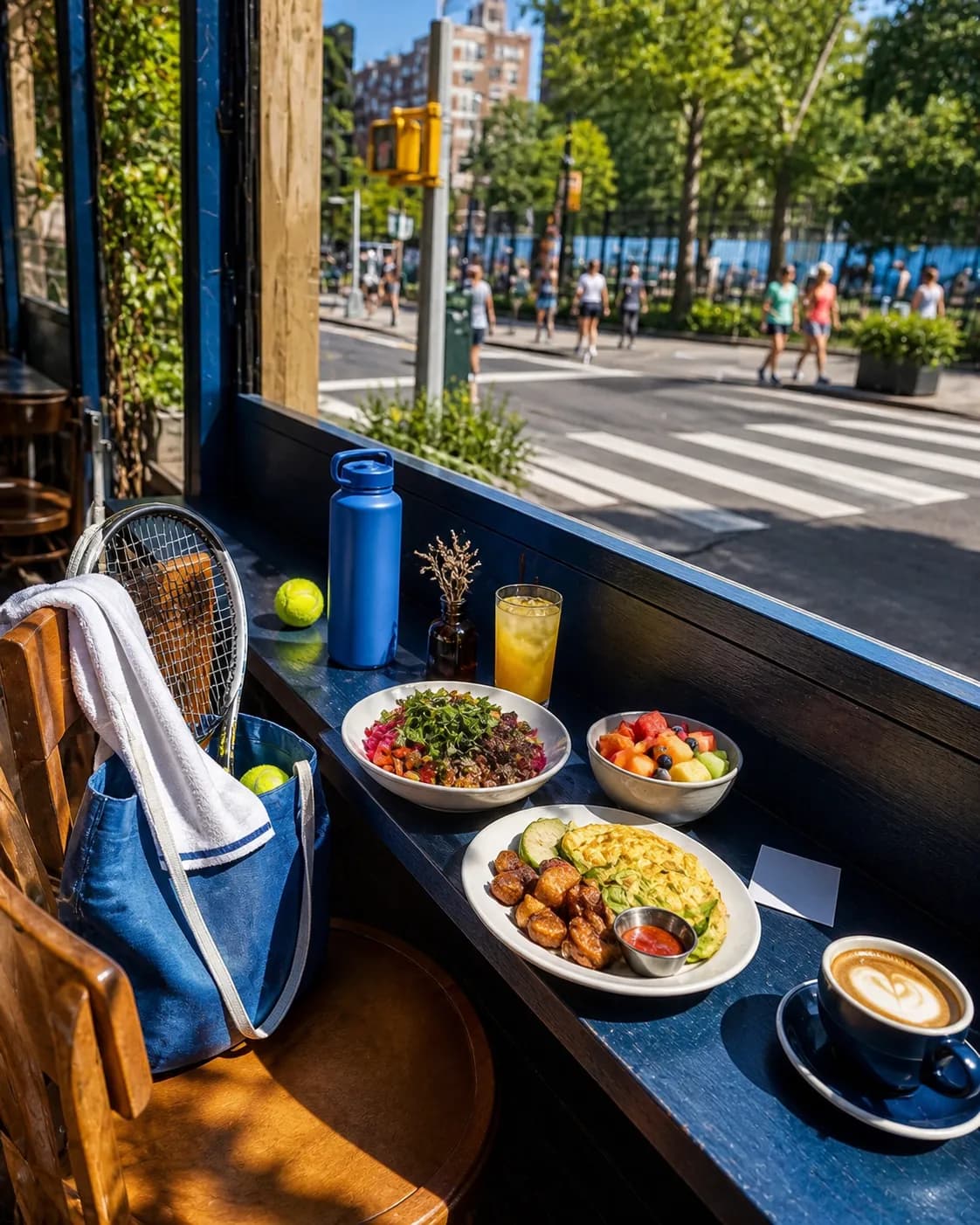
If your group wants to eat before heading into the grounds—where food is available but lines can be long—Flushing and Corona offer dense, affordable options within a short walk or one subway stop from the tennis center. Flushing's downtown, centered around Main Street and Roosevelt Avenue, is packed with bakeries, noodle shops, dumpling counters, and bubble tea spots. Corona, one stop west on the 7 train, has Latin American bakeries, taquerias, and cafes. Meeting for a quick breakfast or early lunch gives your group a natural checkpoint, a chance to use a restroom before security, and a lower-stress start than rushing straight to the gates. Check business hours and current menus online before you go, and pick a spot that's easy to find and close to the train. The walk from downtown Flushing to the tennis center is about fifteen minutes, manageable even with a full group.
What to Carry and What to Leave Behind
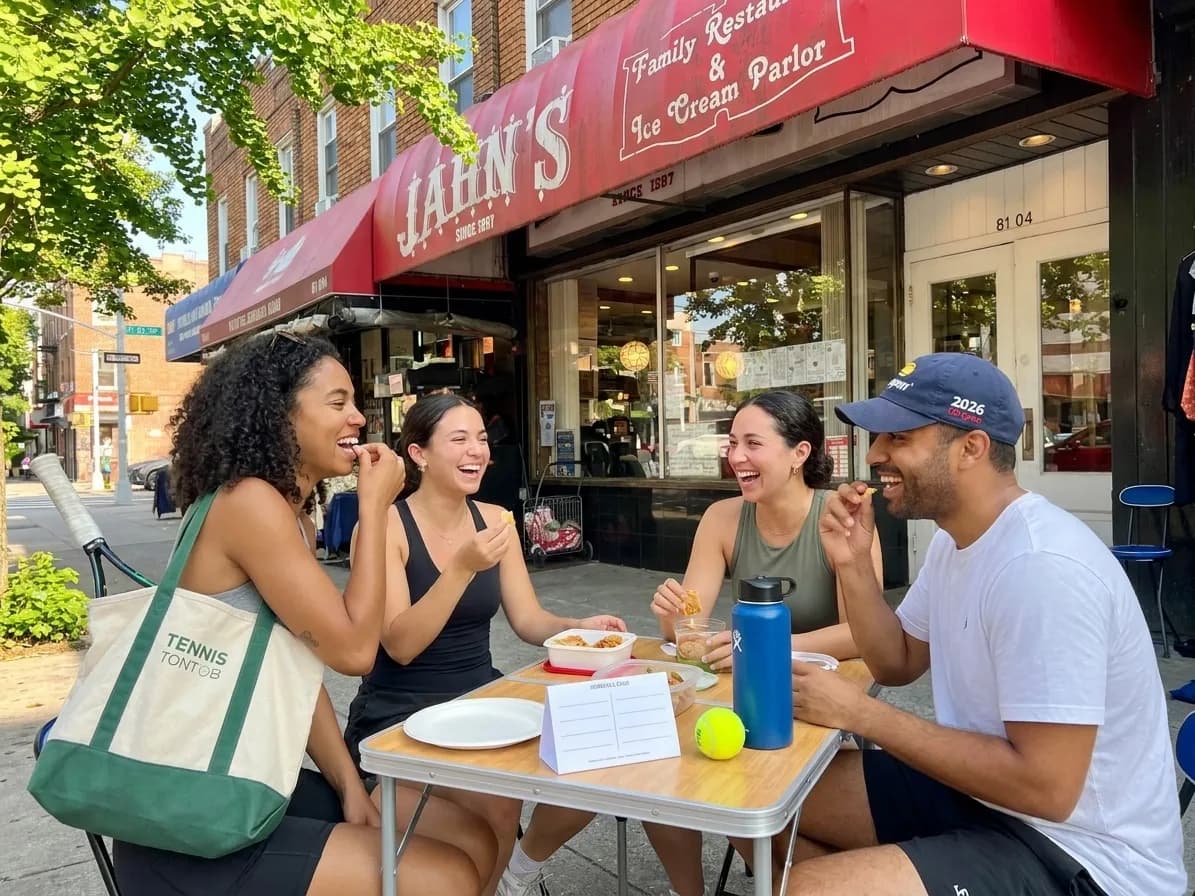
The US Open has a strict prohibited-items policy, and if even one person in your group shows up with a large bag, a cooler, or a backpack over the size limit, they'll be turned away at security and have to find a place to stash it. The official prohibited-items guide on usopen.org lists what's allowed: small bags, clear plastic bags, sunscreen, hats, and sealed water bottles are generally fine, but large backpacks, outside food beyond small snacks, and professional cameras are not. Before your group leaves home, send a quick reminder text with a link to the official list and suggest everyone pack light. If someone is carrying something questionable, have them check it at a hotel or leave it in a car before you all head to the gates. This kind of pre-check is classic football coordination—making sure everyone's in the right gear before kickoff.
Backup Plans for Stragglers and Delays
Even with the best coordination, someone will hit a delay—a missed train, a parking snafu, a last-minute phone call. Build a backup plan into your group's timeline: if someone is running more than fifteen minutes late, does the rest of the group go in and meet them at a specific court or seating area? The US Open grounds are large, and cell service can be spotty in crowded areas, so agree on a secondary meeting spot inside—near a specific food stand, the main video board, or a landmark court. The official event schedule on usopen.org shows session start times and court assignments, which helps you plan where to regroup. If your group is spread across different ticket types or seating sections, coordinate a time to meet for a break or between matches rather than trying to stay together the entire session.
Practical Notes for Group Coordination
- Share a group text thread with everyone's phone numbers, ticket confirmation numbers, and live location sharing turned on the morning of your session.
- Assign one person as the "coordinator"—the one who keeps track of timing, sends reminders, and makes the final call on rally points.
- Check the MTA's service status and the US Open's official social channels the morning of your visit for any last-minute transit or entry changes.
- If someone is driving, confirm parking lot locations and entry gates on the official US Open transportation page before they leave home.
- Bring a portable charger—group coordination burns phone battery fast, and you'll want juice for photos and updates throughout the day.
- Plan your exit strategy too: decide in advance whether you're leaving together after the last match or splitting up, and where you'll regroup if needed.
After the Session: Queens Spots to Decompress
Once your session wraps, your group might want to grab a drink, a meal, or just sit somewhere that isn't a stadium seat. Flushing Meadows Corona Park itself has open lawns, playgrounds, and the Queens Museum, which stays open into the evening and offers a quiet, air-conditioned break. If you're heading back toward Manhattan, consider stopping in Long Island City or Astoria—both one or two stops west on the 7 train or a short ride on other lines—for breweries, wine bars, and restaurants with outdoor seating. Jackson Heights, a few stops north on the 7, has a dense restaurant scene spanning South Asian, Latin American, and Southeast Asian cuisines. Confirm current hours and reservation policies online before you go, and give your group the option to split up if energy levels or dinner preferences diverge. The beauty of Queens is that there's always another neighborhood, another train line, and another spot to explore.
US Open®, USTA Billie Jean King National Tennis Center®, and all related marks are trademarks of the United States Tennis Association. MTA, New York City Subway, and related marks are trademarks of the Metropolitan Transportation Authority. This article is not affiliated with or endorsed by the USTA, MTA, NYC Parks, or any business mentioned.
Ask Karpo First
Tags: #USOpen2026 #Queens #FlushingMeadows #KarpoFinds #Karpo #michaelstrahan #NewYorkLocal #TennisTravel #NYCLocalLife #TennisTravel
Sources consulted: usopen.org — Official event schedule · usopen.org — Official visitor A-Z guide · usopen.org — Official transportation directions · usopen.org — Official prohibited-items guide · MTA — Official US Open transit guide · NYC Parks — Flushing Meadows Corona Park · New York Mets — Citi Field · NYC Tourism — Queens
All trademarks are the property of their respective owners.
Ask Karpo first
Want to know what is actually open, how to time the trip, and where to pause around Queens? Ask Karpo for the latest public US Open context, a respectful visitor plan, and a live route around Flushing Meadows before you head out.