If you search for waterfalls near me in Miami, the honest answer is that there are none, and there is no version of the search that produces one. South Florida sits on a limestone platform with almost no relief — the highest natural point in Miami-Dade County is a few feet above sea level, and a waterfall requires a drop. This is not a gap in the map. It is geology, and once you accept it you can go and find the thing Florida actually has, which is considerably rarer than a waterfall.
Stop searching for the wrong thing. Ask Karpo which spring is realistically reachable in the time you have and whether it needs a booking today.
Why the ground here cannot produce one
The Florida peninsula is a carbonate platform — layers of limestone laid down as marine sediment. Water does not run off it the way it runs off the granite and shale of the Appalachians; it sinks through it. That produces the opposite landform from a waterfall: instead of water falling out of high ground, water emerges from underground under pressure. Florida has one of the largest concentrations of freshwater springs anywhere on Earth, with hundreds of them across the state, and dozens classed as first-magnitude, meaning they discharge enormous volumes continuously.
The same limestone produces the other South Florida landform worth knowing — the sinkhole. Where the roof of a cave system collapses you get a deep, shaded, steep-sided hole with its own microclimate, which is as close as this part of the state gets to a gorge.
The constant that makes springs better than waterfalls
Florida springs run at close to a constant temperature year-round — around 72 degrees Fahrenheit, roughly 22 Celsius — because the water comes from the aquifer rather than from the surface. That single fact is why they beat a waterfall as a destination. A waterfall depends on recent rain and can disappoint completely. A spring is the same on every day of every year: same temperature, same clarity, same flow. In August it is refreshingly cold; in January it is warmer than the air.
The clarity follows from the same mechanism. Water filtered through limestone emerges essentially free of suspended sediment, which is why the photographs look filtered and are not.
The springs actually worth the drive from Miami
None of these is close, and it is worth saying plainly: Miami is at the wrong end of the state for springs. The spring belt runs across north-central Florida, which means four to six hours in the car. These are weekend trips, not day trips, and planning them as day trips is the main way people ruin them.
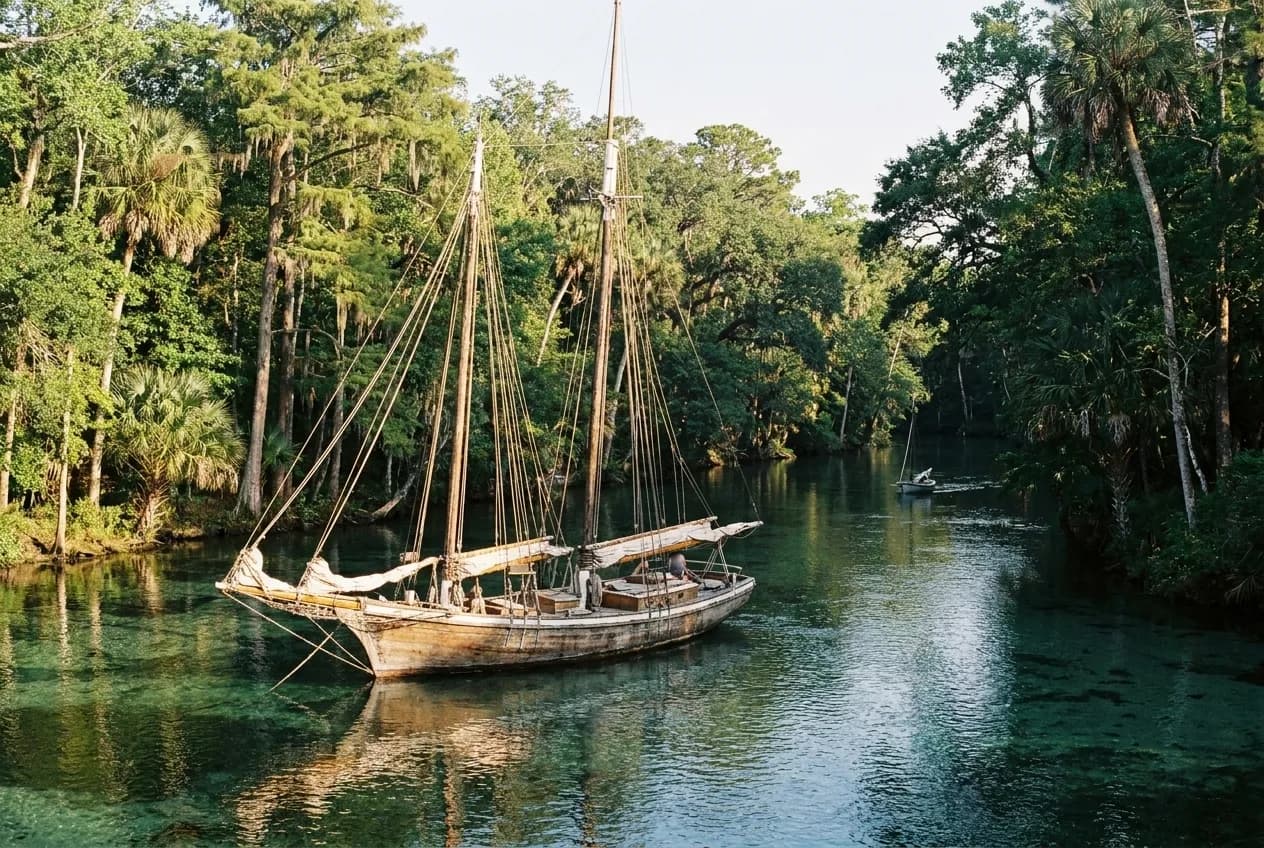
Rainbow Springs, near Dunnellon, is the most immediately gratifying — a first-magnitude spring feeding a startlingly clear river, with the added oddity that the state park contains man-made waterfalls built decades ago when the site was a private tourist garden. If you specifically want to see falling water in Florida, that is where you go, and the fact that they are artificial is part of the charm.
Ichetucknee Springs is the tubing one: you float a spring-fed river for a few hours through shaded forest, and it is one of the best cheap days in the state. It operates on a capacity system in the busy season with limited entries, so it is the one that genuinely requires planning ahead rather than turning up.
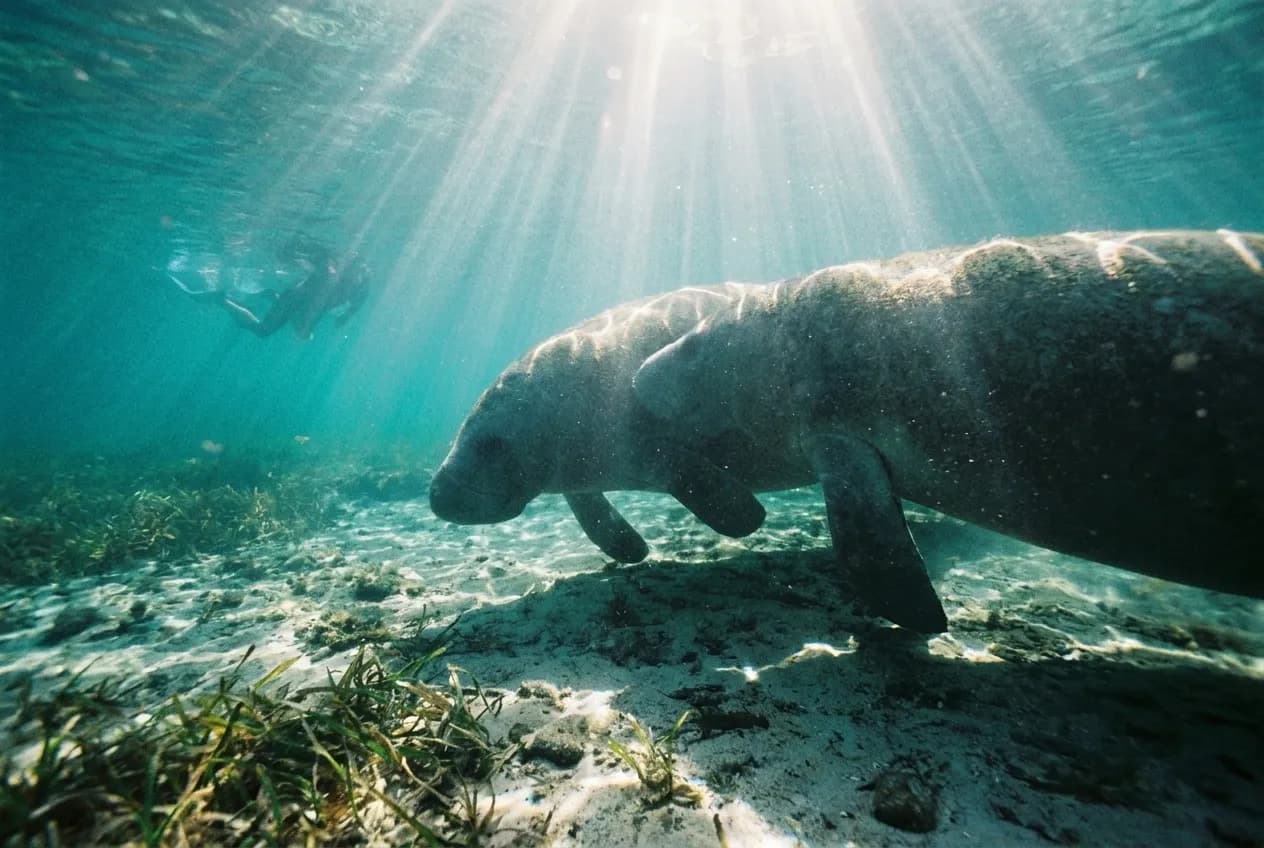
Blue Spring State Park, near Orange City and much closer to Miami than the others, is the manatee one. In cold months, when the river drops below the spring's constant temperature, hundreds of manatees move into the spring run to keep warm, and the park closes the water to swimming while they are there. That inverts the usual advice: winter is when you go to look, summer is when you go to swim.
Three Sisters Springs at Crystal River is the other manatee destination and the one where in-water encounters are permitted under strict rules. Those rules exist for good reason and are enforced; go through a licensed operator rather than improvising.
The nearest genuine waterfall, for completeness
Florida's best-known natural waterfall is at Falling Waters State Park in the panhandle, where a stream drops roughly seventy feet into a deep cylindrical sinkhole and disappears underground. It is a striking thing and it is about as far from Miami as Miami is from Atlanta, which puts it firmly outside the scope of a weekend from here. It is worth knowing it exists mainly so you can stop wondering.
Devil's Millhopper near Gainesville is the more interesting version of the same geology — a large sinkhole with small streams trickling down its walls into a habitat that is measurably cooler than the surrounding forest. It is not a waterfall. It is a hole in Florida with a rainforest at the bottom, which is stranger.
What to do with a Miami weekend instead
If the real desire is water and nature rather than specifically falling water, everything you want is within an hour. The Everglades is a slow-water ecosystem thirty minutes west and is unlike anywhere else on the continent. Biscayne National Park is ninety-five per cent underwater and reachable from Homestead. The mangrove and hammock parks around Matheson and Virginia Key give you shade, water and quiet without a highway. Save the springs for a proper two-day trip north, and do the near thing well in the meantime.
Tags: #WaterfallsNearMe #FloridaSprings #RainbowSprings #Ichetucknee #BlueSpring #ThreeSisters #Manatees #Everglades #DayTripsFromMiami #HiddenGems #Miami #Florida #SpringWater #WeekendTrip
All trademarks are the property of their respective owners.
Ask Karpo first
Working out whether the springs fit the weekend you actually have? Ask Karpo how long each drive really takes from Miami, which parks are capacity-limited right now, and what is worth doing within an hour if you only have a day.