 Wynwood Domino Set Gift Browsing Walk: Acrylic Designs
Hidden Gems & Odd Finds
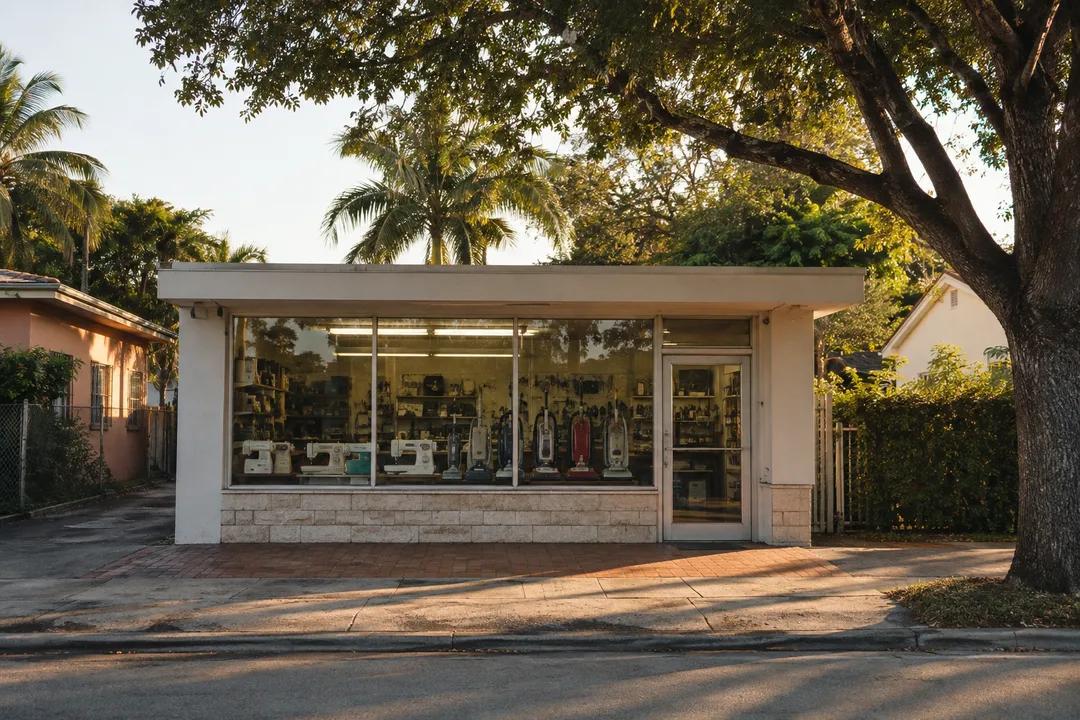
Miller Heights Vacuum Repair Shop in Miami: Since 1972
Miller Heights Vacuum & Sewing Repair at 9334 SW 56th Street pairs vacuum service with sewing know-how. Saturday hours suit a careful model check.
Miller Heights Vacuum & Sewing Repair has the kind of name that makes a vacuum repair shop search feel less anonymous. The shop is at 9334 SW 56th Street, Miami, FL 33165. Local listings describe it as serving Miami since 1972, with Monday through Friday hours of 9:00 am to 5:30 pm and Saturday hours of 9:00 am to 1:00 pm. It is closed Sunday. The sewing side is not a footnote: it signals a counter used to dealing with mechanisms, consumable parts, and older equipment.
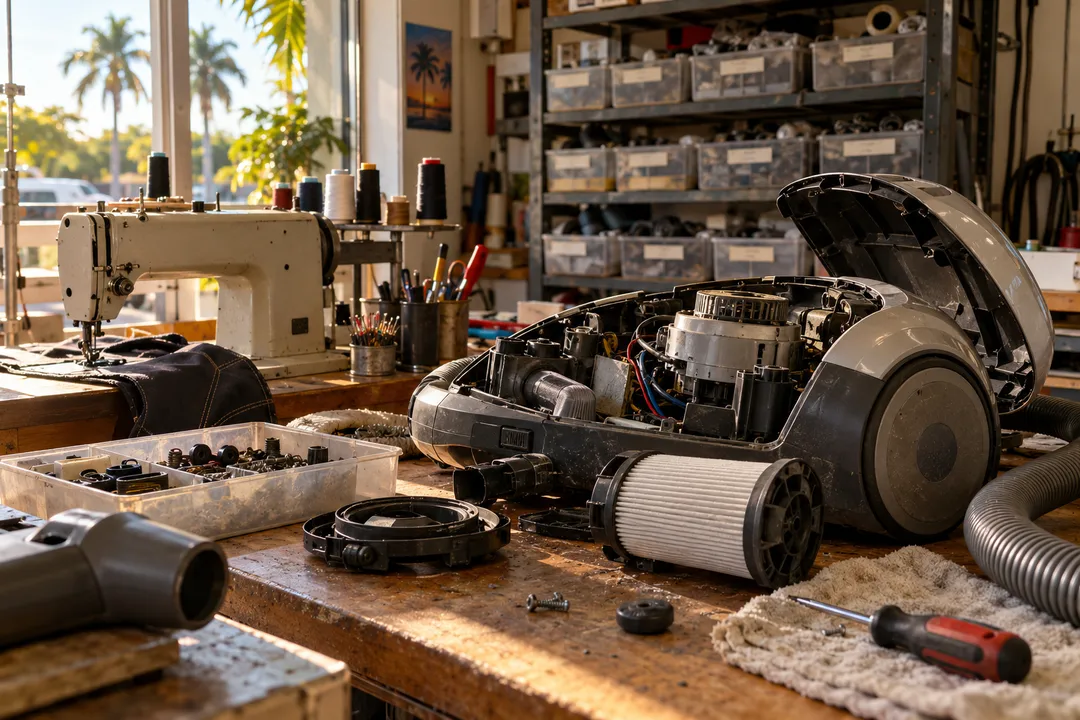
What the 1972 story tells you
A long-running repair shop earns its place in a neighborhood by seeing the same failure in several forms. A vacuum may arrive with a torn belt, a jammed brush roll, a pinched cord, or a filter that looks clean but has stopped passing air. The owner does not need your entire repair theory. The useful handoff is the model, the symptom, and what changed immediately before the problem appeared.
Before leaving home, run a simple visual inventory. Photograph the model plate, floor head, hose connection, and any warning light. If the machine is upright, note whether the brush roll spins when the handle is lowered. If it is a canister, bring the wand and floor tool when the issue happens only with the attachment installed. That small amount of context can save a second trip for the one piece that makes the fault visible.
The sewing connection changes the way you should think about replacement parts. A machine that handles fabric and thread already depends on exact fit, tension, and maintenance, and a vacuum has its own versions of those problems. A belt with the wrong tension can turn a repair into a new noise. A bag that fits the opening but does not seal can reduce suction. Bring the old item instead of relying on a generic product photo.
Prepare a vacuum for a real diagnosis
Skip the temptation to clean every part before the visit. A little dust can show where an air leak or brush obstruction is occurring, while a freshly scrubbed attachment may hide the evidence. Empty the machine, remove loose debris, and keep the failed component in a clear bag. The goal is not to present a showroom object. It is to preserve the clues that explain why it stopped working.
Miller Heights is a better destination for a focused consultation than for a casual browse. Arrive with a short list: the machine model, the exact sound or smell, whether it still powers on, and the last part you replaced. If the problem began after a belt, filter, bag, or hose change, say so. A repair specialist can work faster when the timeline is explicit and the replacement history is not hidden.
The weekday schedule gives you a little more room than the Saturday window. A Monday or Tuesday visit can be useful when the vacuum is central to a household routine and you want time to make a follow-up trip. Saturday from 9:00 am to 1:00 pm works for a part, a small intake, or a quick question. The shop is closed Sunday, so do not save a broken-machine errand for the end of the weekend.
Keep the southwest Miami errand short
SW 56th Street makes this a southwest Miami stop with a simple route: repair counter first, then a short nearby food or coffee break, then home. Do not build a long walk around a machine that may be heavier than it looked in the closet. If the shop keeps the vacuum, the neighborhood becomes easier to explore. If it returns the unit, keep the rest of the route light and put the machine straight into the car.
Carrying technique matters more than people expect. A canister vacuum should ride with the hose and floor head secured, not dangling from the handle. An upright should be wrapped so the cord cannot scrape the door or catch on a cart. If rain starts, use a plastic outer layer but leave ventilation openings alone. Water trapped around a motor or filter turns a repair errand into a second problem.
Public listings do not provide a universal repair fee for every machine, so this guide does not make up a diagnostic price. Ask whether the shop prefers the full vacuum, the failed part, or a photograph first. That question determines the size of the errand and keeps you from lifting a heavy appliance unnecessarily.
A useful Plan B is to start with the accessory that failed. If the brush roll is jammed, bring the head and belt. If the hose has a split, bring the hose and connector. If the technician says the motor or wiring must be inspected, then make a second trip with the full machine. For a small apartment, that sequence is easier than storing a bulky vacuum in the car all afternoon.
The people who fit this shop best are owners of older machines, sewing households that value a local technical counter, and anyone who wants a compatibility answer before ordering another part. It is not the right place to demand a same-minute solution for a machine that needs to be opened. The honest benefit is a more informed decision: repair the unit, replace one part, or retire it with fewer guesses.
A short walk after the visit can be pleasant, but keep your route tied to the machine's status. If the intake is complete and the unit stays, you can take a longer neighborhood break. If the vacuum comes back with you, choose a nearby stop and avoid carrying it through several shops. The best route is not the most scenic one. It is the one that does not turn the repair into an awkward workout.
Practical notes: Miller Heights Vacuum & Sewing Repair is at 9334 SW 56th Street, Miami, FL 33165. Published hours are Monday through Friday, 9:00 am to 5:30 pm, Saturday 9:00 am to 1:00 pm, and Sunday closed. Local listings date the business to 1972. Bring the model label and failed component, and call before transporting a full unit for a complicated fault.
The best reason to use Miller Heights is the combination of history and mechanical context. A vacuum is not just a plastic shell. It is a system of seals, belts, airflow, wiring, and attachments. A shop that also handles sewing machines speaks that language of fit and maintenance. Start with evidence, keep the Saturday plan modest, and let the counter tell you whether the next step is a part, a drop-off, or no repair at all.
Ask Karpo for more information.
Keep reading
- Wynwood Domino Set Gift Browsing Walk: Acrylic Designs
 Coral Gables Domino Set Gift Browsing Walk: Wood Sets
 Little Havana Domino Set Gift Browsing Walk: Clay Tiles