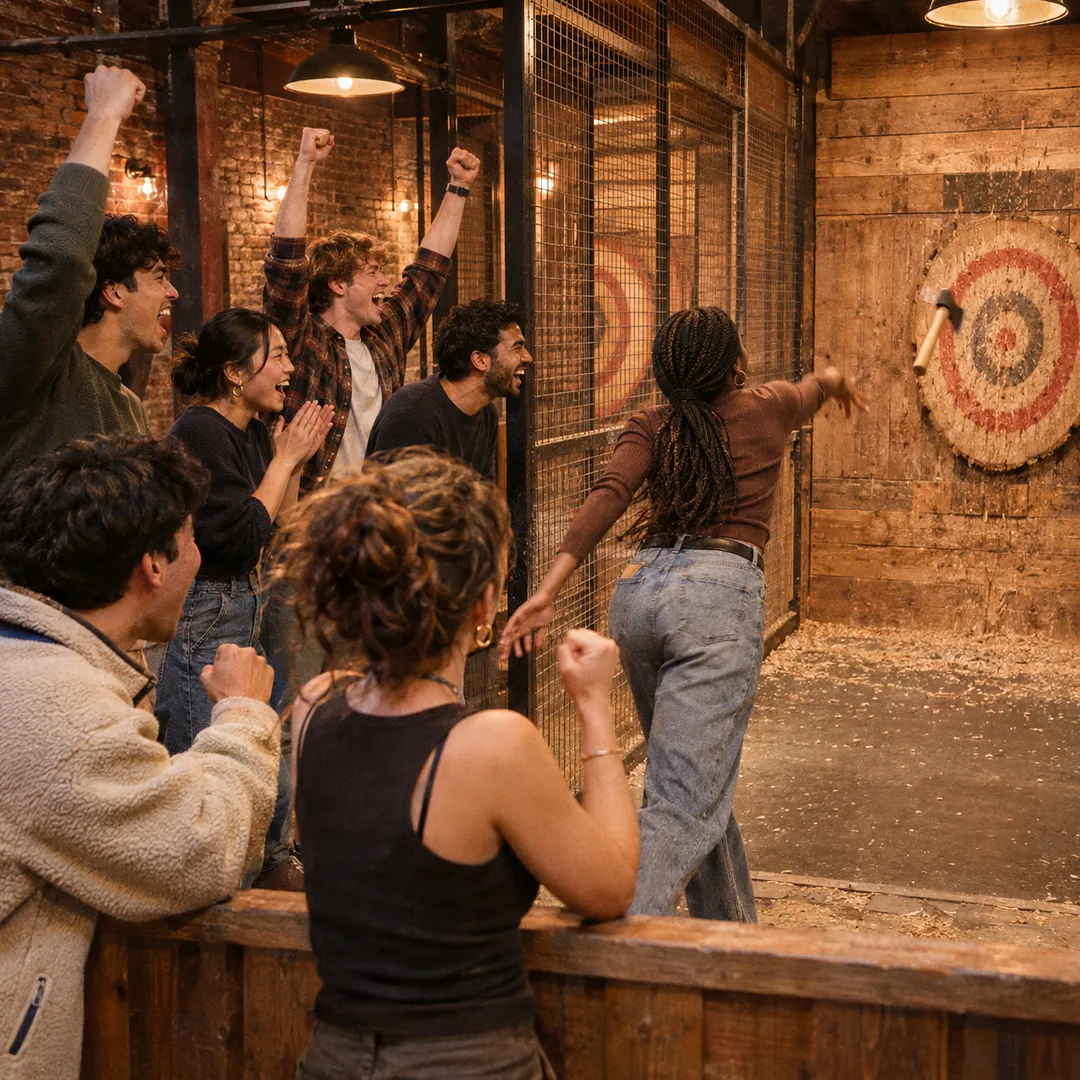
 Little Haiti Axe Throwing Group Night Picker, Soccer Edition
Sports Social

Miami Tennis Court Time: Fit A Session Into Your Day
Find a Miami tennis court session that fits your available time by working backward from arrival, warm-up, playing, changing, and the next commitment.
A Miami tennis session needs to fit inside the rest of the day, including the steps players tend to forget. Give Karpo the hard departure time, starting area, travel method and desired court block. It can work backward to a plan you can inspect before booking.
Give the day a real boundary
A bounded session A Miami tennis court search is useful only when the available block is honest. Share the date, earliest departure, latest arrival and the time you must leave. Mention how you travel and whether you need a change of clothes or equipment stop. Karpo can organise options around the block and show what must fit. The final booking still happens through the operator, after you decide the session length and location are realistic.
Write the endpoint A tennis outing includes more than court minutes. Allow for reaching the entrance, checking in if required, changing shoes, warming up and leaving the site. Those are your planning assumptions, not venue rules. Ask Karpo to keep them visible rather than compressing every step into a single start and end time. If the remaining playing block feels rushed, the answer is to change the plan, not to pretend the buffer does not exist.
Rank the constraints

The forgotten minutes Some players need a certain surface, others need lighting, a rental racket or a lesson. Decide which requirements are essential for this day. A short session may justify a simpler format, while a learning session needs more preparation. Once the hard constraints are clear, Karpo can compare areas and products without treating every preference as equally important. That produces fewer, more usable choices than a long unranked list.
Use a backward prompt: Use: “Find a Miami tennis court for a limited afternoon window. Work backward from my departure deadline, include a warm-up buffer, and show which options fit a relaxed singles session.” Add your starting area and travel method. Ask for the tradeoff when no option fits perfectly. A transparent compromise is more useful than an exact-looking schedule based on unconfirmed future conditions.
Check the booking product
The selected product An operator may list lessons, court hire, drills and equipment separately. Keep the product type beside each suggestion. If access depends on membership, guest status or a particular programme, that belongs in the comparison. Photos and generic facility copy do not establish eligibility. Read the terms for the chosen day and session yourself before paying, especially when the whole outing depends on a narrow time block.
After the shortlist, After choosing, let one person complete the operator’s reservation and send the record to anyone joining. Include the location, session, entry instructions and any preparation detail supplied by the operator. Karpo can assemble the links and explain the schedule, but it does not hold a court or confirm payment. Treat the operator’s receipt as the source of truth and keep your personal travel plan alongside it.
Protect the next commitment
If the block shrinks, If the comparison shows too little slack, preserve the departure deadline. Shorten the hit, choose a closer area, change the date or remove an optional errand. Ask for a revised shortlist using that decision. A last-minute rush can ruin a good session, and a recommendation should make that risk visible. The best plan is the one you can follow without relying on perfect connections or an unplanned shortcut.
When the session ends, After the game, note actual preparation and travel effort, then turn those observations into preferences. You may discover that a midday window works better than an evening one, or that a shorter court block leaves more room for conversation. Use those lessons in future requests. Keep any café stop or walk after tennis separate so the core activity remains possible when the day becomes busy.
Practical Notes
State the Miami date, starting area, transport, playing format and hard departure endpoint. Write the preparation buffer and essential court needs before any optional add-on. Ask the tool to show timing, access and route compromises, then complete the selected operator reservation. Keep the session record, arrival plan and shortened-day alternative together so the rest of the schedule stays credible. For a narrow time block, state the hard departure deadline first and work backward. Separate travel, entrance, changing, warm-up and playing time so the proposed session has honest breathing room. Ask the shortlist to flag any option that only works if every connection is perfect. After selecting a product, use the operator’s booking route and send the confirmation to anyone joining. If the window is too small, shorten the session or move the day instead of erasing the buffer. Keep a record of real preparation time and use it next time. A repeatable schedule is more valuable than a nominally longer game that makes the rest of the day stressful. You can make a short block feel calmer by writing the non-negotiable endpoint first. Say when you must leave the area, when you must be home or at the next appointment, and how much time you need to change afterward. Ask the shortlist to show the remaining play time after those personal buffers. Keep operator hours and product rules separate from your own travel assumptions. When you choose, inspect the exact reservation page and pass the confirmation to your playing partner. If there is no comfortable fit, move the day or use a shorter format rather than trimming every practical step. Keep a note of what really happened: the final walk, the entrance search, the warm-up and the departure. The next request can use those observations to make a realistic block quickly. A time tool earns trust by showing where the squeeze is and by giving you a graceful way to change the plan before the day becomes rushed. A short schedule also needs a clear decision point. Choose when you will stop searching and either book, shorten the hit or move the outing. Tell the other player that rule before comparing. This avoids a long chain of increasingly optimistic alternatives. If the operator changes the product you intended to use, return to the hard endpoint and rebuild the block from there.
When the Miami time block wins, capture the endpoint, preparation allowance, selected product and person responsible for the operator handoff.
Keep the handoff obvious
If the Miami block becomes tight, change the day or playing length while keeping the hard departure time visible.
Karpo explains the Miami timing tradeoffs, while the operator supplies the final reservation conditions and the player protects the endpoint.
Practical Notes
Keep the Miami endpoint visible while the selected operator defines the exact session and reservation conditions.
Ask Karpo for more information.
Keep reading
- Little Haiti Axe Throwing Group Night Picker, Soccer Edition
 Midtown Miami Axe Throwing Group Night Picker for Nurses
 Downtown Miami Axe Throwing Group Night Picker for Visitors