 Little Haiti Axe Throwing Group Night Picker, Soccer Edition
Sports Social

Miami Tennis Court Doubles: Coordinate Four Players
Find a Miami tennis court for doubles by combining four schedules, travel methods, playing needs, and one booking handoff before anyone reserves.
Doubles becomes easier when four players agree on the constraints before debating a court. Share broad starting areas, arrival windows, travel methods and playing needs with Karpo. It can arrange the overlap and make the remaining compromise visible before one person completes the operator reservation.
Collect four schedules before naming a court
Four-player doubles A Miami tennis court doubles plan can fail when one person’s availability is hidden until the end. Start with four broad starting areas, the date, arrival windows and the time each player must leave. Add how everyone travels and who can bring balls or rackets. Karpo can organise overlapping choices around the group’s actual constraints, then the selected operator handles the reservation. Keep home addresses private by using neighbourhoods or landmarks.
Every player needs Four people may value different outcomes: the shortest longest trip, a central meeting area, a transit-friendly option or the least coordination. Choose the priority before comparing. Tell Karpo to explain which player benefits and which compromise remains for each suggestion. Naming the rule keeps the chat focused. It also makes a fallback easier because everyone knows which part of the plan can move and which part is protected.
Filter for the kind of doubles you want

The group priority Clarify whether the group wants a casual hit, a coached session, a full court, lighting, or equipment hire. Put must-haves first. A practice lane or a lesson may not suit four players who want to rotate partners, while an attractive facility may only offer access through a particular programme. The comparison should preserve the distinction between a court, an instruction product and an optional add-on.
Write one shared request: Try: “Find a Miami tennis court for four adults playing doubles. Compare travel fairness, public booking access, court format and a shared arrival window.” Add each person’s area, travel mode and deadline. Ask for a short table or clearly separated options that the group can discuss. Karpo can help gather the information and links, but the group still decides which tradeoff it accepts and whether the selected operator serves the four-player plan.
Keep the fourth player from becoming an afterthought
A candidate must Before posting a recommendation, check that the proposed session supports the group size and the intended format. If one player needs a rental racket or coaching, list that separately. Do not infer that a place with tennis photos offers the same product for every visitor. Read the participation rules for the exact slot. A convenient location that cannot accommodate the actual group is not a successful shortlist.
After the vote, When the group agrees, assign one person to complete the booking and send the confirmation to all four. Include the exact location, session type and arrival instructions supplied by the operator. Karpo organises the plan, but it does not lock inventory, collect payment or guarantee a court. One reservation owner avoids duplicate attempts and gives the group a single source of truth for changes.
Design a group-safe fallback
Should a slot vanish, If the preferred option is gone, preserve the group’s most important rule. You might alter the day, move the meeting area slightly, shorten the session or let one player join by a different travel method. Ask for a revised comparison with that change stated. Do not accept a replacement that quietly adds a long journey to one person while the others keep the original convenience.
When doubles ends, After doubles, note how the four-player arrival worked, whether the warm-up window was generous and which equipment was missing. Keep those observations for the next request. Rotating the person who books can distribute the admin, while rotating the meeting area can keep travel fair over a season. Food afterward is optional; it should not determine the court choice when one player has a firm departure time.
Practical Notes
List four broad starting areas, arrival windows, travel modes, doubles format and departure limits for Karpo. Label group requirements separately from preferences such as equipment or a meal. Use the choices to compare fairness, access and coordination, then let one person book through the operator. Put the confirmation, meeting point and fallback headcount in the same message for every player. For four players, collect all arrival areas, travel methods and departure limits before comparing. Ask for a clear group-size match, the intended doubles format and a single booking route. When the group chooses, assign one reservation owner and have that person share the operator confirmation, cost split and entrance instructions. If a player needs equipment or a lesson, keep that item separate from the court choice. When a preferred option is unavailable, preserve the group’s fairness rule and rerun the search with one changed variable. After the game, note which arrival and warm-up assumptions were realistic. Those notes make the next doubles plan quicker and prevent one player from repeatedly carrying the coordination work. The group should also agree on communication before the day. Put the four names, broad starting areas, arrival window and booking owner in one message. Ask Karpo to separate hard constraints from preferences, then show where the group would need to compromise. Confirm that the selected product supports the intended doubles format and that any rental or lesson is purchased separately when needed. Once the operator’s confirmation arrives, send the exact location and meeting instructions to all players. If someone drops out, do not silently keep the same cost or format; ask for a new plan with the changed headcount. Afterward, compare the expected and actual arrival effort, court time and shared expense. Save the lesson for the next doubles request. A good four-player plan makes coordination visible, gives every player a fair say, and leaves one clear person responsible for the final booking rather than four people making parallel assumptions. Before the group chat closes, restate the agreed area, session length, equipment owner and cancellation decision in one short note. That prevents a later message from changing the plan by accident. If players have different arrival methods, give each person the same meeting landmark and a separate route reminder. Keep the booking owner’s name visible so questions go to one person. These small details are part of the activity design, not administrative clutter.
Once the Miami doubles group decides, list the area, four-player format, arrival landmark and single reservation owner where everyone can see them.
Keep the handoff obvious
If a Miami player drops out, rebuild the format and cost with the new headcount instead of carrying four-player assumptions forward.
Karpo organises the Miami doubles inputs; the operator confirms the product, and the four players share one current record.
Practical Notes
Keep the four-player Miami agreement visible from arrival landmark to final operator confirmation.
Ask Karpo for more information.
Keep reading
- Little Haiti Axe Throwing Group Night Picker, Soccer Edition
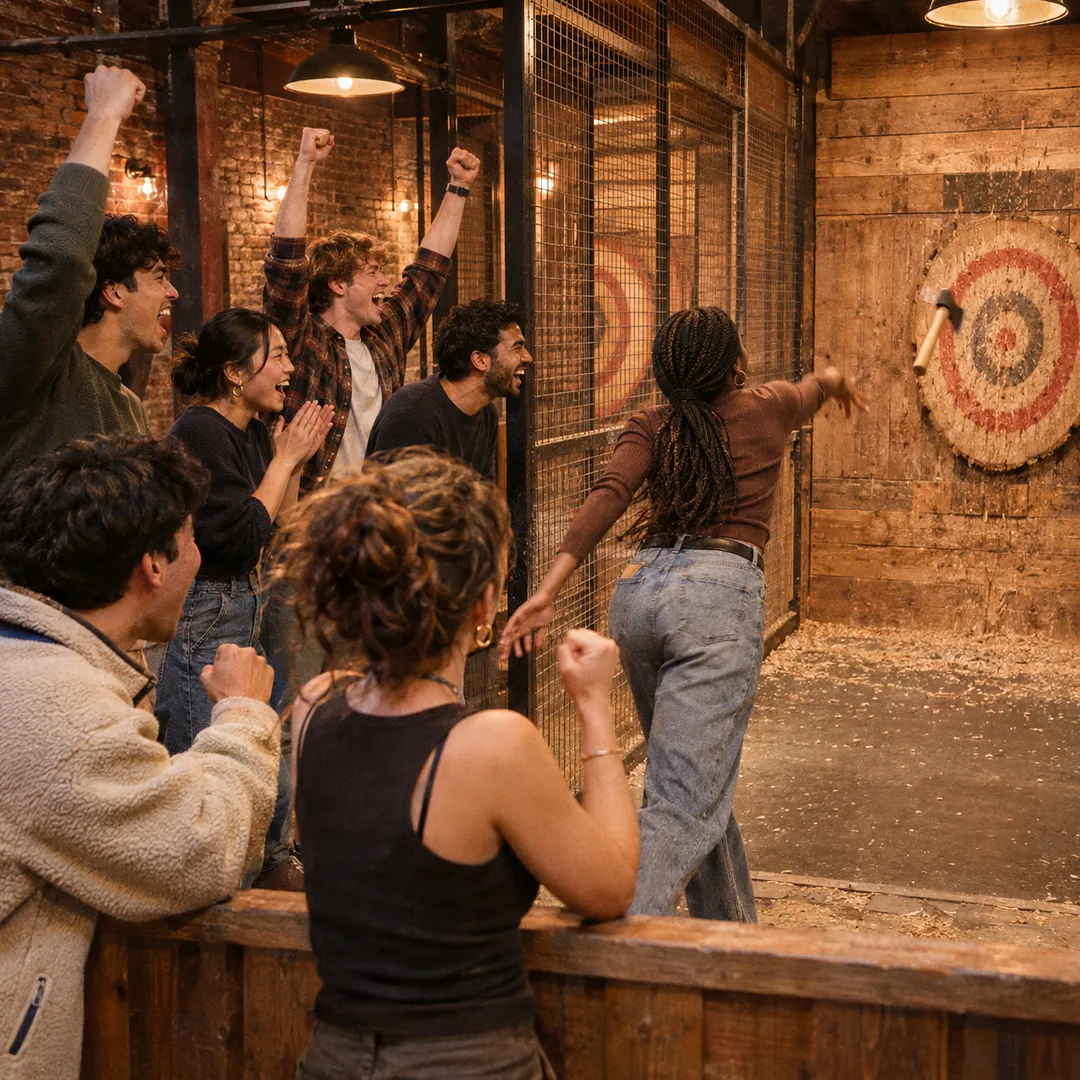 Midtown Miami Axe Throwing Group Night Picker for Nurses
 Downtown Miami Axe Throwing Group Night Picker for Visitors