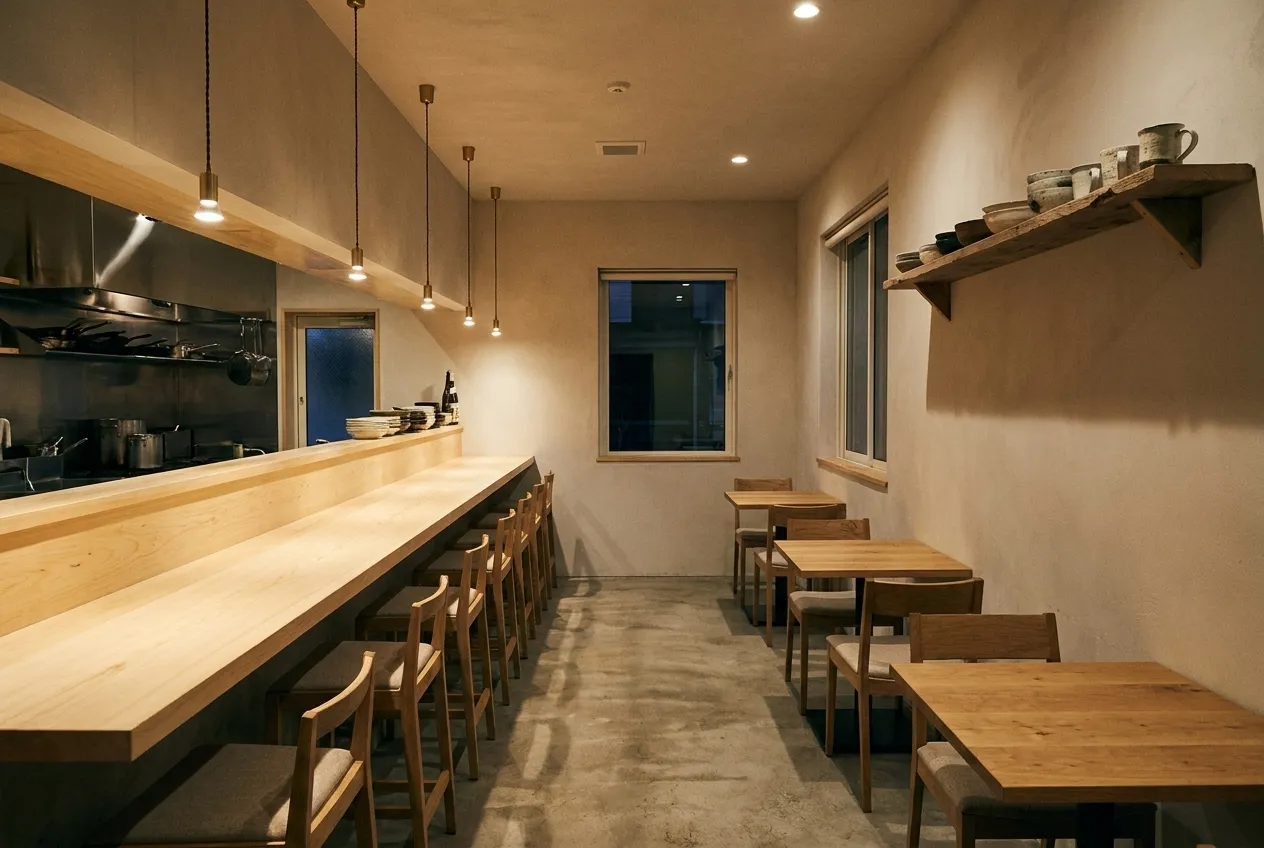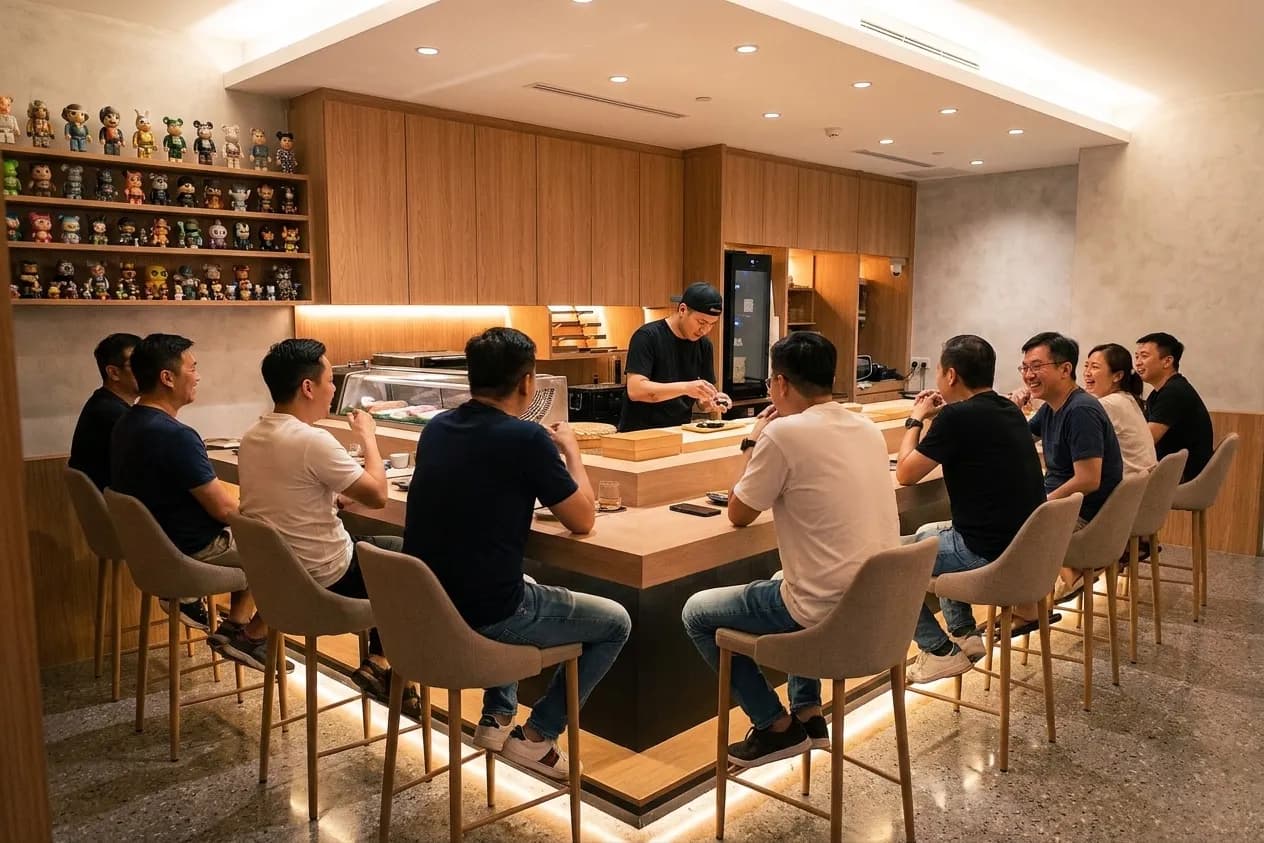
Omakase has an image problem that has very little to do with the food. The format arrived in American cities wrapped in a set of behavioural rules — speak quietly, do not photograph, defer to the chef, dress appropriately — and those rules put a lot of people off something they would otherwise enjoy. Miss Crispy Rice, at 808 Ponce de Leon Boulevard in Coral Gables, kept the fish and threw out the rest. The counter is lined with plastic action figures and the soundtrack is two-thousands pop.
The cheapest way into almost any tasting counter is the lunch sitting, and most people never look at it. Ask Karpo which counters near you run a reduced midday menu, what the course count drops to, and whether the fish is the same.
The tiers, and which one is the value
Pricing works in steps rather than as a single menu. A seven-course lunch has been listed at $35. Dinner runs in tiers — around eleven courses at $70, fourteen at $87, and a longer sixteen-course option at $127. The gaps between those are informative: the jump from eleven to fourteen courses costs seventeen dollars, which is a little over five dollars a course, and that is the best marginal value on the list.
The lunch tier is the underused one. Seven courses for thirty-five dollars is, in the current Miami market, a remarkable number, and the fish at lunch is the same fish that will be served that evening. If you are trying an omakase counter for the first time and are unsure whether you will like the format, this is the correct way to find out cheaply.
There is a second, less obvious reason the lunch tier is worth taking seriously. A fish counter buys for the day, and the first sitting of the day is working with everything at its freshest point — nothing has been sitting in a case through a long service. The conventional wisdom that dinner is the serious meal and lunch is the compromise gets this backwards at a sushi bar. You are paying half as much for fish that is, if anything, in slightly better condition.
Crispy rice, which is the actual specialism
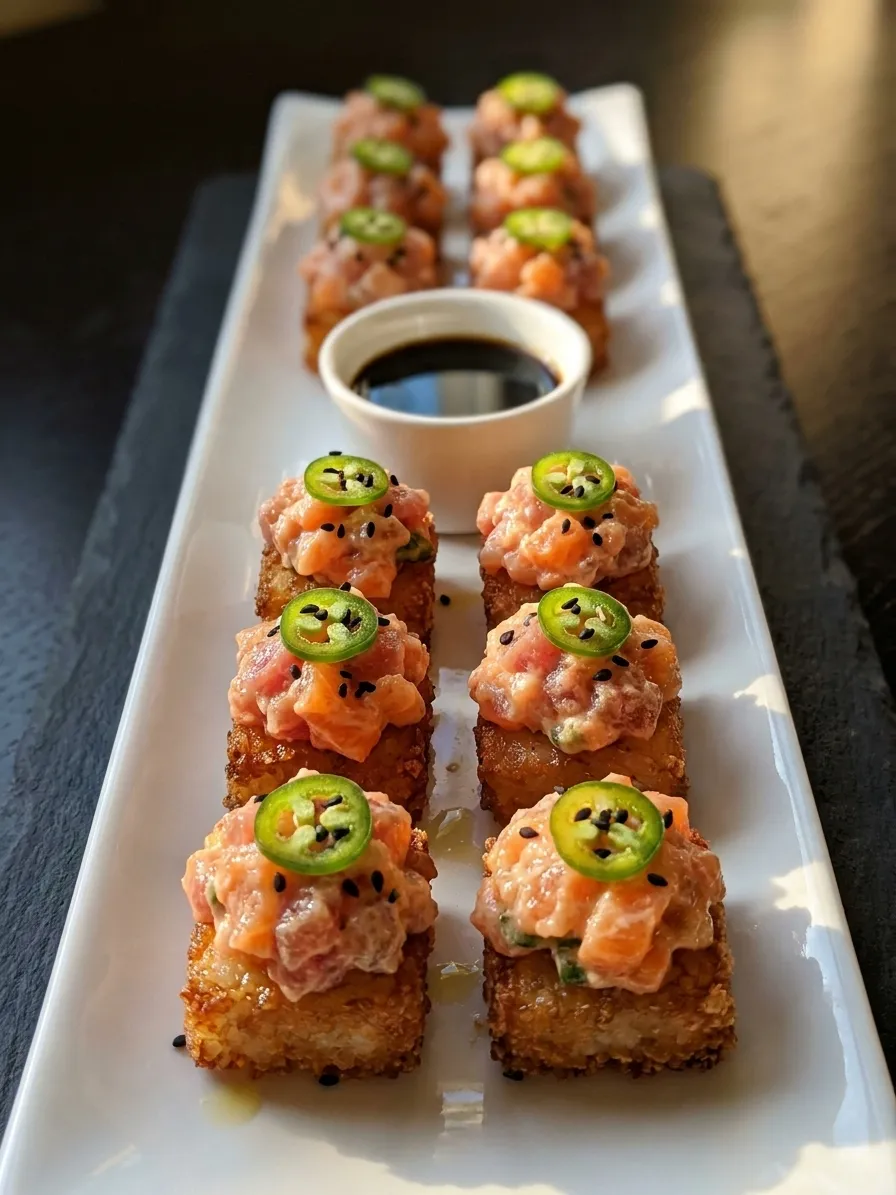
The restaurant bills itself as the world's first crispy rice bar, and the dish it is named after is the one to understand. Pressed sushi rice, fried until the outside forms a crisp shell while the inside stays soft, topped with chopped fish in a sauce — it is texture as the whole point, and it is the reason this counter reads differently from the twenty other omakase rooms in the county.
Beyond it the menu runs nigiri, hand rolls and the full omakase, with fish hand-picked from Tokyo's market. A longer tier here will include things that are not crispy rice at all — soup dumplings, fruit-topped sashimi — which is worth knowing if you assumed the name described the whole menu.
The room is the argument
A shelf of collectible figures behind an omakase counter is a statement of intent. It says you do not have to use your inside voice, you do not have to dress up, and nobody is going to be offended if you take a photograph. For a format that has been made intimidating, that is a genuine public service, and it is why this counter tends to be recommended to people who have never done omakase rather than to people who do it monthly.
The trade-off is that it is not a contemplative room. If what you want from a tasting counter is silence, focus and a chef explaining each piece in a hush, this is the wrong address and there are several in Miami that will do that for considerably more money. Pick according to what you are actually after.
Prices move, so check before you go
Worth being direct about this: the tiers at counters like this get repriced regularly, and published figures go stale fast. Earlier reporting had the lunch at eight courses and the entry dinner around $67 — the numbers have since shifted in both course count and price. That is normal for a small restaurant buying fish at market rates, and it is not a criticism.
The practical instruction is simply to confirm the current menu when you book rather than arriving with a figure in your head. It is also worth asking whether a seasonal city-wide promotion is running, because Miami's late-summer restaurant programme routinely puts longer menus at this counter on a fixed lower price.
Coral Gables makes it easy
Ponce de Leon Boulevard is one of the Gables' main north-south arteries and the neighbourhood is unusually easy to move around by Miami standards — walkable, well signed, with actual parking structures rather than a hunt for a kerb. Douglas Road Metrorail is the nearest station and the Miracle Mile is a short walk, which makes this a workable stop on a longer evening rather than a destination you drive to and from.
The counter is small, which is the usual constraint. Book rather than walking in, particularly for a dinner tier at the weekend, and be aware that the cheapest lunch sitting tends to be the first to go on a Saturday for precisely the reasons described above.
Practical notes
Miss Crispy Rice, 808 Ponce de Leon Boulevard, Coral Gables, FL 33134. Omakase in tiers: a seven-course lunch listed around $35, with dinner options around eleven courses at $70, fourteen at $87 and sixteen at $127. Also serves nigiri, hand rolls, crispy rice, dumplings, wine and sake. Fish sourced from Tokyo's market. Deliberately casual counter — no dress code, music up. Prices and course counts are revised regularly, so confirm when booking. Reservations advisable, including for lunch at weekends. Nearest transit is Douglas Road Metrorail, a short ride away. Hours change — check ahead.
Please drink responsibly. Must be of legal drinking age.
Tags: #tastingmenuunder100nearme #omakasemiami #misscrispyrice #coralgables #miamisushi #omakase #miamirestaurants #miamifood #crispyrice #tastingmenu #ponce #miamidining #valuedining #sushibar
All trademarks are the property of their respective owners.
Ask Karpo first
Omakase pricing moves faster than any listing updates, and the tier you read about last year is rarely the tier on offer now. Ask Karpo what the current menus and prices are at the counters near you, and which sitting gives the best ratio of fish to money.