 Sugar Factory Halloween Candy Shop: Ocean Drive Treats
Hidden Gems & Odd Finds
Superblue Miami Tickets: Is the Immersive Art Worth It?
Superblue Miami delivers room-scale art installations in a warehouse near Little Haiti—but timing, heat, and ticket math matter more than the hype suggests.
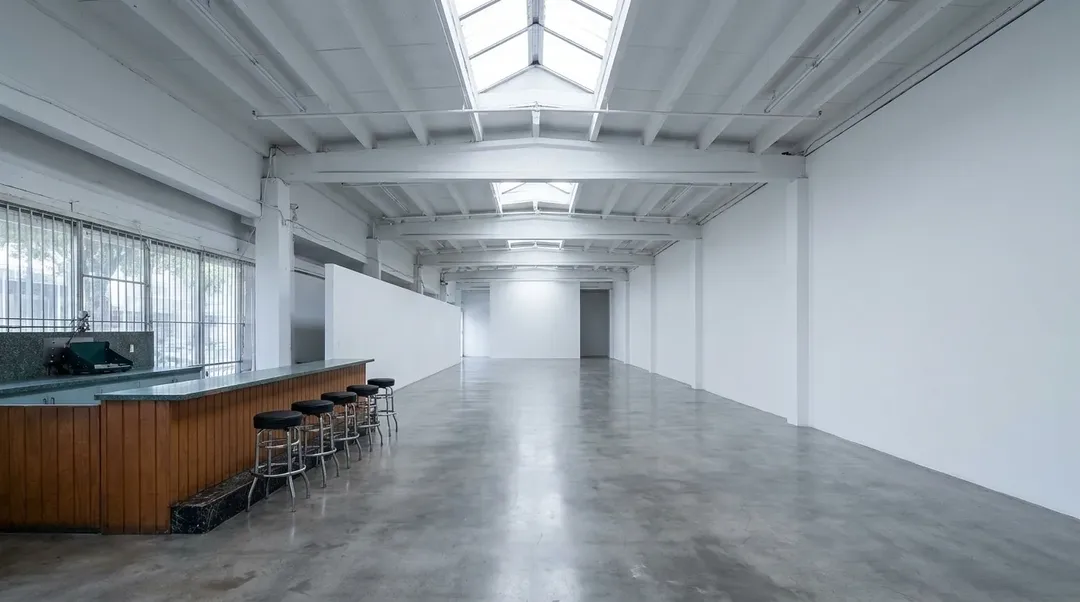
Superblue Miami sits in a former warehouse off Northwest 29th Street, a few blocks west of the Design District and just east of Little Haiti's residential blocks. It's not a traditional gallery. You're paying for large-scale, walk-through installations—environments built by artists known for light, mirrors, and sensory saturation. The space opened in 2021 and rotates its exhibitions every few months, so what you see depends entirely on when you visit. Recent installations have included mirrored infinity rooms, projected landscapes that respond to movement, and fields of suspended mesh that shift color as you walk beneath them.
Text Karpo before you book to check current wait times at Superblue Miami, confirm which installations are up this week, and get a live route that accounts for bridge traffic and afternoon storms.
What You're Actually Paying to See
Tickets typically run between $36 and $45 for general admission, though prices flex based on time slots and whether you book advance or same-day. Timed entry is enforced; you pick a window when you buy, and if you miss it, you may need to rebook. The visit itself usually takes 60 to 90 minutes if you move through at a moderate pace, longer if you linger for photos or wait for rooms to clear. There's no café, no seating area, and minimal air conditioning in the transition corridors—this is a climate-controlled warehouse, not a museum with amenities.
The question of whether Superblue Miami is worth the ticket price hinges on what you value. If you respond to scale, novelty, and the chance to photograph yourself inside art, it delivers. If you expect narrative depth, artist statements on the wall, or a curatorial arc, you'll find the experience thin. The installations are designed to be Instagrammed; some rooms have explicit photo zones. That's not a criticism, but it is the organizing principle. You're inside the art, not contemplating it from a distance.
The Neighborhood Around It Adds Context
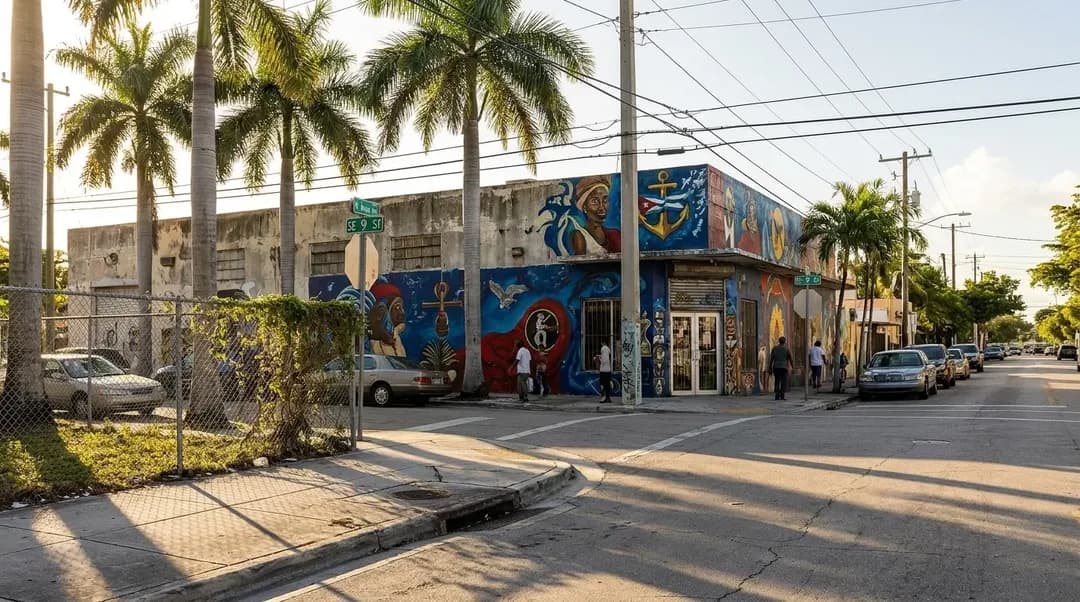
Superblue Miami is positioned on the edge of two neighborhoods that rarely overlap in visitor itineraries: the Design District to the south and Little Haiti to the north. The Design District is polished, air-conditioned retail and dining—luxury storefronts, outdoor sculpture, valet parking. Little Haiti is working-class Creole Miami, botanicas, Caribbean bakeries, murals painted by community groups, and streets named after Haitian heroes. Superblue sits in the buffer zone, where the warehouse blocks haven't fully gentrified and parking lots still outnumber cafés.
If you're driving, you'll likely park in Superblue's own lot or on the surrounding industrial streets. Spots are free but unshaded, and in summer your car will be an oven when you return. If you're using rideshare, the pickup point is straightforward—drivers know the address, and there's no competing venue traffic—but be prepared for a wait if you're leaving during a peak slot change. The area doesn't have much foot traffic, so walking to a busier pickup corner isn't practical.
The location matters because it shapes your before-and-after options. You can't easily stroll from Superblue Miami to lunch in the Design District without getting back in a car; it's a ten-minute walk in full sun along streets without sidewalk shade. If you want to extend the visit into a neighborhood day, consider heading north into Little Haiti instead. Churchill's Pub on Northeast 2nd Avenue is a half-mile walk and has been a dive-bar anchor since the 1980s. The Little Haiti Cultural Complex, a public arts center, is another mile north and often has free exhibitions and weekend events. These are not immersive Instagram experiences—they're older, scrappier, and rooted in a specific community—but they offer a counterbalance if Superblue feels too curated.
Timing Is the Whole Trick
Superblue Miami uses timed ticketing to control crowd density, but that doesn't mean every time slot feels the same. Weekday mornings, especially Tuesday through Thursday before 11 a.m., tend to be the quietest. You'll still share rooms with other visitors, but you're less likely to queue outside an installation or wait for a mirror chamber to empty before you can take an unobstructed photo. Weekend afternoons, particularly Saturday between 2 and 5 p.m., are the busiest; expect lines and a shuffle-through pace.
Miami's weather also dictates timing. Afternoon storms between May and October are near-daily, usually rolling in between 3 and 6 p.m. If your ticket window is late afternoon, plan for rain and factor in extra travel time—causeways and bridges slow to a crawl when storms hit, and rideshare availability drops. The venue itself is indoors and unaffected by rain, but getting there and leaving becomes more complicated. Morning slots avoid this friction entirely.
If you're visiting during Art Basel in early December or Miami Art Week, Superblue Miami becomes significantly harder to book. Tickets sell out days in advance, and the neighborhood around it fills with satellite fairs, pop-ups, and traffic jams. Unless you've secured a slot weeks ahead, it's worth skipping that week and visiting in January or February, when the art crowd disperses and the weather is cooler.
A Quieter Alternative in the Same Genre
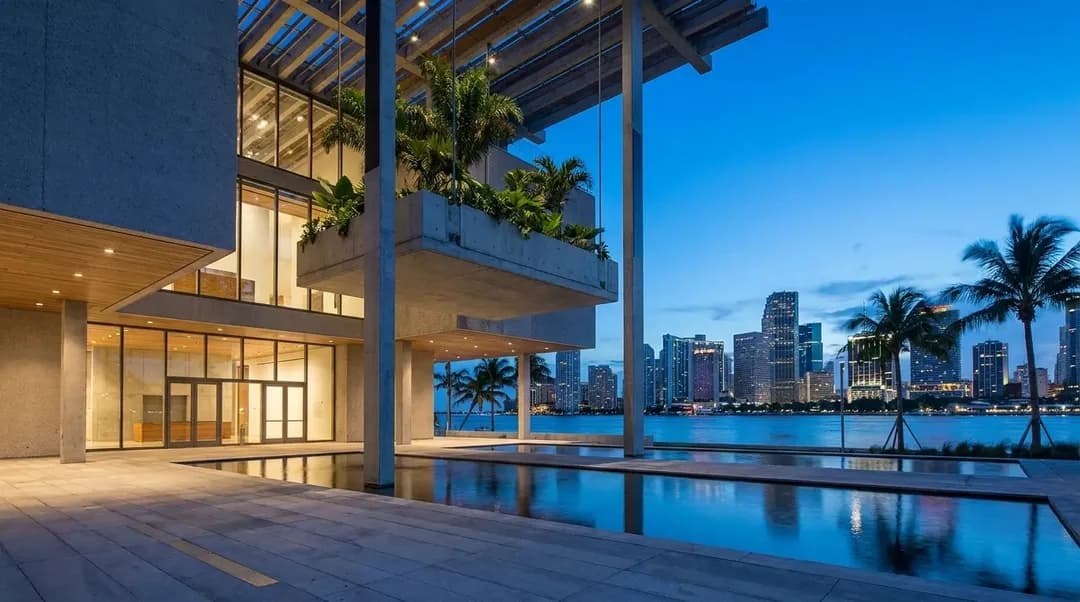
If the ticket price or the timed-entry structure at Superblue Miami feels too rigid, consider the Pérez Art Museum Miami (PAMM) on Biscayne Bay. PAMM is a traditional contemporary art museum, but it regularly features large-scale installations and video work in its ground-floor galleries, and admission is $16 for adults, $12 for students and seniors. The building itself—designed by Herzog & de Meuron—sits on the water with open-air terraces, and you can move through the space at your own pace without a timed slot.
PAMM doesn't specialize in the Instagram-ready infinity mirror aesthetic, but it does show immersive video installations, projection rooms, and participatory works that overlap with what Superblue offers. The museum also has a café, shade, and better public transit access via the Metromover's Museum Park station. On Thursdays, admission is free from 4 to 9 p.m., though those evenings draw bigger crowds.
Another option, though less immersive, is the Wynwood Walls. It's free, outdoors, and you can walk the murals on your own schedule. The trade-off is heat, crowds, and the reality that it's become a branded photo backdrop more than a grassroots art project. Still, if you're weighing Superblue Miami against other visual experiences in the city, Wynwood offers spectacle without a ticket gate.
Verify Before You Commit
Superblue Miami rotates its exhibitions, so the installations you see online may not be the ones on view when you visit. Before you buy a ticket, go to the venue's own website and confirm which artists and works are currently installed. Some shows are extended; others close early. If the lineup doesn't excite you, it's worth waiting for the next rotation rather than paying for something that feels like a placeholder.
Check the refund and exchange policy when you book. Timed tickets are usually non-refundable, but some windows allow you to reschedule up to 24 hours in advance. If you're visiting Miami for a short trip and your schedule is tight, that flexibility matters—especially if a storm or traffic delay throws off your timing.
Finally, if you're planning to go during a weekend or holiday, book at least a week ahead. Walk-up availability is rare, and same-day tickets, when they exist, are priced higher. The venue's capacity is capped by design, so selling out is common. That scarcity is part of the business model, but it also means you can't treat Superblue Miami as a spontaneous stop. It requires the same advance planning as a restaurant reservation or a museum with limited entry.
Practical notes
- Tickets usually $36–$45; timed entry is enforced, book ahead
- Visit takes 60–90 minutes; no café or seating inside
- Weekday mornings before 11 a.m. are quietest; avoid Saturday afternoons
- Parking is free but unshaded; rideshare pickup can be slow after peak slots
- Afternoon storms May–October slow bridges and causeways; morning slots avoid this
- Check venue website to confirm which installations are currently on view before booking
Tags: #karpo #miami #superblue #superbluemiami #immersiveart #miamiart #littlehaiti #designdistrict #miamithingstodo #artmiami #theoddedit #miamiweekend #contemporaryart #miamiguide #visitmiami
Sources consulted: Superblue Miami · Pérez Art Museum Miami · Little Haiti Cultural Complex
All trademarks are the property of their respective owners.
Ask Karpo first
Text Karpo to confirm which installations are up at Superblue Miami this week, check current ticket availability for your preferred time slot, and get a live route from your location that factors in bridge traffic and afternoon storm timing. Karpo can also suggest nearby spots in Little Haiti if you want to extend the visit.
Ask Karpo for more information.
Keep reading
- Sugar Factory Halloween Candy Shop: Ocean Drive Treats
 Kilwins Halloween Candy Shop: Coconut Grove Fresh Fudge
 Peterbrooke Halloween Candy Shop: Coral Gables Gift Boxes