 Little Haiti Axe Throwing Group Night Picker, Soccer Edition
Sports Social
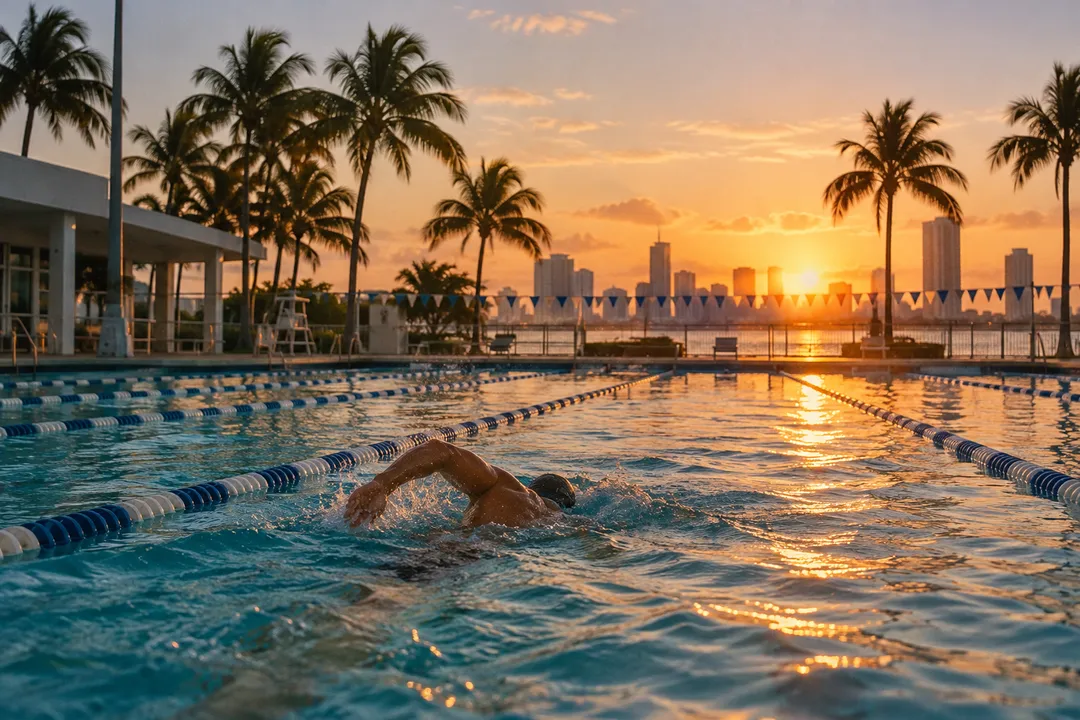
Miami Strength Conditioning Gym Plan for Lap Swimmers
Miami swimmers gain the most from two weekly strength conditioning gym sessions focused on shoulder stability, upper back strength, core control and legs.
Swimming is a way of life in Miami. Outdoor lap pools stay open through most of the year, and open water swimmers head to the bay and the ocean on calm mornings. Swimming builds a strong aerobic engine, but it leaves gaps that a strength conditioning gym can fill. Two short sessions a week focused on shoulders, upper back, core and legs help swimmers stay healthier, push off walls more powerfully and hold good form late in long sets.
What Swimming Leaves Out
Swimming loads the shoulders through thousands of repetitive strokes each week, often with a forward-rounded posture. Over time, that can lead to tight chest muscles, weaker upper back muscles and shoulders that feel cranky. Swimming also provides little resistance for the legs compared to land-based training, and almost no loading for bones. Strength training addresses all of these gaps without taking much time away from the pool.
Shoulder Stability First
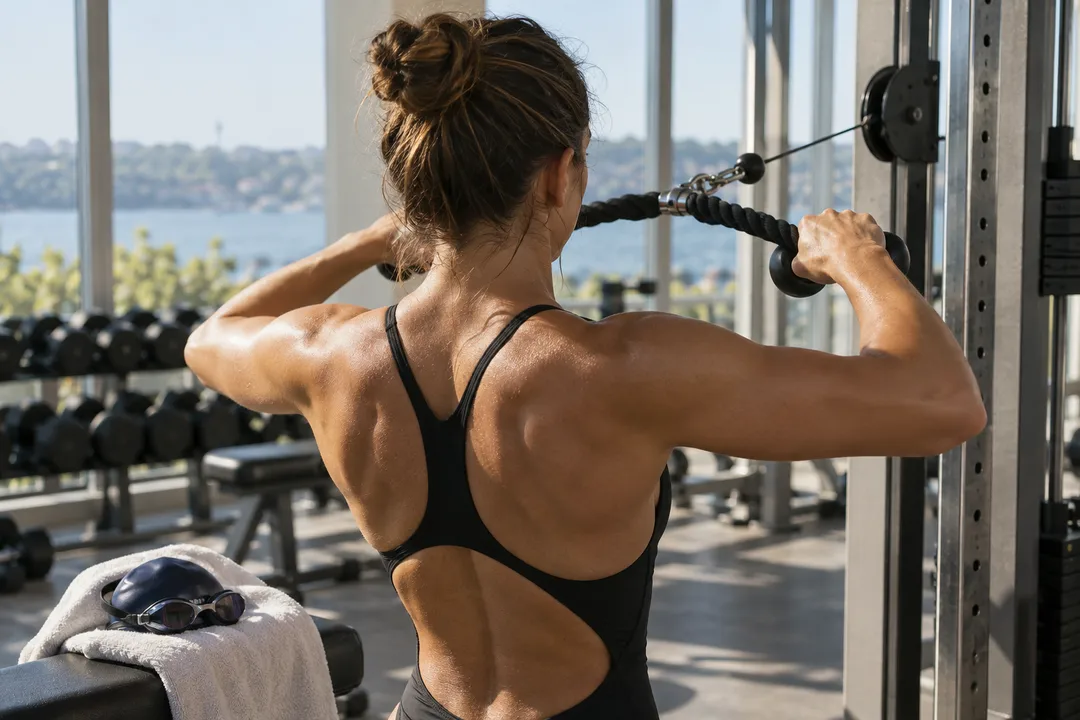
Healthy shoulders are a swimmer's most valuable asset. Include exercises that strengthen the muscles around the shoulder blade and rotator cuff, such as face pulls, band pull-aparts, external rotations and rows. These movements balance the pulling and internal rotation of swimming strokes. Keep the weights moderate and the movements controlled. The aim is resilience, not maximal strength.
Build the Upper Back and Lats
Strong lats and upper back muscles drive the pull phase of every stroke. Pull-ups, lat pulldowns, dumbbell rows and straight-arm pulldowns build that strength on land. Many swimmers find pull-ups especially valuable, since the movement mirrors the catch and pull in the water. Focus on full range of motion and smooth reps rather than speed.
Core Control for a Better Body Line
A strong core helps you hold a streamlined position and connect your upper and lower body during each stroke. Planks, side planks, dead bugs, pallof presses and hanging leg raises build that control. Anti-rotation exercises, which resist twisting, are particularly useful for keeping your body line stable during freestyle and backstroke.
Legs for Starts, Turns and Kicks
Powerful starts and turns rely on leg strength. Squats, split squats, Romanian deadlifts and jump variations build the power to push off walls and blocks. Even distance swimmers benefit, since stronger legs make the kick more efficient and help with open water swimming in choppy conditions. Keep jumps low in volume and focus on quality.
The Two Weekly Sessions
Session one can include goblet squats or front squats, pull-ups, face pulls and planks. Session two can include Romanian deadlifts, dumbbell rows, external rotations, split squats and pallof presses. Each takes about forty-five minutes. Keep two or three reps in reserve on most sets, so the work supports swimming rather than leaving you too tired for your next pool session.
Timing Around Pool Sessions
Place gym sessions after easy swims or on lighter training days, and avoid heavy upper body work right before a hard set in the pool. Many swimmers lift in the afternoon after a morning swim, giving the body time to recover before the next day's training. During competition periods or before an open water race, reduce gym volume and focus on maintaining strength.
Mobility and Recovery
Swimmers often have flexible shoulders but tight chest muscles and stiff upper backs. Pair strength work with mobility exercises for the thoracic spine, chest and hips. Sleep, nutrition and hydration matter too, especially in Miami's heat, where outdoor pool sessions and gym work can leave you more dehydrated than you realize.
Open Water Considerations
Open water swimming in the bay or ocean adds waves, currents and longer continuous efforts. Strength in the shoulders, upper back and core helps you handle chop and sight without losing form. Grip and forearm work can also help with the extra effort of open water strokes. Training on land for these conditions makes long swims feel more controlled.
Choosing a Gym as a Swimmer
Look for a gym with cable machines, pull-up bars, dumbbells and space for core work. A location near your pool makes it easy to lift after swimming. Ask whether coaches have worked with swimmers or endurance athletes, since they will understand how to balance gym and pool training. Some Miami gyms also have pools or partner with nearby aquatic centers.
Tracking Progress
Track your lifts and note how your shoulders feel in the water. Over a few months, look for signs like stronger pulls late in sets, more powerful turns and fewer shoulder aches. Those changes show the gym work is paying off in the pool, which is what matters most.
A Sample Week Around the Pool
Here is a practical layout. On Monday, swim an easy aerobic set in the morning and lift in the afternoon with goblet squats, pull-ups, face pulls and planks. On Tuesday and Wednesday, focus on harder pool sessions. On Thursday, swim easy again and complete the second gym session with Romanian deadlifts, rows, external rotations and split squats. Friday and the weekend hold your longest swims or an open water outing. Two gym visits fit neatly without crowding the pool work.
During the off-season, a third short session focused on legs and core can be added if recovery allows.
Common Mistakes Swimmers Make in the Gym
The first is overloading the shoulders with heavy pressing, which adds stress to joints already working hard in the water. Keep overhead pressing moderate and favor pulling and stabilizing work. The second is skipping legs entirely, missing a chance to improve starts and turns. The third is training to exhaustion, which drains energy needed for swim sessions. Strength training should make swimming feel easier, not compete with it.
Getting Started if You Have Never Lifted
Many swimmers have spent years in the water and never touched a barbell. Start with a few coached sessions to learn the basic movements, use light weights and focus on form. Bodyweight exercises like push-ups, inverted rows and split squats are good starting points. Within a few weeks, most swimmers adapt quickly, since they already have strong aerobic fitness and body awareness.
Dryland Before Swim Meets
If you compete in masters meets or open water events, plan the gym work around the calendar. Build strength in the months before the season, then taper gym volume in the final two weeks before a key race. Keep a short activation routine with bands and light core work on race days to wake up your shoulders before getting in the water.
Practical Notes
Lift twice a week, focusing on shoulder stability, upper back, core and legs. Schedule gym sessions after easy swims. Keep upper body loads moderate before hard pool sessions. Hydrate well in Miami's heat. The Karpo APP can help you find strength gyms near your favorite Miami pools, so training on land fits easily around your swim schedule.
Ask Karpo for more information.
Keep reading
- Little Haiti Axe Throwing Group Night Picker, Soccer Edition
 Midtown Miami Axe Throwing Group Night Picker for Nurses
 Downtown Miami Axe Throwing Group Night Picker for Visitors