 MiMo District Free Indoor Weekend Plan Finder for Retro Fans
Free Things to Do
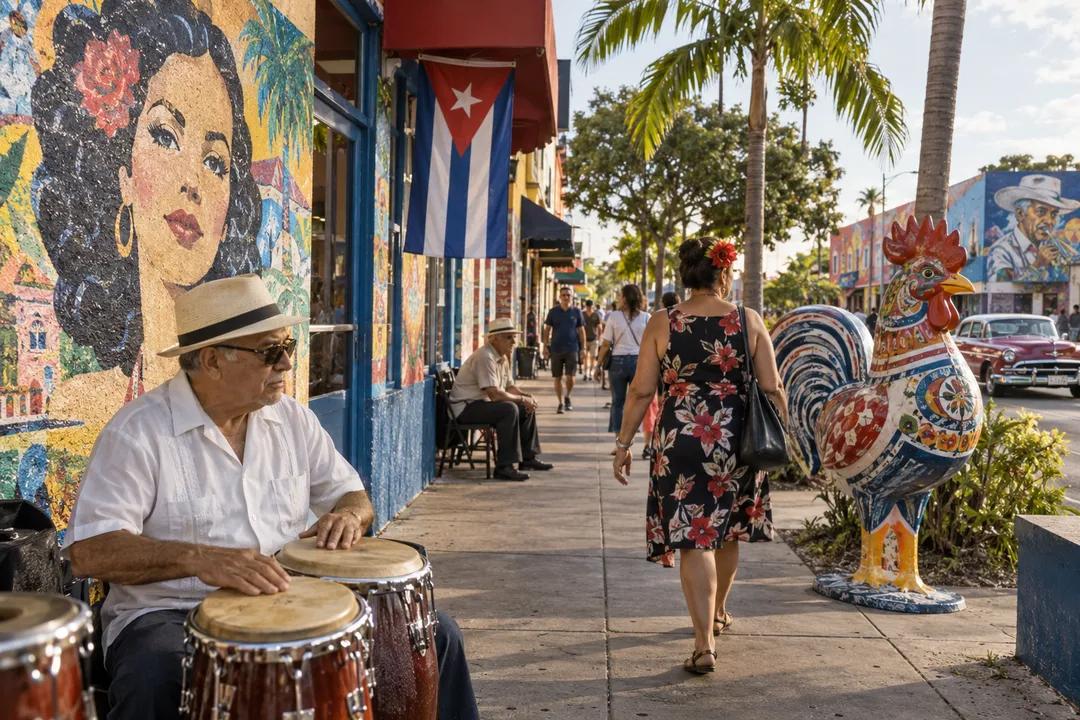
Street Art Near Me on Calle Ocho in Little Havana
A free Little Havana mural walk along Calle Ocho, with cultural context, timing advice, rooster-statue details, and nearby food and music stops.
Looking for street art near me in Little Havana leads you to Calle Ocho, where murals share the sidewalk with music, coffee, domino tables, rooster statues, and Cuban-American memory. The art is not separated from daily culture here. It appears among storefronts, memorials, flags, signs, and the rhythm of SW 8th Street. Because Domino Park asks visitors to treat people as neighbors, not scenery, Calle Ocho Murals gives the opening choice a local anchor, and Miami feels easier to read from there.
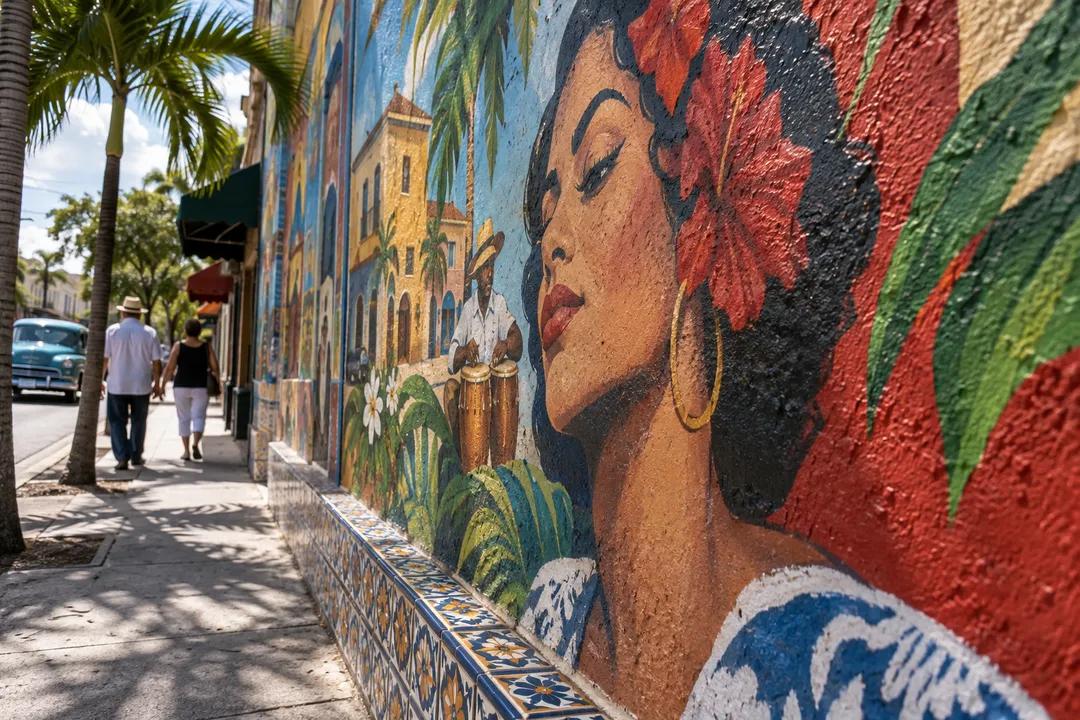
Calle Ocho anchors Little Havana's public life, and its murals belong to that larger cultural landscape. They reflect migration, identity, political memory, music, family, and neighborhood pride. Unlike a dedicated mural park, the work is woven into cafes, cigar shops, plazas, theaters, and sidewalks where people gather for reasons beyond art. Around Calle Ocho Murals, the detail to notice is that Cuban coffee windows make the walk taste like the corridor around it; it keeps the stop from becoming a generic wall on a map.
Begin around SW 8th Street and walk in short segments. Pause at plazas, bakeries, domino tables, painted storefronts, and coffee windows instead of pushing in a straight line. Little Havana rewards interruptions. A good route feels like strolling through a neighborhood corridor rather than tracking isolated wall locations. Use this route cue near Calle Ocho Murals: rooster sculptures add color without replacing the mural stories. That Calle Ocho Murals cue helps visitors decide when to pause and when to move.
The visual field includes painted flags, portraits, bright facades, old signage, tiled details, rooster figures, and murals that lean into heritage and memory. Sound matters too. Music from a doorway or the clack of dominoes can change how a wall feels. Calle Ocho's art is strongest when absorbed with the street around it. At Calle Ocho Murals, notice that Viernes Culturales can turn a normal walk into a monthly arts night. That Calle Ocho Murals texture matters when the block is busy, shaded, or changing by the minute.
Etiquette here begins with respect for people. Ask before photographing shop workers, cigar rollers, musicians, or domino players, especially if they are the focus of your image. Do not turn cultural memorials into silly props. A mural may invite attention, but the stories behind it deserve more than a quick pose. For timing at Calle Ocho Murals, remember that Tower Theater gives the route a historic landmark between painted stops. Around Calle Ocho Murals, light, traffic, and comfort can change the pace of looking.
Late morning is a practical sweet spot. You get daylight, food options, coffee, and enough energy without the heavier evening crowds. Night adds music and atmosphere, but careful mural viewing becomes harder. If you want both, arrive before sunset, walk slowly, then let dinner or live music carry the later part. Etiquette feels clearer at Calle Ocho Murals when you remember that music from doorways changes how the same wall feels at different hours. The art at Calle Ocho Murals still sits inside a working Miami neighborhood.
Domino Park is an essential nearby stop, though it should be approached as a real social space, not a stage. Tower Theater adds historic texture, Cuban coffee counters fuel the walk, and cigar shops show another layer of neighborhood craft. If your date matches Viernes Culturales, the monthly arts night can deepen the visit. Planning stays flexible at Calle Ocho Murals when memorial language deserves slower attention than a quick pose is treated as useful context, not a promise that every visit will match.
The rooster statues are part of the visual fun, but they should not distract from the wall art and memorial language around them. Notice how painted surfaces and sculptural street elements work together. Little Havana is colorful in an integrated way: signs, windows, doors, murals, music posters, and public symbols all contribute. A smaller loop around Calle Ocho Murals works well because a return walk on the opposite sidewalk reveals overlooked storefront art can pull attention away from the obvious wall.
Transit, rideshare, or a single parking plan will keep the visit easier. The corridor is walkable, but Miami heat can make even short distances feel longer. Carry water and step into shade when you can. Cafeterias and bakeries are not just treats; they are useful pacing tools. Nearby, Domino Park asks visitors to treat people as neighbors, not scenery can reset the day, giving Calle Ocho Murals a second rhythm after the first sweep of color.
Photography benefits from context. A mural beside a ventanita, a portrait near an old sign, or color reflected in a shop window tells more than a cropped wall. Be careful with close-ups of strangers. The neighborhood's public culture is generous, but visitors should not confuse openness with permission to intrude. Let the frame include the fact that Cuban coffee windows make the walk taste like the corridor around it at Calle Ocho Murals; real street life often explains scale better than an empty shot.
Calle Ocho can be festive, political, nostalgic, and commercial within the same few blocks. That mixture is the point. A city guide visit should leave room for contradiction rather than smoothing everything into postcard color. Look for memorial plaques, names, dates, and references that suggest why an image was placed there. Look for how rooster sculptures add color without replacing the mural stories changes the surface, because Calle Ocho Murals carries weather, repair, and neighborhood use together.
If you are coming for a short visit, choose a compact stretch near the main cultural landmarks. If you have more time, wander farther along SW 8th Street and let smaller storefront paintings appear between bigger stops. The murals do not announce themselves all at once; some of the most rewarding details sit low or off-center. As of October 2026, Viernes Culturales can turn a normal walk into a monthly arts night is the sort of current detail worth checking before crossing Miami.
Practical Notes: the sidewalk walk is free, while food, paid tours, performances, and festival conditions vary by date. Check Viernes Culturales timing if monthly programming matters to you. Wear light clothing, bring water, and be ready for closures or crowded sidewalks during special events. Tower Theater gives the route a historic landmark between painted stops keeps this street art near me result specific to Calle Ocho Murals, not interchangeable with another mural district.
Nearby food is not optional in spirit, even if it is optional in budget. A cafecito, pastelito, or sit-down Cuban meal helps ground the art in the neighborhood's everyday hospitality. Choose one stop where you are not rushing. Calle Ocho is at its best when taste, sound, and image overlap. Practical planning improves when music from doorways changes how the same wall feels at different hours is handled before arrival, leaving more attention for the free outdoor art.
Leave by walking back on the opposite side of the street if possible. The return view reveals different murals, signs, and angles, and the neighborhood often feels changed after you have eaten or listened for a while. Calle Ocho's art is memorable because it belongs to a living corridor, not because it isolates beauty from culture. For the last pass, memorial language deserves slower attention than a quick pose gives Calle Ocho Murals a memory beyond the search phrase and the first photograph.
Ask Karpo for more information.
Keep reading
- MiMo District Free Indoor Weekend Plan Finder for Retro Fans
 Coral Gables Free Indoor Weekend Plan Finder for Book Lovers
 South Beach Free Indoor Weekend Plan Finder for Rainy Days