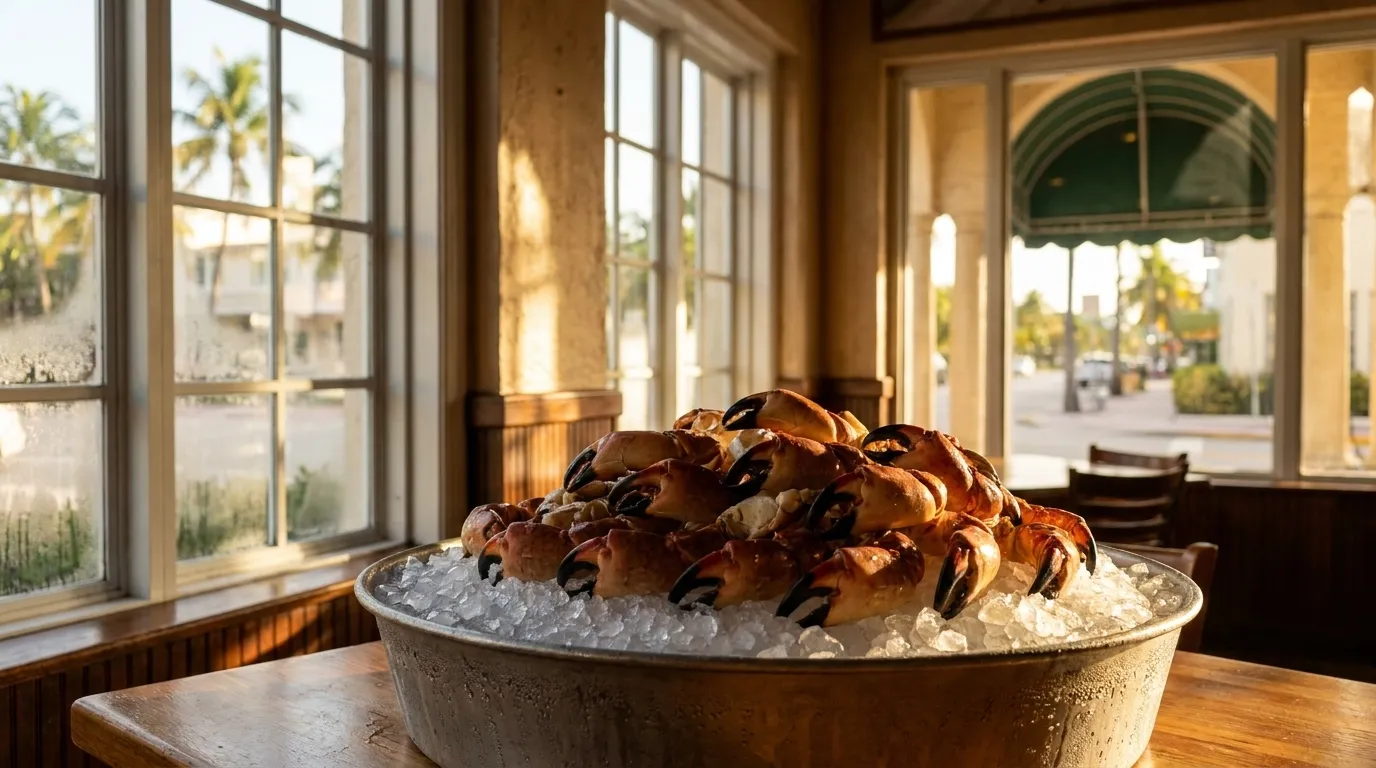
Stone crab season in Miami runs from October 15 through May 15, and those seven months shape the rhythm of the city's seafood counters more than any other calendar event. The claws come in cold, the crackers come out, and suddenly every fish shack worth its mustard sauce has a line out the door. This isn't about farm-raised tilapia or frozen shrimp rings—it's about what the Gulf and Atlantic deliver daily, and the family operations that have been shucking, steaming, and grilling it for decades.
Karpo tracks stone crab season timing and knows which counters have the freshest haul today—whether you want tablecloths or paper plates.

Joe's Stone Crab: the South Beach institution since 1913
Joe's Stone Crab opened on South Beach in 1913, back when the neighborhood was mangrove swamps and a scattering of wooden houses. More than a century later, it's still family-run, still closed from mid-May through mid-October, and still the place tourists and locals alike think of first when stone crab season opens. The dining room is large and loud, with black-and-white tile floors, white tablecloths, and waiters who've worked the floor for thirty years. Expect a wait—even with a reservation, the bar area fills early, and walk-ins on weekend evenings can stretch past two hours.
Order the stone crab claws by the pound—medium, large, or jumbo, though jumbo pricing climbs fast—and they arrive chilled, pre-cracked, with mustard sauce and melted butter. The hash browns are crispy-edged and come in a skillet big enough to share. Creamed spinach, coleslaw, and Key lime pie round out the menu, but the claws are the point. Locals know to go early in the week, around 5 PM when the season opens, or to call ahead for takeout if the dining room feels like too much theater. The takeaway counter moves faster and lets you eat the same claws on your own dock or hotel balcony.
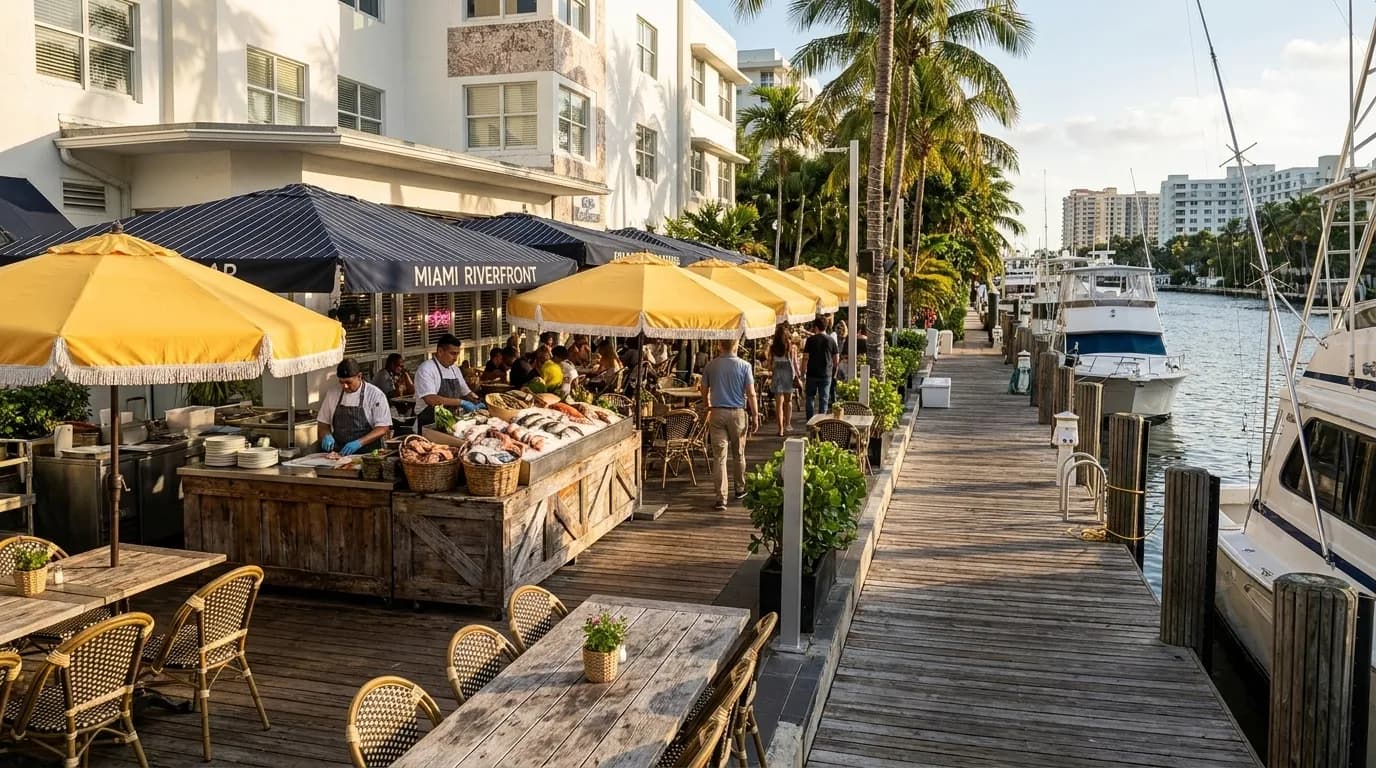
La Camaronera: the Little Havana fish market with a fryer
La Camaronera sits on a corner in Little Havana, half seafood market and half open-air counter kitchen. The interior is small, fluorescent-lit, and lined with coolers full of whole snapper, conch, shrimp by the pound, and whatever came off the boats that morning. The back counter fries, grills, and steams to order, and most people eat standing at high tables under a covered patio or take their boxes to nearby Domino Park.
The fried whole snapper comes scaled, gutted, and crisped to a mahogany shell, with rice, beans, and plantains on the side. Stone crab claws appear in season, priced lower than Joe's and sold by the pound with the same cold-crack presentation. The camarones al ajillo—garlic shrimp—arrive in a foil tray swimming in butter, olive oil, and enough garlic to follow you home. Conch fritters are dense, not doughy, and come with a lime wedge and hot sauce. Cash speeds things up, though they take cards. Parking is tight; the lot across the street fills by noon on weekends.
Garcia's Seafood: dockside grills and river views
Garcia's Seafood Grille and Fish Market has been on the Miami River since 1966, and the location still defines it. Boats tie up a few feet from the outdoor tables, the water smells brackish and alive, and the whole operation feels more working waterfront than polished tourist stop. The fish market side sells whole fish, fillets, and live stone crabs in season; the restaurant side grills, fries, and blackens whatever's freshest.
Stone crab claws here come steamed or chilled, and the pricing undercuts South Beach by a clear margin. The grilled mahi-mahi is simple—olive oil, lemon, salt—and benefits from the high-heat char of the outdoor grill. Conch fritters are a constant on the menu, and the fish dip, made from smoked local catch, comes with crackers and enough smokiness to make you order a second bowl. Locals sit outside even in July, sweating through the humidity because the breeze off the river and the parade of boats make it worth it. The restaurant doesn't take reservations for parties under six, so plan to arrive before the lunch or dinner rush if you want a table with a view.
When to plan around the season
Stone crab season opens every year on October 15, and the first few weeks see the highest demand and the spottiest supply as trappers get their rhythm back. By November, volume steadies, prices settle, and every counter from Homestead to North Miami has claws on ice. The season peaks around the holidays—Thanksgiving through New Year's—when both visitors and locals build meals around them. If you're timing a trip specifically for stone crab, aim for late November through March, when supply is strong and the weather cooperates for outdoor eating.
The season closes May 15, and every restaurant that specializes in stone crab either pivots to other seafood or shuts down entirely until October. Joe's famously goes dark for the summer; La Camaronera and Garcia's stay open year-round, leaning on snapper, grouper, shrimp, and whatever else the boats bring in. If you arrive in June expecting stone crab, you'll be six weeks too late, and no amount of frozen imports will taste the same.
What to order when claws aren't the move
Even in season, not every meal needs to center on stone crab. La Camaronera's whole fried snapper is cheaper, feeds two, and showcases the same daily-catch ethos. Garcia's fish dip and blackened grouper hold up year-round, and the conch fritters at either spot deliver the kind of Gulf-and-Caribbean flavor that defines Miami seafood beyond the seasonal headline act. Joe's hash browns and creamed spinach have their own cult followings, and the Key lime pie there is tart enough to cut through a pound of butter and claw meat.
If you're eating at Garcia's, ask what came in that morning—the staff will steer you toward the freshest fish, which might be hog snapper, yellowtail, or mangrove snapper depending on the day. At La Camaronera, the shrimp al ajillo is a better deal than the claws most nights, and the plantains are fried to order, not sitting under a heat lamp. All three spots prove that Miami's seafood culture isn't just about one crustacean; it's about proximity to the water, family recipes that haven't changed in fifty years, and the understanding that fresh fish needs little more than heat, citrus, and salt.
Practical notes
Joe's Stone Crab is closed from mid-May through mid-October; during season, expect waits unless you arrive right at opening or opt for takeout. La Camaronera is cash-friendly and closes earlier than you'd expect—call ahead if you're planning a late dinner. Garcia's doesn't take reservations for smaller parties; riverside tables fill fastest around sunset. All three spots are better on weekdays. For Joe's, parking is tight on South Beach; consider a rideshare. La Camaronera has limited lot space. Garcia's is near the Miami River, accessible by car or rideshare; public transit is less convenient. Stone crab pricing fluctuates weekly based on supply—check menus or call if budget is a hard line. Dress codes are relaxed everywhere; shorts and sandals are standard, even at Joe's.
Tags: #miamiseafood #stonecrabseason #joestonecrab #lacamaronera #garciasseafood #miamirestaurants #southbeacheats #littlehavanafood #miamirivertables #seafoodcounters #stonecrabmiami #freshcatch #localeatsmiami #seasonaldining #miamifoodguide
All trademarks are the property of their respective owners.
Ask Karpo first
Karpo knows exactly when stone crab claws are running strong this week, which counters have the best pricing today, and how long the wait is at Joe's right now. Before you drive across the causeway or settle for frozen substitutes, ask Karpo—it'll route you to the freshest haul and help you skip the lines that tourists stand in.