 MiMo District Free Indoor Weekend Plan Finder for Retro Fans
Free Things to Do
Coconut Grove Scenic City Overlook Trail Along the Bayfront
Stroll a free Coconut Grove scenic city overlook trail from Commodore Plaza to Peacock Park, Dinner Key and Kennedy Park for long, shaded views over the bay.
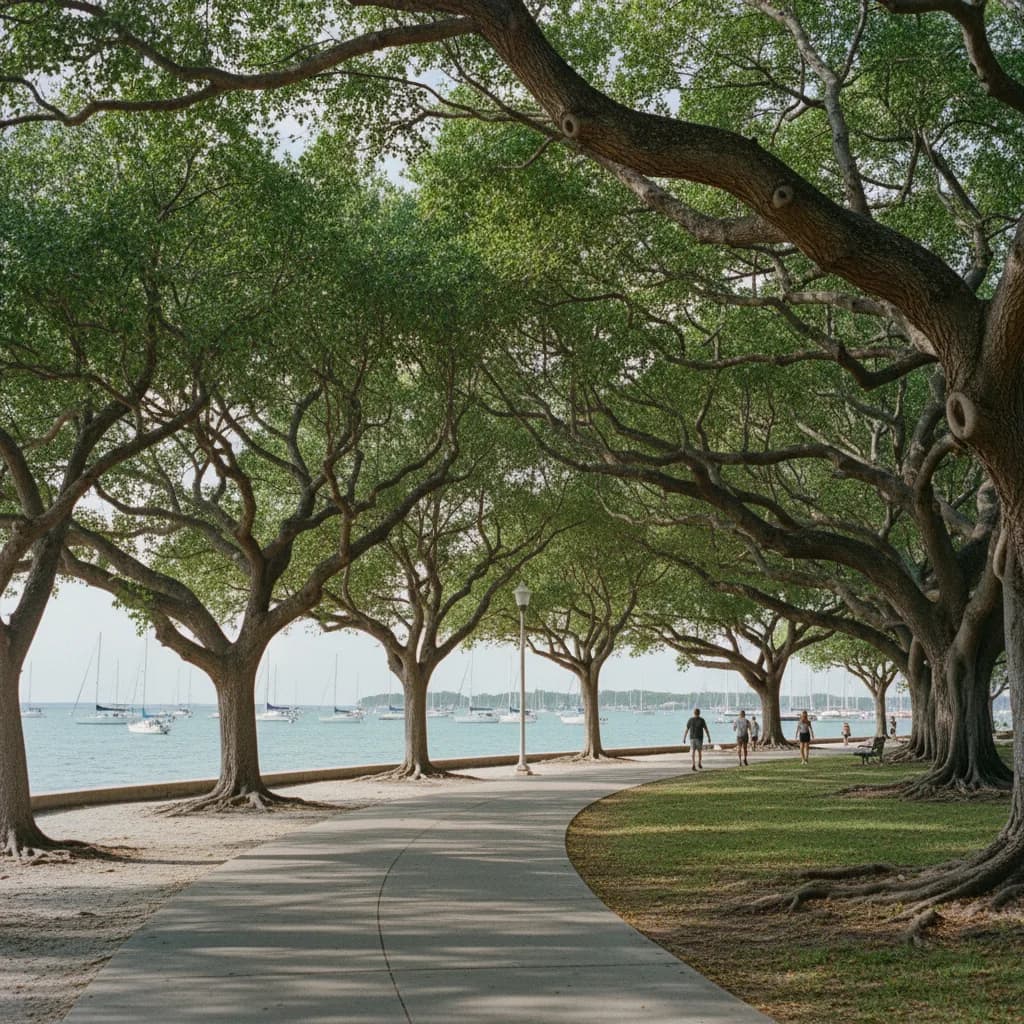
A scenic city overlook trail in Coconut Grove follows the shoreline, because the Grove's beauty lies in the way its green canopy spills down to Biscayne Bay. There is no summit here, only a gentle ridge of old limestone where pioneers built their homes, and every few hundred yards the trees part to reveal masts, mangroves and the open water. This route links the village center with three bayfront parks and the marina at Dinner Key, then finishes at a modern shrine that faces south across the sea. It is free, mostly shaded and easy to do at a slow pace.
Why the Grove Feels Different
Coconut Grove was settled in the second half of the nineteenth century, before the city of Miami was incorporated, and it still carries a village feel. Bahamian immigrants, New England sailors and naturalists shaped the early community, building homes from local stone and timber washed ashore from shipwrecks. Many streets are lined with huge banyans and live oaks that meet overhead, turning even a short walk into a tunnel of shade. That canopy is the first reward of this route, and the bay is the second.
Starting at Commodore Plaza
Begin in the village center around Commodore Plaza and Main Highway, where small shops, cafes and sidewalk tables cluster under the trees. Pick up coffee, then head toward the water on the side streets. Within a few minutes the commercial noise fades and the land slopes very slightly down toward the bay. Pay attention to that faint slope. It is the remains of the coastal ridge, and it explains why the earliest houses were built just here.
Peacock Park and the Pioneer Story
Peacock Park takes its name from Charles and Isabella Peacock, who opened one of the first inns on this stretch of coast in the 1880s. Their Bay View House drew visitors and workers, and a small community grew around it. Today the park is a wide lawn running to the water, popular with families, dog walkers and anyone who wants a picnic with a view. Walk to the seawall and look east: sailboats ride at anchor, and on clear days you can see the low line of Key Biscayne across the bay.
The Bahamian Roots of the West Grove
Many of the people who built and staffed the early inns came from the Bahamas, and they settled in what is now the West Grove, around Charles Avenue. Mariah Brown, a Bahamian immigrant who worked at the Peacock family's inn, built a home there around 1890, and it is often cited as one of the first houses in that community. The neighborhood kept its Caribbean character for generations, with wooden shotgun houses, churches and a historic cemetery. A short detour west before you reach the bay adds an important chapter to the story, but walk respectfully, since these are residential streets.
A Glimpse of the Barnacle
Just south of the village, the Barnacle Historic State Park protects the home that boat designer Ralph Munroe built in 1891. It is considered the oldest house in Miami-Dade County still standing on its original site, raised off the ground to catch breezes and survive storms. The park keeps its own visiting schedule and entry details, so look them up before you go. Even from the road you get a sense of how thick the original hardwood forest was.
Dinner Key and the Seaplane Terminal
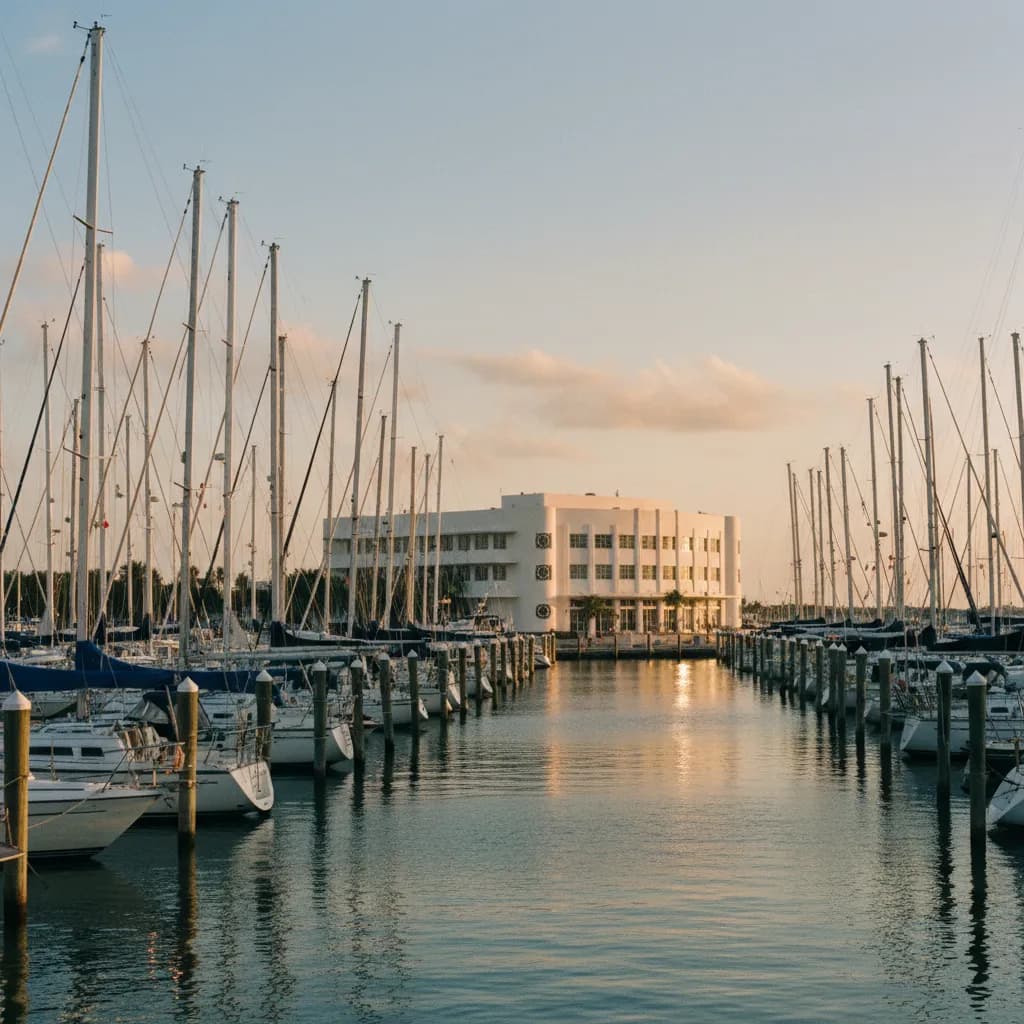
Heading north along South Bayshore Drive, you reach Dinner Key, a busy marina full of masts. Its name is said to come from early picnickers who stopped here to eat. In the 1930s Pan American Airways built a seaplane terminal at this spot, and flying boats departed for Latin America and the Caribbean. The art deco terminal building now serves as Miami City Hall, an unusual reminder that this quiet harbor was once an international gateway. Walk the marina edge to see the boats up close.
Kennedy Park on the Water
Continue north to David T. Kennedy Park, a long green strip along the bay with a shaded path, a fitness course and plenty of benches. This is the most open view of the walk, with the water stretching east toward Key Biscayne and the Brickell towers visible to the north. Locals use it for morning runs and evening strolls. Sit on a bench under the sea grape trees and watch the sailing school boats tack back and forth when the wind is up.
The Shrine Facing Cuba
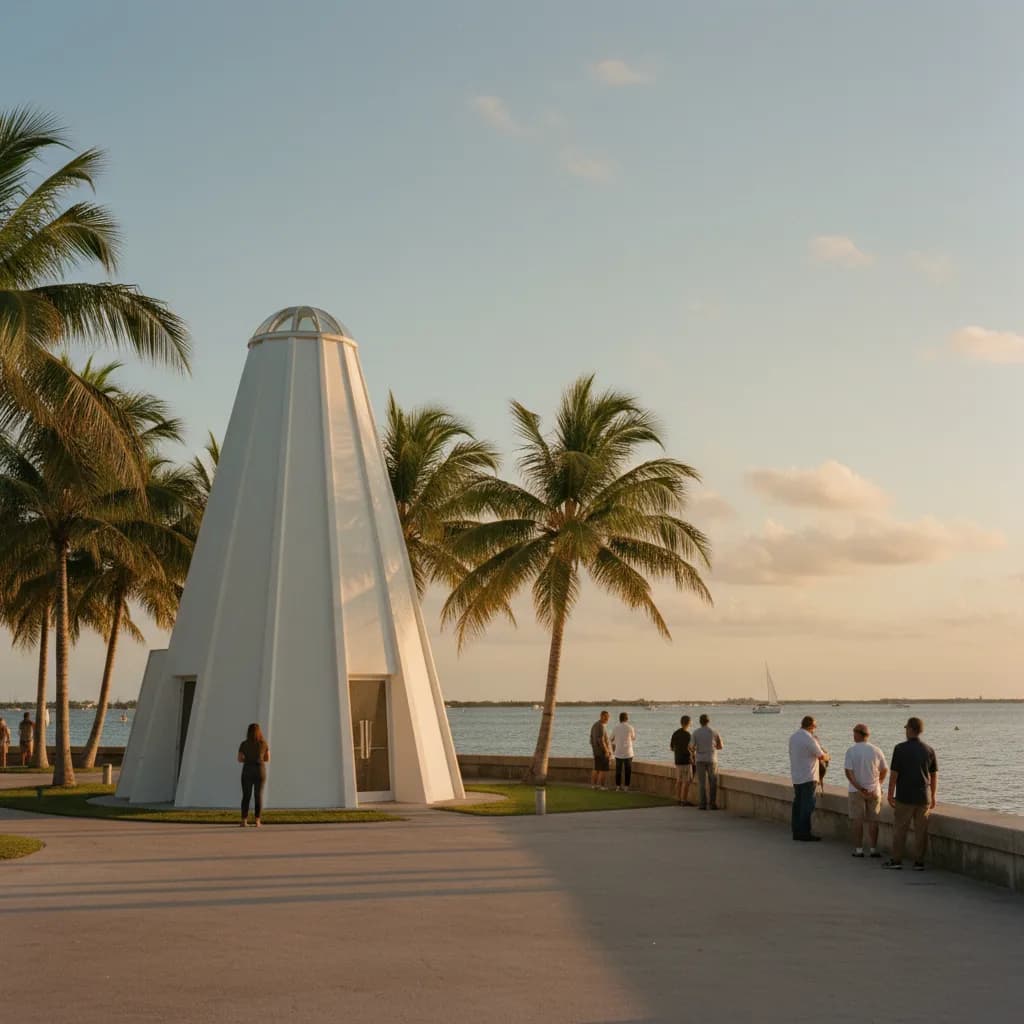
A little further north stands the Ermita de la Caridad, a conical shrine completed in 1973 and dedicated to Our Lady of Charity, the patron saint of Cuba. It was built by and for Cuban exiles, and it was designed to face south toward their homeland across the sea. A mural inside traces the history of the island, and the bayfront lawn outside is calm and contemplative. Visitors are welcome, but remember that it is an active place of worship and keep voices low.
Best Times for Light and Breeze
Mornings are the coolest and calmest time to walk the Grove, with soft light filtering through the canopy and the bay glassy before the wind picks up. Late afternoon brings warmer tones and a steady sea breeze that makes the open parks pleasant. Summer afternoons often bring short, heavy thunderstorms, so plan an indoor coffee stop in the village if dark clouds build to the west.
Who This Route Suits
This walk suits anyone who prefers shade and water to steep climbs. It is good for families with strollers, for slow travelers who want a sense of Miami history, and for photographers who like boats and trees more than skyscrapers. Most of the route is flat and paved, though some park paths are grass or packed dirt.
Plan It With Karpo
Tell Karpo in the Karpo APP that you want coffee in Coconut Grove, Peacock Park, Dinner Key, Kennedy Park and the shrine in one easy morning. Karpo can suggest an order for these stops and nearby places to eat once you finish. Look up the forecast and any park notices yourself before leaving, since storms arrive quickly in summer.
Practical Notes
Wear light clothing and bring water, sunscreen and insect repellent, since mosquitoes can be lively near the mangroves after rain. The full route from the village to the shrine runs roughly two miles one way along the bay, so allow two to three hours with stops. Rideshare or the local trolley can bring you back to the village if you do not want to retrace your steps.
Ask Karpo for more information.
Keep reading
- MiMo District Free Indoor Weekend Plan Finder for Retro Fans
 Coral Gables Free Indoor Weekend Plan Finder for Book Lovers
 South Beach Free Indoor Weekend Plan Finder for Rainy Days