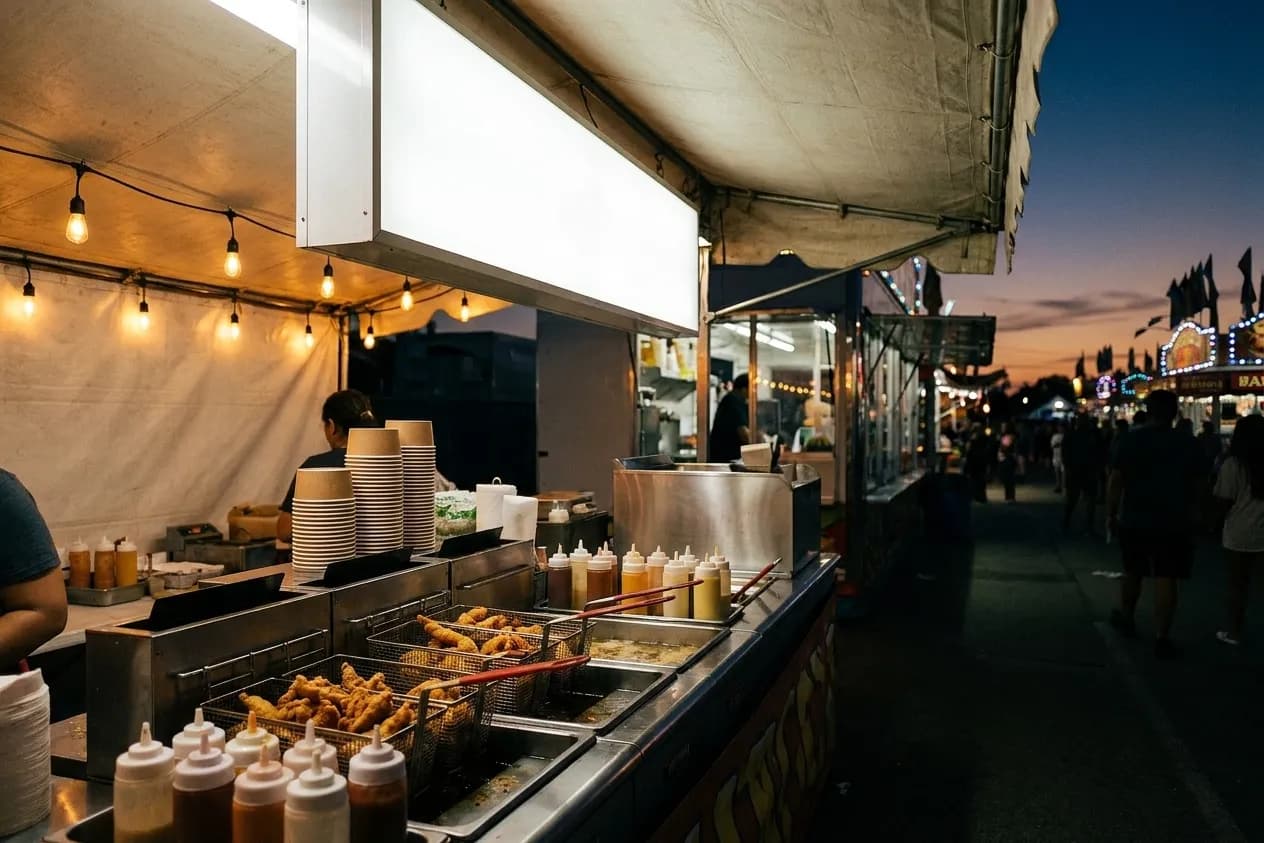
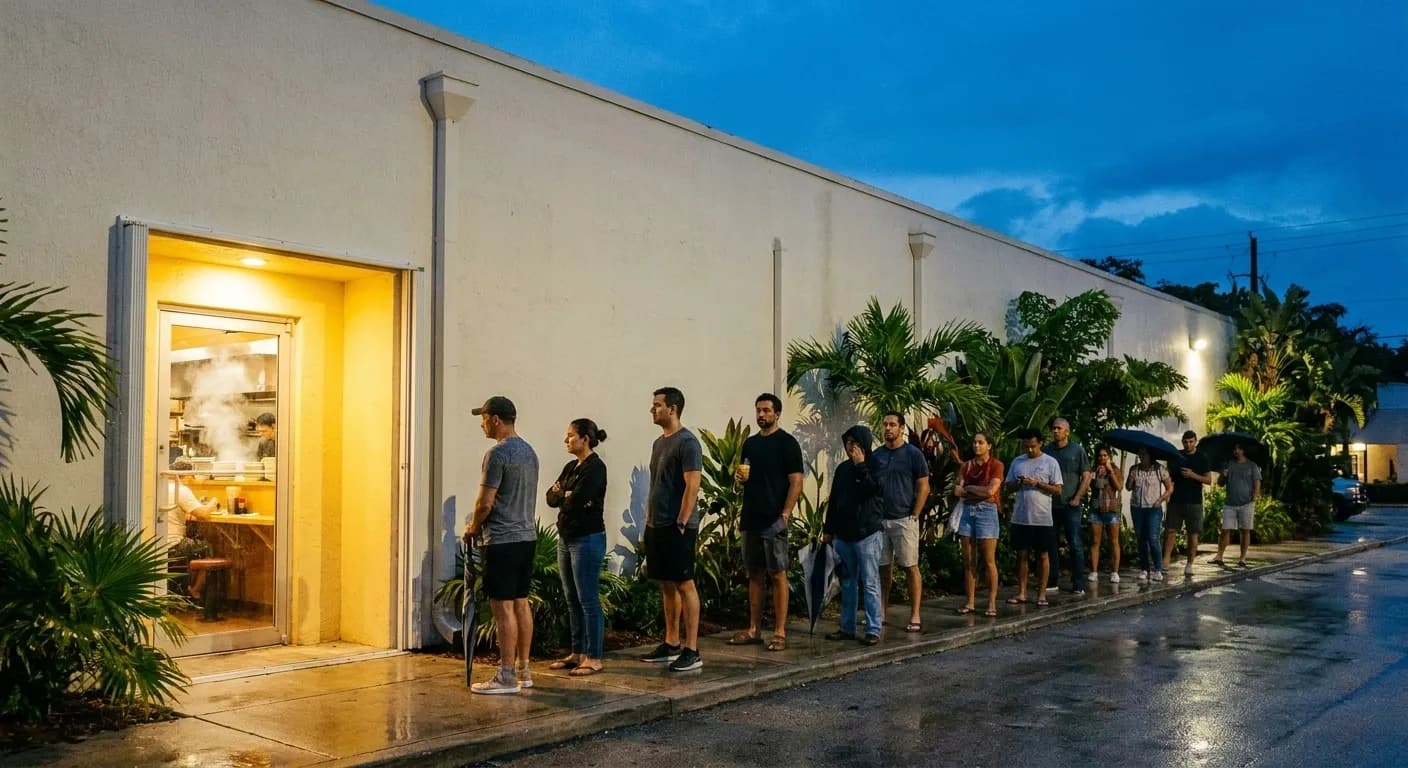
People treat Cuban food in Miami as one cuisine served in one kind of restaurant, and then wonder why the sit-down version of a dish they loved from a window was worse. It is not one thing. It is at least four distinct commercial formats — the ventanita, the panadería, the cafeteria counter and the dining room — and each of them is genuinely best at different dishes. Eat the right dish in the right format and Miami is one of the great food cities. Eat them in the wrong one and it is fine.
Format decides quality here more than any rating does. Ask Karpo which of these formats is nearest to you right now and what it is actually best at.
Start at a ventanita, and know what to say
The ventanita is a walk-up window in the side of a Cuban café. There is no table, no waiter and no bill — you order standing on the pavement and you drink standing there too. It exists for coffee and for small hot pastry, and it is unbeatable at both because the turnover is enormous and nothing sits.
The vocabulary matters and nobody explains it. A cafecito is a small, very sweet shot of espresso, sugar whipped into the first drops. A colada is the same thing in a larger cup with a stack of small plastic thimbles, and it is not a big coffee for one person — it is explicitly a communal serving you are expected to share with the three people you came with or work with. A cortadito is a cafecito cut with steamed milk, which is the everyday one. Order a colada alone and drink it alone and you will have consumed roughly four espressos before ten in the morning.
The panadería is where breakfast actually is
Cuban bakeries sell the pastry layer of this cuisine and they are busiest before nine in the morning. The pastelito is the item — flaky, glazed, filled with guava, guava and cheese, coconut or meat — and the guava-and-cheese one is the reference version. They are made in the morning and they are meaningfully better in the morning, which is the single most useful timing fact in this whole article.
The other bakery item worth knowing is the croqueta. A proper Cuban croqueta is small, smooth, ham-filled and slightly loose inside, and it is eaten as a snack rather than a starter — frequently three at a time, standing up, with a cortadito. If you have only had them as a restaurant appetiser you have had the least good version.

The sandwich question: Cubano versus medianoche
The Cuban sandwich in Miami is roast pork, ham, Swiss, pickle and mustard, pressed flat on Cuban bread — a light, crusty loaf made with lard that collapses correctly under the plancha. The medianoche is the same filling on a soft, slightly sweet egg bread roll, and it is called a midnight because it was the thing you ate after a night out. They are not interchangeable. The Cubano is crisp and salty; the medianoche is softer and reads sweeter against the mustard and pickle.
One long-running local argument worth knowing about: Tampa's version of the Cuban sandwich includes Genoa salami, a legacy of that city's Italian immigrant population, and Miami's does not. Bringing this up in either city produces a very specific kind of conversation. The pressing is the part that decides quality either way — the bread should be compressed to about half its height and the cheese should be fully melted into the pork, not sitting on it.
The cafeteria counter, and eating by weight
The steam-table counter is the format that feeds working Miami at lunch, and it is where the braises live. Ropa vieja — shredded flank in tomato, peppers and onion — and vaca frita, which is the same cut boiled then shredded then fried hard on a flat top until the edges crisp, are the two to know. Vaca frita is the better dish and the less ordered one, largely because it is harder to make well and does not photograph as neatly.
Order it with black beans, white rice and either tostones or maduros. The choice between them is real: tostones are green plantain smashed and fried twice, savoury and starchy; maduros are ripe plantain fried soft and sweet. With a heavily seasoned braise, tostones balance and maduros amplify. Both are correct; nobody agrees.
The dining room is for the long lunch, not the best food
Full Cuban restaurants with waiters and tablecloths do a version of all of the above plus seafood, palomilla steak and whole roast pork. They are pleasant, they are where a family goes on a Sunday, and they are the right call if you want to sit for two hours. They are almost never the best version of any individual dish on this page, because the counter formats do those dishes twenty times more often per day.
The order to do it in
One day, four stops, in this sequence. Bakery before nine for pastelitos and a cortadito. Cafeteria counter at noon for vaca frita, beans and rice, when the steam table has just been refilled. Ventanita at four in the afternoon, which is when Miami collectively takes its second coffee and the window is at its most social. Sandwich late, at a place with a plancha you can see. Do it in the opposite order and every single item is worse.
Tags: #RestaurantsNearMe #CubanFood #LittleHavana #Ventanita #Cortadito #Pastelito #Croqueta #CubanSandwich #VacaFrita #RopaVieja #MiamiFood #Miami #CalleOcho #Restaurants
All trademarks are the property of their respective owners.
Ask Karpo first
Want to run this crawl from wherever you are staying? Ask Karpo which format is closest to you at the hour you are reading this, which stops are still open today, and how to compress the four stops into an afternoon if that is all you have.