 Wynwood Domino Set Gift Browsing Walk: Acrylic Designs
Hidden Gems & Odd Finds
Wolfsonian: Miami Beach Rare Bookstore Research Visit Guide
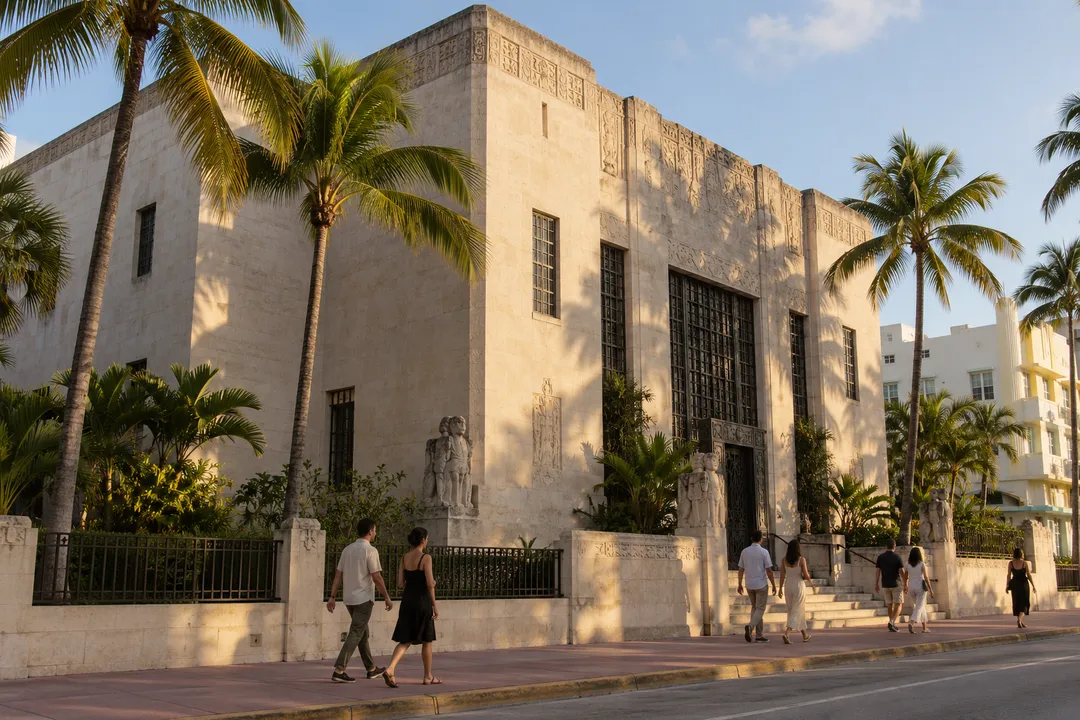
The Wolfsonian-FIU at 1001 Washington Avenue pairs Miami Beach museum galleries with a by-appointment research library and $12 adult admission.
The Wolfsonian–FIU at 1001 Washington Avenue is not a conventional retail rare bookstore; it is a Miami Beach museum with a design-focused library and research center. That distinction makes it valuable for a rare-bookstore search when you want context around books, images, industry, and modern objects rather than a stack of titles to buy. The public galleries run Monday–Tuesday 10am–6pm, close Wednesday, reopen Thursday 10am–6pm, stay open until 9pm Friday, and run 10am–6pm Saturday–Sunday. Adult admission is $12, and the reading room operates by appointment.
Know What Kind Of Book Stop This Is
The corner of 10th Street and Washington Avenue makes arrival simple, but the visit should begin with a choice. Do you want the public galleries, a research appointment, or both? The museum is at 1001 Washington Avenue, Miami Beach, Florida 33139, with the official phone (305) 531-1001. If you are studying a particular designer, movement, or printed object, use the library’s appointment structure rather than assuming the reading room works like an open bookstore. If you only have an afternoon, the galleries still provide enough material to turn a book search into a visual argument.
Use The Washington Avenue Address
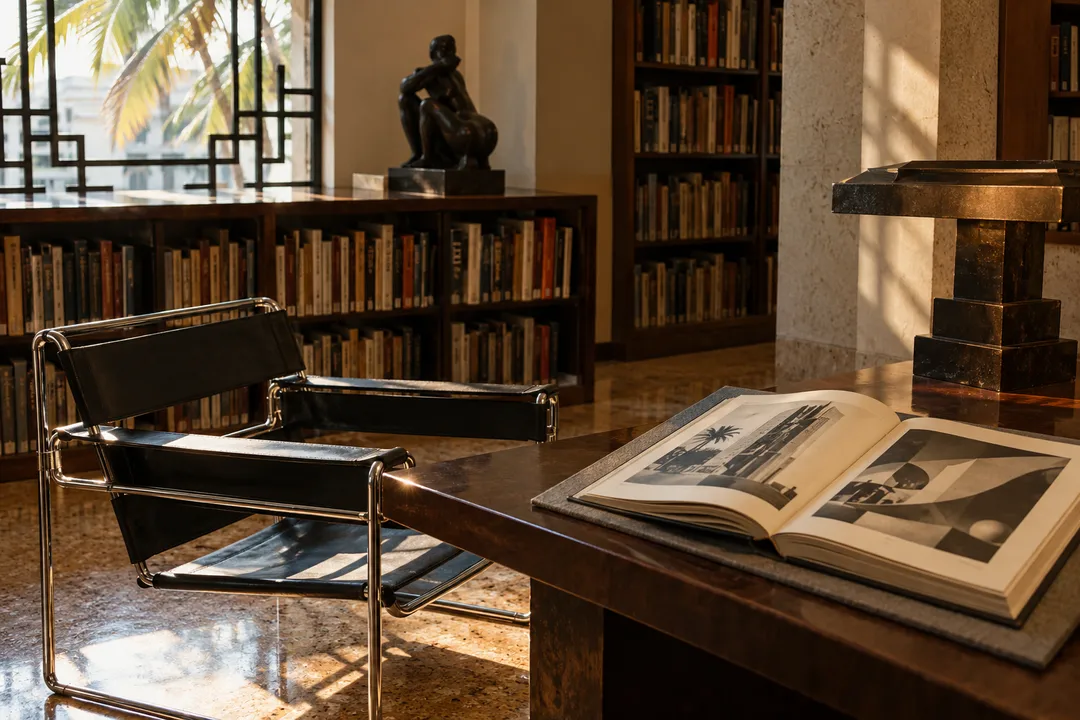
The Wolfsonian’s strength is that it shows how design lives inside systems. A book, poster, chair, appliance, or industrial image can explain how a period imagined progress, comfort, speed, or domestic life. Move through the galleries slowly and notice the relationship between typography, materials, advertising, and the objects around the printed page. The best rare-bookstore question here is not “What old book can I buy?” but “What did this publication help people see?” That shift makes the museum useful for students, designers, historians, and curious readers who want more than a pretty cover.
The Museum Makes Context Visible
For a design collection, read the whole object: cover, typography, paper, image reproduction, binding, and the visual language of the surrounding display. Ask what the object was made to do and who was expected to use it. A technical manual can reveal a period’s industrial confidence; a domestic design book can reveal ideas about labor and taste; a catalog can preserve a vanished company’s vocabulary. The museum setting helps you compare artifacts without flattening them into a chronology. Take notes on relationships, not only names, because the unexpected pairing is often the most useful discovery.
How To Read A Design Collection
The research center is a quiet working space, not a casual browse. Reading-room visits are by appointment, and the public gallery has its own boundaries around handling, bags, food, and photography. Follow staff instructions, keep materials supported, and do not treat a rare volume as a prop for a quick picture. If you are working from a list, bring call numbers, subjects, or dates where possible. A clear request makes the appointment more productive and signals that you understand the difference between looking at a collection and shopping for a souvenir.
Reading Room Rules Matter
Choose the visit window according to your goal. Friday is the late day, with museum hours until 9pm, so it can suit an after-work gallery visit. Wednesday is closed, and the reading room follows its own appointment schedule: Monday–Friday 9am–5pm and Saturday 11am–5:30pm. The practical move is to reserve research time before building the rest of the afternoon around it. If you are visiting only the museum, arrive early enough to read without rushing. If a gallery is busy, step into a quieter section and let the objects reset your pace.
Practical Notes
The $12 adult admission supports access to the museum galleries rather than a guaranteed rare-book purchase. That is worth stating because the Wolfsonian rewards interpretation, not bargain hunting. Students and seniors with identification pay a reduced admission, and the collection’s design focus makes the ticket especially useful for anyone researching modernism, industrial culture, visual communication, or decorative arts. Skip the idea that the most famous object must be your best takeaway. A smaller printed artifact, a material detail, or a strange pairing in the display may provide the sharper reference for your own work. After the visit, stay near Washington Avenue and build a short South Beach loop. The museum sits close to the Art Deco streets, so you can compare the collection’s ideas with the city’s storefronts, signs, facades, and shadows. Keep the walk focused: one architectural block and one café break are enough to continue thinking without turning the museum into a checklist. If you are carrying notes or a catalog, protect them from sun and rain. The neighborhood is most useful after the gallery when the designed environment feels newly legible. The Wolfsonian is ideal for researchers, designers, students, museum visitors, and readers who want to understand why a book matters inside a larger visual culture. It is not the right stop if you need a walk-in shop with shelves and immediate purchasing. My honest skip is the rushed “museum plus beach plus dinner” itinerary that leaves only twenty minutes for the galleries. Choose one theme—industrial design, domestic life, propaganda, transport, or printed ephemera—and give it enough time to connect. The rare-bookstore value here is depth, not inventory volume. Practical Notes: The Wolfsonian–FIU is at 1001 Washington Avenue, Miami Beach, Florida 33139, at 10th Street and Washington Avenue. Museum hours are Monday–Tuesday 10am–6pm, Wednesday closed, Thursday 10am–6pm, Friday 10am–9pm, and Saturday–Sunday 10am–6pm. Adult admission is $12; the reading room is by appointment and lists Monday–Friday 9am–5pm plus Saturday 11am–5:30pm. The official site is wolfsonian.org and the phone is (305) 531-1001. Ask Karpo in the Karpo APP for a South Beach design walk after the collection. Leave time to compare the museum’s objects with the streets outside, and keep a note of one material, image, or typography detail that you can carry into the next part of the day. That small act turns a visit into research instead of a checklist. It also gives you a concrete memory to revisit when a later book, object, or neighborhood building echoes the same design language.
Ask Karpo for more information.
Keep reading
- Wynwood Domino Set Gift Browsing Walk: Acrylic Designs
 Coral Gables Domino Set Gift Browsing Walk: Wood Sets
 Little Havana Domino Set Gift Browsing Walk: Clay Tiles