 Wynwood Domino Set Gift Browsing Walk: Acrylic Designs
Hidden Gems & Odd Finds
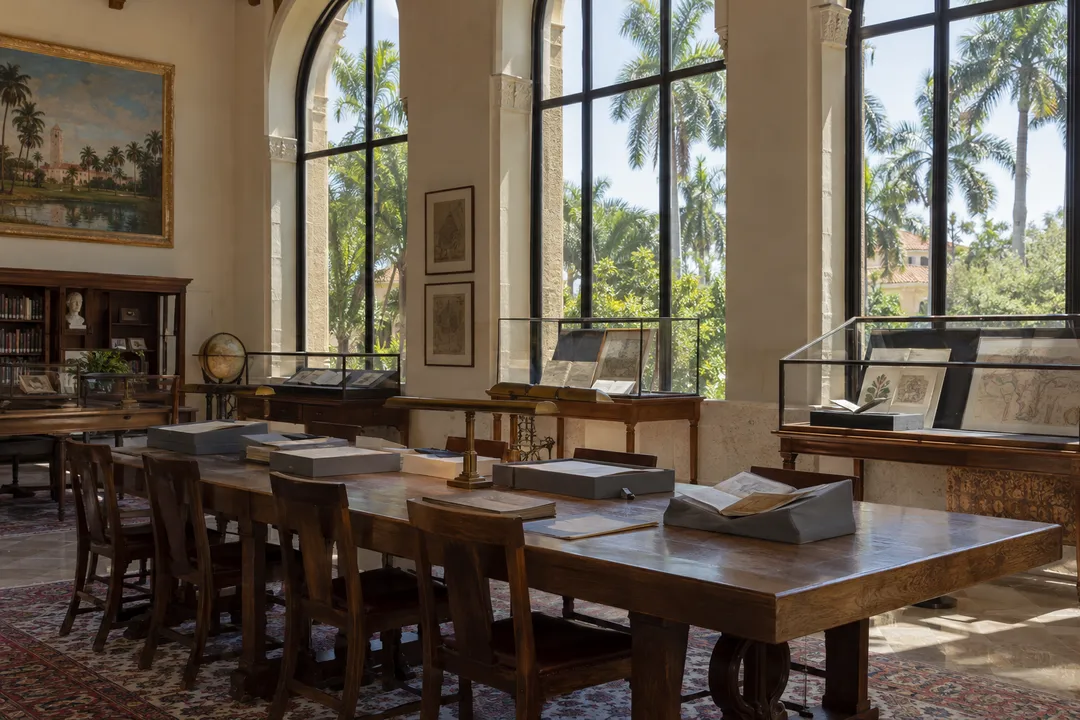
Coral Gables Rare Bookstore: UMiami Collections Visit Guide
University of Miami Special Collections at 1301 Memorial Drive welcomes public researchers by appointment, with rare books and archives inside Richter Library.
If rare bookstore near me is your search phrase but your real goal is to see a historic book rather than buy one, University of Miami Special Collections is a more useful destination than a conventional shop. The department works from Richter Library at 1301 Memorial Drive, Coral Gables, Florida 33146, and its public-facing research guidance explains how visitors can request collection material. This is a research room, not a retail counter: you make a request, follow handling rules, and work with books or archives that may not be displayed on open shelves. The distinction is important, but it is also the appeal. A rare-book visit here is about access, context, and the chance to study an object carefully in the place responsible for preserving it.
A Rare-Book Destination With A Different Mission
Begin by narrowing your question before contacting the library. Special collections can be more rewarding when you know whether you want Florida history, Caribbean studies, Cuban and Latin American material, local authors, maps, photographs, artists’ books, or a particular archive. Search the library’s catalog and collection pages for names and subjects, then save the call number or collection title. A request that says “I want old books” is difficult to act on, a request that identifies an author, date range, subject, or manuscript group gives staff a workable starting point. The library’s role is not to sell a copy or build a shopping cart. It is to connect a researcher with a primary object and the information around it.
What Researchers Can Request
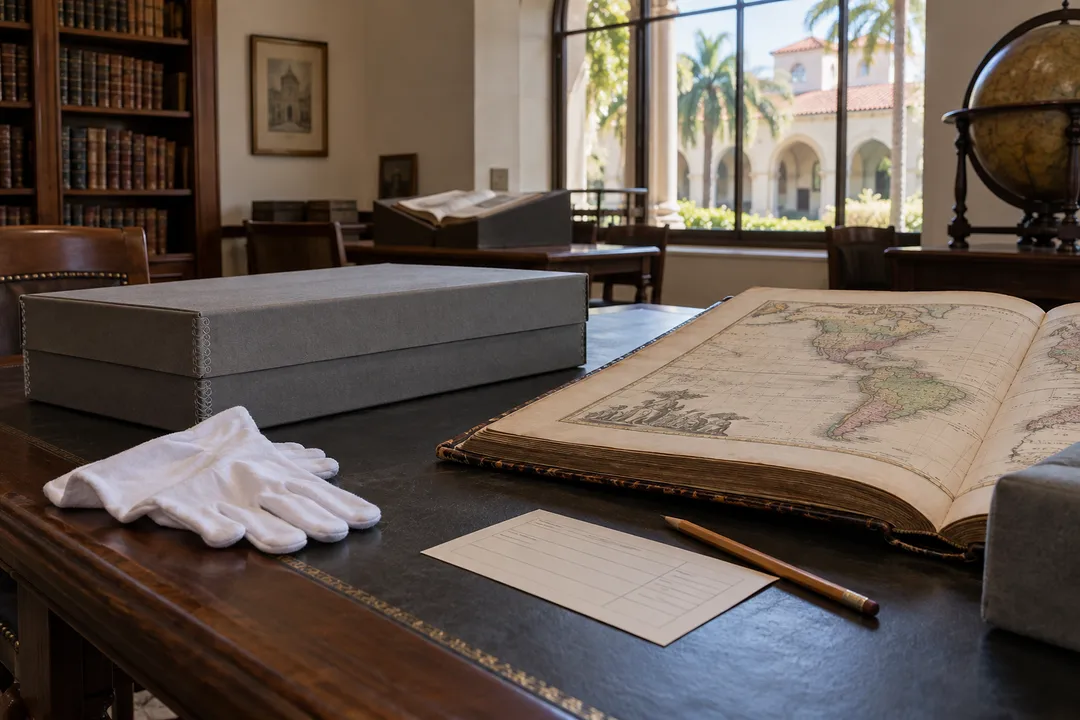
The room’s rules are part of the experience. Expect to use clean dry hands, pencils rather than pens, and supports or weights supplied by staff. Keep bags, food, drinks, and bulky coats outside the research area unless the department gives different instructions. Turn pages from the edge, avoid leaning on a binding, and never rearrange the order of loose papers. Ask before photographing, scanning, or using a tripod. These practices are not needless ceremony, they protect paper, cloth, leather, and fragile annotations for the next researcher. The most respectful visitor is prepared, quiet, and willing to ask before improvising. That makes the session feel less like a restriction and more like an introduction to conservation.
How The Reading Room Works
What makes this a rare-book destination is the interpretive layer. A catalog record may tell you the date and subject, but the physical copy can reveal an owner’s bookplate, a handwritten note, a printer’s mark, a local binding, or evidence of how a text traveled through Miami and the Caribbean. Ask staff which related materials can be viewed alongside the book. A newspaper, photograph, map, or personal archive may change the meaning of the volume. Take notes on the call number, title page, edition, and any provenance that staff permits you to record. The goal is not to rush through a famous object, it is to leave with evidence that another reader could follow.
What To Bring And What To Leave Outside
Give yourself enough time for the administrative side. Research-room visits often require advance communication, an identification check, and a scheduled seat, especially when material is stored off-site or needs staff retrieval. Read the current visitor guidance from the University of Miami Libraries and describe your project clearly. If you are a first-time researcher, say so, staff can explain the request process and handling expectations. Do not assume a web image replaces the original, and do not arrive expecting every item to be immediately available. The queue here is a retrieval queue, not a line at a checkout. Planning is what turns a rare-book search into a calm, productive session.
A Coral Gables Campus Walk
After the appointment, keep the campus walk light. Richter Library sits in Coral Gables near the University of Miami’s landscaped core, so you can continue along Memorial Drive, notice the palms and historic academic buildings, and then head toward nearby South Miami or Coral Gables for food. If you have made detailed notes, take a break before trying to summarize them, rare material can be mentally dense. Protect any permitted reproductions from rain and heat, and keep your notebook separate from drinks. The campus setting makes this destination feel different from a bookseller’s room, but the same principle applies: one carefully chosen subject is more satisfying than an overloaded itinerary.
Practical Notes
Practical Notes: University of Miami Special Collections works from Richter Library at 1301 Memorial Drive, Coral Gables, FL 33146. Use the University of Miami Libraries Special Collections pages to identify material and request access before visiting. Bring photo identification, a pencil, and a short research list, leave food, drinks, pens, and large bags outside the reading area. This is not a retail bookstore and there is no purchase counter, so frame the visit as a public research appointment. Save the department name, library address, request details, and any call numbers in the Karpo APP so the campus route stays separate from Miami’s commercial bookshops.
Choose this rare-book destination if you want evidence, not a souvenir. University of Miami Special Collections suits students, writers, family historians, collectors researching provenance, and curious readers who want to understand a primary object in context. It is not the right answer for a spontaneous browse or a guaranteed purchase. It is excellent for a deliberate afternoon in which the book itself is the destination: request it, handle it correctly, read its marks, and follow the related archive. For Coral Gables readers searching rare bookstore near me and willing to treat “bookstore” as a doorway into research, the visit can be far more memorable than a quick retail stop. Before leaving, repeat the call number and collection title back to staff so your notes are useful later. If you plan to cite the item, ask what form of acknowledgment the library prefers. That courtesy protects both the researcher and the collection. It also turns a one-time viewing into a traceable piece of work that another reader can revisit through the same public research process.
Ask Karpo for more information.
Keep reading
- Wynwood Domino Set Gift Browsing Walk: Acrylic Designs
 Coral Gables Domino Set Gift Browsing Walk: Wood Sets
 Little Havana Domino Set Gift Browsing Walk: Clay Tiles