 MiMo District Free Indoor Weekend Plan Finder for Retro Fans
Free Things to Do

Coconut Grove Quiet Study Reading Alcove: Pioneer Library
Coconut Grove's quiet study reading alcove is a library founded by pioneers in the 1890s, beside Miami's oldest marked grave, with Peacock Park by the bay.
Coconut Grove's most storied quiet study reading alcove is its neighborhood library, which traces its roots to 1896, when the Pine Needles Club founded by Mary Barr Munroe and her husband Kirk Munroe began collecting books for the young settlement. The first library building opened in 1901 on land given by pioneer Ralph Munroe, and the present branch has served readers since November 16, 1963.
A Library With a Grave on Its Grounds
Ralph Munroe attached one condition to his gift of land. His first wife, Eva Amelia Hewitt Munroe, had died in 1882, and he asked that her grave be cared for on the site forever. The small gated enclosure still stands beside the library, and it is considered the oldest marked grave in Miami. Most first-time visitors walk right past it, so stop for a minute before you head inside.
That story sets the tone for reading here. This is not a grand civic hall but a modest neighborhood building surrounded by tropical trees, close to the bay and the shops of the Grove. Regulars include retirees who have lived here for decades, students from nearby schools doing homework, and parents waiting while children browse picture books. Quiet comes from the building's small scale rather than from strict rules.
Before You Go: Check the Branch Status
The Miami-Dade Public Library System has been carrying out an improvement project at the Coconut Grove Branch, covering mechanical systems, waterproofing, site work and a new passenger elevator. Before you plan a whole morning around it, look at the branch page on the system's website to see whether the building is open and which services are available that week.
If the branch is open, take a table near a window and settle in early, because the reading area is small and fills quickly after school. If it is closed for work, the plan below still holds: start outdoors by the bay and move indoors to another branch when the heat builds. Either way, the grounds and the grave remain worth seeing, and the walk from the village center takes only a few minutes.
Peacock Park: Reading by the Bay
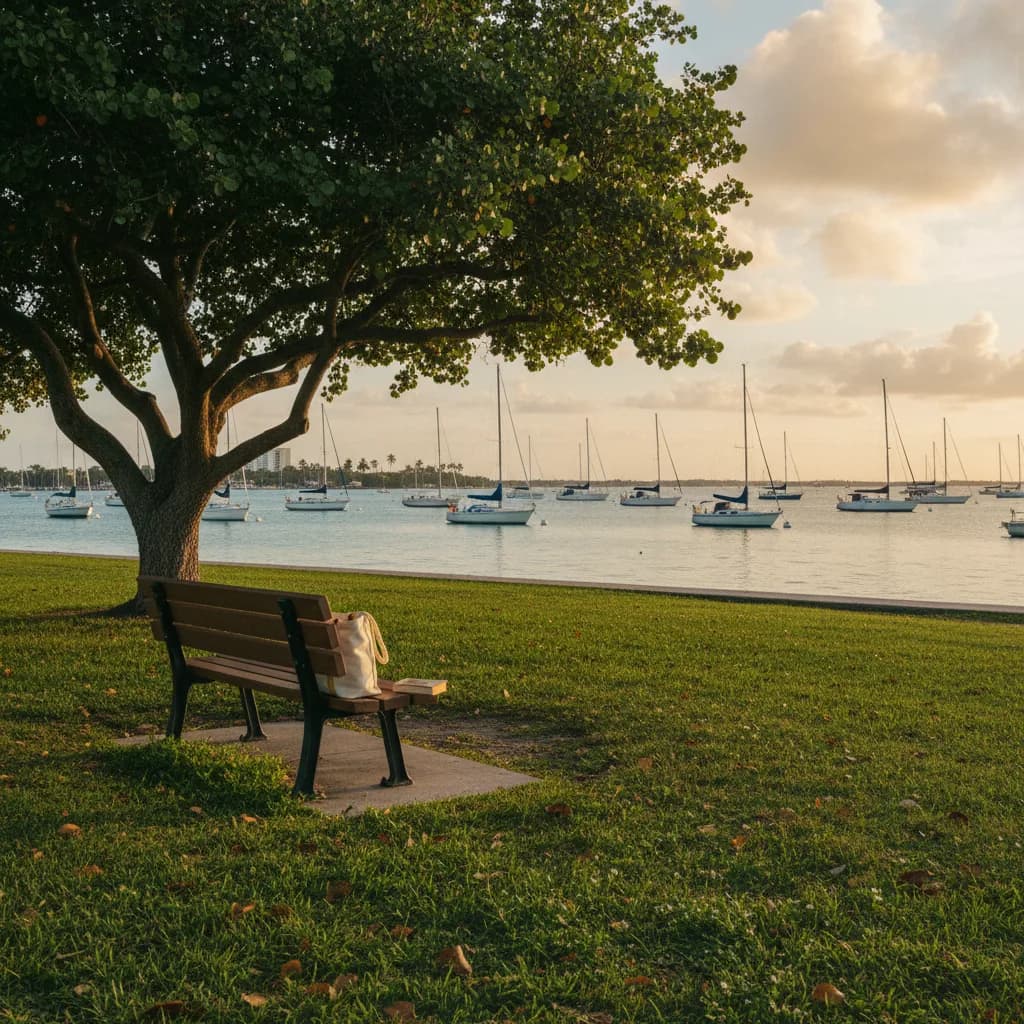
Next to the library, Peacock Park stretches toward Biscayne Bay. It takes its name from the Peacock Inn, the Grove's first hotel, opened by Charles and Isabella Peacock in the 1880s, and it is one of the best free places in Miami to read outside. Look for a bench under a sea grape or a shade tree facing the water, where the breeze off the bay keeps the air moving.
Skip the park for serious reading on weekend afternoons, when sports games, picnics and dog walkers fill the lawn. Weekday mornings are calmer, and the light is softer before noon. Bring a hat and water, since much of the lawn is open to the sun, and keep an eye on the sky during summer, when afternoon storms can arrive with little warning.
A Slow Grove Reading Loop
A good day starts with coffee in the village center, followed by a short walk down to the library grounds. Read indoors for an hour if the branch is open, or begin directly on a bench in Peacock Park. Around midday, walk back up to the shaded streets of Main Highway and Commodore Plaza for lunch, where the banyan trees offer plenty of shade on the sidewalks.
In the afternoon, return to the bayfront for a final chapter as the sailboats come in. If the weather turns, a short drive takes you to the Coral Gables Branch Library, a larger reading room that reopened after renovations in 2023. Keeping that indoor backup in mind means a sudden downpour never ends your reading day early.
Small Habits That Help
The Grove is humid most of the year, so bring a light cover for your book and a bag that closes if rain starts. Paper notes survive a bench better than a laptop does. For long readings, print chapters at home, carry a pencil, and use the library for anything that needs Wi-Fi or a power outlet. If you are studying for an exam, split the day into two blocks of about ninety minutes each, one indoors and one outdoors, with a proper lunch between them. The change of scene helps memory, and the walk between the bay and the village gives your eyes a rest from the page.
Respect the local rhythm too. The neighborhood has a long history of artists, writers and sailors, and many residents treat the library and the park as extensions of their front porches. Keep calls short and away from benches where others are reading, and leave the grave enclosure as you found it.
How Karpo APP Helps
Karpo APP can help you put this day together. Tell it you are in Coconut Grove, want free and quiet places to read, and prefer either an indoor table or a bench by the water. It can suggest an order for the library grounds, Peacock Park, a lunch stop on Main Highway and an indoor backup in Coral Gables, and it saves the plan so you can follow it later. Whether a branch is open that day is something to confirm on the library website.
As you return, add notes to your saved plan: which bench caught the best breeze, which table had an outlet, and how long the walk took from your favorite coffee shop. Those notes make each visit easier and help you share the route with friends who want to read in the Grove. Over a season, you will learn which months bring the softest breeze, when school groups visit the branch, and which corner of the lawn stays shaded longest.
Coconut Grove Reading Summary
Coconut Grove's library grew out of the Pine Needles Club of 1896, opened its first building in 1901 on land from Ralph Munroe, and moved into its present building in 1963. Eva Munroe's grave, the oldest marked grave in Miami, sits on the grounds. Peacock Park next door is the free outdoor alcove by the bay.
Check the branch status before you go, read indoors when you can and outdoors when the weather allows, and keep Coral Gables as your rainy-day backup. Save the stops in Karpo APP so the routine is ready when you are. It is a quiet way to spend a day in one of Miami's oldest neighborhoods.
Ask Karpo for more information.
Keep reading
- MiMo District Free Indoor Weekend Plan Finder for Retro Fans
 Coral Gables Free Indoor Weekend Plan Finder for Book Lovers
 South Beach Free Indoor Weekend Plan Finder for Rainy Days