The start of a term in Miami produces a very specific problem: you have a fixed weekly food budget, a schedule with gaps in strange places, and a city where it is extremely easy to spend thirty dollars on a mediocre lunch without noticing. The good news is that Miami has one of the strongest cheap-eating economies of any major American city, and almost all of it runs through counters rather than dining rooms. Here is how to read it.
A term of lunches is a real budget. Ask Karpo which of these counter formats is closest to your campus or office and what a full meal there actually costs.
The rule: counters, not rooms
Every format below shares one structural property — no table service. That single difference removes a server's wages, a tip expectation and a leisurely pace from the cost of your meal, and in Miami it is routinely the difference between eleven dollars and twenty-six. It also removes the thing that makes a cheap meal feel cheap, because a counter is not pretending to be a restaurant. It is a counter, and it is very good at being one.
The corollary is that you should ignore ambience entirely as a signal here. Strip-mall frontage, fluorescent lighting and a laminated menu are neutral in Miami. They tell you about the rent, not the cooking.
The Cuban cafeteria counter: the default
The steam-table counter attached to a Cuban café is the backbone of cheap eating in this county. You get a protein — ropa vieja, roast pork, chicken fricassee, picadillo — with black beans, white rice and plantains, in a portion calibrated for someone doing physical work. It lands comfortably under fifteen dollars in most of the county away from the beach, and it is one of the few cheap lunches anywhere that reliably leaves you full for six hours rather than two.
Two ordering notes. Ask for the daily special rather than reading the whole board — it is cheaper, it is what has just been made, and it moves fastest. And the choice between tostones and maduros is free, so treat it as a real decision: tostones with a heavily sauced braise, maduros with something dry and salty.
Venezuelan and Colombian windows: arepas and empanadas
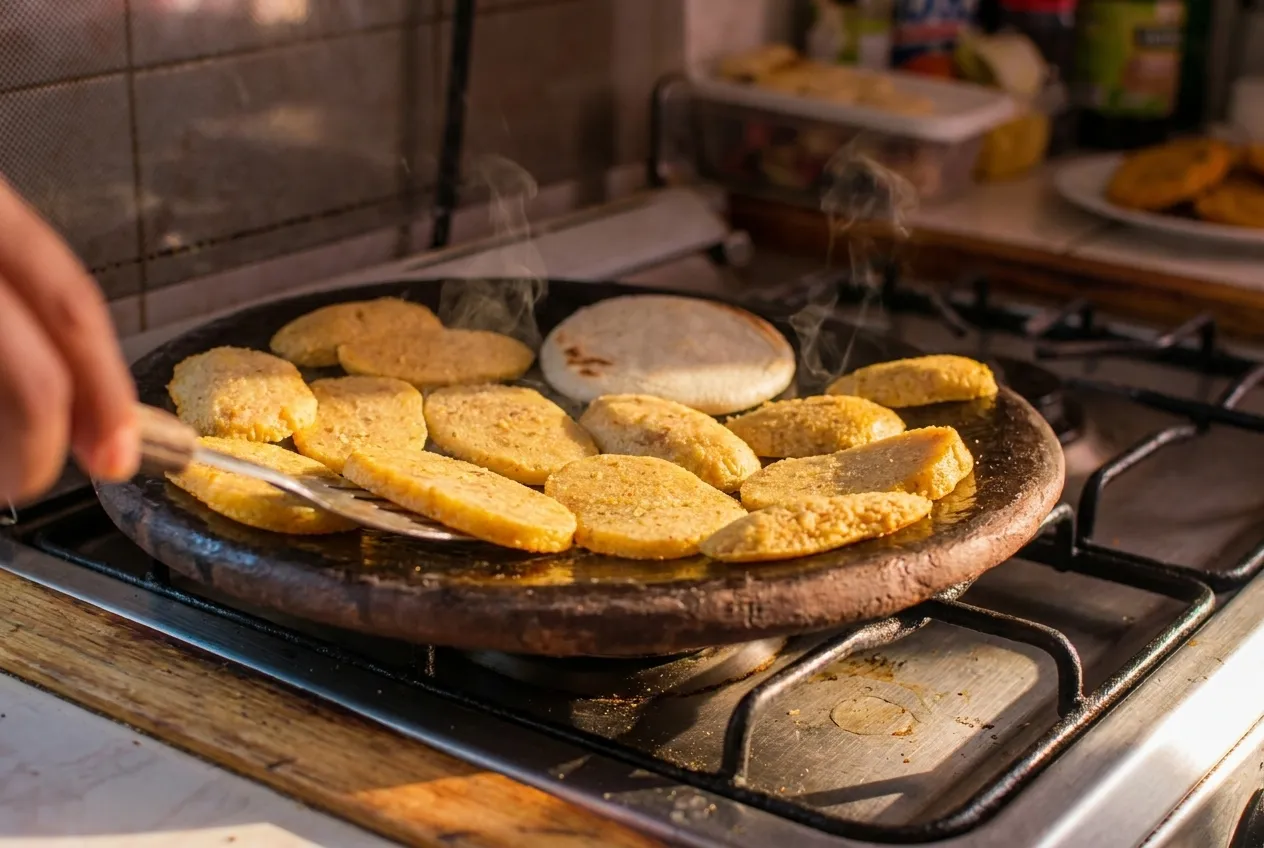
Miami has the largest Venezuelan population in the United States, and the arepa economy that came with it is the single best value-per-dollar food in the county. An arepa is a griddled corn cake split and stuffed — shredded beef, chicken and avocado, black beans and cheese — and one substantial one is a meal for well under ten dollars in most of the city.
The Colombian version of the same window sells empanadas, arepas de choclo and pandebono, and it is generally even cheaper. Both formats are fast, portable and open early, which makes them the best answer to a gap between classes rather than a proper lunch break.
Nicaraguan fritangas: the biggest portions in the county
A fritanga is a Nicaraguan grill counter — you point at a tray, they pile a plate. Gallo pinto, grilled meat, fried cheese, plantain, cabbage salad. The portions are the largest cheap portions in South Florida by a clear margin, and the pricing is close to unchanged from a decade ago in the western parts of the county where these mostly are. This is the format to know if the goal is calories per dollar and you are not squeamish about a plate that arrives with no negotiation.
Haitian counters, and the most under-used cheap food in Miami
Haitian griot — pork marinated, boiled and then fried — with pikliz, the fiery pickled cabbage and Scotch bonnet relish, and rice with djon djon is one of the great cheap plates available in this city, and it is systematically under-visited by everyone who is not Haitian. The counters concentrate in Little Haiti, Little River and North Miami, portions are large, and the ceiling on this cuisine's quality is much higher than its price suggests.
The Sunday problem, and how to solve it
Here is the constraint nobody warns you about. A large share of Miami's best cheap counters are lunch operations serving a working population, and they close on Sundays or close early. If your week has a Sunday in it — and it does — you need a specific Sunday plan rather than the assumption that Saturday's option will be there.
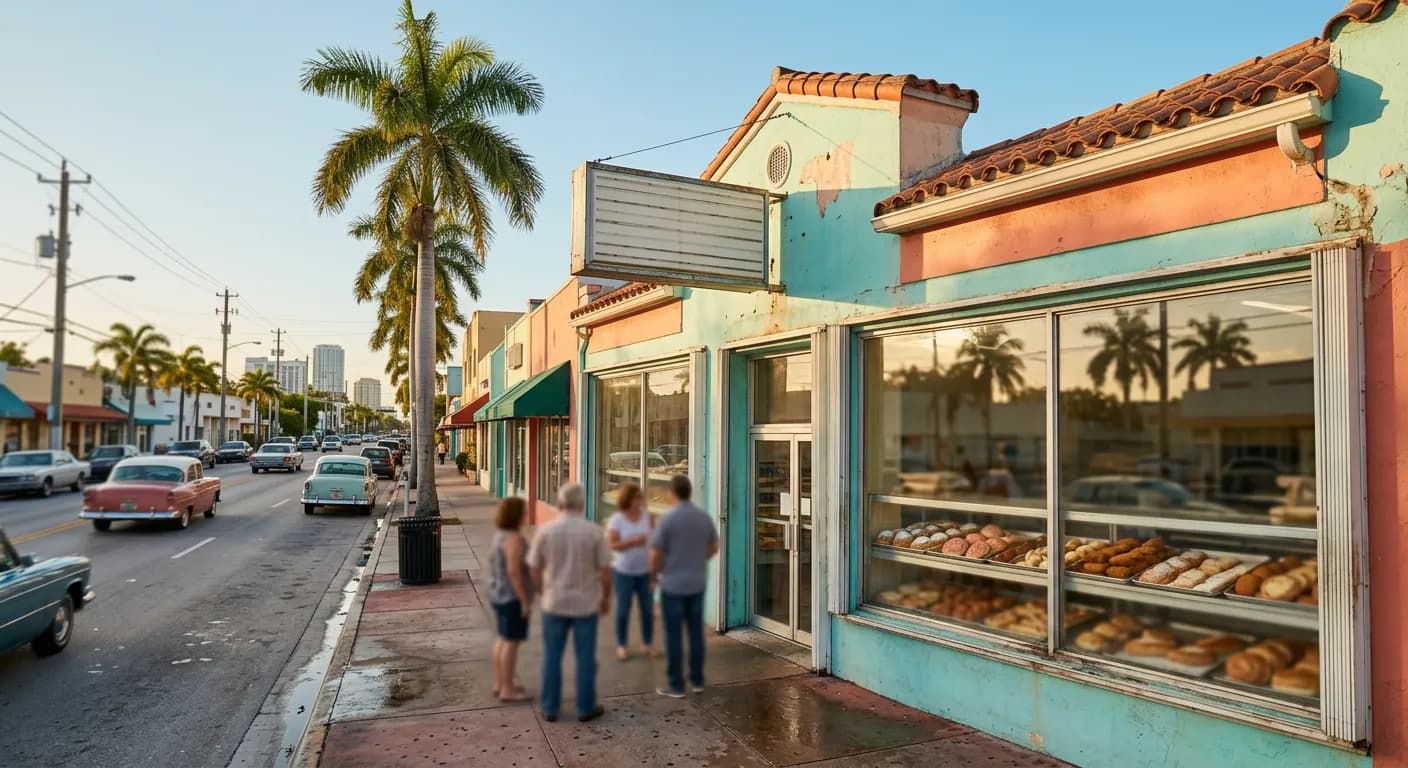
Three formats reliably survive Sunday. Ventanitas and Cuban bakeries, because Sunday morning is one of their busiest sittings. Pizza counters, which run on a weekend-heavy demand curve. And the larger 24-hour Cuban restaurants, which are more expensive than the steam-table counters but are genuinely always open. Build the week around the counters and let Sunday be the day you use one of those three.
The weekly method
Pick three counters within ten minutes of where you actually are on weekdays — one Cuban, one arepa or empanada window, one of whatever else is nearby — and rotate them. Eat your main meal at lunch rather than dinner, because every format on this page is a lunch operation and the same food costs more or is unavailable at eight in the evening. Carry a little cash, because a meaningful number of these counters still prefer it. And treat the beach and the fashionable districts as weekend territory rather than weekday territory; the same plate costs roughly double within two blocks of the ocean.
Tags: #PlacesToEatNearMe #CheapEatsMiami #StudentBudget #BackToSchool #Arepas #Fritanga #Griot #CubanFood #Miami #CounterService #Under15 #MiamiFood #CampusLife #WeeklyMeals
All trademarks are the property of their respective owners.
Ask Karpo first
Want three cheap counters near where you actually spend your weekdays? Ask Karpo what is within ten minutes of you, what a full plate costs at each, and which of them are open on a Sunday.