 Wynwood Domino Set Gift Browsing Walk: Acrylic Designs
Hidden Gems & Odd Finds
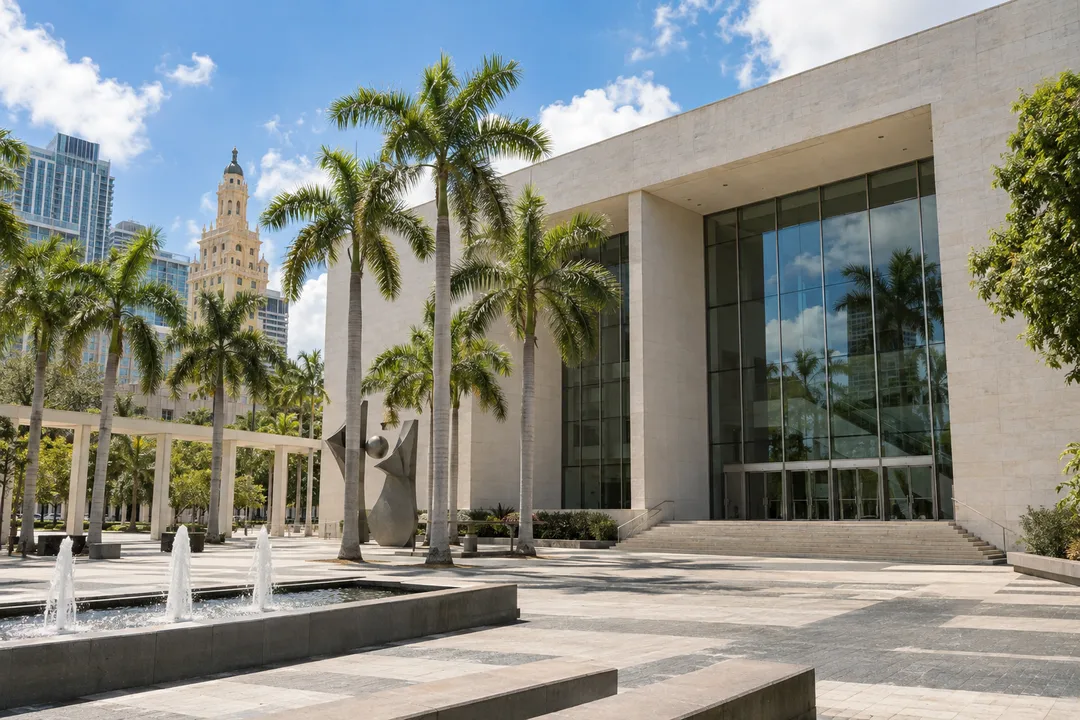
Oddities Museum Near Me: HistoryMiami Museum's Local Cabinet
HistoryMiami Museum in downtown Miami gathers archaeological material, maps, photographs, objects, and personal stories into a layered portrait of South Florida.
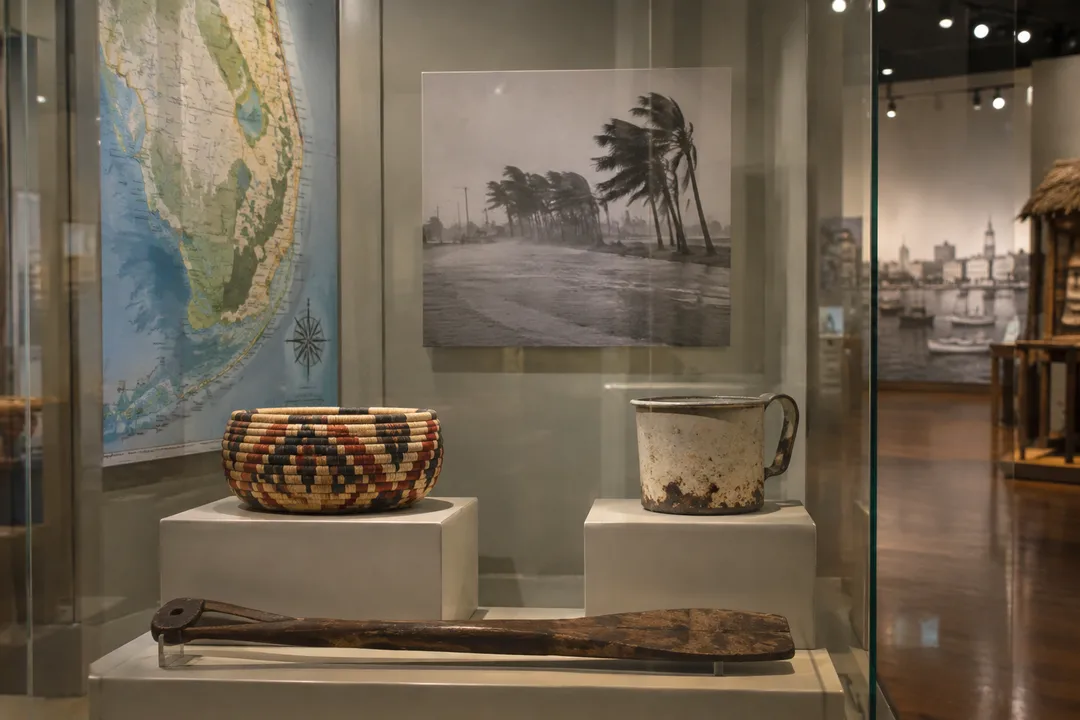
HistoryMiami Museum is a strong oddities museum near me option for visitors who want the objects beneath Miami's glossy surface. At 101 West Flagler Street inside the Miami-Dade Cultural Center, the museum gathers archaeology, maps, photographs, newspapers, personal belongings, and material from the region's many communities. The unusual quality comes from the mix: a city map, a hurricane photograph, a Seminole object, a household item, and a tourist souvenir can all belong to the same complicated story.
The museum is across from Government Center and close to the Metromover, Metrorail, Metrobus, and the Miami-Dade Cultural Center garage. Enter the plaza level from West Flagler Street, with accessible routes available by ramp, stairs, or elevator. Listed hours are Tuesday through Saturday from 10am to 5pm and Sunday from noon to 5pm. Arrive near opening for the quietest galleries, or use the free second Saturday when you want a community-focused day. The central location makes it easy to continue toward the river after the galleries.
Start with the maps and archaeological material because they disrupt the idea that Miami began with hotels and highways. Long before the skyline, South Florida was shaped by Indigenous communities, water routes, trade, storms, and changing shorelines. Maps make that instability visible. A line that looks permanent on paper may represent a short-lived development, while an old route can explain why a neighborhood still carries a particular name or pattern.
The personal objects give the regional story a human scale. Clothing, household tools, letters, signs, and photographs show how people adapted to heat, migration, work, tourism, and sudden growth. Look at the difference between an object made for a local household and one designed for visitors. Both may be colorful, but they speak to different audiences. HistoryMiami is at its best when the collection lets those viewpoints sit beside each other.
Storms and climate are another thread. South Florida history cannot be separated from hurricanes, flooding, heat, and the practical decisions people make around weather. Photographs, emergency material, building objects, and news coverage show how a disaster becomes part of family memory and public policy. These are oddities in the best sense: a bent sign or a salvaged household item can record a whole season of fear, repair, and community response.
The museum's rotating exhibitions often give the permanent collection a sharper question. A display about maps, migration, local food, or a specific neighborhood can change how you read the older objects. Ask staff what is newly on view when you arrive, then use it as a lens rather than trying to see everything equally. Downtown Miami's history is too layered for a single definitive route, and the museum is more useful when you follow one thread deeply.
The rules are museum-standard but important. Keep food and drinks outside the galleries, follow photography and recording instructions, and give school groups or public programs room when they gather. The best line strategy is to arrive at 10am Tuesday through Saturday or reserve a place for a special event. Second Saturday admission is free for all visitors, but that community day can be busier. Go early if you want close reading before the crowd arrives.
Adult admission is $10, seniors and students with identification pay $8, children ages 6 to 12 pay $5, and children under 6 enter free. The museum also offers free admission on the second Saturday of each month. Visitors can validate parking at the cultural center garage, with a flat $5 visitor rate described in the museum's access information. These prices make HistoryMiami one of the easier substantial indoor stops in downtown.
The atmosphere is more archival than theatrical. Galleries ask you to compare documents, objects, and images, while the Cultural Center plaza outside reminds you that Miami's official story is still being built around you. The museum does not hide the region's contradictions: development and preservation, tourism and displacement, climate risk and ambition. That seriousness is balanced by colorful objects and personal stories, so the visit feels curious rather than heavy.
HistoryMiami's institutional story reaches back to 1940 and reflects a long effort to collect, preserve, and interpret Miami-Dade's past. As a Smithsonian Affiliate, it connects local material to broader research networks, but the collection remains grounded in South Florida. The museum's oddity is scale. A city that often markets itself as new has an archive full of older landscapes, political choices, communities, and objects that complicate the postcard version.
Afterward, walk through the Cultural Plaza toward the Main Library, Government Center, and the Miami River. A southbound route reaches Brickell, while a westbound walk follows Flagler Street into older commercial blocks and courthouse history. The Metromover gives you an easy way to see downtown from above without adding a long hike. Let the museum set the route: look for the layers you just studied in street names, building materials, murals, and waterfront edges.
Practical Notes: HistoryMiami Museum is at 101 West Flagler Street, Miami, FL 33130. Hours are Tuesday through Saturday, 10am to 5pm, and Sunday, noon to 5pm. Admission is $10 for adults, $8 for seniors and students, $5 for children ages 6 to 12, and free for children under 6. The second Saturday is free for everyone. Use the Cultural Center garage or Government Center transit, and allow time for special exhibitions.
Choose this oddities museum near me when you want Miami's stranger evidence rather than only its famous views. It suits families, local-history fans, map readers, photographers, students, and visitors curious about how a city is assembled from many communities and environments. It is not a single gimmick attraction. The reward is a more durable picture of South Florida, where a map, a storm object, a keepsake, and a public decision can all belong to one history.
Ask Karpo for more information.
Keep reading
- Wynwood Domino Set Gift Browsing Walk: Acrylic Designs
 Coral Gables Domino Set Gift Browsing Walk: Wood Sets
 Little Havana Domino Set Gift Browsing Walk: Clay Tiles