 Crazy About You Brickell Friendsgiving Dinner: Free Starters
Restaurants
What Does Mickey Gasper Have to Do with Finding Dinner in Downtown Miami?
A Baltimore catcher's name trends nationally, and somehow you're still hungry in Miami at 8 p.m. with no reservation.
You're in a hotel room near Biscayne Boulevard, scrolling through search results because Mickey Gasper—a Baltimore Orioles catcher—just had a moment in a game, and now his name is everywhere. You're not sure why you're still reading about him, but you are, and it's 7:45 p.m., and you haven't eaten. The search bar autocompletes to restaurants, because that's what happens when a trending name collides with hunger and a city you don't know well. You're not alone. When a sports figure spikes in search volume, people in unfamiliar cities often pivot the same query toward food, bars, or plans, hoping the algorithm will connect the dots. It won't. But you still need dinner.
Karpo finds what's actually open right now in Downtown Miami, checks current wait times, and builds a route that skips the causeway backup. Text it before you leave your hotel.
Why a Baseball Player's Name Sends People Looking for Miami Restaurants
Downtown Miami after dark is not a patient place. Parking garages fill by 8 p.m. on weekends, and the blocks between Flagler Street and the Pérez Art Museum turn into a bottleneck of rideshare pickups and convention crowds. If you're walking from a hotel on Biscayne, you'll pass three closed storefronts for every open restaurant, and the open ones will have a host stand that quotes you forty minutes. The friction here is real: you can see the bay, you can see the lights, but you can't sit down without a plan.
The keyword itself—Mickey Gasper—carries no Miami connection. He plays for Baltimore. There's no pop-up, no restaurant collaboration, no local angle beyond the fact that people searching his name also happen to be in Miami and also happen to be hungry. So the task is to treat the search honestly: you're looking for a meal in a city where timing and location matter more than the reason you started typing.
The Four-Block Radius That Actually Delivers
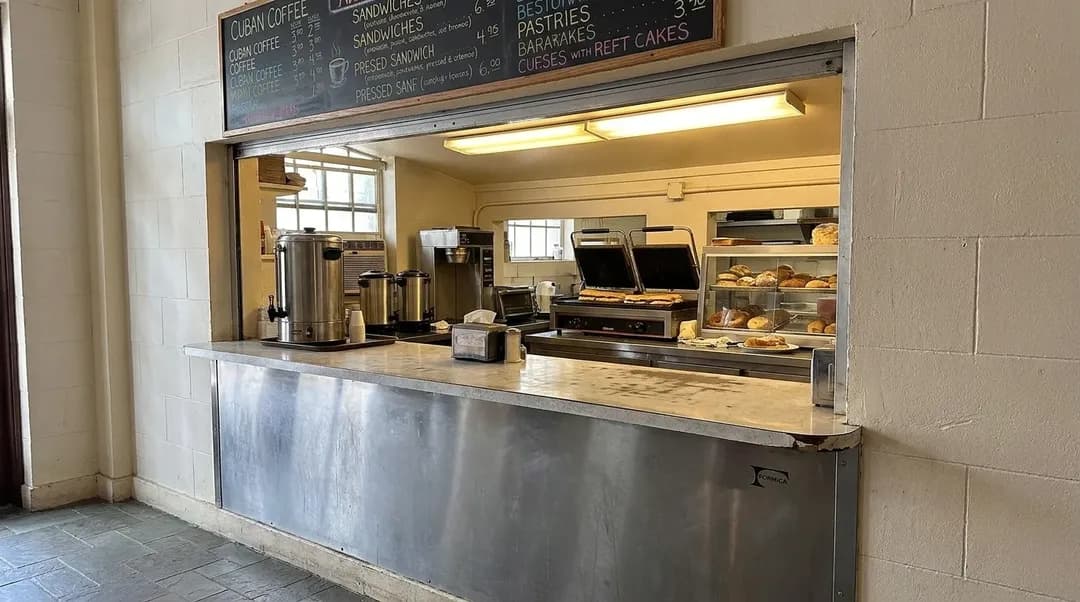
Downtown Miami's restaurant density peaks in a narrow corridor between Northeast 2nd Avenue and Biscayne Boulevard, roughly from Northeast 6th Street down to Flagler. This is not Brickell, which is a fifteen-minute rideshare south and a different parking nightmare. This is not Wynwood, which requires a car and a willingness to circle for twenty minutes. Downtown is walkable if you're already there, and it has enough long-standing spots that you can build a same-night plan without calling ahead.
The Biscayne Boulevard sidewalk between the Marriott Marquis and Bayfront Park is the spine of the district. You'll find Cuban cafeterias with walk-up windows, a handful of hotel steakhouses with bar seating, and a few Mediterranean places that keep their kitchens open past 10 p.m. The key is to avoid anything inside Bayside Marketplace—the wait times are inflated by cruise passengers, and the outdoor seating faces a parking lot, not the water. Walk one block west instead. Northeast 1st Avenue has less foot traffic and shorter waits, even on Friday nights.
If you're coming from the Julia Tuttle Causeway or the Venetian, you'll hit the downtown grid from the north. The intersection at Northeast 14th Street and Biscayne is where traffic compresses before the turn south. Park in the public garage at Northeast 13th Street and 2nd Avenue if you're driving; it's a flat rate after 6 p.m., and the walk to any restaurant in the core is under ten minutes. If you're using rideshare, request pickup at the front entrance of the Adrienne Arsht Center—it's a designated zone, and drivers know where to go. The Metromover is free and runs a loop that hits Government Center, but the stations close to the densest restaurant blocks are elevated, so you'll still walk down stairs and across a plaza.
The Two-Hour Window Before Everything Changes
Dinner in Downtown Miami has a narrow optimal window: 6:30 to 8:30 p.m. Before that, half the kitchens are still in prep mode, and the hotel restaurants are empty. After 8:30, the theater crowd from the Arsht Center floods the sidewalks, and every place with a liquor license has a line. If you're arriving at 7 p.m., you can walk into most spots without a reservation. By 8:15, you're looking at a forty-minute wait or a compromise—bar seating, counter service, or a table next to the kitchen door.
The other timing variable is weather. Miami's afternoon storms roll through between 3 and 6 p.m. most summer days, and the streets stay wet for an hour after. If you're planning to walk, check the radar at 5:30. The covered sidewalks along Biscayne help, but the cross streets have no canopy, and the intersections flood fast. If it rained that afternoon, the outdoor patios will be closed or half-empty, and indoor seating will be tighter. Plan for that.
Bridge timing matters if you're coming from the Beach or from Coconut Grove. The Venetian Causeway is slower but more predictable than the MacArthur, especially after 7 p.m. when cruise traffic clears. The Julia Tuttle is fastest from the north but dumps you into a confusing merge at Northeast 17th Street. If you're driving, add fifteen minutes to whatever the map says. If you're in a rideshare, tell the driver to take Biscayne Boulevard instead of cutting through side streets—the grid is one-way, and every shortcut adds three turns.
The Backup Plan Three Blocks West
When Downtown's core is packed, walk west to the blocks between Miami Avenue and Northwest 1st Avenue. This stretch is quieter, less tourist-facing, and home to a handful of Venezuelan, Peruvian, and Dominican spots that stay open late and rarely have a wait. The clientele skews local—office workers, courthouse staff, people who know the neighborhood. The menus are straightforward, the portions are large, and the prices are lower than anything on Biscayne.
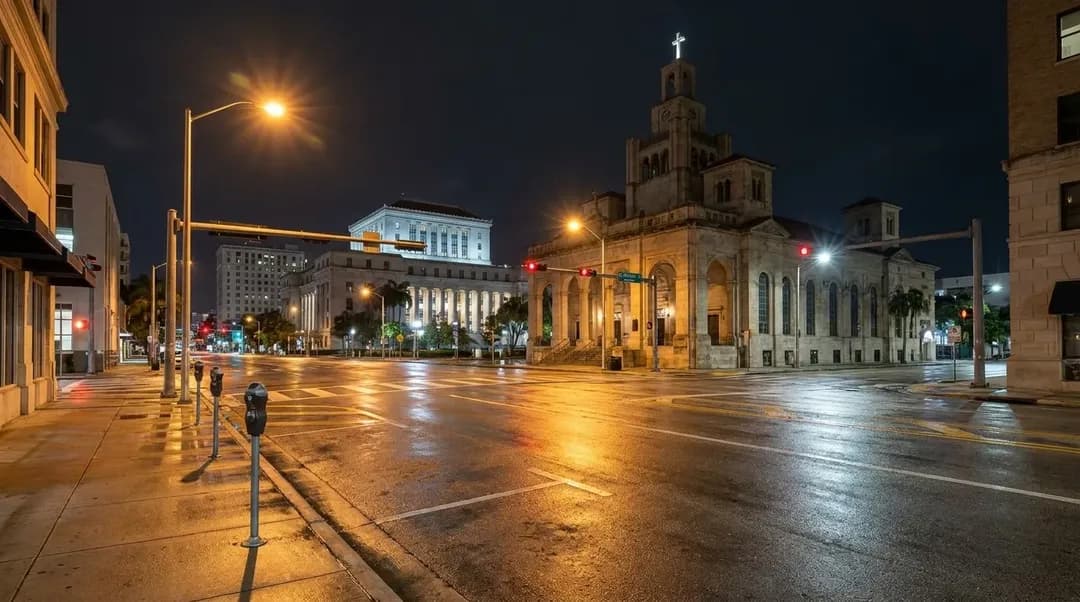
The walk from Bayfront Park to Miami Avenue takes eight minutes and crosses the Metromover tracks at street level. The sidewalks are wider here, and the lighting is better than you'd expect. You'll pass the old Dade County Courthouse, which is lit at night and makes a decent landmark if you're navigating on foot. The parking is easier on this side—metered spots open up after 6 p.m., and there's a surface lot on Northwest 1st Avenue that charges five dollars flat.
This is also where you find the late-night cafeterias that serve Cuban coffee and pressed sandwiches until 2 a.m. If your dinner plan falls apart—if the restaurant is closed, if the wait is too long, if you just want something fast—these windows are the safety net. They don't take reservations, they don't have hostesses, and they don't care if you're in shorts and a T-shirt. You order, you pay, you eat. It's efficient, and it works.
Check Before You Walk Out the Door
Downtown Miami restaurants close without warning. A place that was open last month might be dark this week, and Google Maps won't know until someone updates the listing. Before you commit to a walk or a rideshare, check the restaurant's own website or call the number. If no one answers, pick a backup. The friction of arriving at a locked door in this neighborhood is high—you're on a sidewalk with no shade, limited seating, and a fifteen-minute walk to the next viable option.
Verify parking rules if you're driving. The public garages post their rates online, but the meters on side streets have different enforcement hours depending on the block. Some are free after 6 p.m., some are free after 9 p.m., and some are enforced until midnight. The parking authority tickets aggressively, and the fines start at fifty dollars. If you're unsure, use a garage. It's ten dollars, and you won't come back to a citation on your windshield.
If you're planning around a specific event—a game, a concert, a screening—check the venue's calendar before you build a dinner reservation around it. Miami's event schedules shift frequently, and what's listed on a third-party site may not match what's actually happening. The Arsht Center posts its own performance times, and the AmericanAirlines Arena (now FTX Arena, now Kaseya Center) does the same. If you're coordinating dinner with a 7:30 curtain, you need to know if doors open at 6:30 or 7:00, because that changes whether you eat before or after.
The broader lesson: Mickey Gasper's name will fade from search trends in a day or two, but the mechanics of eating well in Downtown Miami won't change. You need a target block, a time window, a weather check, and a backup. The keyword brought you here, but the city's logistics are what determine whether the night works.
Practical notes
- Arrive between 6:30 and 8:00 p.m. to avoid theater and convention crowds.
- Park in the garage at Northeast 13th Street and 2nd Avenue; it's flat-rate after 6 p.m. and a short walk to most spots.
- Check afternoon radar; summer storms flood intersections and close outdoor patios.
- If Biscayne Boulevard is packed, walk west to Miami Avenue for quieter restaurants and easier seating.
- Call ahead or check the restaurant's own site—Downtown spots close without updating third-party listings.
- Budget ten to fifteen dollars for parking or rideshare; street meters have inconsistent enforcement hours.
Tags: #karpo #miamidowntown #miamidining #miamieats #downtownmiami #biscayneboulevard #miamirestaurants #miamifood #miaminightlife #mickeygasper #miamiplans #miamitravel #miamilocal #miamitiming #miamiparkinglife
Sources consulted: Miami-Dade County Parking · Adrienne Arsht Center · Miami Metromover · Downtown Miami Development Authority
All trademarks are the property of their respective owners.
Ask Karpo first
Text Karpo before you leave and ask what's actually open in Downtown Miami right now, what the current wait times are, and which route skips the causeway backup. It'll build a live plan that adjusts if a spot is closed or if weather changes the timing.
Ask Karpo for more information.
Keep reading
- Crazy About You Brickell Friendsgiving Dinner: Free Starters
 Los Fuegos Friendsgiving Dinner: $129 Sunday Asado at Faena
 Old Lisbon Friendsgiving Dinner on Coral Way Since 1991