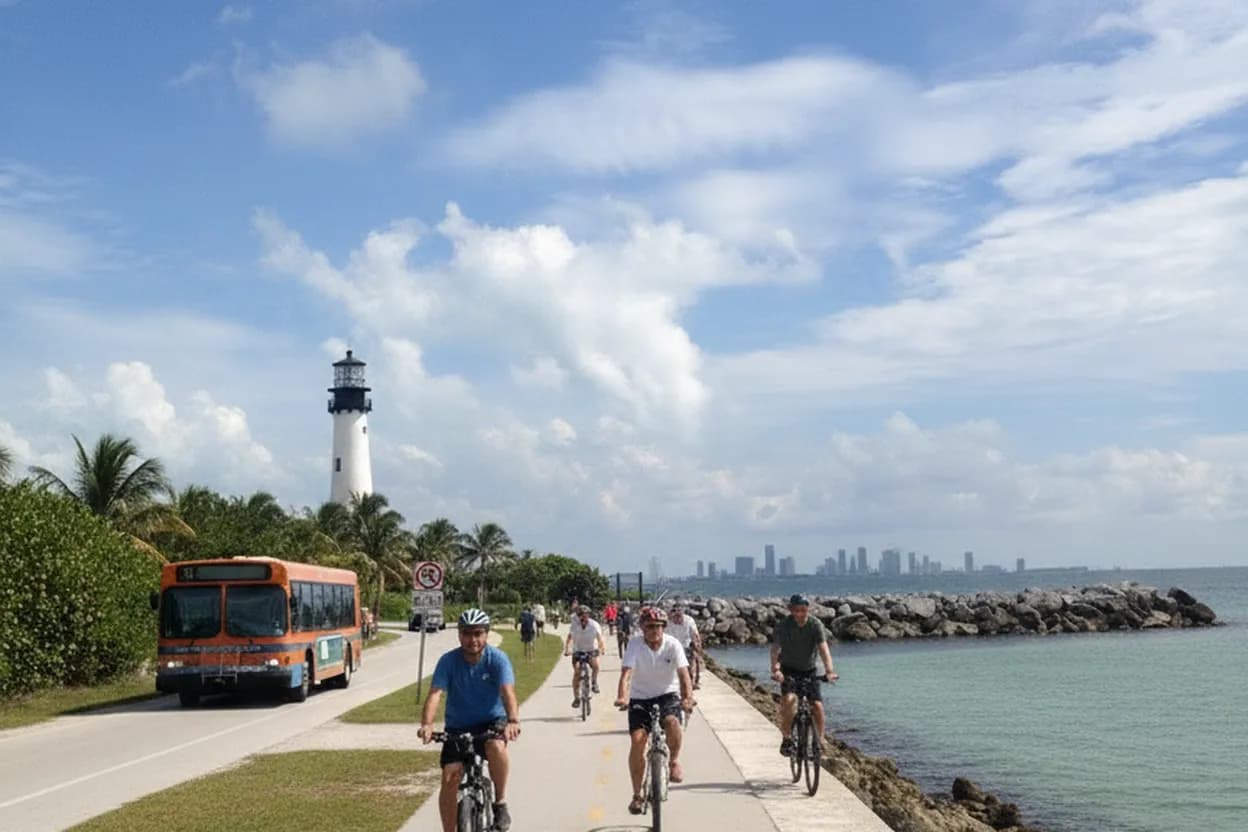
The newport beach shark breach video may be pulling attention west, but Miami has a better local response: watch the water with patience, distance, and practical judgment. From Key Biscayne, a breezy, sunny morning is well suited to Bill Baggs Cape Florida State Park, where the Cape Florida Lighthouse, bay seawall, flat paths, and Atlantic beach make marine-life observation feel calm rather than sensational. This guide keeps the focus on what a family can actually do today, what to verify before leaving, and where to pivot if parking, surf, heat, or access rules change. Treat wildlife as a sighting, not a target.
Want a low-stress Key Biscayne route before you leave? Text Karpo for the latest park, beach, and backup checks tied to Miami’s coastal wildlife morning.
Bill Baggs Entrance Gate on Cape Florida Drive
Bill Baggs Cape Florida State Park is the most direct choice if you are already in Key Biscayne and want an easy, nature-first morning. The official park page lists daily access from 8 a.m. until sundown, with vehicle, pedestrian, bicycle, ride-share, and boat day-use fees. Because capacity can affect entry, especially on beach days, build the plan around arriving early and keeping a nearby Crandon Park backup instead of assuming the gate will stay easy.
The tradeoff is that Bill Baggs is not a free-entry venue for most visitors, despite fitting a low-cost outdoor day. If the goal is strictly no-fee activity, walking or biking from nearby lodging changes the math, but the official pedestrian and bicycle fee still applies. Families should decide whether the lighthouse, shaded trail loops, restrooms, water refill points, and calmer pace justify the entry cost before committing the morning.
Cape Florida Lighthouse Viewing Area
The Cape Florida Lighthouse gives the outing a clear anchor without turning it into a beach marathon. Florida State Parks lists tower tours from 10 a.m. to noon, Thursday through Monday, with the tower closed Tuesdays and Wednesdays. The lighthouse grounds are useful even when a climb is not practical, because the family can pause, orient to the shoreline, and watch the Atlantic from a managed historic area rather than crowding the surf line.
Accessibility and comfort matter here. The official lighthouse page says tower guests must handle 109 spiral steps, narrow spaces, and heights, and children must be at least 42 inches tall and able to climb independently. Anyone with mobility limits, a stroller, heat sensitivity, or a child below the height requirement should treat the lighthouse as a photo and shade stop, not a must-do climb. Verify tour availability with the park before building the whole morning around it.
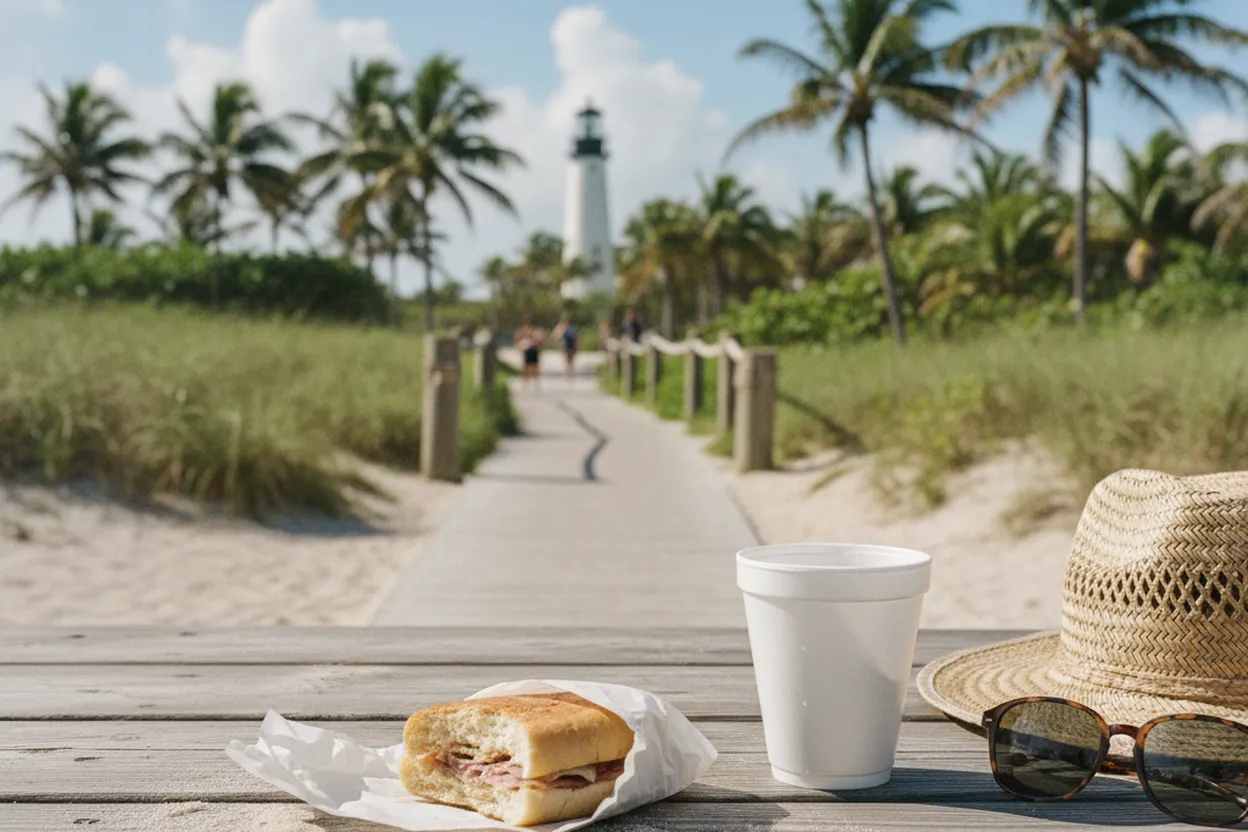
Beach Access 6 Mobi Mat and Wheelchairs
Bill Baggs is strongest for families when the plan includes a realistic beach access point. The park lists a Mobi Mat at Beach Access No. 6 near the Lighthouse Cafe, plus two beach wheelchairs and two swimming wheelchairs available at no charge on a first-come, first-served basis from the bicycle rental area. That detail makes the park more flexible for mixed-age groups, but it also creates a failure mode: limited equipment can already be taken.
Use the accessible beach setup for shoreline observation, not as a promise that ocean swimming is right today. The park states there are no lifeguards and swimming is at your own risk. That is a major distinction from some guarded Miami-Dade beaches. If the family includes newer swimmers, children, or anyone uncomfortable in surf, stay on sand, use the trails, or switch to Crandon’s guarded-beach environment after checking current county conditions.
No Name Harbor Seawall Wildlife Pause
No Name Harbor and the park seawall are better places to slow down than to search aggressively for animals. The park’s amenities page notes that visitors may spot eagle rays or manatees from bike routes and that birds appear along the seawall and trails depending on season, weather, and migration. The right posture is quiet looking: scan the surface, keep children back from edges, and avoid feeding, touching, blocking, or following wildlife.
This is also where the viral-shark frame should be kept in proportion. Florida Fish and Wildlife Conservation Commission guidance says shark bites in Florida waters are extremely unlikely and rarely life threatening, while still recommending basic precautions such as staying in groups, avoiding murky water, avoiding dawn or dusk swimming, and leaving the water if sharks are seen. For a family morning, observation from land preserves the wonder without increasing risk.
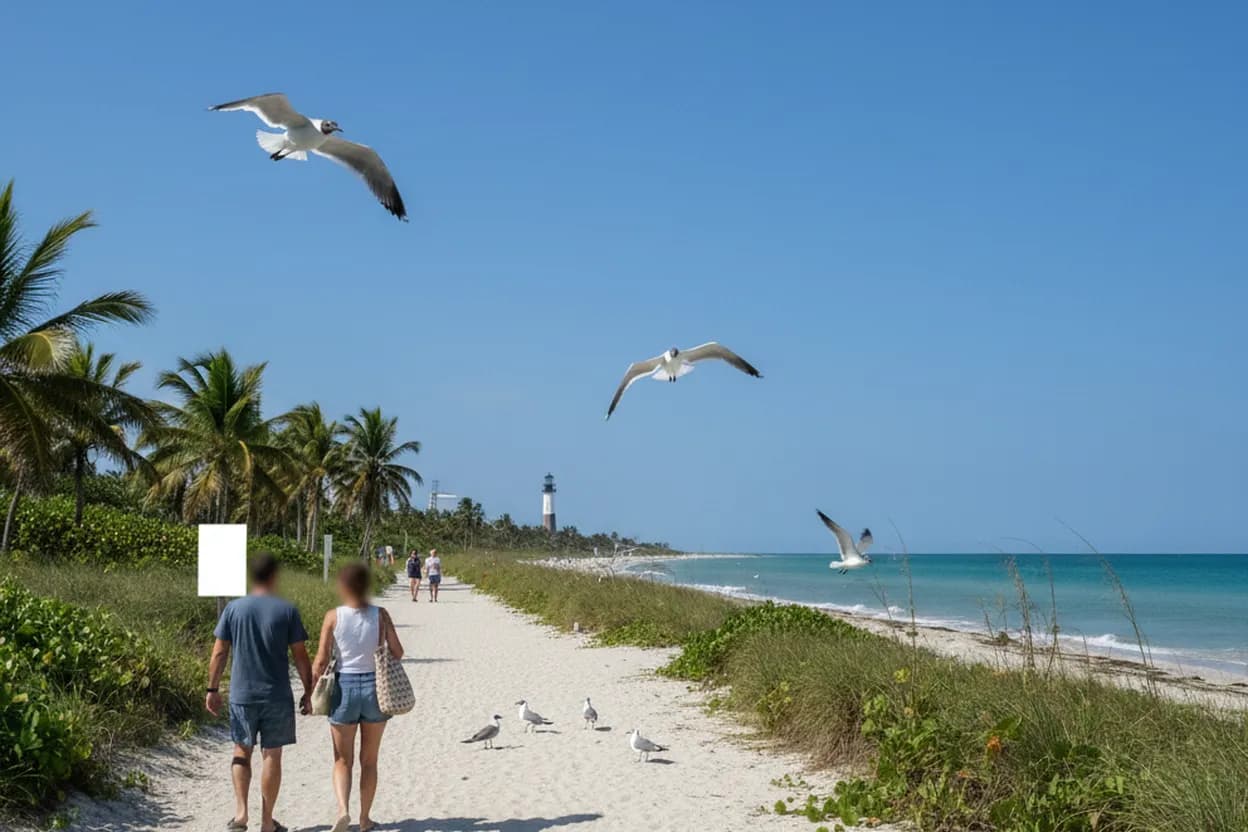
Crandon Park Nature Center Backup on Crandon Boulevard
If Bill Baggs reaches capacity, the weather feels hotter than expected, or the group needs a more interpretive stop, Crandon Park is the strongest Key Biscayne backup. Miami-Dade County lists the Visitor and Nature Center at 6767 Crandon Boulevard, open daily from 9 a.m. to 4 p.m. The Biscayne Nature Center also states there is no admission fee, while guided programs and special events may carry separate fees noted by the center.
Crandon changes the pacing. Instead of lighthouse-and-beach movement, the family can use dunes, mangroves, coastal hammock, seagrass context, and Bear Cut Preserve trails for a quieter educational loop. Miami-Dade notes that the park has paid parking, with different weekday and weekend rates, so free admission does not mean a zero-cost visit if arriving by car. Before switching, verify parking, program availability, and whether any trail or beach area is restricted.
Route 26 Bus or One-Car Key Biscayne Plan
A practical Miami plan has to account for the causeway. Driving gives the most control over water, towels, chairs, and a quick Crandon pivot, but it also ties the morning to parking and potential entry capacity. Transit can reduce parking stress for light travelers, yet service details can change, so check Miami-Dade Transit before leaving. If using ride-share, remember Bill Baggs lists a per-person fee for passengers dropped off by a ride service.
For families, one-car simplicity often wins unless everyone is comfortable walking between stops in heat and wind. Pack water, sun protection, and a small towel even for a non-swim plan, because shoreline watching can stretch longer than expected. If a companion tires early, shorten the route to lighthouse grounds, one shaded trail segment, restroom break, and exit. The easy version is still a complete Miami coastal morning.
Miami Beach Flags and Final Park Call
Before anyone enters the water, check beach flags and official safety guidance. Miami-Dade Fire Rescue explains the Florida flag system: double red means closed to swimmers, red signals high hazard, yellow medium hazard, green low hazard, and purple dangerous marine life. The same guidance stresses that ocean swimming differs from pool swimming and recommends lifeguard-protected beaches. At Bill Baggs, the absence of lifeguards should push cautious families toward shoreline observation.
Make the final verification action concrete: on the morning of the outing, check the Bill Baggs official page or call the park, review National Weather Service Miami rip-current information, and confirm any Crandon Nature Center hours or fees if using the backup. If any condition is uncertain, do the land-based version: lighthouse grounds, seawall, trails, water refill, and exit before midday heat. The best Miami response to marine-life news is informed distance.
Tags: #Miami #KeyBiscayne #BillBaggs #CapeFlorida #CrandonPark #BeachSafety #MarineLife #WildlifeViewing #FamilyOuting #FreeThingsToDo #OutdoorMiami #AskKarpo #BeforeYouGo #CoastalParks
Sources consulted: Source 1: floridastateparks.org · Source 2: floridastateparks.org · Source 3: floridastateparks.org · Source 4: miamidade.gov · Source 5: biscaynenaturecenter.org · Source 6: myfwc.com
All trademarks are the property of their respective owners.
Ask Karpo first
Tell Karpo your date, group size, budget, and starting point. We’ll check current access, timing, transit, and the cleanest Miami plan for Bill Baggs Cape Florida State Park before you head out.


