The Zero-Fare Circle Above the Streets
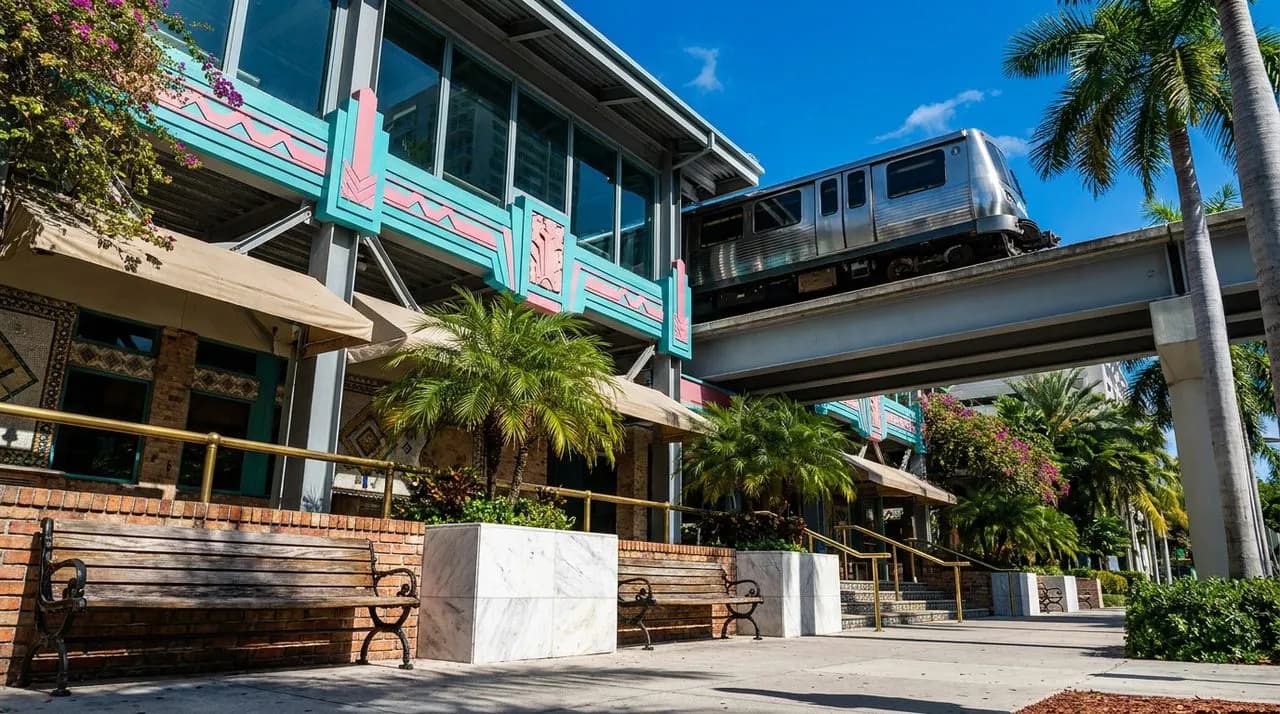
Miami's Metromover has operated fare-free since 2002, a 4.4-mile elevated loop that glides above Biscayne Boulevard, cuts through the glass canyon of Brickell Avenue, and arcs back toward the bay. The system comprises three loops—Inner, Omni, and Brickell—but the core circuit between Downtown and Brickell remains the most scenic and practical for first-time riders. Trains arrive every 90 seconds during peak hours, and the entire Inner Loop takes roughly 15 minutes if you stay aboard without hopping off.
For visitors accustomed to paying per ride in other cities, the concept feels almost too good to be true. There are no turnstiles, no fare gates, no ticket machines. You walk up the station stairs, wait on the platform, board the driverless two-car train, and ride. Locals use it for quick hops between office towers; tourists use it as a moving observation deck. Either way, it works.
Art Deco Miami from an Elevated Vantage
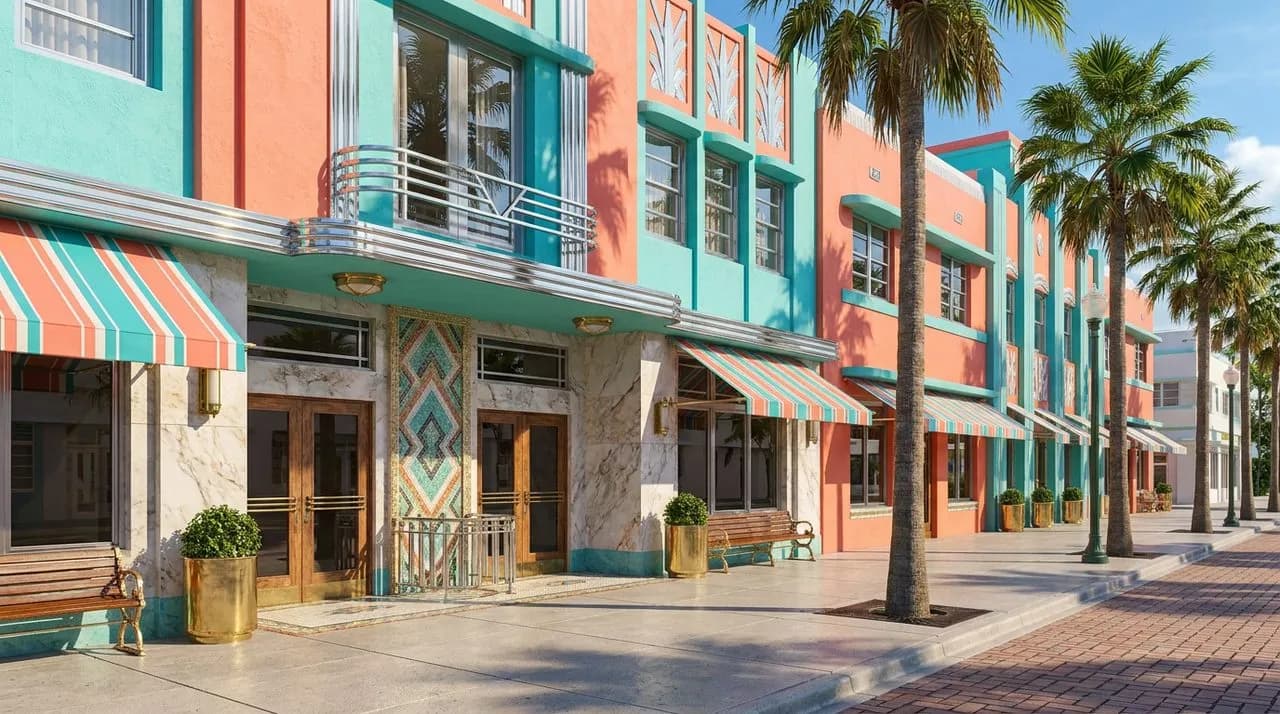
Most visitors associate Art Deco with South Beach's pastel hotels, but pockets of 1920s and 1930s architecture survive in Downtown Miami, and the Metromover offers oblique views of several. The College/Bayside station sits near the Freedom Tower at 600 Biscayne Boulevard, a 1925 Mediterranean Revival landmark that once processed Cuban refugees and now houses contemporary art exhibitions. From the train heading south, you catch a clean sightline of its ornate cupola against the bay.
Further south, the Eleventh Street station on the Brickell Loop passes within a block of the Ingraham Building at 25 Southeast Second Avenue, a 1927 Art Deco office block with zigzag friezes and terra-cotta detailing. The train's elevation—typically 20 to 30 feet above street level—puts you at eye level with upper-story cornices and rooflines that pedestrians rarely notice. Bring binoculars if you want to study the relief work; the train moves slowly enough through tight curves that you can focus without motion blur.
Brickell: Glass, Steel, and Sidewalk Cafés
The Brickell Loop diverges from the Inner Loop at the Eighth Street station and swings south along Brickell Avenue, Miami's high-rise financial corridor. The train threads between condominium towers—some clad in blue glass, others in white concrete fins—and offers fleeting glimpses into residential balconies and rooftop pools. The Financial District station sits at the heart of the action, adjacent to Brickell City Centre, a mixed-use complex with climate-controlled open-air walkways and a second-story food hall.
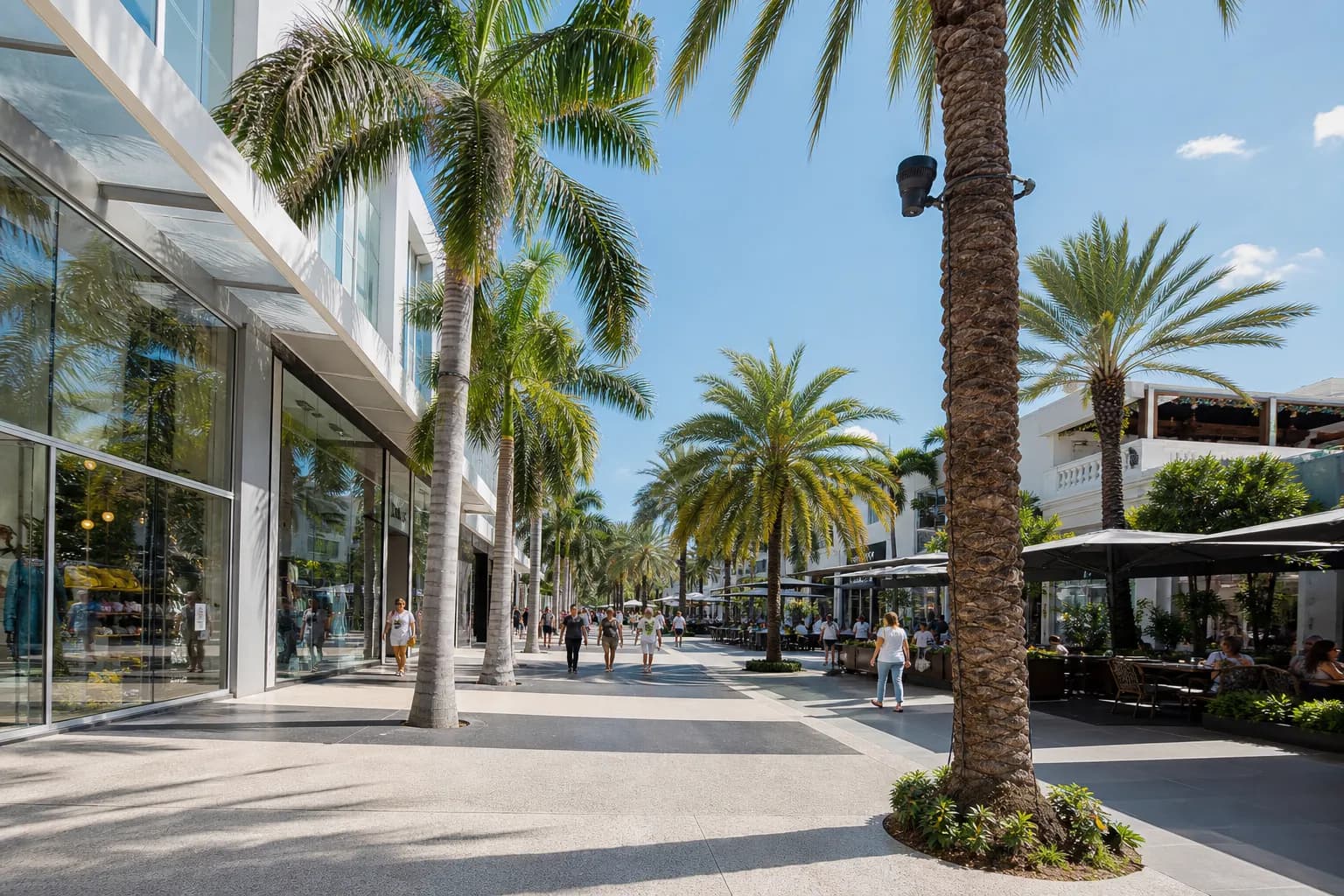
Exit at Tenth Street for Mary Brickell Village, a pedestrian plaza lined with bistros, wine bars, and gelato shops. The station platform overlooks the intersection of South Miami Avenue and Southeast Tenth Street, where outdoor seating spills onto wide sidewalks shaded by ficus trees. On weekday evenings, the plaza fills with finance professionals and condo residents; weekends draw brunch crowds and dog walkers. It's a neighborhood that feels simultaneously corporate and residential, a balance that works better in practice than it sounds on paper.
The Bayside Extension and Waterfront Access
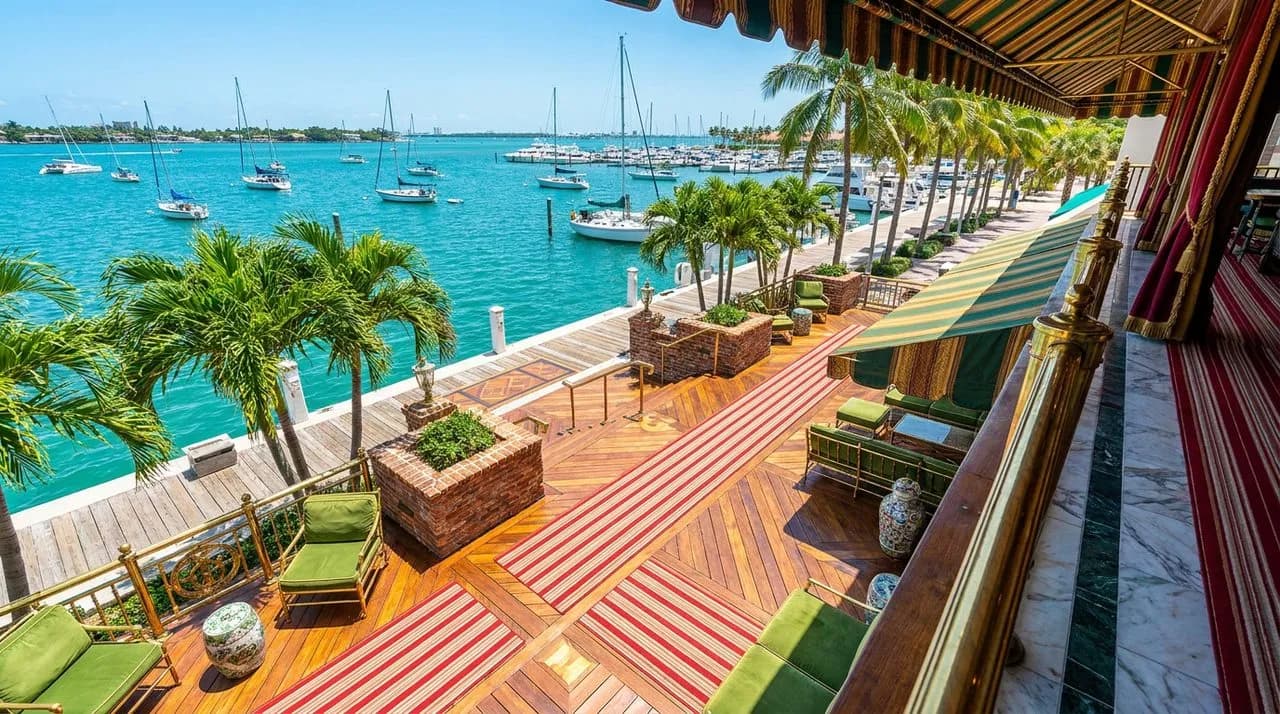
In late 2025, Miami-Dade Transit extended the pedestrian connection from the Bayfront Park station to the waterfront promenade that runs along Biscayne Bay. The new covered walkway—a climate-controlled glass corridor—links the Metromover platform directly to the park's southern edge, eliminating the need to navigate surface streets and traffic lights. The extension also connects to the Bayside Marketplace, a two-story open-air shopping center with marina views and live music stages.
The promenade itself stretches nearly a mile from the American Airlines Arena (now FTX Arena, now Kaseya Center—the naming rights have cycled) south to the Tenth Street Marina. Palm trees line the paved path, and stone benches face the water. On clear mornings, the light off the bay is sharp and white; by late afternoon, cruise ships slide past the PortMiami channel, their hulls casting long shadows. The extension makes the waterfront feel less like a detour and more like a natural part of the Metromover journey.
Best Stops for Photography and People-Watching
Government Center remains the system's busiest transfer point, where the Metromover meets Miami's heavy-rail Metrorail. The station sits above Northwest First Street, adjacent to the brutalist Stephen P. Clark Center and the modernist Miami-Dade Cultural Center, which houses the main library and the HistoryMiami Museum. The platforms here are wide and sun-bleached, with views north toward the Design District and west toward the Health District. It's not picturesque in the postcard sense, but it's a good spot to watch the city's cross-section: students, courthouse staff, hospital workers, tourists consulting paper maps.
For pure skyline drama, ride the outer curve of the Brickell Loop between the Brickell and Tenth Street stations during golden hour. The train arcs eastward, and for a few seconds the entire Downtown cluster—the Southeast Financial Center, the Marquis, the Four Seasons tower—lines up against the western sky. The glass facades catch the low sun and glow amber and rose. It's a two-minute window, but it's worth timing your ride for.
Practical Notes for First-Time Riders
The Metromover is simple to navigate, but a few details help smooth the experience. Trains run from approximately 5:00 a.m. to midnight daily, with reduced frequency after 9:00 p.m. Stations are not staffed, so there's no attendant to ask for directions; rely on the system map posted at each platform or download Miami-Dade Transit's app for real-time arrival information. The trains are driverless and automated, so don't expect a conductor's voice announcing stops—station names appear on digital screens inside each car.
Seating is limited, especially during weekday rush hours, but the ride is short enough that standing rarely becomes uncomfortable. The cars are air-conditioned, though the doors open at every stop, so expect brief blasts of humid air. Bicycles are allowed, and there's space near the doors for strollers and wheelchairs. Most importantly, remember that the system is free but not immune to crowding: if you're carrying luggage or traveling in a group, consider riding outside the 8:00–9:30 a.m. and 5:00–6:30 p.m. peaks.
- No fare required—walk on, ride, walk off.
- Trains arrive every 90 seconds during peak hours, every 3–5 minutes off-peak.
- College/Bayside station connects to the Freedom Tower and waterfront promenade.
- Tenth Street/Promenade station serves Mary Brickell Village dining and nightlife.
- Government Center is the transfer point for Metrorail to Coconut Grove, Coral Gables, and Miami International Airport.
- Download the Miami-Dade Transit Tracker app for live train locations and service alerts.
Why It Still Matters in 2026
Miami's reputation as a car-dependent city is not unearned, but the Metromover stands as a quiet counterexample. It moves more than 25,000 riders on an average weekday, connecting residential Brickell to office towers Downtown and cultural venues along the bay. For visitors, it's a low-stakes introduction to the city's geography—a way to orient yourself before committing to a neighborhood or a restaurant. For locals, it's a shortcut that bypasses traffic on Brickell Avenue and parking headaches around Bayfront Park.
The system is not without critics. Some argue that its limited reach—confined to a roughly two-square-mile area—makes it more novelty than utility. Others point out that the fare-free model, while politically popular, strains the transit authority's budget. But as a piece of urban infrastructure that actually works, that costs nothing, and that offers a perspective on the city unavailable from street level, the Metromover earns its place on any Miami itinerary. Ride it once for the views. Ride it twice to understand the city's bones.
Sources consulted: Miami-Dade Transit – Metromover · Greater Miami Convention & Visitors Bureau · Miami Design Preservation League · HistoryMiami Museum · Bayside Marketplace
All trademarks are the property of their respective owners.