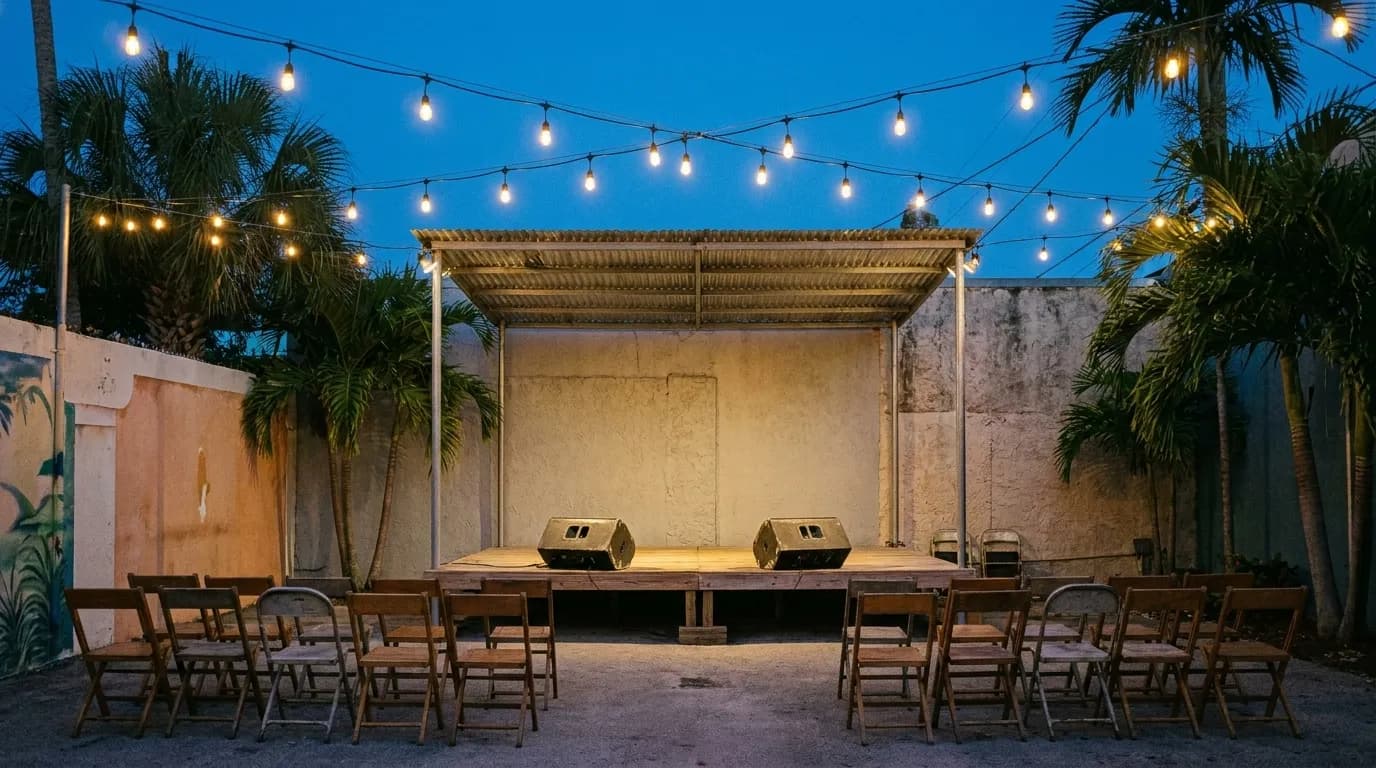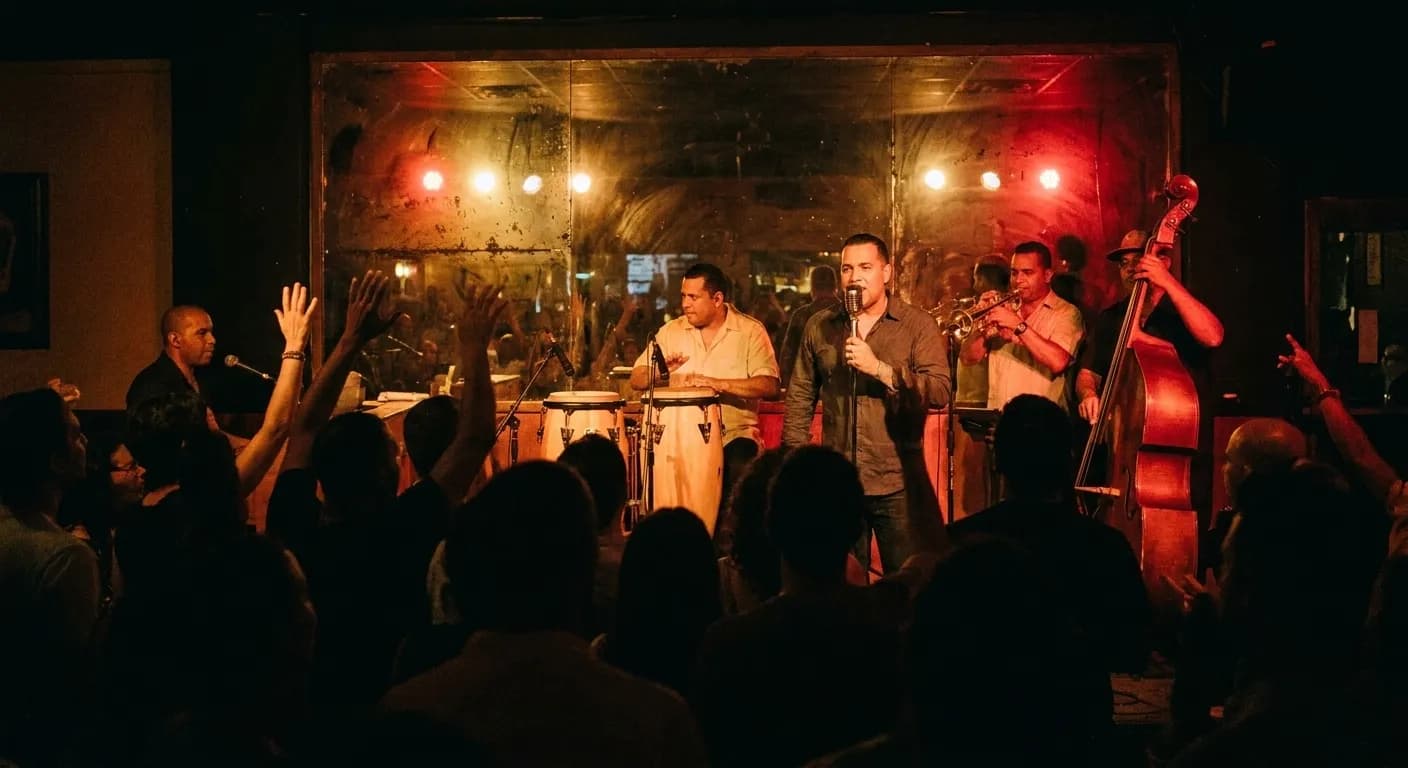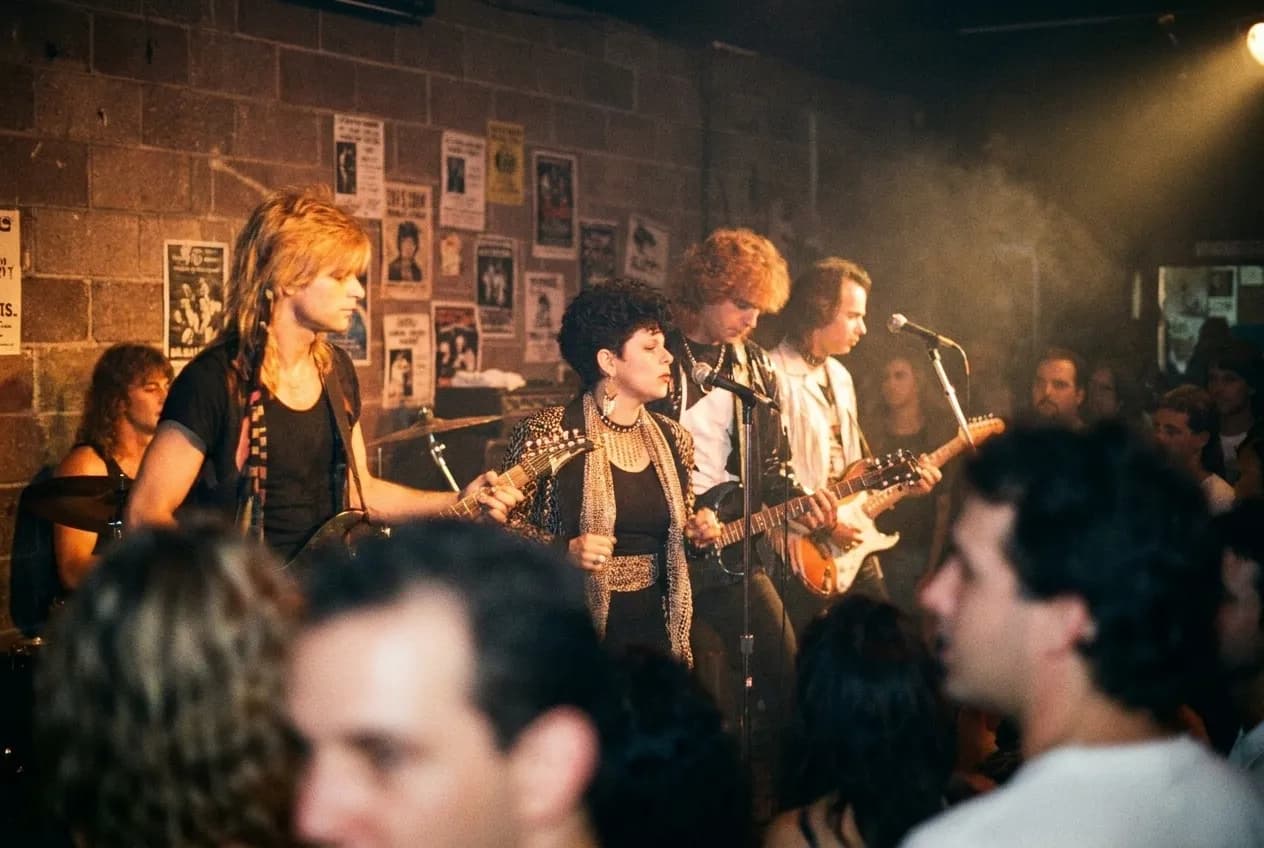
The mistake people make searching for live music near me in Miami is treating it as a venue question. It is a calendar question. The rooms here largely do not have a house sound; they have a weekly rota, and the same bar that is a quiet cocktail room on a Tuesday is running a full timba band with a horn section on a Thursday. If you turn up on the wrong night you will conclude the venue is dead, when in fact you simply arrived on the wrong day of its week.
The venue matters less than the night. Ask Karpo what is actually playing near you tonight, what time the set really starts, and whether there is a cover at the door.
The rota exists because of how residencies are booked
Most free live music in Miami is booked as a recurring residency rather than a one-off show: a band takes a specific night for a season or longer, the venue pays little or nothing, and the band makes its money on tips, drinks and the audience it builds. That model only works if the night is fixed, because the audience has to be able to find it without checking. So the schedule is unusually stable — the same night, the same band, month after month, which is exactly what makes it plannable.
It also explains why listings are poor. A residency that has run for three years does not get promoted, because everyone who goes already knows. The information exists on a chalkboard inside the venue and in the band's own social posts, and almost nowhere else.
Midweek is jazz and it starts later than you think
Tuesday and Wednesday across Miami's smaller rooms skew heavily to jazz and Latin jazz, generally with no cover and a one-drink expectation. This is the most consistently good value music in the county and the least attended, because it competes with people having a normal week. Sets typically do not begin until nine-thirty or ten, and the second set — usually after eleven — is the one where the band stops playing the arranged material and starts actually playing.
The practical note is that arriving at eight will get you an empty room and a wrong impression. If a listing says the music starts at nine, in Miami that means the band is loading in at nine.
Thursday through Saturday: son, salsa and timba
The Cuban music weight of the city concentrates at the end of the week, and the distinction between the styles is worth knowing before you pick a room. Son is the older, slower, guitar-and-tres-driven tradition — the sound of the classic Cuban repertoire, and what you will hear in the Little Havana rooms with an older crowd. Timba is the modern, aggressive, heavily syncopated dance music that came out of Cuba in the nineties, played loud with a full horn section, and it draws a much younger floor.
Both are frequently free to enter. The difference in experience is enormous, and picking wrong is the most common way a visitor decides they do not like Cuban music. If you want to sit and listen, go for son. If you want the room dancing, go for timba, and go after eleven.
Little Haiti has its own calendar entirely
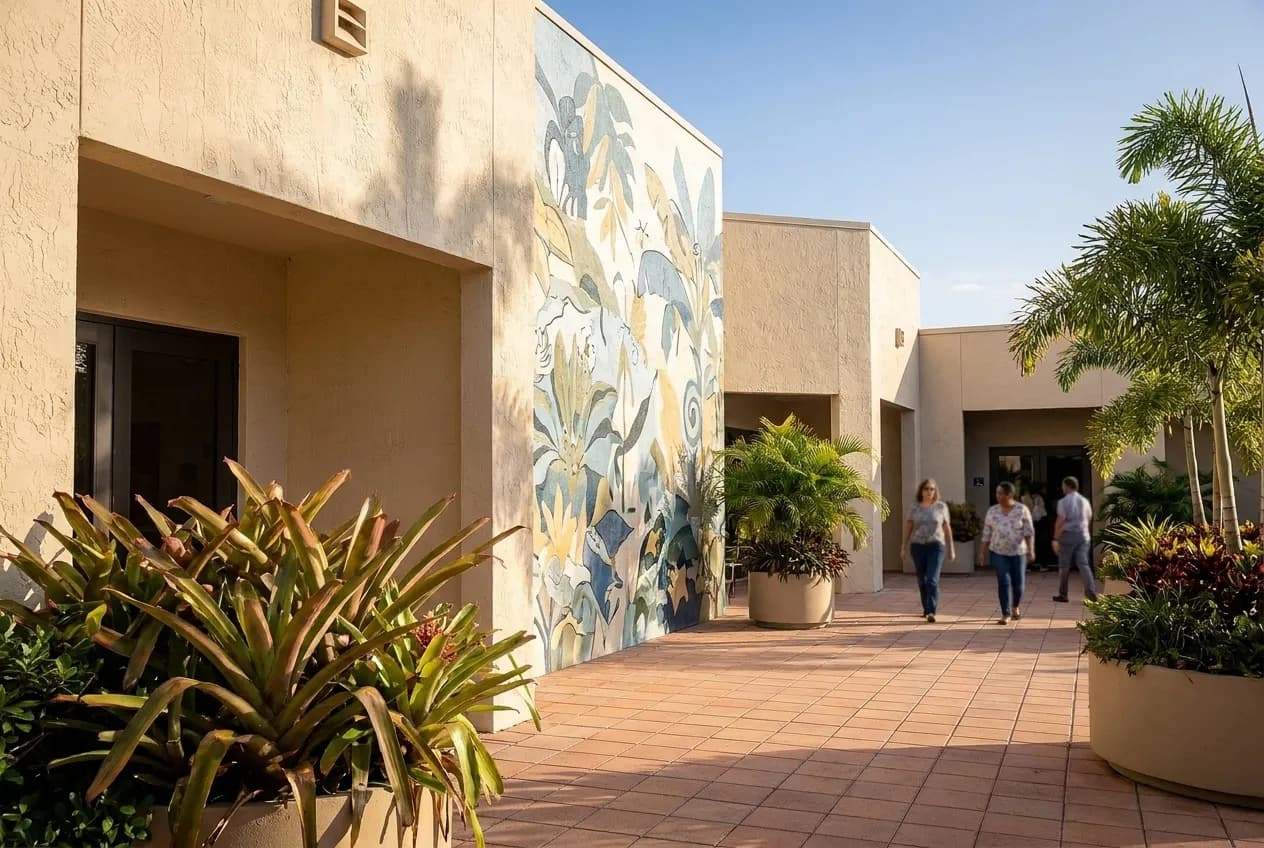
Little Haiti's music scene runs on Haitian genres that have almost no overlap with the Cuban rota — racine, the roots music built on Vodou rhythms; kompa, the smoother dance style that dominates Haitian popular music; and the twoubadou guitar tradition. The Little Haiti Cultural Complex programmes regular free and low-cost cultural events, and the neighbourhood's smaller venues and restaurants run their own nights around them.
This is the most under-visited music in Miami relative to its quality, and the reason is simply that it is not on the same listings as everything else. It is worth checking the cultural complex's own calendar directly rather than a general events aggregator.
Sunday afternoons are the sleeper
Sunday afternoon is Miami's quietly best free music slot. Outdoor and waterfront venues programme afternoon sets to catch people who are already out, parks and public spaces run seasonal free concert series, and the whole thing is over by early evening. It is the only slot on the list that works with children, works without a late night, and works in the heat, because most of it is either shaded or on the water.
Four habits that make this work
Check the band rather than the venue, because the band is the constant and the venue is the variable. Assume every published start time is optimistic by an hour. Bring cash for the tip jar, since that is the actual economics of a free show and the band notices. And when a residency is good, go back on the same night rather than trying a new room — in a residency economy, being a regular is what gets you the second set, the seat at the front and the tip about next week.
Tags: #LiveMusicNearMe #MiamiMusic #FreeLiveMusic #LittleHavana #LittleHaiti #Timba #SalsaMiami #JazzMiami #Kompa #MiamiNightlife #FreeThingsToDo #Miami #WeeklyResidency #LatinMusic
All trademarks are the property of their respective owners.
Ask Karpo first
Want to know what is actually playing tonight rather than what a venue usually does? Ask Karpo which rooms near you have live music this evening, what genre it is, when the set really starts, and whether the door is free.