The mural went up before the first group stage match kicked off, and by the time the paint cured in Miami's summer humidity, the regulars had already claimed their spots. Tucked along the NW 2nd Avenue corridor in Little Haiti, this corner bar has become the kind of place where the world cup standing updates arrive via three different phone screens before the television catches up—a community living room that happens to serve Prestige and play fútbol at volume.
Where the Flags Don't Match and Nobody Minds
The bar sits in that particular stretch of Little Haiti where the Caribbean and South American diasporas have learned to share sidewalk space. Haitian Creole mixes with Portuguese on match nights. The room itself is modest—maybe forty seats if the back patio counts, which it does when knockout rounds arrive. A Brazilian flag hangs next to a Haitian one behind the bar, neither taking precedence, both slightly sun-faded from the front window. The bartender, a woman who has worked this stretch of avenue for years, switches between languages mid-sentence without breaking rhythm. First-timers often assume they've walked into a Haitian spot or a Brazilian spot. The regulars know better. This is both, and the tournament has only sharpened that dual identity.
The Mural That Announced the Intention
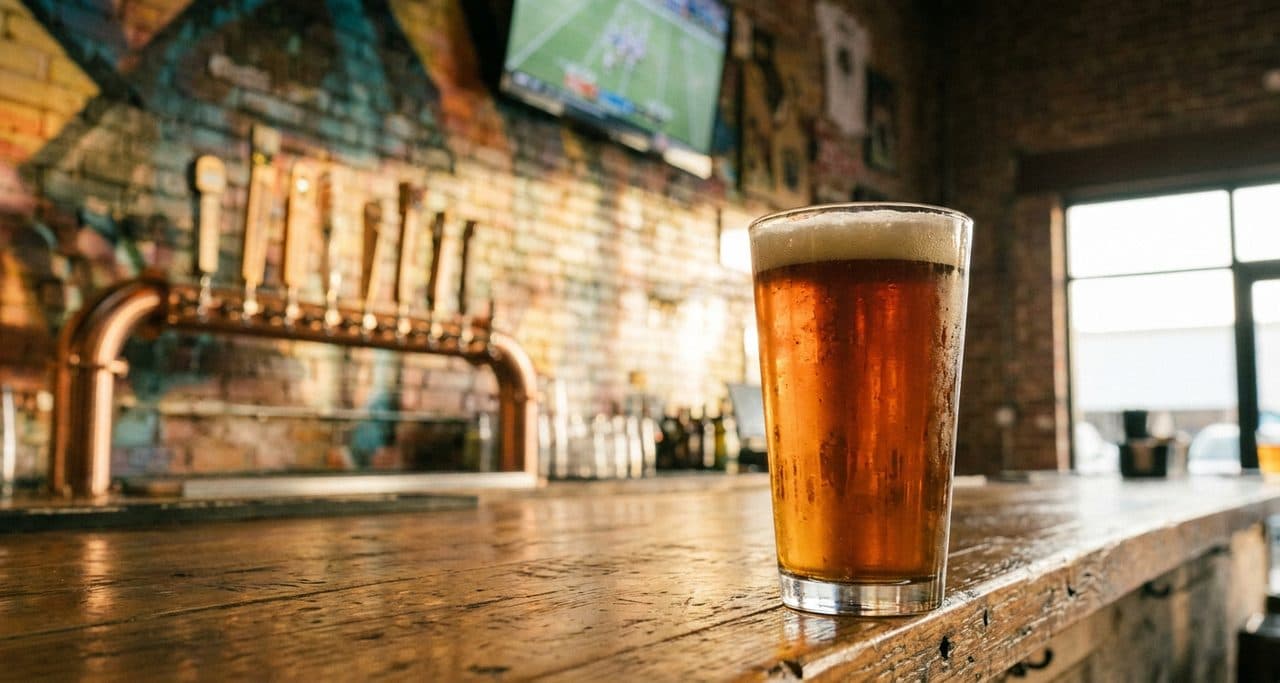
On the bar's eastern exterior wall, a community mural appeared in the weeks before the tournament began. Local artists painted it over three weekends, and the imagery tells a specific story: a soccer ball morphing into a globe, with Miami's skyline rendered in the background—a direct reference to the city's role as a 2026 host venue. The mural includes subtle nods to both Haitian and Brazilian visual traditions, geometric patterns meeting tropical color palettes. It has already become a neighborhood landmark, the kind of thing people photograph before they realize there's a bar attached. The paint still looks fresh because someone from the block touches it up after heavy rains. That level of care signals something about how this corner views the tournament—not as content, but as occasion.
The Food Pop-Up That Changes the Room
Certain match nights transform the space entirely. When Haiti plays, or when Brazil faces elimination-level stakes, a Haitian food pop-up operates from a folding table near the back patio door. Griot appears in paper boats. Pikliz arrives in portions meant for sharing. The pop-up has no fixed schedule posted anywhere—it materializes based on the match calendar and the cook's availability, which means those who want the full experience learn to check with the bartender a day or two ahead. The food changes the crowd composition. Families arrive earlier. Children sit on laps. The volume shifts from bar-noise to something closer to a block party contained within walls. For knockout round matches, the pop-up draws enough extra bodies that the usual seating math no longer applies.
The Knockout Round Math
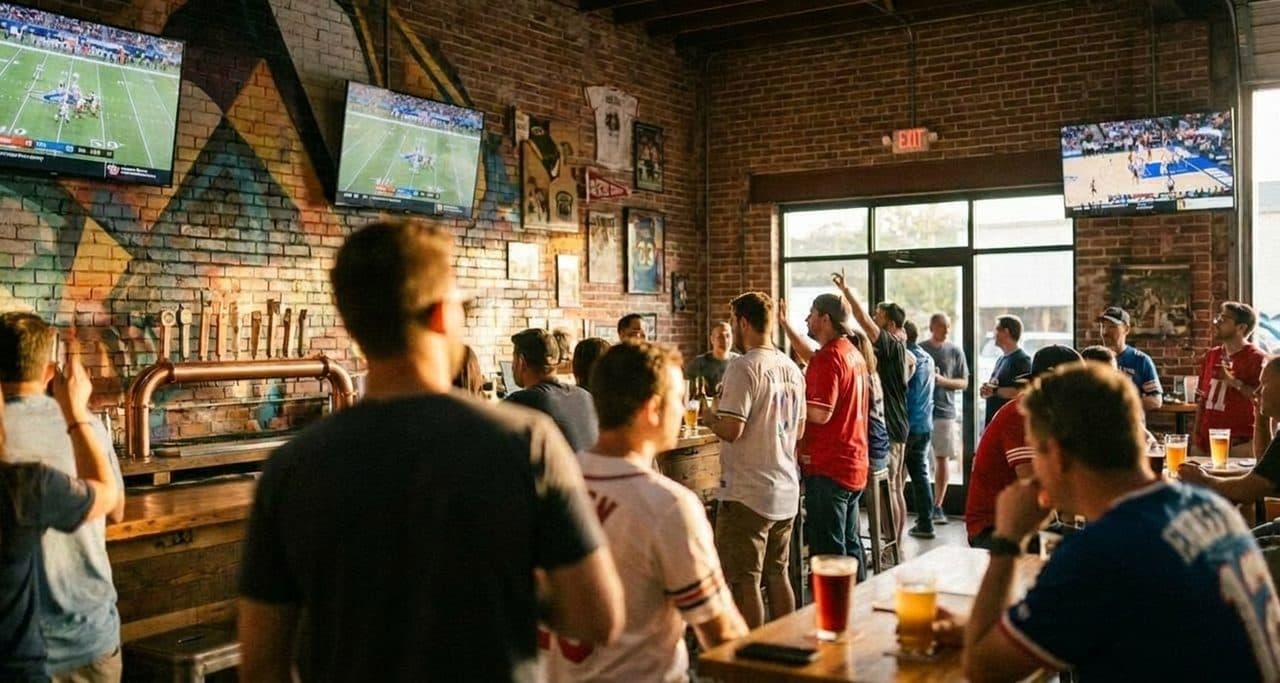
Anyone hoping to watch an elimination match from an actual chair needs to arrive roughly ninety minutes before kickoff. This is not exaggeration for effect. The bar has no reservation system, no VIP section, no bottle service shortcut. First-come seating only, and the regulars who live within walking distance have home-field advantage. By the time the pre-match coverage starts, standing room becomes the only room. The back patio fills next, where a secondary screen—smaller, slightly delayed—serves the overflow. Latecomers end up watching through the front window from the sidewalk, which has its own appeal on summer nights when the interior becomes a humid press of bodies. The smart move is arriving during the match before the match, catching the end of an earlier game while the seats are still available.
The Rhythm of a Match Night
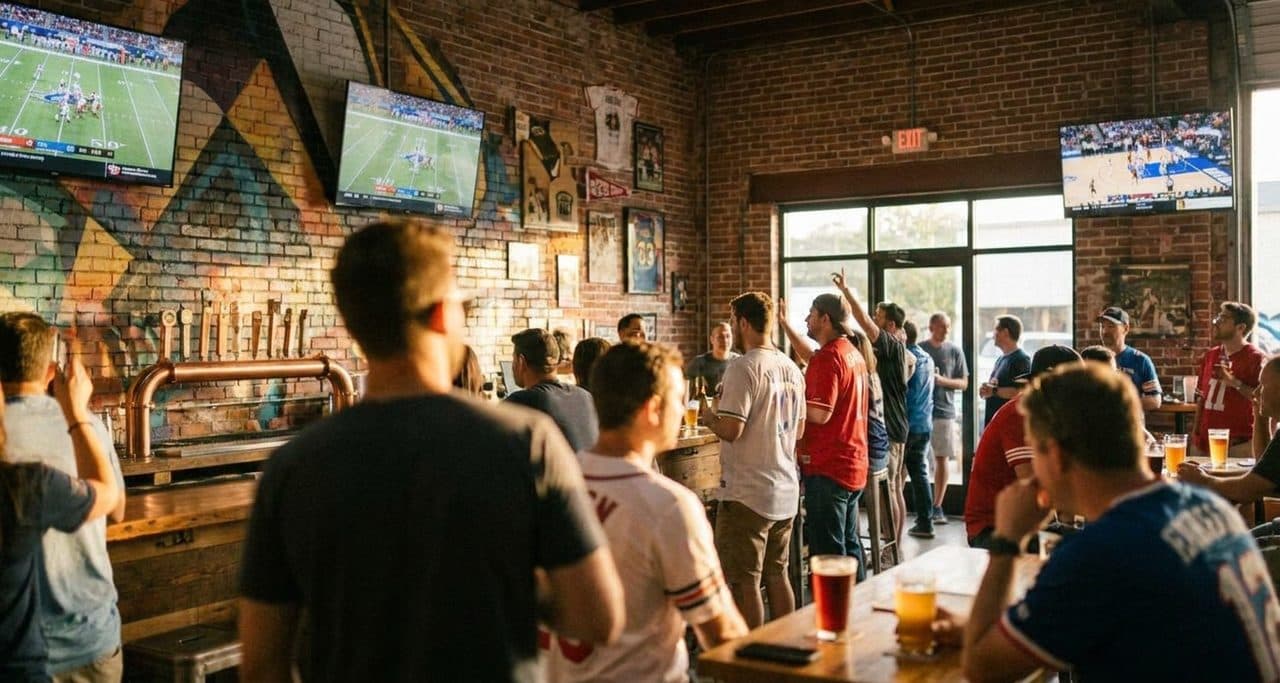
The room operates on its own clock. Early arrivals order food from the regular menu—fried plantains, jerk wings, rice plates that lean Caribbean without committing to a single island. The first beer goes down slow. Conversation stays possible. Then the teams walk out, and the room contracts. Strangers become temporary allies or opponents based on jersey colors. The bartender controls the remote but takes requests for volume adjustments with visible skepticism. Goals produce eruptions that spill onto the sidewalk. Near-misses produce groans that the neighbors have learned to interpret. Between halves, the line for the single bathroom becomes a social scene of its own—a place where people who arrived alone leave with phone numbers or dinner plans. The Little Haiti Cultural Complex sits nearby, and on certain nights the overflow from gallery openings wanders in, confused by the crowd, often staying.
Practical Notes
The bar occupies a corner spot along NW 2nd Avenue in Little Haiti, reachable by bus routes that run the avenue's length or by rideshare from the Design District in under ten minutes. Street parking exists but requires patience on match nights; the residential blocks to the west offer better odds. Hours extend late on game days, though the kitchen winds down before the final whistle on weeknight matches. No reservations, no cover charge, cash and card both accepted. The back patio allows smoking. The front door stays propped open when temperatures permit, which in Miami means most of the year. Dress code is nonexistent—flip-flops and jerseys dominate, though someone always shows up overdressed from somewhere else.
What the Room Knows
The 2026 World Cup will eventually end, and the mural will fade, and the pop-up will find other occasions. But this bar existed before the tournament and will exist after, serving the same corridor, the same overlapping communities. The watch parties are not a pivot or a brand activation. They are an extension of what the room already was—a place where the neighborhood gathers when something matters. The world cup standing shifts daily, brackets collapse and reform, but the corner spot remains. Those who find it early enough to claim a seat discover something the apps cannot surface: a room where the game is the excuse, and the gathering is the point.
Tags: #LittleHaitiMiami #WorldCup2026 #MiamiWatchParty #HaitianDiaspora #BrazilFans #NW2ndAvenue #CaribbeanMiami #FutbolCulture #MiamiNightlife #CommunityBar #StreetArtMiami #SoccerBar #MiamiHiddenGems #WatchPartyVibes #LittleHaitiCulture
Sources consulted: timeout.com · miamiherald.com · fifa.com
All trademarks are the property of their respective owners.
Ask Karpo first
Want to know whether the Little Haiti watch party is running for the next match, what time to arrive to guarantee a seat in the knockout rounds, and what else is open in Little Haiti on a match night? Ask Karpo for a live Miami World Cup guide and a neighborhood plan that goes beyond Wynwood.