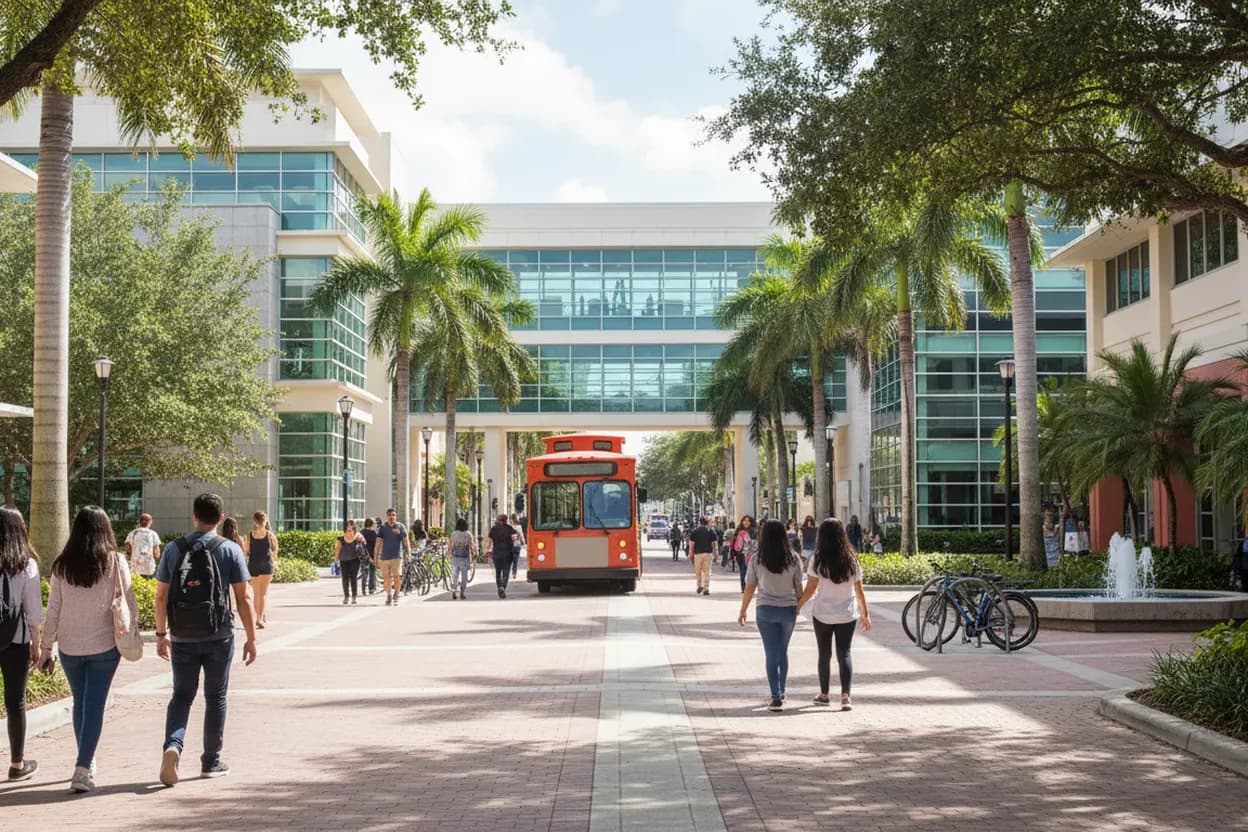
Miami students looking at journalism this back-to-school season have a useful local advantage: the city is a live reporting classroom, from Coral Gables campus beats to downtown public records, neighborhood culture, weather, transit, sports, and bilingual media. Interest in kaitlan collins can be a starting point, but the stronger move is to translate that curiosity into repeatable practice: verify, interview, observe, write, revise, and publish responsibly. This guide centers on the University of Miami School of Communication while also giving non-UM students practical ways to test the field using Miami-Dade College, Miami-Dade Public Library resources, and transit-accessible reporting routines on a hot, sunny Wednesday, July 29, 2026.
Want a Miami journalism starter route without guessing what is open, nearby, or realistic today? Text Karpo for a city-specific plan that checks campus access, transit, library tools, and backup options before you go.
University of Miami School of Communication in Coral Gables
Start with the University of Miami School of Communication because its journalism bulletin gives a concrete map of what the field actually asks of students. The undergraduate journalism major emphasizes writing, audio and video recording, photography, graphics, data visualization, reporting skills, analytical thinking, and ethics. That mix matters in Miami, where a student may cover a city commission agenda one week and a climate, sports, arts, or Latin America story the next.
The practical tradeoff is access. UM’s program details are public, but classrooms, studios, advising, and student publication work are not automatically open to every curious visitor. Prospective students should use the bulletin as a self-audit, then verify admissions events, campus visitor rules, and any School of Communication contact path directly before traveling. If access is limited, treat the campus as a research anchor, not the only possible first step.
The Miami Hurricane, Distraction Magazine, and Ibis Yearbook
UM’s bulletin specifically points journalism students toward The Miami Hurricane, Distraction magazine, and the Ibis yearbook, which is useful because student media turns interest into deadlines. For a Miami student working alone, this is the fastest way to learn whether reporting feels energizing or exhausting. Read recent student work first, then note story formats: campus news, longform features, photos, design, editing, social posts, and multimedia packages.
The failure mode is assuming a famous journalist’s path maps neatly onto yours. Student media rewards consistency more than admiration. A better first assignment is small: observe one public campus-adjacent issue, identify two verifiable sources, draft five fair questions, and write 500 clean words. If you are not a UM student, do not imply affiliation or request access as press; use public information and ask editors or advisers about eligibility.
Miami Dade College Wolfson Campus and The Reporter
For students outside UM, Miami Dade College offers a local journalism pathway and a visible student publication ecosystem. MDC describes mass communication and journalism as covering newspapers, magazines, books, radio, television, film, online media, blogs, social media, news, advertising, and public relations. The Reporter, MDC’s student newspaper, has listed opportunities for enrolled students interested in reporting, photography, illustration, and graphic design, with offices including Wolfson Campus downtown.
This route fits students who want a lower-cost or transfer-oriented start, but eligibility still matters. The Reporter’s recruitment notice said applicants needed to be enrolled in at least six credits per semester, so a nonstudent should not treat it as an open community newsroom. The backup is still valuable: read its coverage, compare how campus stories are sourced, and use MDC’s published program page to plan questions for an adviser.
Main Library at 101 West Flagler Street
The Miami-Dade Public Library System is the best backup workspace when campus access, heat, or transportation changes disrupt the day. Its Main Library page lists the address as 101 West Flagler Street in downtown Miami, and the library system’s computer guidance says branches offer public computers, internet access, Microsoft Office, USB ports, free Wi-Fi, and scanner access at branches except the UHealth Jackson kiosk.
Build the library stop around verification, not just studying. Bring headphones, a charger, a photo ID or library card, and a short source list. Computer sessions may require a library card or guest pass, reservations are made in person for the current day, and equipment shuts down before closing. The smart pacing is one hour for source gathering, twenty minutes for notes, then a break before drafting.
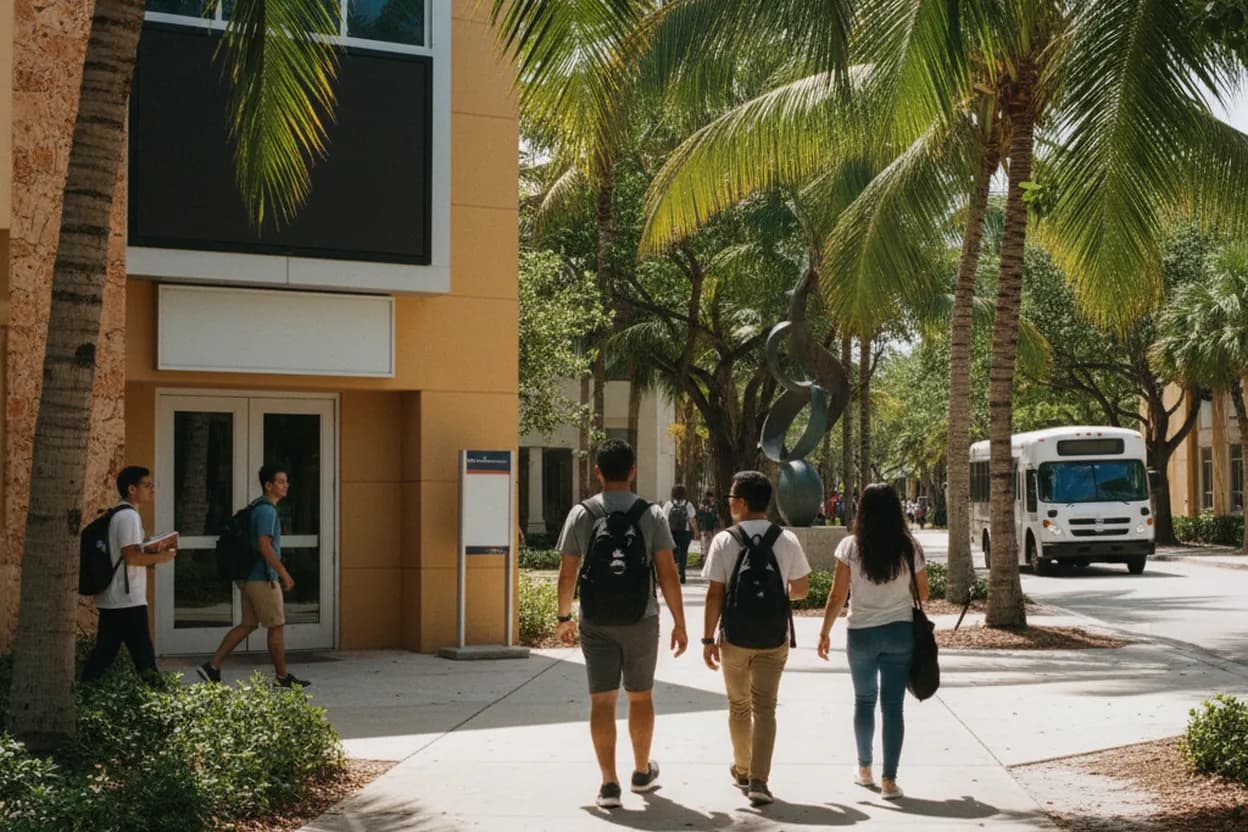
University Metrorail Station at 5400 Ponce de Leon
If you are traveling to the UM area without driving, use Miami-Dade Transit’s official Metrorail information and the University station tracker before leaving. The county tracker lists University station at 5400 Ponce de Leon in Coral Gables, serving places of interest including the University of Miami, Lowe Art Museum, Watsco Center, and Lennar Medical Center. It also notes connecting bus services and parking information that can change with construction.
For cost and timing, Miami-Dade says Metrorail operates from 5 a.m. to midnight, seven days a week, with fare payment by contactless options, EASY Card, EASY Ticket, or mobile pass. Do not build a tight interview schedule around a single train arrival. Check the tracker, elevator and escalator status, heat exposure on the walk, and whether parking is partially closed before committing to a campus or library sequence.
A Five-Question Notebook Drill on a Hot Miami Day
Use the weather as a reporting constraint. On a hot, sunny Miami daytime plan, keep the first outing moderate: one venue, one transit route, one shaded backup, and one publishable note. Your notebook drill should ask who is affected, what changed, when it happened, where a reader can verify it, and what remains unknown. That structure prevents a student story from becoming a personal reaction or a recycled trend summary.
Accessibility belongs in the same notebook, not as an afterthought. Record whether the route has elevators, shaded waiting space, seating, restrooms, quiet work areas, captions for video material, and alternatives for people who cannot stand outside long. If any fact is uncertain, write the uncertainty plainly. Journalism practice starts when you refuse to fill gaps with assumptions, especially around hours, access, prices, and school policies.
Final Action: Verify Today, Then Pitch One Miami Story
Before you go, verify four live items on Wednesday, July 29, 2026: the destination’s current hours or access rules, Miami-Dade Transit alerts for your route, library computer availability if you need equipment, and the contact or eligibility rule for any student publication. If one item cannot be confirmed, choose the lower-risk plan. For most students, that means library research first and campus outreach second.
End the day with one Miami-specific pitch, not a vague career goal. A strong beginner pitch names a local audience, a public place, a timely question, and two reachable sources. Examples might involve back-to-school transit, student media access, heat-aware study spaces, or how journalism programs teach verification. Keep the pitch honest about what you confirmed, what you still need, and why a Miami reader would care.
Tags: #Miami #MiamiStudents #Journalism #BackToSchool #UniversityOfMiami #CoralGables #MiamiDadeCollege #StudentMedia #MiamiDadeTransit #MiamiDadeLibrary #MediaCareers #AskKarpo #BeforeYouGo #PublicLearning
Sources consulted: Source 1: bulletin.miami.edu · Source 2: miamidade.gov · Source 3: miamidade.gov · Source 4: cnnpressroom.blogs.cnn.com · Source 5: mdc.edu · Source 6: mdpls.org
All trademarks are the property of their respective owners.
Ask Karpo first
Tell Karpo your date, group size, budget, and starting point. We’ll check current access, timing, transit, and the cleanest Miami plan for University of Miami School of Communication before you head out.


