 MiMo District Free Indoor Weekend Plan Finder for Retro Fans
Free Things to Do
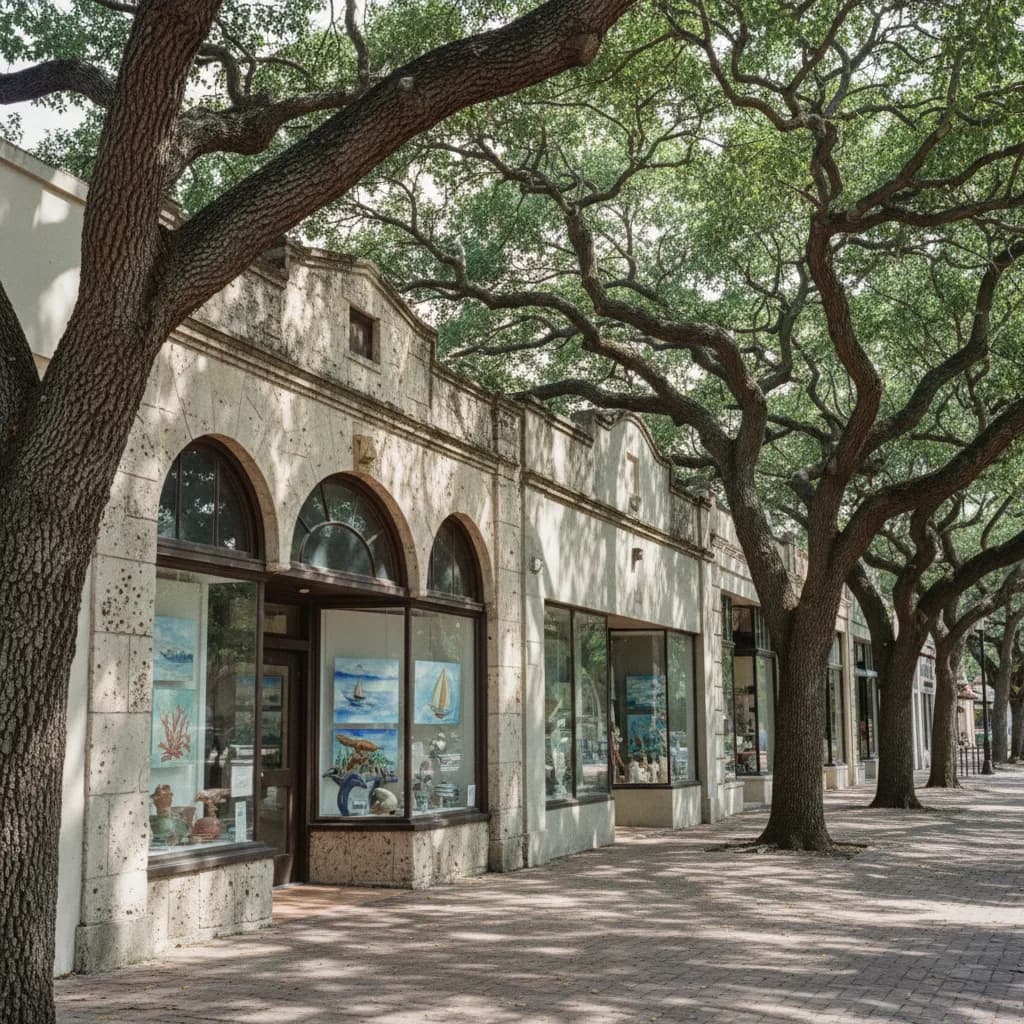
Coconut Grove Indoor Art Exhibition Finder: 4 Banyan Walks
Use a Coconut Grove indoor art exhibition finder along Main Highway and Commodore Plaza. Group banyan-shaded village shows near Peacock Park in Miami.
Overarching banyan roots and oolitic limestone storefronts along Main Highway and McFarlane Road form Miami's oldest pedestrian village core, where an indoor art exhibition finder helps you connect shaded courtyard galleries between Peacock Park and Commodore Plaza. Rooted in the 1873 maritime settlement along Biscayne Bay, the 1891 pioneer bayfront homesteads, and the 1963 launch of the neighborhood's famous annual arts festival tradition, Coconut Grove concentrates watercolor rooms, ceramic studios, and Caribbean painting showcases along Grand Avenue, Main Highway, and Fuller Street. Because the village streets curve along an ancient prehistoric coral ridge above the bayshore, grouping your indoor exhibition stops around the central triangle of McFarlane Road and Main Highway keeps your entire walk beneath a continuous tropical tree canopy.
Tracing the Village Triangle Around Main Highway and McFarlane
Unlike the orthogonal street grids of Downtown Miami or Wynwood, Coconut Grove bends around the natural contour of the Silver Bluff limestone ridge overlooking Biscayne Bay. Where Grand Avenue, McFarlane Road, and Main Highway meet opposite Peacock Park, a tight four-block pedestrian village clusters ground-floor art spaces, botanical print rooms, and courtyard design pavilions.
Just north of Main Highway, brick-paved Commodore Plaza and the pedestrian mall of Fuller Street operate as calm, low-speed lanes lined with historic coral-rock and stucco facades. When you build your sequence using an indoor art exhibition finder workflow in the Karpo APP, begin at the eastern bayfront edge on McFarlane Road opposite Peacock Park, weave north through Commodore Plaza, and follow Main Highway west toward Charles Avenue.
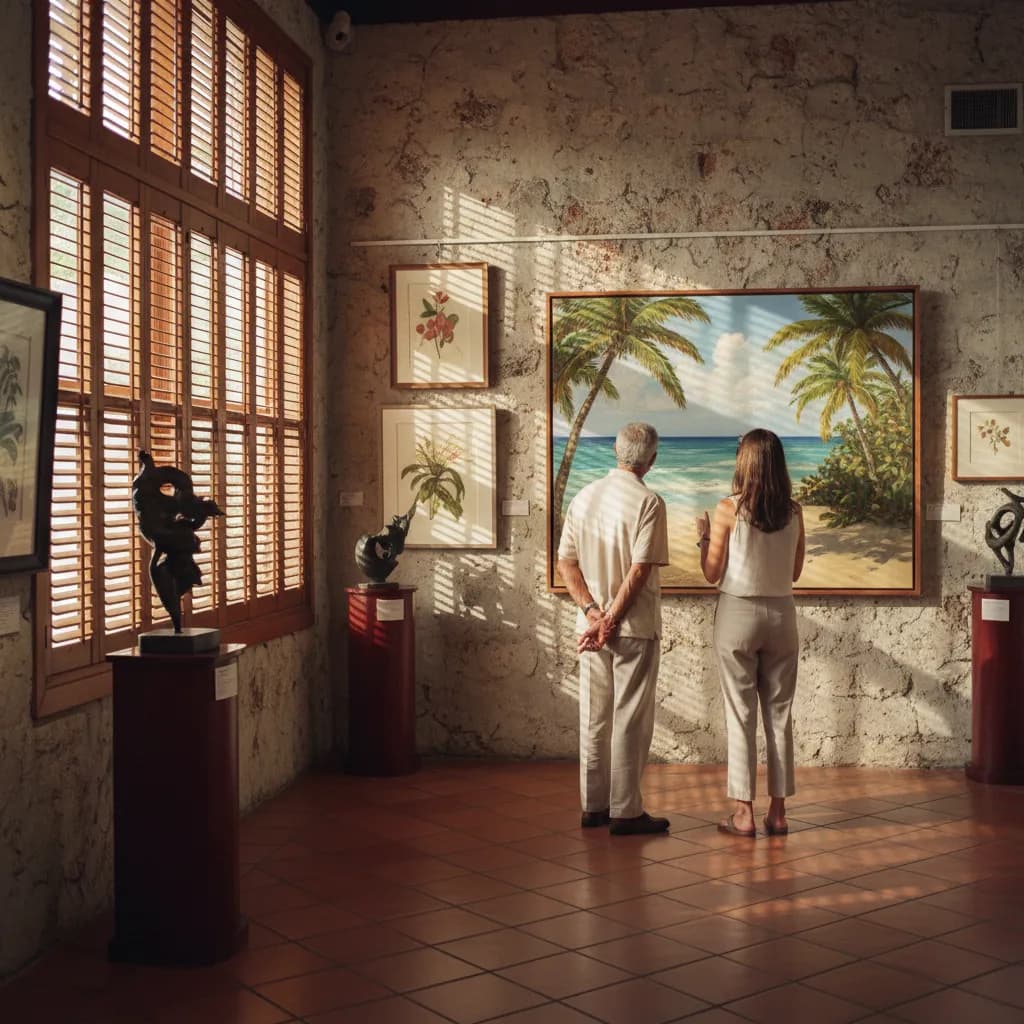
Inside Coral-Rock Cottages and Louvered Courtyard Galleries
Exhibition architecture in Coconut Grove reflects nineteenth-century Bahamian timber carpentry and 1920s Mediterranean Revival masonry rather than industrial concrete warehouses. Along Main Highway, Tigertail Avenue, and Grand Avenue, several viewing rooms occupy restored coral-stone cottages and arched stucco arcades with Dade County pine rafters and terracotta tile floors.
Inside these cool, shuttered rooms, curatorial programs emphasize South Florida's maritime and botanical ecology: plein-air oils of the Everglades and Biscayne Bay, hand-built stoneware glazed in reef blues and mangrove ochres, botanical copperplate engravings, and Afro-Caribbean wood sculpture. Stepping off the brick sidewalk through French doors into a ceiling-fan-cooled limestone room gives your eyes a calm, natural light balance.
Pay close attention to the fossilized shell and coral textures visible right inside the interior masonry piers of historic buildings along Charles Avenue and Main Highway. Those thick oolitic stone walls naturally regulate interior humidity while framing contemporary works on paper and woven fiber sculptures against warm ivory stone.
Watercolorists, Sailors, and Village Gallery Etiquette
Visit a Coconut Grove gallery on a Thursday afternoon or Saturday morning and you will immediately feel the village's maritime and academic character. Sailors walking up from the Dinner Key marina on South Bayshore Drive inspect marine charts and coastal watercolors. University of Miami studio art faculty and tropical botanists from the southern ridge study botanical illustrations, and longtime Grove residents chat with gallery owners along Commodore Plaza.
Inside these intimate village rooms, visitors practice a relaxed, neighborly etiquette. Step carefully across uneven historic terracotta tiles and raised coral-stone door sills, keep wet umbrellas or sun hats in hand rather than setting them on mahogany display tables, and sign the physical guest register if you want invitations to monthly Friday evening courtyard openings.
When browsing unframed botanical prints or historical Biscayne Bay photographs in wooden portfolio stands, use the cotton page-turning tabs on the corners of the protective sleeves rather than pinching the center of the sheet, especially after walking in humid coastal air.
Using Banyan Canopy Shade and Biscayne Bay Trade Winds
Coconut Grove enjoys the thickest mature tree canopy in Miami-Dade County, where century-old banyans, live oaks, and gumbo-limbo trees arch completely across Main Highway, Commodore Plaza, and Charles Avenue. Even between noon and three in the afternoon when tropical sun blazes overhead, the sidewalks around Fuller Street and McFarlane Road remain eighty percent shaded.
Along the eastern edge of the village at Peacock Park and South Bayshore Drive, steady southeast trade winds off Biscayne Bay funnel up McFarlane Road and Oak Avenue, keeping outdoor humidity noticeably lower than inland neighborhoods. Schedule your eastern bayfront gallery stops for mid-afternoon when the sea breeze peaks, and save the deeper interior courtyards along Grand Avenue and Main Highway for the warmest hour around one o'clock.
Notice how north-facing storefront windows along the south side of Commodore Plaza catch soft reflected light off the pale stucco facades across the narrow brick street, allowing you to view framed watercolors and photography without window reflections.
What to Skip and Your Mayfair-to-Commodore Rainy-Day Plan B
Skip walking the long, exposed mile down US-1 (South Dixie Highway) if you arrive at Coconut Grove Metrorail station at SW 27th Avenue during midday heat. Instead, walk straight down shaded SW 27th Avenue (Grapeland Boulevard) or hop the free air-conditioned Coconut Grove Trolley outside the station, which drops you directly at Grand Avenue and McFarlane Road in five minutes.
You should also skip trying to drive and park along narrow Commodore Plaza on weekend afternoons, when outdoor cafe tables and village pedestrians turn the one-way brick lane into a slow crawl.
If an independent gallery on Main Highway pauses entry for a midday framing consultation or a sudden bay squall sweeps across Dinner Key, trigger your Plan B inside the covered architectural arcades between Florida Avenue, Rice Street, and Grand Avenue. The sheltered terracotta courtyards, indoor botanical atrium walkways, and covered bookshop loggias along Grand Avenue and Commodore Plaza keep you completely dry within steps of the trolley loop.
Organizing Your Village Loop in the Karpo APP
Because Coconut Grove's streets meet at five-way angles around Peacock Park and curve west along the ridge, sorting your stops in the Karpo APP before leaving the Metrorail station keeps your route compact. Group your Commodore Plaza and Main Highway pins as your eastern village cluster, and save your Grand Avenue and Florida Avenue stops as your western cluster.
Reviewing your saved walking sequence in the Karpo APP also lets you connect the historic 1891 bayfront park path on Main Highway with the surrounding gallery doors without retracing your steps along South Bayshore Drive.
For an unhurried two-hour afternoon walk, ride the Metrorail to Coconut Grove station and take the free village trolley to Peacock Park, explore the coral-rock and stucco galleries along McFarlane Road and Commodore Plaza, stroll west beneath the banyans of Main Highway to Grand Avenue, and catch the return trolley back to the train.
Ask Karpo for more information.
Keep reading
- MiMo District Free Indoor Weekend Plan Finder for Retro Fans
 Coral Gables Free Indoor Weekend Plan Finder for Book Lovers
 South Beach Free Indoor Weekend Plan Finder for Rainy Days