 MiMo District Free Indoor Weekend Plan Finder for Retro Fans
Free Things to Do
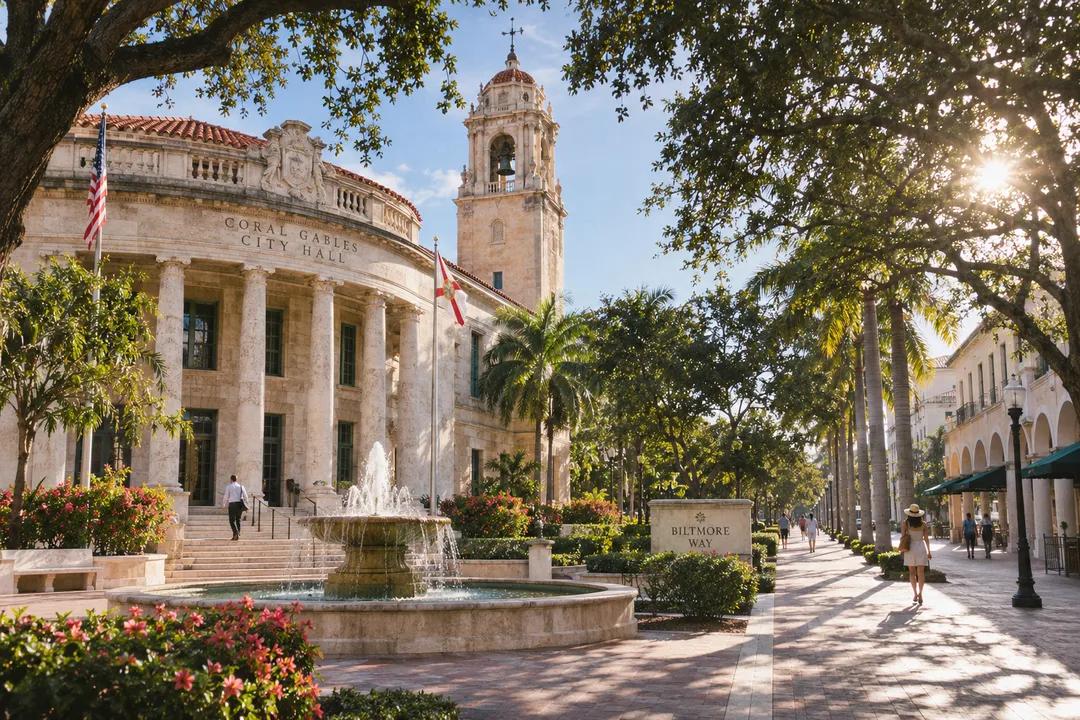
Coral Gables Historic Civic Square Promenade Guide
Explore Coral Gables historic civic plazas and Mediterranean architecture along an engaging walking promenade connecting City Hall to plazas.
Coral Gables was planned in the 1920s by visionary developer George Merrick as 'The City Beautiful,' an extraordinary master-planned municipality based on Mediterranean Revival architecture, grand landscaped boulevards, and formal civic plazas. This historic civic square promenade invites pedestrians to experience the city's monumental public realm, from the palatial civic plaza of Coral Gables City Hall along Biltmore Way to the historic monumental fountains designed by artist Denman Fink. Walkers discover one of the most cohesive and elegant examples of early twentieth-century American town planning.
Coral Gables City Hall and Biltmore Way Plaza
Dedicated in 1928 and designed by architects Phineas Paist and Harold Steward, Coral Gables City Hall stands as a monumental masterpiece of Spanish Mediterranean Revival architecture. Constructed of native coral rock and finished in warm ochre stucco, the building is crowned by a magnificent three-story semicircular colonnade and an ornate clock and bell tower inspired by historic town halls of Spain. The building sits at the triangular apex of Biltmore Way, Miracle Mile, and LeJeune Road, commanding grand vistas along major civic axes.
In front of City Hall, a wide landscaped civic plaza features manicured circular lawns, vibrant bougainvillea plantings, and a dignified bronze statue of George Merrick, sculpted by artist William Rose and dedicated in 2006 to honor the city's founder. Wide stone walkways encircle the plaza, providing generous space for municipal ceremonies, cultural gatherings, and community celebrations. The surrounding grand oak trees draped in Spanish moss create a stately park-like atmosphere.
Stepping inside the building's central rotunda reveals magnificent ceiling frescoes painted by Denman Fink depicting the four elements, while the grand exterior stone staircase provides a commanding overlook across the civic plaza. The open accessibility of the plaza and municipal grounds reflects Merrick's foundational vision of public civic pride and architectural beauty.
Walking the Biltmore Way Civic Promenade
Extending southwest from City Hall, Biltmore Way serves as a ceremonial civic boulevard designed to connect municipal government with the palatial 1926 Biltmore Hotel. The boulevard features exceptionally wide landscaped sidewalks, formal rows of majestic royal palms, and expansive central grassy medians planted with native flowering trees. Strolling along the boulevard offers an unhurried walking rhythm, insulated from heavy vehicle traffic by deep architectural setbacks.
The street is lined with distinguished Mediterranean revival civic buildings, church sanctuaries, and low-rise residential villas built during the 1920s and 1930s. Their hand-crafted wrought-iron balconies, barrel-tile roofs, and carved coral stone entryways showcase exquisite craftsmanship. Benches placed beneath shady live oaks offer welcoming spots to rest and admire the rhythmic architectural facades.
Pedestrian crossings feature well-marked crosswalks, brick curb extensions, and textured paving that make walking safe and comfortable for pedestrians of all ages. Continuing along Biltmore Way rewards walkers with framed vistas of the Biltmore's soaring Giralda tower rising above the tree canopy in the distance, establishing an iconic architectural destination.
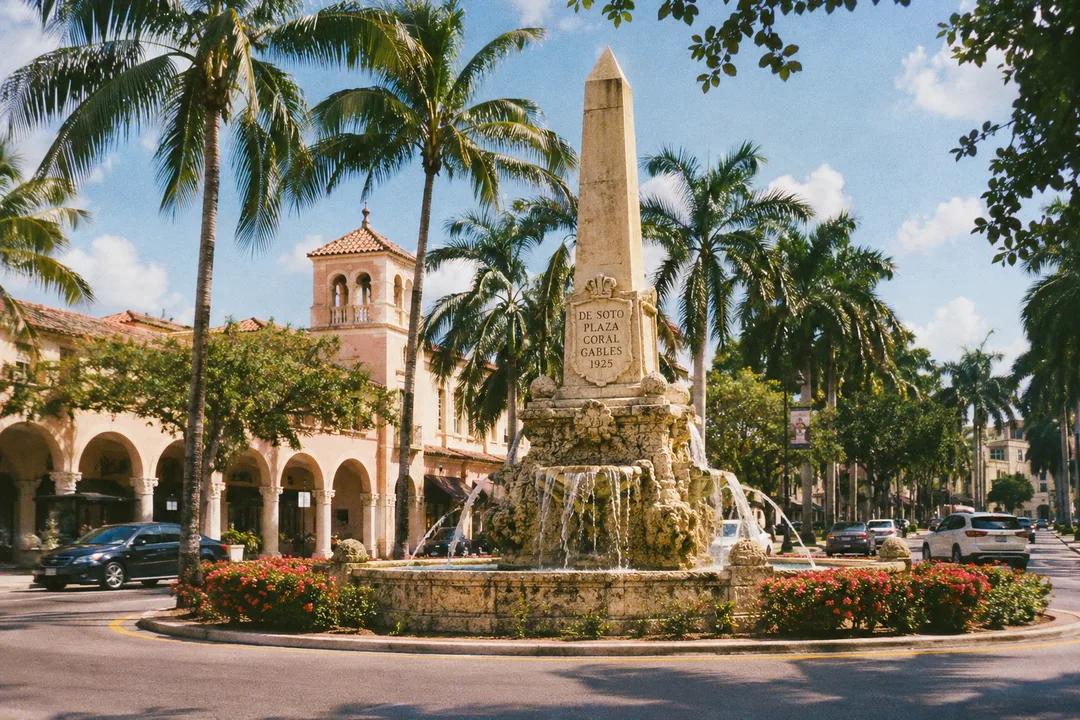
DeSoto Plaza and the Historic Coral Rock Fountain
Wandering northward along Granada Boulevard brings walkers to DeSoto Plaza, designed in 1924 by artist and planner Denman Fink. Located at the intersection of DeSoto Boulevard, Granada Boulevard, and Sevilla Avenue, this monumental circular plaza is anchored by the historic DeSoto Fountain, an ornate carved coral rock and cast-stone fountain centered around an imposing obelisk.
The fountain features four sculpted water-spouting figures, bubbling water cascades, and ornate cast-iron decorative lanterns that illuminate the plaza at night. The circular plaza is encircled by graceful banyan trees, cabbage palms, and stone benches where visitors can sit and listen to the soothing sound of splashing water. The plaza exemplifies Merrick's innovative use of traffic roundabouts as civic public art monuments.
Nearby along DeSoto Boulevard, the historic Venetian Pool, carved in 1924 from a coral rock quarry by architect Phineas Paist, showcases Italian loggias, Spanish porticos, and cascading natural spring waterfalls. The public aquatic facility was conceived as an integral civic recreation amenity for community residents and remains on the National Register of Historic Places. Walking past its coral stone ramparts illustrates the lavish craftsmanship that distinguishes Coral Gables.
The residential streets radiating from DeSoto Plaza feature historic 1920s homes designed under strict architectural oversight to preserve Mediterranean harmony. Walking beneath the lush canopy of ficus and mahogany trees reveals quiet sidewalk corridors that celebrate human scale and horticultural abundance. Concluding the walking tour at DeSoto Plaza leaves pedestrians with an enduring appreciation for Merrick's City Beautiful legacy.
Effortless Route Planning With Karpo APP
Navigating Coral Gables's geometric plazas and grand landscaped boulevards is remarkably convenient when using the Karpo APP. Rather than getting confused by curving residential avenues, Karpo helps you map direct pedestrian connections between City Hall, Biltmore Way, and DeSoto Plaza, locate shaded rest stops, and bookmark historic architectural landmarks along the journey. Karpo delivers a clear, interactive visual map of Coral Gables public squares, letting you customize every step.
Whether you are planning an architectural sketching walk, a historic fountain photography tour, or a relaxing weekend promenade with family, Karpo keeps your saved spots neatly organized. You can easily mark accessible trolley stops, check walking distances between plazas, and coordinate meeting points near well-known civic monuments. The application's clean design lets you focus entirely on the architectural splendor and community warmth of Coral Gables.
Exploring Coral Gables with the Karpo APP makes it easy to trace George Merrick's geometric plazas, monumental fountains, and grand royal palm boulevards. Using Karpo ensures you never miss historic stone landmarks or tranquil reflecting pools along the stately Biltmore Way municipal promenade.
Practical Tips for Coral Gables Walkers
Morning hours offer cool, pleasant temperatures and golden sunlight illuminating the eastern facade and bell tower of Coral Gables City Hall, providing exceptional conditions for architecture photography. Late afternoons provide gentle shade along Biltmore Way beneath the live oaks and pleasant breezes across DeSoto Plaza. Public transit connectivity is convenient, with the free Coral Gables Trolley stopping directly at City Hall and connecting to the Douglas Road Metrorail station.
The walking route features mostly flat, well-maintained concrete and stone sidewalks equipped with ADA-compliant curb cuts at all major intersections for complete accessibility. Public restrooms and drinking fountains are accessible within City Hall during public operating hours and at nearby municipal libraries. Wearing comfortable walking sneakers ensures an enjoyable journey exploring the grand Mediterranean promenades and historic plazas of this extraordinary city.
Ask Karpo for more information.
Keep reading
- MiMo District Free Indoor Weekend Plan Finder for Retro Fans
 Coral Gables Free Indoor Weekend Plan Finder for Book Lovers
 South Beach Free Indoor Weekend Plan Finder for Rainy Days