 Ghost Walk Near Me at Cauley Square: Historic Village Ghost Tour
Weekend Plans
Ghost Walk Near Me at Miami City Cemetery: Museum Walking Tour
Museum of Miami presents the Annual Miami City Cemetery Walking Tour at 1800 NE 2nd Avenue, exploring Julia Tuttle's vault and pioneer history for $35.
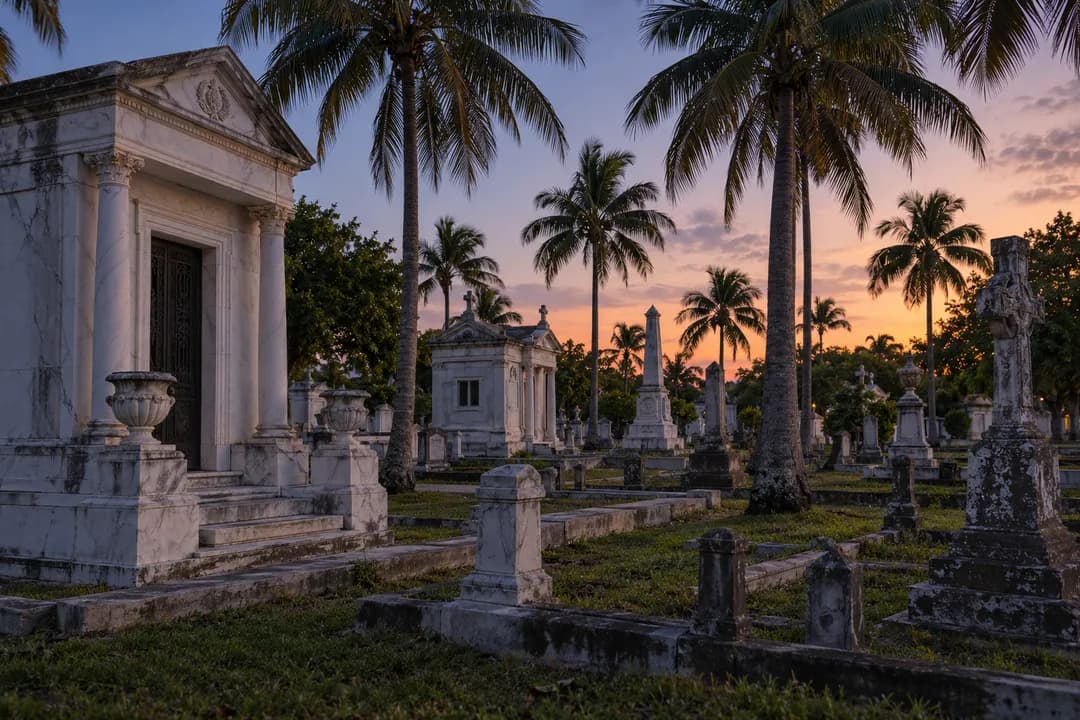
History enthusiasts and cemetery walkers looking for an intellectually profound and haunting ghost walk near me across urban Miami will find an extraordinary annual tradition in the Annual Miami City Cemetery Walking Tour, presented by the Museum of Miami (formerly HistoryMiami Museum). Taking place at the historic burial grounds located at 1800 NE 2nd Avenue, near Downtown Miami and the Wynwood Arts District, this renowned two-hour guided walking tour convenes ticket holders at the cemetery's historic North Gate entrance. Priced at $35 for general non-members, $25 for museum members, and $15 for youth aged fourteen and under, the evening excursion steps inside Miami's oldest municipal cemetery, established in 1897, to examine the fascinating lives, sudden yellow fever deaths, pioneer struggles, and enduring supernatural lore of the city's legendary founders.
Establishment and 1897 Yellow Fever Origins
The Miami City Cemetery traces its solemn origins to the birth of the municipality itself. Following the incorporation of the City of Miami in July 1896, a devastating yellow fever epidemic struck the fledgling community in 1897, claiming dozens of pioneer lives and overwhelming temporary quarantine camps. In response, founding land baron William Brickell deeded ten acres of high rocky hammock land to the city to create a permanent municipal resting ground. The cemetery was formally opened in May 1897, with Graham Branscomb, a 24-year-old native of Texas who perished from yellow fever, recorded as the very first burial.
The tour guide, typically an esteemed regional historian from the Museum of Miami, opens the journey by illustrating the rugged reality of nineteenth-century Miami. Surrounded by dense palmetto scrub and swarming marsh mosquitoes, early residents carved out civil institutions with sheer grit. Walkers learn that the cemetery's ten acres reflect the diverse social, racial, and religious tapestry of early South Florida, containing distinct sections dedicated to pioneer white settlers, black Bahamian laborers who built the railroad, Jewish merchants, and veterans of five American military conflicts.
Julia Tuttle and the Founders of Modern Miami
A central highlight of the walking tour stops before the dignified granite burial vault of Julia Tuttle (1849–1898), celebrated as the 'Mother of Miami' and the only woman credited with founding a major American city. Tuttle, an astute businesswoman from Cleveland, purchased hundreds of acres along the northern banks of the Miami River in 1891. Following the devastating Great Freeze of 1894–1895 that decimated northern citrus groves but spared her subtropical estate, she famously sent fresh orange blossoms to railway magnate Henry Flagler, successfully convincing him to extend his railway south to Biscayne Bay.
Tuttle passed away suddenly in September 1898, just two years after her dream city incorporated, leaving massive debts and her grand estate unresolved. Standing beside her illuminated memorial vault under the rustling palm fronds, walkers hear documented accounts from long-serving cemetery sextons and visiting historians who have reported sensations of sudden floral scents, including fresh citrus blossoms, wafting around her grave on windless autumn evenings. Nearby, the tour honors other prominent founders, including early mayor John B. Reilly and pioneer merchant J. E. Lummus.
The Historic Black Bahamian Pioneer Section
The eastern portion of the cemetery preserves an exceptionally significant, sobering historical record: the segregated burial grounds of Miami's black pioneer and Bahamian community. During the late nineteenth and early twentieth centuries, southern segregation laws mandated separate resting areas. Over one-third of the registered burials in the cemetery represent black pioneers who cleared the original hammock forests, quarried the oolitic limestone, and laid the railway tracks that made modern Miami possible.
Guides highlight prominent figures buried here, including Reverend Richard H. Neilly, an influential Bahamian religious leader, and numerous early civic heroes. Many early African American and Bahamian graves were marked with native conch shells, hand-carved limestone markers, or wooden headboards that deteriorated over time. The tour discusses the sacred Caribbean spiritual traditions brought by Bahamian settlers, exploring how ancestral reverence and respectful folklore have protected these historic resting places across generations.
Confederate Memorials and The Lady in White Apparition
Weaving through the shaded center aisles, the tour inspects the marble obelisks and military grave markers honoring veterans of the Civil War, the Spanish-American War, and World War I. In the Confederate section, erected by the United Daughters of the Confederacy, white marble crosses mark the resting places of soldiers who migrated south after the war to begin new lives in the tropical frontier.
Longtime cemetery caretakers and nocturnal researchers have shared compelling accounts of spectral phenomena centered around the central military plots. The most persistent legend involves the 'Lady in White,' a translucent female figure wearing an ankle-length Victorian mourning gown, who has been observed weeping softly near the central mausoleums before fading into the twilight shadows. Others describe unexplained magnetic anomalies, sudden camera battery drains, and the faint, mournful sound of a military bugle echoing through the grounds after hours.
Event Logistics, Ticketing, and Cemetery Etiquette
The Annual Miami City Cemetery Walking Tour spans approximately two full hours, from 6:30 PM to 8:30 PM, scheduled as an exclusive October seasonal event hosted on Friday, October 30, 2026. The walking route covers roughly one mile across flat paved lanes and gentle grass pathways. The grounds are accessible for wheelchairs and strollers, though participants should wear comfortable, sturdy closed-toe walking shoes to traverse occasional uneven turf and tree roots.
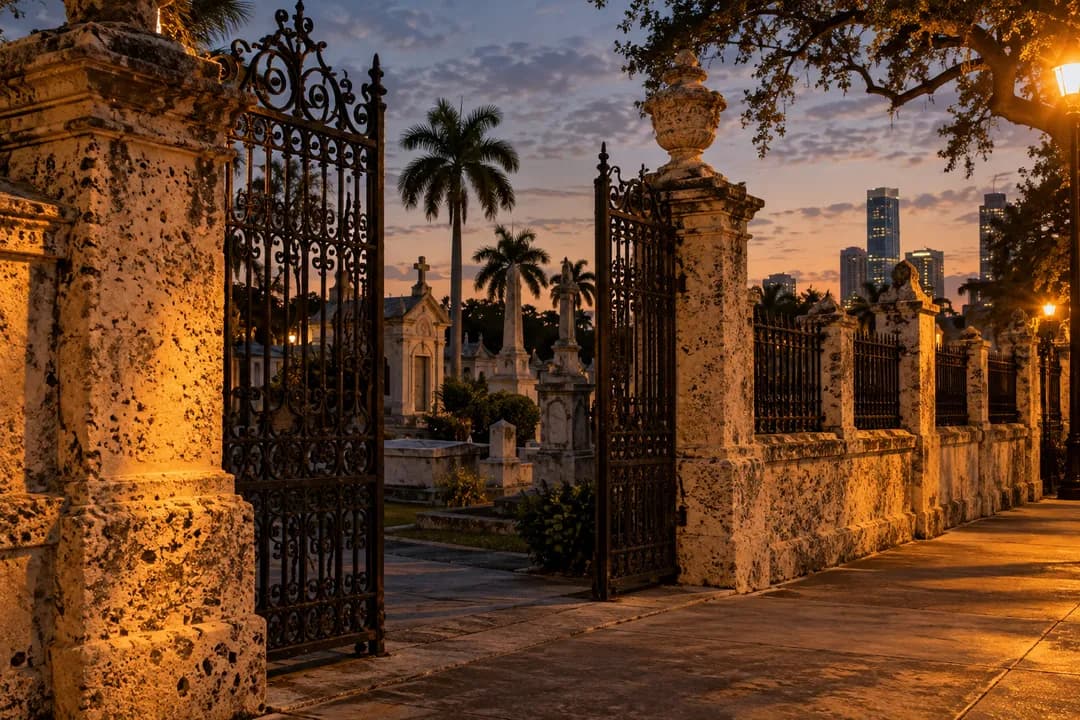
Advance ticket purchase through the Museum of Miami website (museumofmiami.org) is mandatory, as this signature event routinely sells out weeks in advance. General admission is $35 for non-members, $25 for museum members, and $15 for youth aged fourteen and under. All participants must assemble outside the historic North Gate at 1800 NE 2nd Avenue fifteen minutes before the 6:30 PM departure. Respectful cemetery etiquette is strictly enforced: touching or leaning on historic headstones and taking disruptive flash photography are strictly prohibited.
Arts & Entertainment District Stroll and Nearby Dining
Following the conclusion of the cemetery tour, visitors find themselves perfectly positioned to explore Miami's dynamic Arts & Entertainment District and adjacent Wynwood. Walk west along 20th Street to reach the colorful murals of the Wynwood Arts District, featuring world-class street art galleries, craft cocktail lounges, and open-air dining patios buzzing with creative energy.
For post-tour dinner and drinks, visit Sabor a Peru at 2923 Biscayne Boulevard, a beloved local institution serving authentic ceviche, lomo saltado, and passion fruit pisco sours in a welcoming, family-run atmosphere. Alternatively, head to Gramps at 176 NW 24th Street in Wynwood, an unpretentious cultural landmark offering cold craft beers, artisan pizza from the back patio, and a relaxed outdoor garden to discuss the evening's historic revelations.
Practical Notes for the Miami City Cemetery Walking Tour
Address: Tour departs from the North Gate entrance of the Miami City Cemetery at 1800 NE 2nd Ave, Miami, FL 33132. Schedule: Annual evening walking tour takes place on Friday, October 30, 2026, from 6:30 PM to 8:30 PM. Pricing: Non-members are $35; Museum of Miami members are $25; children aged fourteen and under are $15. Reservations and Phone: Book tickets online at museumofmiami.org; telephone inquiries are handled by the museum office at (305) 375-1492. Transit and Parking: Accessible via the Miami Metromover Omni Loop at the School Board Station, followed by a short five-minute walk east. Limited street parking is available along NE 2nd Avenue, with nearby paid public parking garages located along NE 19th Street.
Ask Karpo for more information.
Keep reading
- Ghost Walk Near Me at Cauley Square: Historic Village Ghost Tour
 Ghost Walk Near Me at Deering Estate: Historic Night Ghost Tour
 Ghost Walk Near Me in South Beach: Miami Haunts Tour