 Chrono Sky watch repair shop in Downtown: Free Estimates
Hidden Gems & Odd Finds
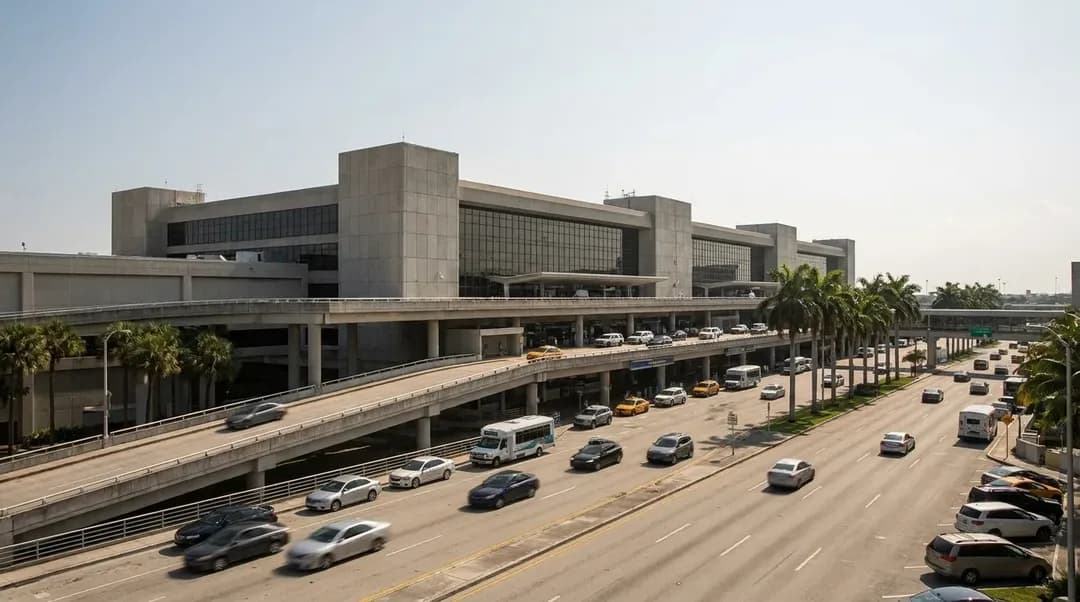
George Bush Intercontinental Airport Searches Spike in Miami Before Every Houston Connection
Miami travelers searching Houston's IAH before booking discover the timing math changes everything about which flight works.
You're comparing flights to somewhere west or central. The nonstop costs twice as much. The one-stop through George Bush Intercontinental Airport in Houston shows up cheaper, sometimes by three hundred dollars, and the layover looks manageable on paper. You click through to double-check gate distances, because IAH is enormous and you've heard stories. That search volume from Miami isn't random. It's people doing the same math every week, trying to figure out if saving money on a connection is worth the risk when you're starting from a city where summer storms roll in every afternoon and causeway traffic can add forty minutes you didn't plan for.
Text Karpo now for live rideshare wait times at MIA, the fastest parking lot for your departure window, and a backup plan if afternoon storms delay your connection window.
Why Miami Residents Search Houston's Airport This Often
George Bush Intercontinental has five terminals. If you're connecting through United, you'll stay in Terminal B or E, which are linked airside. If your inbound is a different carrier and your outbound is United, you may need to exit security, take the train, and re-clear. That detail matters when your Miami departure is already threading the needle between a thunderstorm closure and evening bridge traffic. The search pattern makes sense: Miami travelers are figuring out whether a sixty-minute layover is real or fictional once you factor in taxi time, terminal transfers, and the likelihood that your MIA departure pushes late.
Downtown Miami Departure Timing Sets the Whole Day
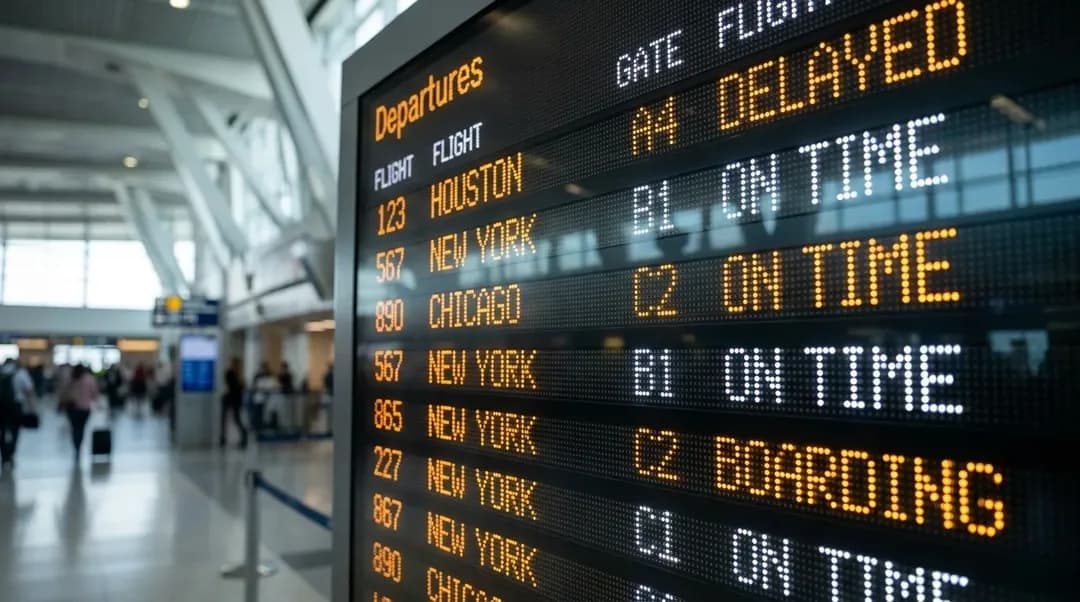
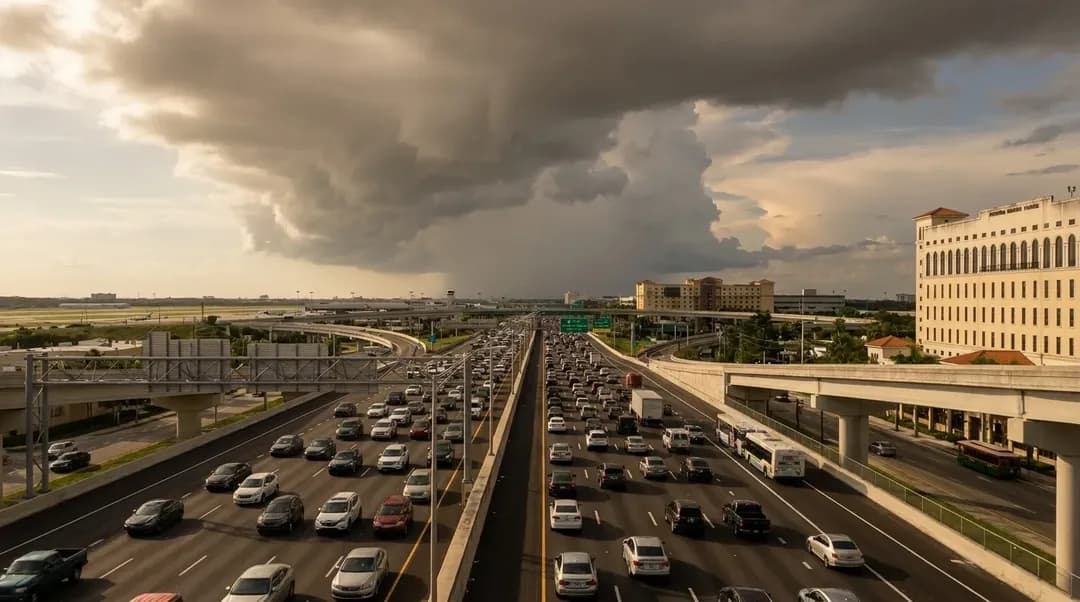
If you're leaving from Downtown Miami, your drive to MIA is theoretically twenty minutes. In practice, leaving at four in the afternoon means sitting on the Dolphin Expressway watching cells build over Hialeah. Leaving at noon works if your flight is mid-afternoon, but the rideshare pickup queue at MIA has gotten long enough that people now budget fifteen minutes from curb to car on return. Flying out before ten in the morning avoids weather. Flying out after seven at night avoids peak causeway loads but risks that your Houston connection lands after the last useful departure west.
The calculation flips when you're booking the return. George Bush Intercontinental's afternoon banks are huge. If you're inbound to Houston at three and need to connect to Miami, the next available seat might not be until seven, which puts you at MIA baggage claim at eleven at night. Rideshare pricing surges. The parking shuttle to the Dolphin lot stops running. You're forty-five minutes from a Downtown bed, and that's if 836 is clear. Searching the airport by name before booking is the move that saves you from discovering this at the gate.
People who do this route regularly know to check MIA's departure board the morning of, not just the airline app. Ground stops for lightning happen fast. A fifteen-minute delay leaving Miami can close a one-hour Houston window completely if IAH is running arrival holds. The search habit forms because the route is common enough to feel routine but unpredictable enough that you need to verify every time.
When the Connection Window Shrinks Below Comfortable
Sixty minutes at George Bush Intercontinental is the number that shows up in booking engines as legal. It assumes your inbound lands on time, your gate is in the same terminal, and you don't check a bag. Miami weather makes on-time a coin flip between May and October. If your MIA departure is noon or later, you're flying into the storm window. Airlines pad the schedule, but not always enough. A twenty-minute taxi delay leaving Miami turns into a thirty-five-minute pad evaporating in Houston.
IAH's layout rewards knowing which gates connect easily. Terminal B to Terminal E is a long walk but airside. Terminal A and C require the train. If your connection involves switching from an international arrival to a domestic departure, add forty minutes for customs and re-check even if you're a citizen with Global Entry. The search volume around this airport from cities like Miami reflects people trying to model whether their specific itinerary survives real-world friction. The booking engine doesn't tell you that Terminal C's north end is a twelve-minute walk from the train platform.
If you're booking this route for a morning you need to be somewhere that matters—a meeting, a wedding, a cruise departure—add a day. Overnight in Houston or pick the nonstop. The savings evaporate the first time a missed connection costs you a night in an airport hotel and a rebooking fee. If the trip is leisure and you have flex, the one-stop works more often than it fails. Just don't schedule anything in Houston that requires you to leave the airport. IAH is thirty minutes from downtown Houston in ideal conditions, longer in reality, and re-clearing security for a return to your gate is its own time trap.
The Nonstop Alternative and What It Costs
American runs nonstops from MIA to several cities that also appear as cheap one-stops through Houston. The nonstop to Austin costs more but cuts four hours off your travel day and eliminates the risk that a Miami storm delay cascades into a missed connection. If you're comparing a $310 one-stop through IAH against a $480 nonstop, the difference is $170. A missed connection and a night in Houston costs more. A full day lost to rebooking costs more if you're using vacation days.
The break-even isn't just dollars. It's also what you're doing the night before. If you're staying in Miami Beach and your flight is eight in the morning, you're leaving your hotel at five-thirty to account for bridge traffic and security. The causeway can back up even early if there's an accident. If your flight is a one-stop through Houston and you're cutting it close, that five-thirty departure becomes five because you can't afford any slippage. The nonstop that leaves at ten costs more but gives you breakfast and a slower morning.
Some travelers split the difference: book the one-stop, then monitor weather the week before. If the forecast shows afternoon cells, pay to move to the nonstop or an earlier departure. Most carriers allow same-day changes for a fee that's less than a full rebooking. The search pattern around George Bush Intercontinental from Miami includes people checking whether their layover is long enough, but it also includes people who've already booked and are now second-guessing.
Check Live Departure Status the Morning You Fly
The day of, open the MIA departure board, not just your airline's app. Ground stops appear there first. If your flight is showing a fifteen-minute delay at nine in the morning and you're not scheduled to board until one in the afternoon, that's a weather pattern forming. Storms in Miami are predictable by season but not by hour. A cell that looks like it will pass by noon can stall over the airport and shut departures for forty minutes.
If you see your flight delay while you're still at your hotel or in Downtown, text your airline to ask about rebooking before you leave for the airport. Rebooking from home is faster than rebooking at the gate. If your connection window in Houston was already tight and your Miami departure is now thirty minutes late, the math is done. You'll miss it. Getting ahead of that saves you the drive to MIA, the parking cost, and the stress of watching your connection window close on the departure board.
Rideshare pickup at MIA has moved twice in two years. Check your app for the current zone before you land. The walk from some gates to the rideshare pickup area is ten minutes. If you're returning to Miami late at night and you're tired, that walk feels longer. Parking in the Dolphin garage or the Flamingo garage keeps you closer to the terminals than the economy lots, but the shuttle frequency drops after ten. Know which lot you're in and where the shuttle stops. If you're connecting through Houston and landing at MIA late, confirm your parking lot's shuttle schedule before you leave.
Practical notes
- MIA afternoon departures face storm delays May through October; book morning flights when connecting through Houston.
- George Bush Intercontinental requires 90+ minutes for tight connections if you're switching terminals or carriers.
- Rideshare pickup at MIA can take 15 minutes from curb to car during peak; budget extra time on returns.
- Causeway and Dolphin Expressway traffic adds 20-40 minutes during afternoon rush; leave Downtown earlier than the map suggests.
- Check MIA's live departure board the morning of your flight, not just the airline app; ground stops appear there first.
- Parking shuttle frequency drops after 10 p.m. at MIA economy lots; Dolphin or Flamingo garages keep you closer to terminals.
Tags: #karpo #miamitravel #georgebushintercontinental #houstonconnection #miamiairport #flightplanning #iahlayover #downtownmiami #traveltiming #airportconnections #miamistorms #flightdelay #theoddedit #travelfriction #connectionflight
Sources consulted: Miami International Airport · George Bush Intercontinental Airport
All trademarks are the property of their respective owners.
Ask Karpo first
Text Karpo the morning you're flying to Houston for live MIA departure status, current rideshare wait times, and the fastest parking option for your departure window. If your connection is tight, Karpo will check whether your inbound is on time and suggest earlier rebooking options before you leave for the airport.
Ask Karpo for more information.
Keep reading
- Chrono Sky watch repair shop in Downtown: Free Estimates
 Federal & Co watch repair shop: Weekday Service Downtown
 Sugar Factory Halloween Candy Shop: Ocean Drive Treats