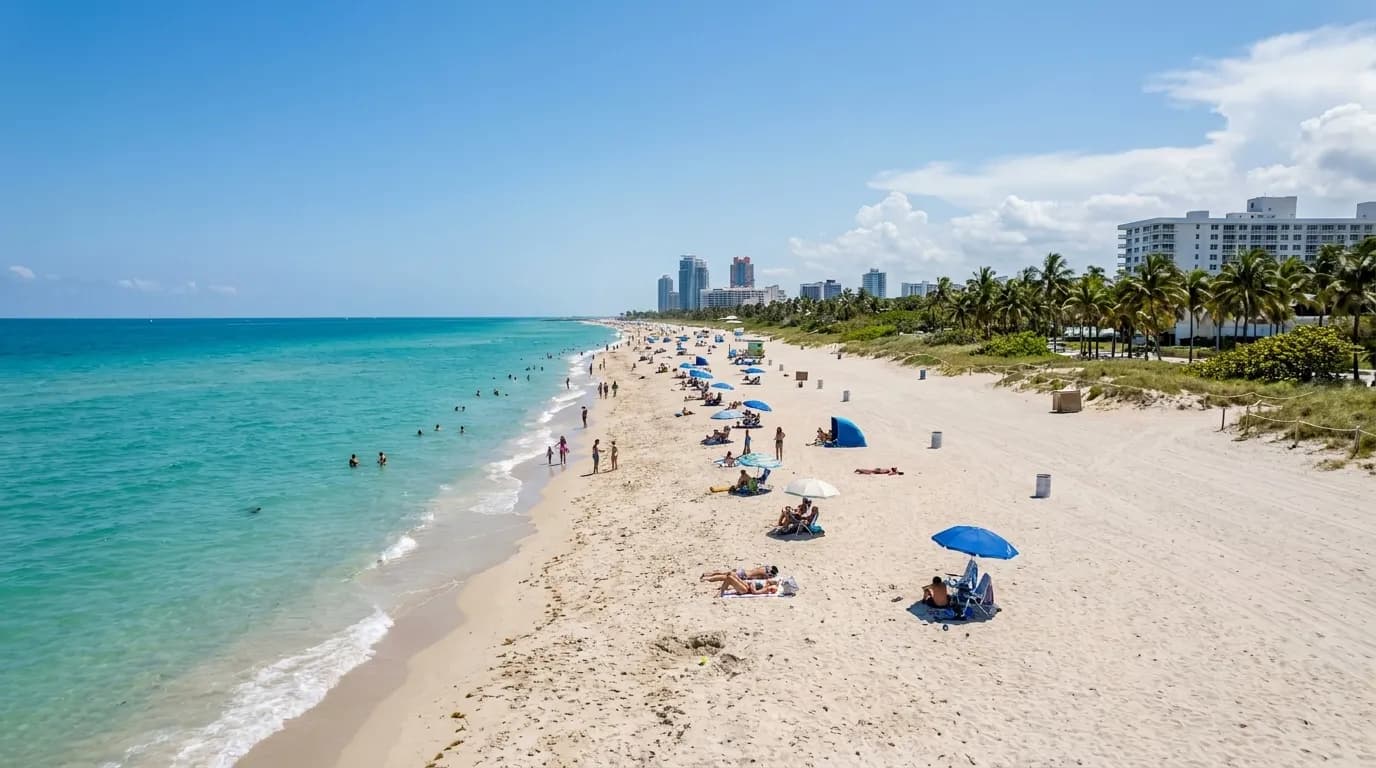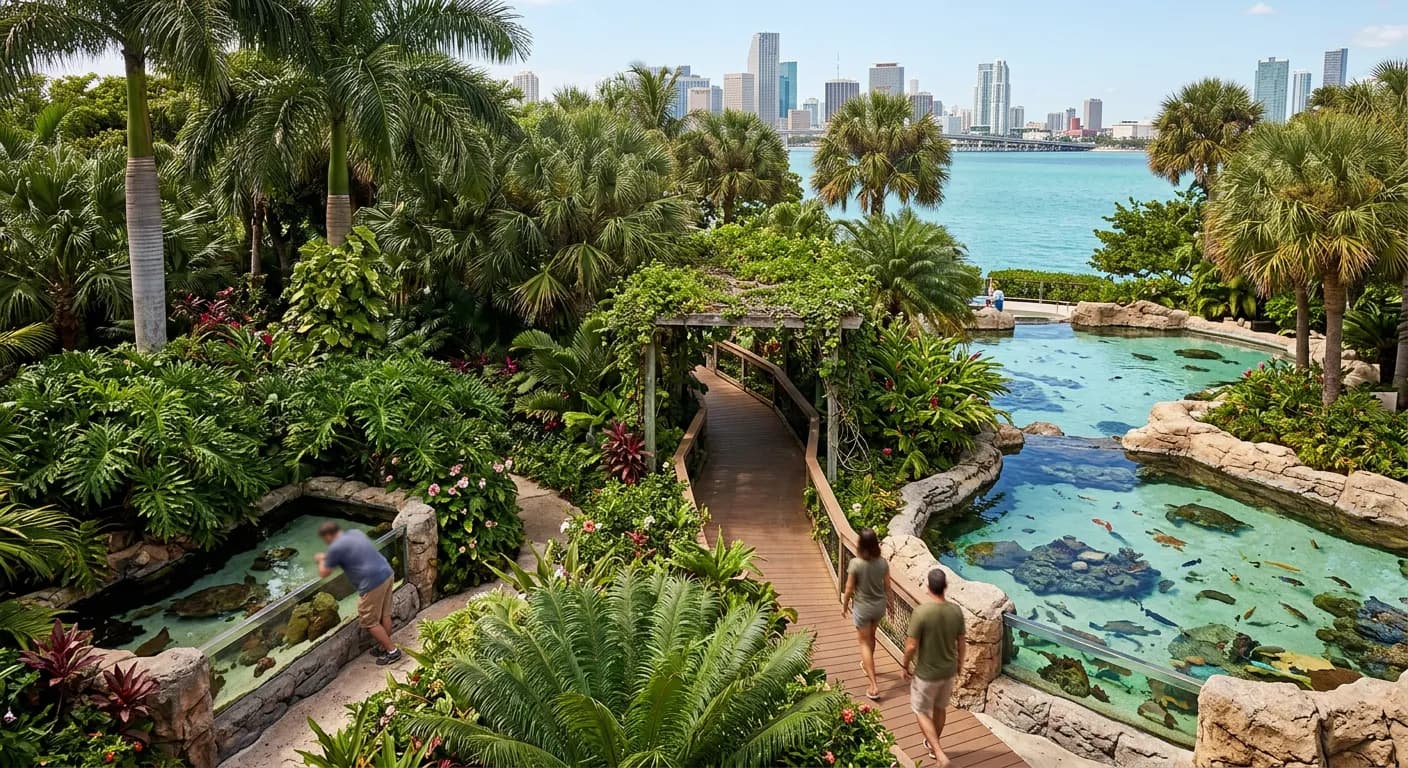
Miami's lush subtropical climate makes it a premier destination for botanical exploration, yet seasonal agricultural burns and regional hawk fire smoke can occasionally impact outdoor air quality. Planning a garden day requires balancing open-air walks with sheltered indoor alternatives to ensure a comfortable experience.
To safeguard your itinerary against sudden shifts in regional air quality, verify the current local Air Quality Index (AQI) before heading out.

Fairchild Tropical Botanic Garden and Indoor Conservatories
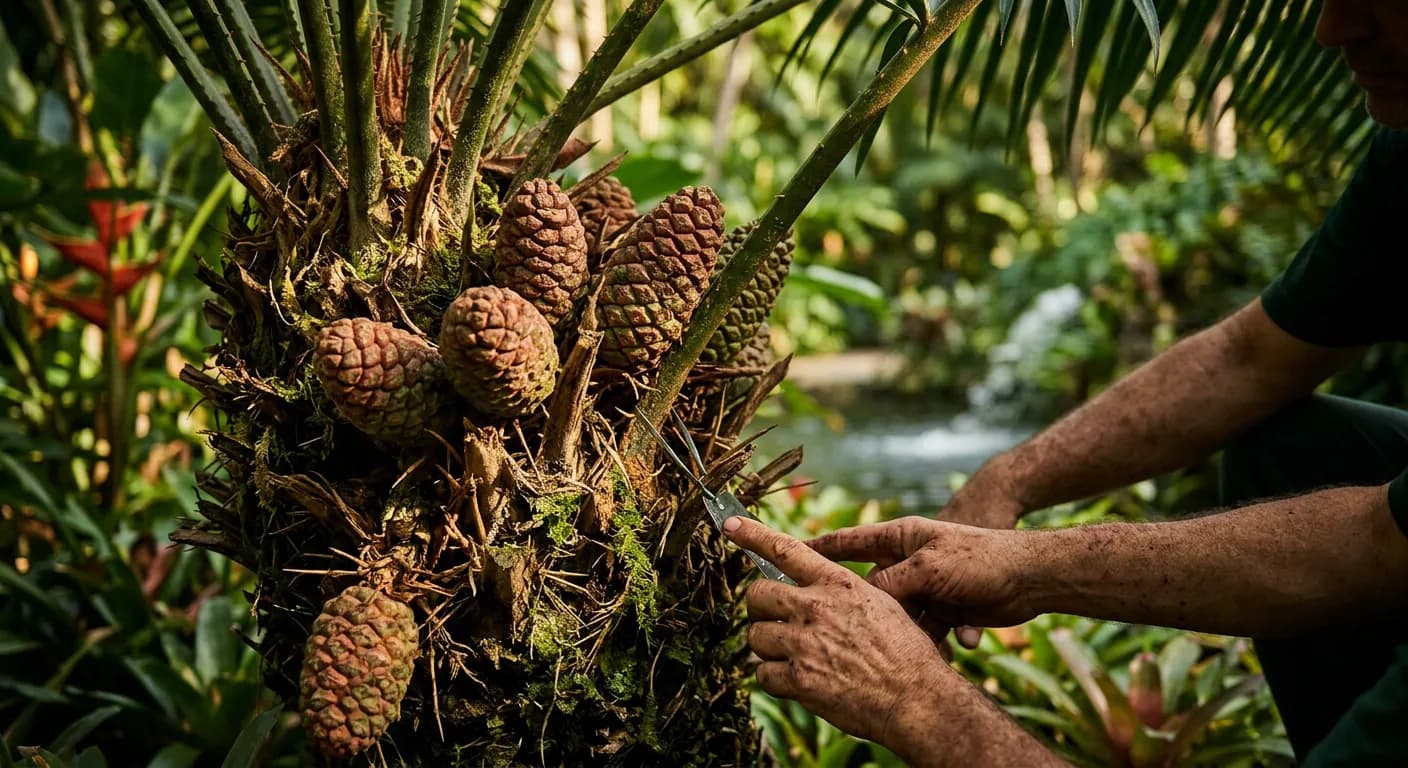
Fairchild Tropical Botanic Garden offers expansive outdoor pathways showcasing rare tropical plants, palms, and cycads. When seasonal hawk fire smoke or high humidity levels make outdoor walking less comfortable, visitors can retreat into the Wings of the Tropics conservatory, a fully enclosed, climate-controlled space filled with exotic butterflies and lush understory plants.
To plan your visit, check the garden's official website the morning of your trip to confirm which indoor exhibits are open and to review any seasonal tram tour schedules.
Shaded Canopy Walks at Pinecrest Gardens
Pinecrest Gardens features a historic native hammock, winding paths, and a diverse collection of tropical flora under a dense, protective canopy. This natural shade provides a cooler microclimate on warm days, though outdoor air quality should still be monitored during active regional burn periods.
- Wander through the shaded cypress slough and native hardwood hammock.
- View the outdoor art installations integrated into the botanical pathways.
- Consult the venue's calendar online prior to arrival for seasonal family programs.
Indoor Aquatic Escapes at Frost Science Aquarium
When outdoor air quality drops due to hawk fire smoke or summer storms, the Frost Science Aquarium provides a premier indoor alternative. This multi-level facility features a massive Gulf Stream aquarium alongside interactive science exhibits, allowing visitors to experience South Florida's marine ecosystems in a fully climate-controlled environment.
Because ticketing demands vary seasonally, check the aquarium's online reservation portal before arriving to secure your timed-entry slot.
Smart Strategies for Seasonal Air Quality Shifts
Regional environmental factors, including agricultural management and distant hawk fire events, can periodically carry fine particulate matter into the Miami metro area. Utilizing real-time monitoring tools allows you to seamlessly transition from outdoor garden walks to indoor museum galleries when conditions warrant.
- Monitor the EPA AirNow database for real-time PM2.5 levels in Miami-Dade County.
- Keep a backup list of indoor-centric exhibits, such as the Frost Science Aquarium, for low-AQI days.
- Wear appropriate protective masks if outdoor exposure is necessary during active smoke advisories.