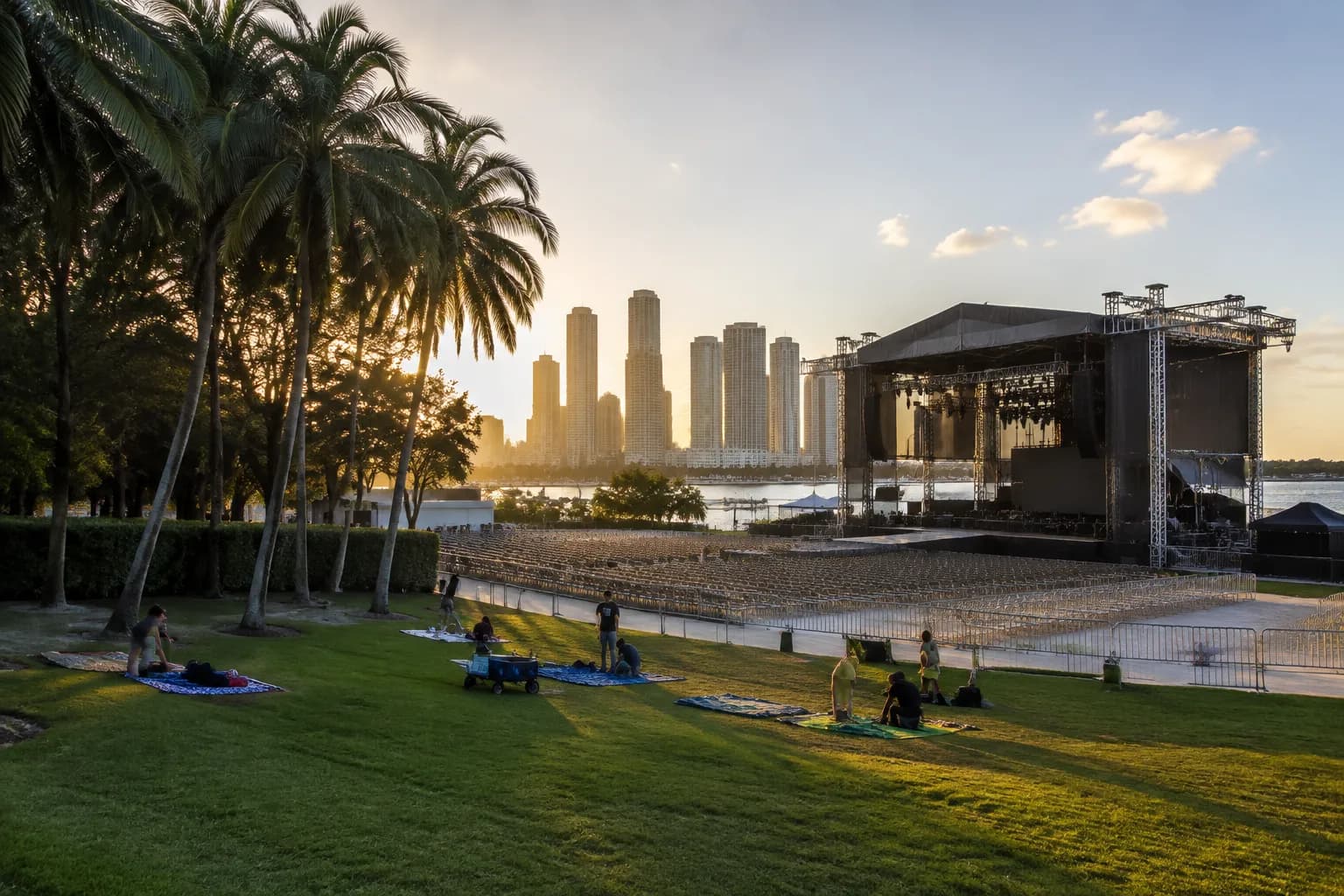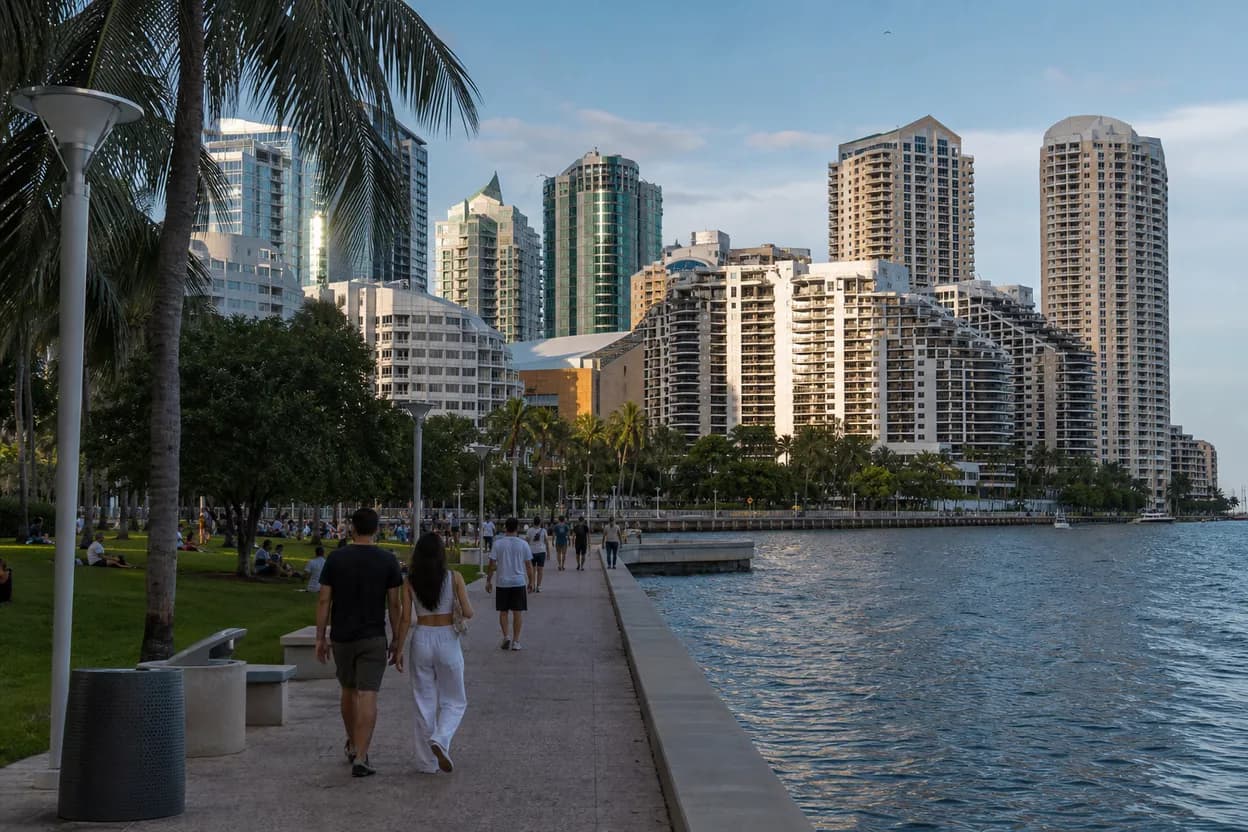
Miami’s useful winter forecast is rarely about snow; it is about wind off Biscayne Bay, quick rain chances, cooler post-front evenings, and how far you want to be from a dry exit. The attention around 2026-27 winter weather predictions can help if it turns a vague waterfront idea into a same-day plan. For a free late-afternoon walk, downtown gives you three workable choices: Bayfront Park for the easiest loop, Maurice A. Ferré Park for more open space, and the Riverwalk/Baywalk edges when the visible path, light, and weather all cooperate.
Want a free waterfront route matched to Miami’s wind, rain window, and sunset timing? Text Karpo before you leave so you can pick the smarter Bayfront walk, not just the nearest one.

Bayfront Park at 301 Biscayne Boulevard
Bayfront Park is the safest first pick when the forecast looks changeable and you want a free walk with fast turnarounds. Bayfront Park Management Trust lists the park at 301 Biscayne Boulevard, open daily from 7:00 AM to 11:00 PM. The compact downtown setting, paved paths, bay views, fountain area, playground, monuments, and nearby transit make it practical for a solo walker or one friend who wants movement without a complicated route.
The weakness is that Bayfront Park is also an event park. Ticketed areas, festival builds, city work, or crowd surges can change the walk even when general hours remain posted. If wind feels sharp along the bay edge, shorten the loop rather than pushing exposed sections. If access looks blocked, do not search for side entrances; move north toward Maurice A. Ferré Park or reset through the Bayfront Park Metromover station.
Maurice A. Ferré Park at 1075 Biscayne Boulevard
Maurice A. Ferré Park works when Bayfront Park feels too busy or when a cleared afternoon gives you room to stretch the walk. The same management trust lists it at 1075 Biscayne Boulevard, open daily from 7:00 AM to 10:00 PM. Its location near the museums, public art, lawns, and bayfront paths gives a wider, less compressed version of the downtown waterfront without making the outing expensive.
Because the park is open to Biscayne Bay, the weather matters more than the map suggests. A breezy dry day can feel refreshing; a gusty evening can feel tiring and make conversation harder. Stay on paved routes, avoid wet grass or construction edges, and treat ponding after heavy rain or king tides as a real limit. For lower mobility, start near the clearest paved entrance and keep the first lap short.
Downtown Miami Riverwalk and Baywalk Connections
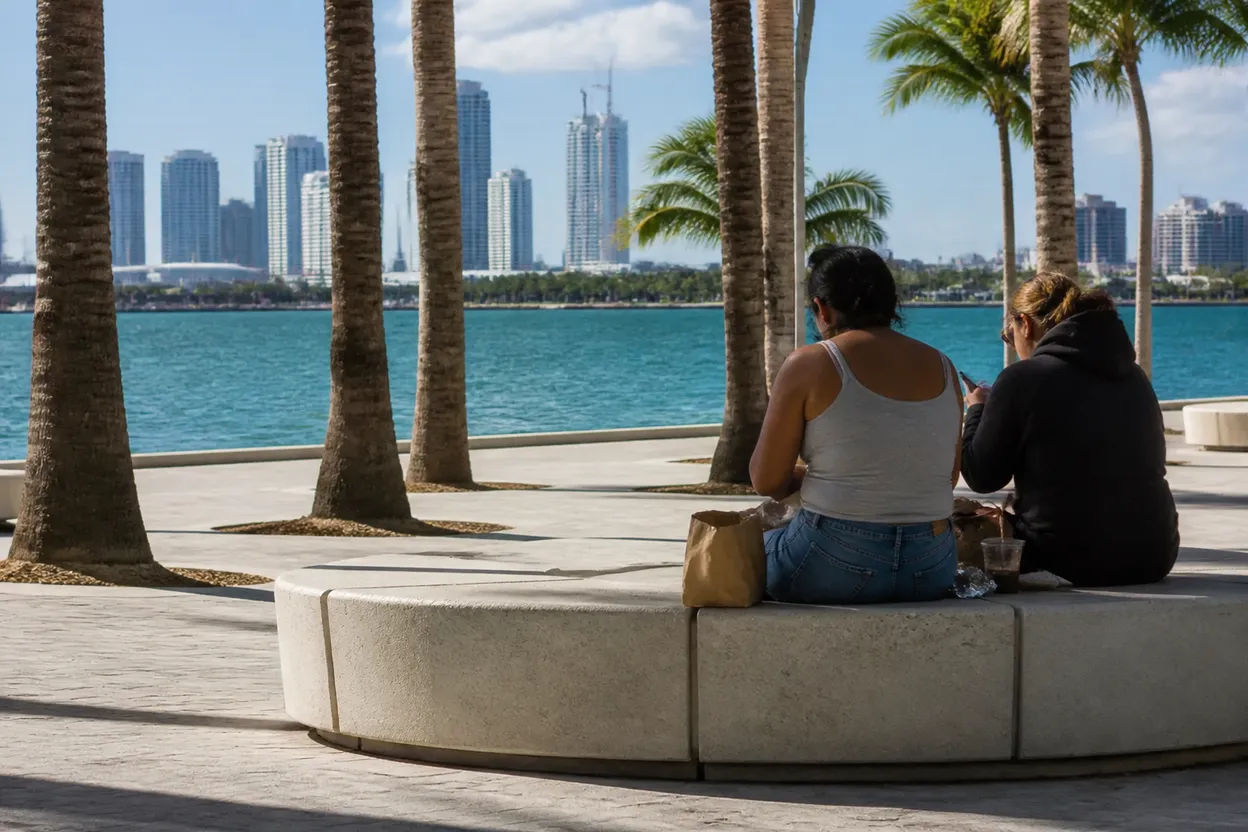
The Riverwalk and Baywalk are best treated as connected waterfront pieces, not a guaranteed continuous promenade. Miami Downtown Development Authority materials describe the Baywalk as mostly complete and the Riverwalk/on-road Greenway as less complete, with ongoing needs around access, visibility, wayfinding, lighting, shade, materials, and resiliency. That makes the route rewarding on a good day, but less predictable than staying inside one managed park.
Use these edges as an extension after you confirm the path ahead is open, dry, lit, and comfortable. If the route narrows, disappears into private frontage, feels poorly signed, or sends you toward a dark gap, turn back toward Biscayne Boulevard. The free-plan advantage comes from flexibility, not distance. In winter, that matters because wind, cloud cover, and earlier darkness can make an extra waterfront block feel longer than expected.
Bayfront Park Metromover Station
Metromover is the practical transit choice for keeping this walk free and flexible. Miami-Dade County describes Metromover as a free elevated people mover serving Downtown, Omni, and Brickell, operating seven days a week from 5:30 AM to 10:00 PM. The Bayfront Park station tracker lists the station at 150 S Biscayne Boulevard, with Bayfront Park, InterContinental Miami, and One Miami nearby.
The tradeoff is upgrade work and accessibility uncertainty. Miami-Dade flags ongoing Metromover upgrades and tells riders to check elevator and escalator status; the county also describes backup accessible service when a wheelchair or mobility-aid user encounters an inoperable elevator. Confirm the loop and destination on the platform display before boarding. If service is interrupted, use the station as a decision point for a shorter walk, not a reason to improvise a long detour.
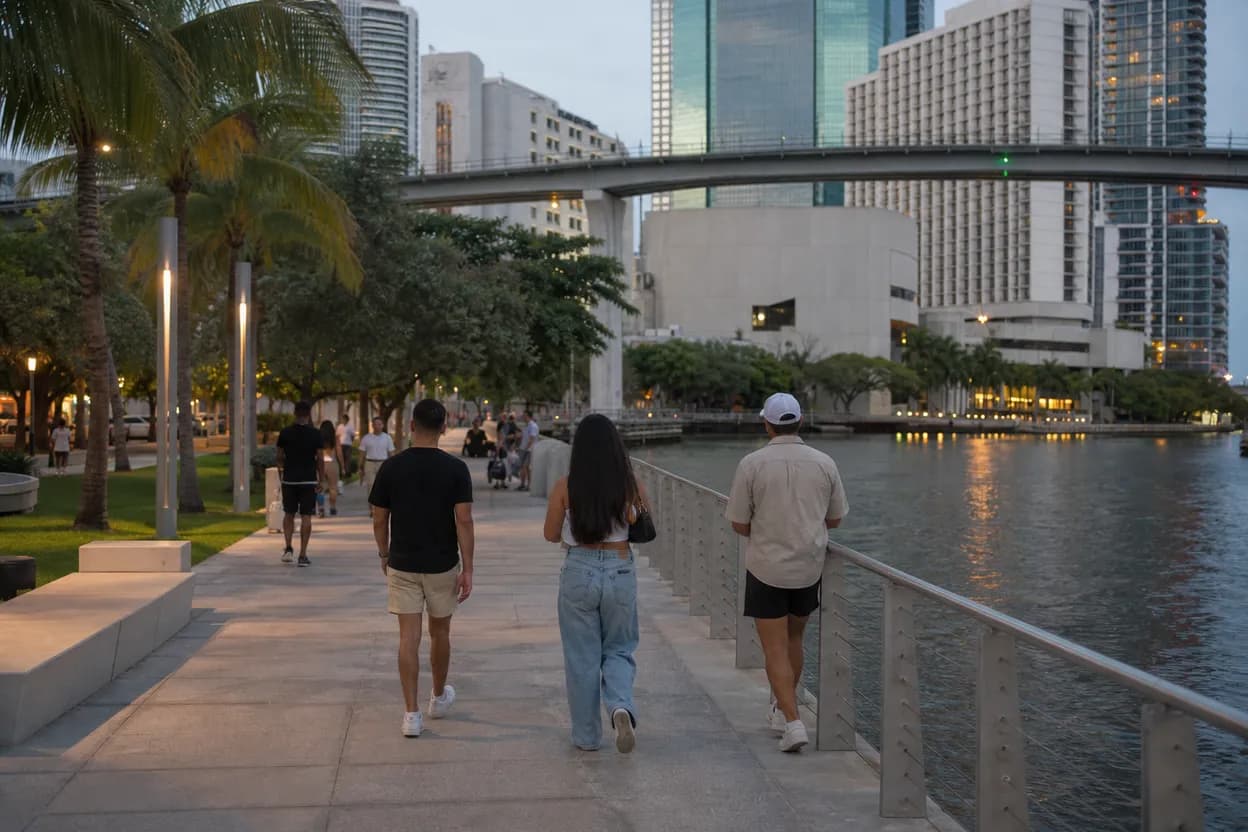
Biscayne Boulevard as the Dry-Exit Spine
Biscayne Boulevard gives this free walk its most useful backup logic. If showers form over the bay, an event blocks the lawn, or the wind makes the open edge unpleasant, you can retreat to the downtown street grid, another Metromover stop, or a public-facing indoor-adjacent area without crossing isolated stretches. Plan the walk so Biscayne Boulevard is always close enough to reach in about ten minutes.
This route fits restless, low-budget walkers better than people seeking a quiet nature escape. Downtown traffic noise, event crowds, and construction can be part of the experience. The payoff is control: you can start small, add blocks only when conditions are good, and leave without paying for parking or a ticket. If you need restrooms, seating, food, or shade, verify those details by venue before leaving.
National Weather Service Miami Forecast Check
Seasonal outlooks are not same-day instructions. NOAA Climate.gov explains that monthly and seasonal outlooks describe probabilities for temperature and precipitation categories, not exact temperatures, rainfall totals, or one evening’s comfort. NOAA’s Climate Prediction Center also posts official 90-day outlooks on a monthly schedule. Use those products to understand why winter planning is in the conversation, then move to the local forecast.
For the actual walk, check the National Weather Service point forecast for downtown Miami close to departure. Look for precipitation probability, wind speed, alerts, and any coastal or marine language that suggests rougher bay conditions. If the forecast is dry with manageable wind, choose the longer park-to-park option. If showers, gusts, or advisories appear, pick Bayfront Park’s shortest loop and keep Metromover within easy reach.
Your Two-Hour Miami Waterfront Decision
Make the final call within two hours of leaving, because Miami’s waterfront can change quickly. First, check the National Weather Service Miami forecast. Second, check Bayfront Park Management Trust updates or event listings for Bayfront Park and Maurice A. Ferré Park. Third, decide whether the Riverwalk/Baywalk extension is visible, open, and comfortable from where you stand. If any answer is uncertain, keep the route compact.
The decision guide is simple: Bayfront Park for the easiest confirmed access, Maurice A. Ferré Park for more space, Riverwalk/Baywalk only when the path is obvious, and Metromover when you want a free escape valve. Before you go, verify today’s hours, service alerts, event impacts, and forecast again. When a changing fact cannot be confirmed, make verification part of the plan and choose the shorter waterfront walk.
Tags: #Miami #BayfrontPark #MauriceAFerrePark #DowntownMiami #MiamiRiverwalk #Baywalk #FreeThingsToDo #MiamiWalks #WinterWeather #SunsetWalk #Metromover #BiscayneBay #AskKarpo #BeforeYouGo
Sources consulted: Source 1: bayfrontparkmiami.com · Source 2: bayfrontparkmiami.com · Source 3: miamidda.com · Source 4: miamidade.gov · Source 5: forecast.weather.gov · Source 6: cpc.ncep.noaa.gov
All trademarks are the property of their respective owners.
Ask Karpo first
Tell Karpo your date, group size, budget, and starting point. We’ll check current access, timing, transit, and the cleanest Miami plan for Bayfront Park, Maurice A. Ferre Park, and Downtown Miami Riverwalk/Baywalk waterfront cluster before you head out.