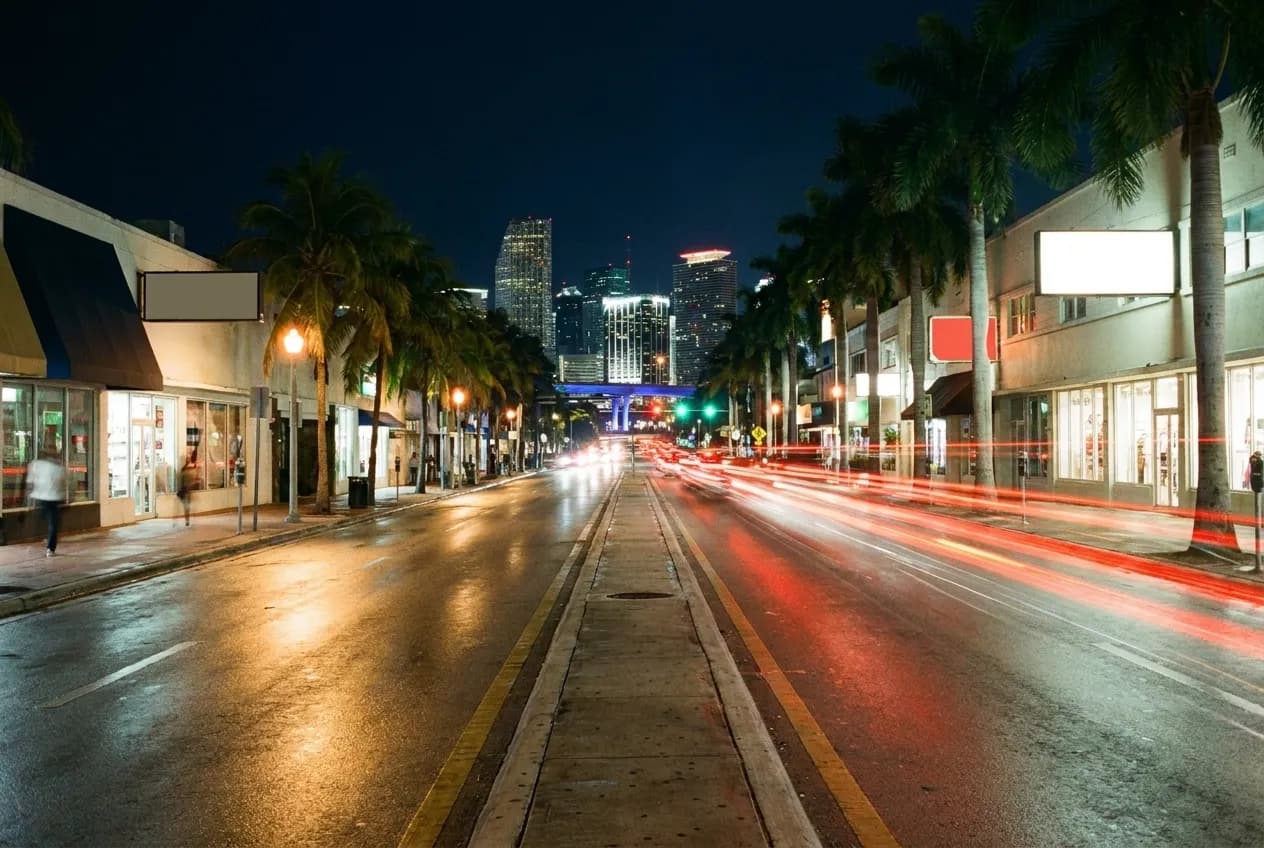
Biscayne Boulevard runs the whole north-south length of Miami, past downtown towers, the MiMo motel strip, Edgewater's new high-rises and out towards the county line. It looks, at one in the morning, like a road that should feed you — it is wide, lit, lined with businesses and busy with traffic. It mostly does not. Searching food open near me from a car on Biscayne at that hour produces a list dominated by places that closed at ten, and the real map is a handful of specific turn-offs.
Biscayne is a road to drive along rather than to eat on at this hour. Ask Karpo which of the turn-offs near you is genuinely open right now.
The MiMo strip, which closes early
The stretch of Biscayne through the MiMo historic district — the mid-century motel architecture in the fifties and sixties block numbers — is one of the more characterful pieces of road in Miami and one of the least useful late. The restaurants along it are neighbourhood rooms serving a residential area, and they keep neighbourhood hours: kitchens down between nine and eleven, everything dark by midnight.
That is worth stating plainly because the strip looks like it should be open. Neon on the motel signs stays lit all night, the road is busy, and the visual language is of an American highway that never sleeps. It is a preserved architectural district rather than a functioning late-night economy, and the two are easy to confuse at speed in the dark.
What actually runs all night
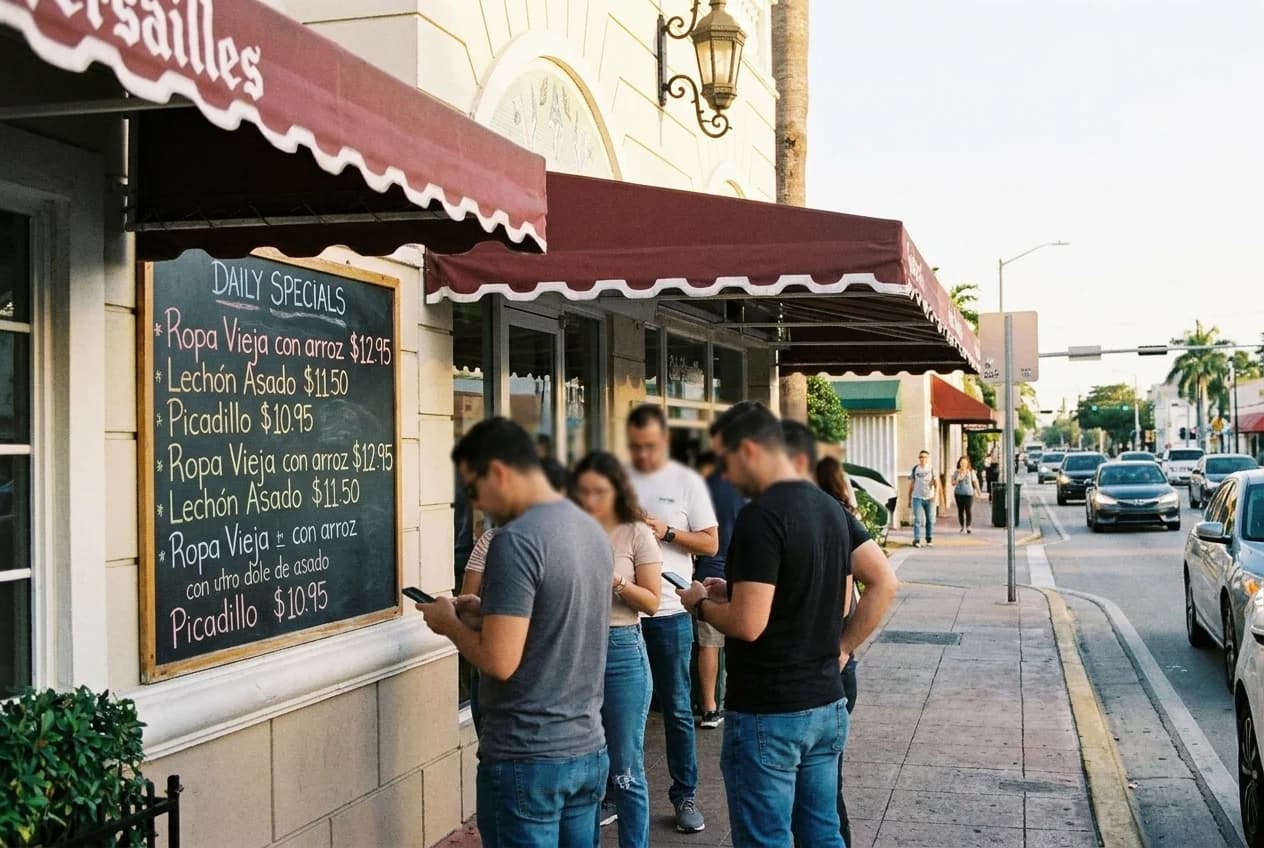
Miami's genuine twenty-four-hour infrastructure is Cuban, and it is reachable from most points on Biscayne. Sergio's operates round the clock and is the reliable answer at any hour. The ventanita layer — coffee windows attached to bakeries and restaurants — runs later than almost anything else in the city and will produce a cortadito, a croqueta and a pastelito at an hour when nothing else will. Those two categories cover the overwhelming majority of real answers to this question.
Fritangas and Nicaraguan and Cuban counters fill the same role further west and north, several of them keeping hours that a listing will not reflect. The general rule for late food across this city is that the further you get from the tourist grid, the more likely a kitchen is genuinely open, which inverts most people's assumptions.
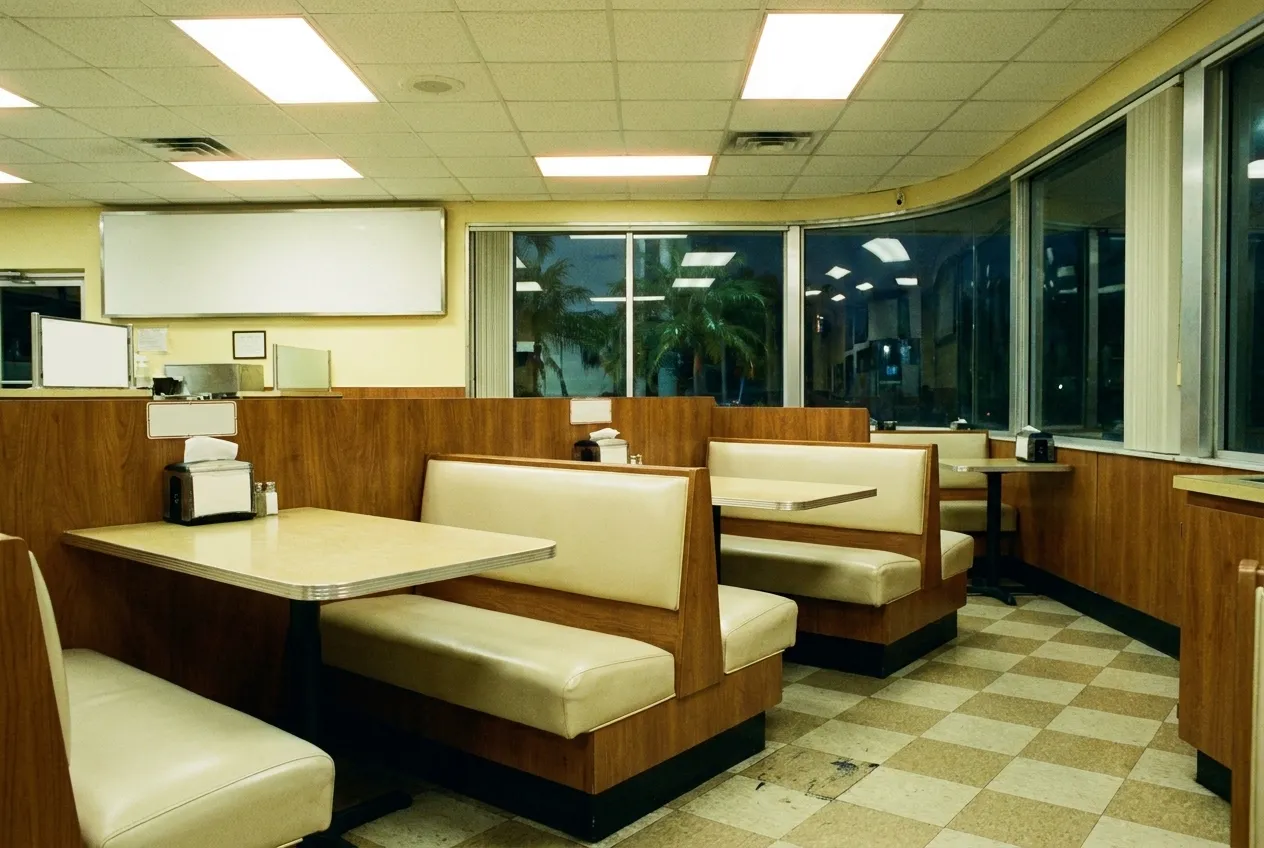
The turn-offs that work
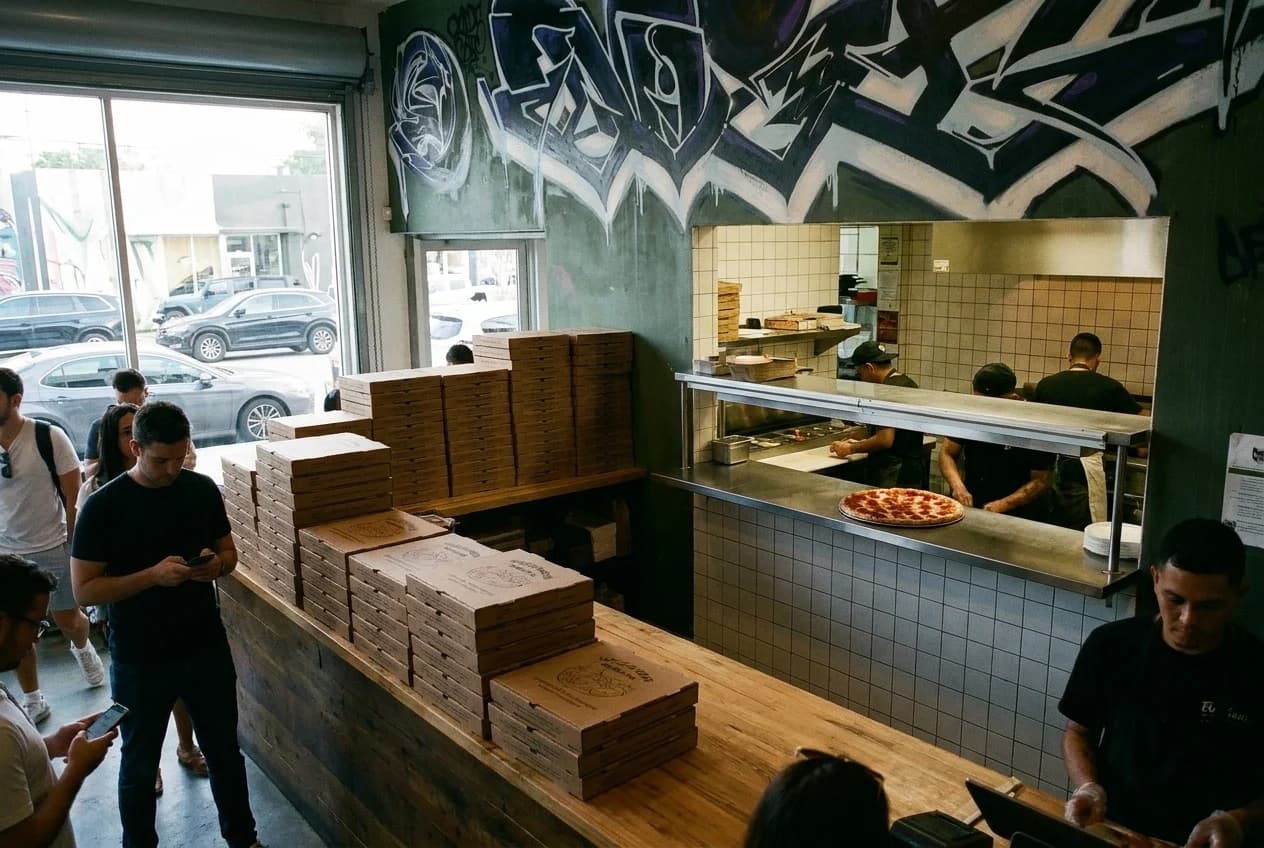
The practical strategy on Biscayne at one in the morning is not to look along the boulevard but to know which cross streets to take. West into Wynwood, roughly in the twenties, gets you the densest late-night food in Miami — bar kitchens running to two or three and pizza to five at weekends. South into downtown and Brickell gets you a smaller but real set of late rooms and the Metromover district's bar trade. And north-west towards Little Haiti and Little River gets you taco counters and wings that run later than their neighbours.
Each of those is a two- to five-minute drive from the boulevard, which at that hour is nothing. The mistake is continuing north or south on Biscayne itself hoping something will appear. It is a corridor between neighbourhoods with late food rather than a neighbourhood with late food of its own.
The drive-thru layer
Miami has a functioning late drive-thru economy that most food writing ignores, and at one in the morning it is a legitimate answer rather than a defeat. Cuban chains with drive-thru windows, the twenty-four-hour national chains clustered near the highway junctions, and gas-station counters attached to bakeries all run through the night along and around this corridor.
The quality range is wide and the useful discriminator is the same as everywhere: look at whether anyone is there. A drive-thru with four cars at one in the morning is turning food over; an empty one is serving you something that has been sitting. This is more reliable than any rating at that hour, because ratings do not know what time it is.
Doing it safely and sensibly
Biscayne at one in the morning is a fast road with long signal phases and a lot of people running them, and the stretches between neighbourhoods are quiet in a way that rewards ordinary caution — park in lit areas, use main-road frontages rather than back lots, and keep the walk from car to counter short. None of that is specific to this corridor; it is the same advice as any American arterial road late at night.
The other practical point is that if you have been drinking, this is precisely the situation where a rideshare beats the drive. The whole premise of eating on Biscayne is that you are already in a car, and the fares across central Miami after midnight are low enough that the calculation is easy.
Practical notes
Check hours before turning off, since the businesses that do run late here change their schedules seasonally and by night of week. Weekend nights have several times the late capacity of a Tuesday. Many counters and ventanitas are cash-first with card minimums. Twenty-four-hour claims on listings are the least reliable data in this category — a place that has run all night for years can go to a midnight close without updating anything.
If you are looking for a specific thing rather than any food at all, the honest advice is to decide before you set off. Driving a long boulevard hoping to recognise something open is the least efficient way to eat in this city at one in the morning, and it is how most people spend forty-five minutes and end up disappointed.
Tags: #FoodOpenNearMe #Miami #BiscayneBoulevard #LateNightMiami #MiMoDistrict #HiddenGems #OpenLate #MiamiEats #MiamiFood #Ventanita #WhereToEatMiami #LateNightEats #Wynwood #MiamiNights
All trademarks are the property of their respective owners.
Ask Karpo first
Want to know which turn-off near you has something genuinely open at this hour? Ask Karpo before you drive another twenty blocks.