 Wynwood Mofongo Dinner Picker: Arts District Evening Plates
Restaurants
Plaza Seafood Market Fishmonger: 6am Catch Picks for Dinner
Plaza Seafood Market at 3114 NW 17th Ave is a working Miami fishmonger open early daily. Learn which local catch to buy and how to carry it home.
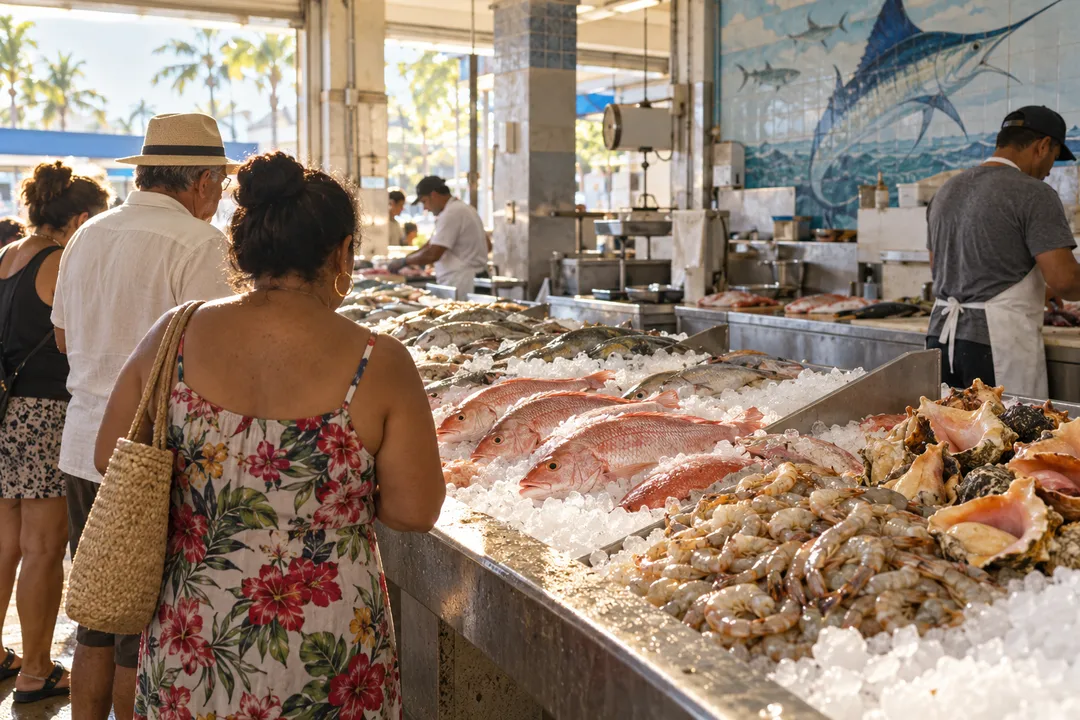
Plaza Seafood Market is most useful when you treat it as a place to buy dinner rather than a sightseeing stop. The official site says the business has served Miami since 1980 and describes fish caught by its own fishermen. That gives the visit a practical rhythm: look at what came in, ask how it should be cooked, then buy only what you can keep cold.
Why the early window matters
The market opens at 8:00 am Monday through Saturday and again at 8:00 am Sunday. That schedule makes the first hour the calmest bet for someone who wants to ask questions. By late morning, shoppers are making decisions around the day’s catch and the room feels more transactional. Come early if you want the staff to explain a whole fish or a less familiar cut.
Read the case before naming a fish
Start with a complete pass across the display. Look for whole fish, fillets, shrimp, and conch before deciding. The site says Plaza Seafood sources from Key West, Miami, Jupiter, and other South Florida waters, so a rigid species list can be less useful than asking what is strongest that day. Your best question is often, “What would you cook tonight?”
A simple first order
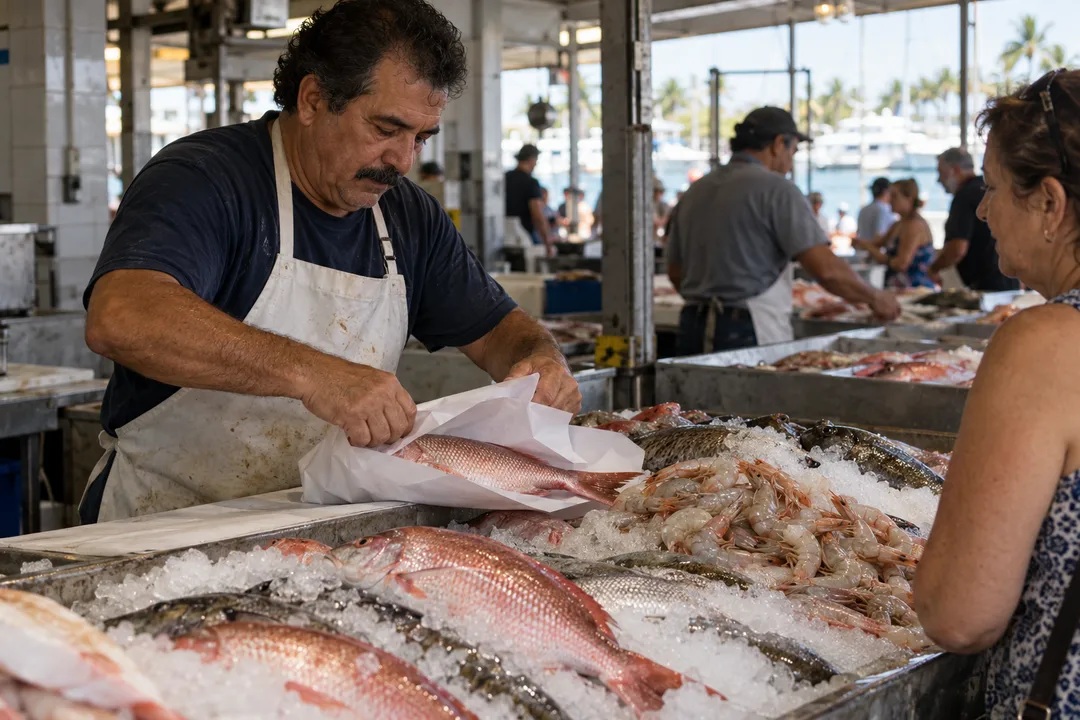
For two people, a modest fillet or a pound of shrimp is easier to manage than an ambitious seafood haul. Ask for skin on or off, bone removal, and the amount of cleaned product you will take home. If the answer points toward whole fish, ask how it will be scaled and gutted. That conversation turns the counter into a useful kitchen consultation.
The local-catch story
The market’s own description emphasizes fish from South Florida waters, plus wild-caught shrimp and conch from the Turks and Caicos, Bahamas, and St. Vincent. That range is the reason to shop here instead of defaulting to a supermarket tray. You are choosing among different origins and formats, not merely comparing identical plastic packages.
The line has an unspoken rule
Keep your questions focused while you are at the case. Decide whether you need a quick purchase or a longer explanation, and step aside if you want to discuss several cooking methods. Do not handle wrapped seafood or lean across the display. The regulars move quickly because they know the counter works better when curiosity does not block the next order.
What to skip
Skip a large mixed order if your evening includes a long drive or several errands. Raw seafood does not improve while it waits in a warm car. The honest judgment is that Plaza is strongest for a planned meal: one fish, one cooking method, and one direct route home. Buy variety only when you have a cooler and a menu that uses it.
A practical neighborhood route
The store sits on NW 17th Avenue, west of the denser downtown core. Make the market your first stop, not the last stop after a full day around Miami. If you want a neighborhood wander, do it before shopping, then return with an insulated bag. That order keeps the seafood cold and lets you explore without turning the purchase into a logistical problem.
How to choose between whole fish and fillets
Whole fish gives you more control over freshness and presentation, but it asks for a larger pan and a plan for bones. Fillets are more forgiving for a weeknight, especially if you are cooking in a rental kitchen. Tell the staff what equipment you have. “I have a skillet” is more useful than asking for the most expensive item in the case.
When the line is too long
If the line is longer than fifteen minutes and you only need an uncomplicated dinner, simplify the order. Choose a ready-to-cook portion, ask for it to be packed over ice, and leave. Return on a weekday morning when you need detailed help. If a preferred fish is gone, ask for a similar firm fish rather than waiting for a particular name.
People you will see there
The room serves home cooks buying a weekend centerpiece, restaurant workers moving with purpose, and neighbors who already know how they want a fish cleaned. Watch the second group: they ask precise questions and do not overbuy. A first-time visitor can borrow that rhythm without pretending to know every species. Clarity is the local etiquette.
Keep the purchase cold
Bring a reusable insulated bag and leave space for ice. Make the market the last food errand, keep packages flat, and drive directly home. If you are walking or using transit, plan the route before ordering. A carefully chosen fish is not a successful purchase if it arrives warm, crushed, or forgotten under other groceries.
What to ask before paying
Ask the staff how soon the fish should be cooked, whether the skin should remain, and whether the package is labeled with the species and cut. If you are buying shrimp or conch, ask about the cleaning yield. Those questions cost nothing and prevent the common mistake of leaving with a product that does not fit the recipe you had in mind.
Prices and planning
Plaza Seafood Market’s public site focuses on sourcing and service rather than a fixed online price list. That is normal for a market where the case changes. Set a budget before you reach the counter and ask for the price before a custom cut is made. Compare the amount that feeds your table, not the sticker on a whole fish that creates extra work.
Practical notes
Plaza Seafood Market is at 3114 NW 17th Ave, Miami, FL 33142. The site also describes the business as serving Miami since 1980. Bring an insulated bag, make a direct trip home, and ask for the day’s best cooking option.
The short verdict
For a fishmonger search in Miami, Plaza Seafood Market is the choice when you want local sourcing, a broad working counter, and an early start. Arrive close to opening, ask what came in, buy a manageable amount, and protect it on the ride home. The market rewards a shopper with a real dinner plan more than someone chasing a dramatic basket of seafood.
Before you leave, ask which preparation makes sense for the exact portion you chose and keep the package label with your receipt. The question is worth asking even when the counter is busy because a fillet for a skillet behaves differently from one intended for a grill. If the staff recommends a different fish, ask whether the substitute has the same cooking time. That one detail can save a weeknight dinner from becoming a second shopping trip.
If the seafood is for tomorrow, clear a cold shelf before you drive back; a planned storage spot is part of the purchase. Keep shellfish and fish separate when the package calls for it, and do not bury the order under warm groceries. An insulated tote is more useful than an extra plastic bag. The best Plaza purchase is the one that reaches your kitchen cold enough to cook confidently, not the one that fills the largest basket.
Write down the species, cut, and cooking method while the counter conversation is fresh, because that note will make the next Plaza visit faster. A short record also helps you compare a local whole fish with a cleaned portion the next time you shop. Return with the same practical information: number of diners, available pan, and cooking time. The staff can then move from general advice to a recommendation that actually fits your kitchen.
Ask Karpo for more information.
Keep reading
- Wynwood Mofongo Dinner Picker: Arts District Evening Plates
 Allapattah Mofongo Dinner Picker: Dominican Heritage Plates
 Little Havana Mofongo Dinner Picker: Calle Ocho Sunset Bowls