 Board Game Cafe Near Me: Kendall's GameZilla Skips The Menu
Back To School
What Does the Elon Musk Search Surge Mean for Miami Study Routes This Fall?
When tech news cycles spike, Miami students still need quiet tables and working power. Here's the route that skips the crowds.
The week before fall classes resume, search volume around high-profile tech figures climbs as students catch up on news cycles they ignored all summer. Elon Musk's name appears in assignment prompts for business ethics courses, engineering case studies, and media-literacy seminars, which means undergrads and graduate students in Miami suddenly need three things at once: a stable internet connection, a table with an outlet, and enough quiet to skim six months of headlines without losing focus. The problem is that the usual campus carrels fill early, and the coffee shops along Brickell Avenue turn into laptop hostels by ten in the morning.
Karpo checks which library floors are open right now, tracks afternoon storm cells moving in from the bay, and texts you a backup indoor spot if your first choice is at capacity. It saves the double-trip.
Why Students Search Tech Names During Study Prep
This is not about following celebrity gossip. It is about needing two uninterrupted hours to outline a paper or compare conflicting news sources on electric-vehicle policy, space exploration funding, or social-media governance. The search term itself is a proxy for a task: synthesizing recent events into coherent notes before the semester's first deadline. Miami's heat and sudden afternoon storms make this harder than it should be. You cannot count on an outdoor bench, and you cannot assume the place you walked twenty minutes to reach will have a free seat when you arrive.
The efficient study route in Miami during back-to-school season is the one that chains three resources in order: a library or study hall with guaranteed seating, a print shop or supply store for last-minute binder runs, and a fallback indoor spot you can reach in under ten minutes if the first location is packed. Downtown offers that sequence if you know which blocks to use and which hours to avoid causeway traffic backing up along Biscayne Boulevard.
Downtown's Library and Supply Corridor
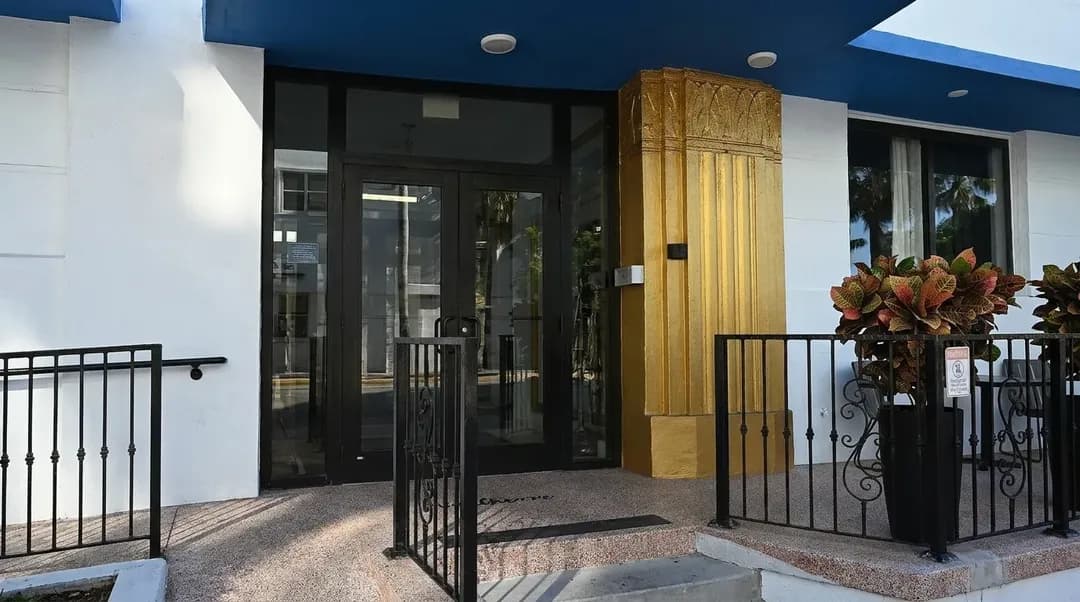
The main branch of the Miami-Dade Public Library system sits at 101 West Flagler Street, a few blocks west of the Metromover's Government Center station. The building has multiple floors, and the second and third levels tend to stay quieter than the ground floor, where the circulation desk and public computers draw steady foot traffic. The upper floors have long tables with power strips, and the air conditioning runs cold enough that you will want a light layer even in August. The building opens early, but the study rooms on the fourth floor require advance booking through the library's online system, so confirm availability before you commit to the trip.
Two blocks east on Flagler, between Miami Avenue and North Miami Avenue, you will find a cluster of office-supply stores and copy shops that handle poster printing, spiral binding, and same-day lamination. These are not tourist stops; they serve law offices and municipal workers, which means they stock heavy-duty three-ring binders, legal pads in bulk, and the specific highlighter colors professors request in syllabi. Prices are lower than campus bookstores, and the staff will not upsell you on decorative planners. The walk from the library to this block is flat, covered by awnings on the north side of Flagler, and takes under five minutes.
If the main library is full or closed for an event, the HistoryMiami Museum at 101 West Flagler—directly across from the library—has a small research room on its second floor that is open to the public during museum hours. It is not advertised as a study space, but the room has tables, natural light, and almost no foot traffic mid-morning on weekdays. You will need to pay general admission or confirm that the museum is hosting a free community day, which happens monthly but on a rotating schedule.
When to Move and When to Wait
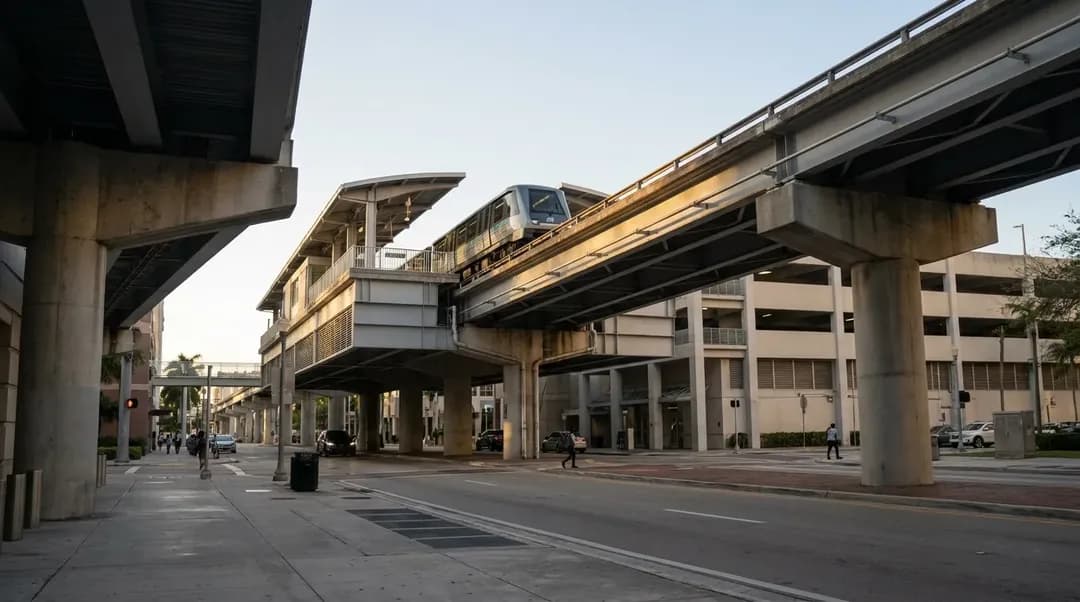
Afternoon storms in Miami build between two and four o'clock from June through October, and they arrive fast. If you are planning a study route that involves any outdoor walking, start early enough to be indoors by one-thirty. The Metromover is free and runs in an elevated loop through Downtown, Brickell, and the Arts & Entertainment District, but the stations themselves are open-air platforms. You will get soaked if you are caught on one during a downpour, and the trains do not stop running, which means you cannot wait it out under cover unless you exit the station entirely.
Parking downtown is expensive and inconsistent. The public garage under the Government Center Metromover station charges hourly rates that climb after the first two hours, and the entrance is on Northwest First Street, which funnels causeway traffic during morning and evening peaks. If you are driving, arrive before nine or after ten to avoid backups on the MacArthur Causeway that spill west onto Biscayne Boulevard. Rideshare pickup points near the library tend to cluster on the south side of Flagler Street, near the intersection with North Miami Avenue, where there is a wider curb and less bus traffic. Drivers will not wait if you are still gathering your books; have your bag packed and be visible at the pin before you confirm the ride.
The Metromover's Government Center station connects to Metrorail, which runs north to Tri-Rail and south to Dadeland. If your study day includes a run to a campus bookstore or a meeting with a professor, check the Metrorail schedule before you leave. Trains run every fifteen minutes during weekday peaks but stretch to twenty or thirty minutes mid-afternoon. Missing one train can cost you half an hour, which matters if you are trying to return downtown for a second study block before the library closes.
The Bayfront Fallback When Downtown Is Crowded
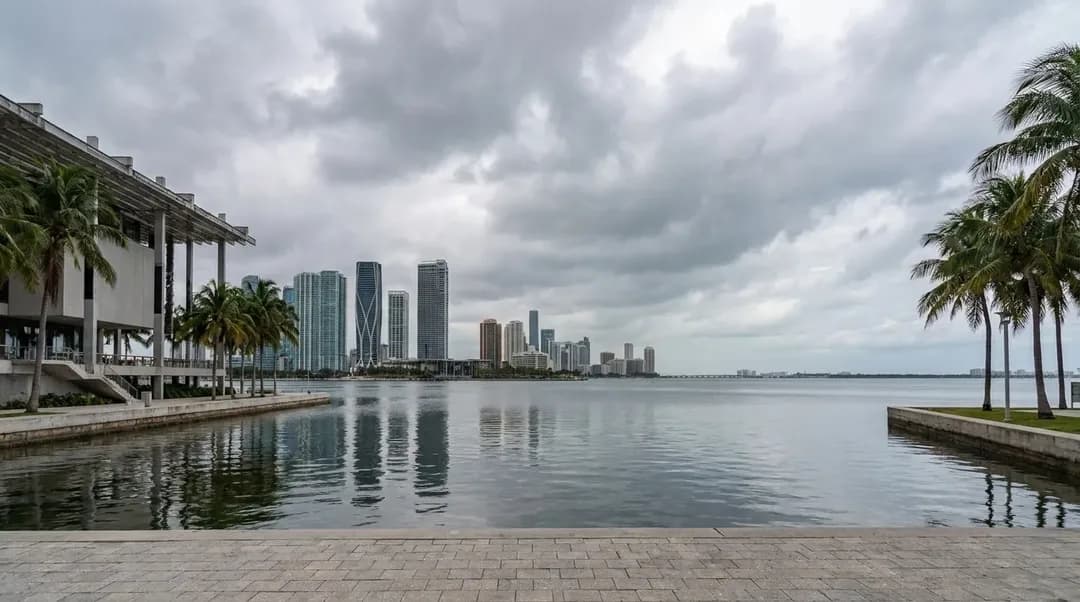
When the main library is at capacity or hosting a public event, the Pérez Art Museum Miami on Biscayne Boulevard offers an alternative. The museum's ground-floor lobby and outdoor terraces are open to the public without an admission ticket, and the lobby has benches, phone-charging stations, and strong air conditioning. The space is not marketed as a study area, but students use it regularly during weekday mornings when gallery traffic is light. The museum does not allow food or open drinks inside the galleries, but the terrace overlooks Biscayne Bay and has tables under a wide overhang that stays dry during light rain.
The walk from the Government Center Metromover station to the museum is about twelve minutes east along Flagler, then north on Biscayne Boulevard. The route is exposed, with no shade after you cross Biscayne, so attempt it only in the morning or late afternoon. The museum sits inside Museum Park, which has paved paths and a few shaded benches near the water, but the park itself offers no indoor backup if a storm moves in. The restrooms inside the museum are accessible without a ticket, which matters during a long study session.
If you are using the museum as a fallback, confirm its hours before you leave the library. The museum is closed Mondays, and it occasionally closes early for private events. The Frost Science Museum is next door and has similar public-access lobby space, but its hours and crowd levels differ. Do not assume that both will be available on the same day. The Metromover's Museum Park station is a short walk from both buildings, but the platform is elevated and fully exposed, so plan your exit before the sky darkens.
Double-Check Before You Walk
Miami's public libraries and museums publish their hours online, but special closures for staff training, hurricane prep, or facility maintenance appear with short notice. The Miami-Dade Public Library system posts alerts on its homepage, and the Pérez Art Museum updates its social channels when hours change. If you are planning a study day around a specific location, check the website the night before and again the morning of your trip. A wasted trip in Miami heat is not a minor inconvenience; it is a lost two hours and a drained phone battery.
The same caution applies to parking and transit. The Metromover is free, but it does shut down for maintenance, and those closures are announced on the Miami-Dade Transit website and app. If the Government Center station is closed, your next-closest stop is Third Street or Wilkie D. Ferguson Jr. Station, both of which add ten minutes of walking. Rideshare surge pricing spikes during afternoon storms and evening rush periods, so if you are relying on a ride home, have a backup plan that includes Metrorail or a longer wait.
For students working on assignments that require current news sources, public library computers provide free access to newspaper databases and academic journals that are paywalled on personal devices. The Miami-Dade system subscribes to several research databases, but you need a library card to log in remotely. If you do not have one, bring a photo ID and proof of address to the circulation desk; cards are issued on the spot. The upper-floor study areas fill fastest between eleven and three on weekdays, so arrive early or plan to work in shorter blocks with a mid-afternoon break.
Practical notes
- Main library opens early; confirm fourth-floor study room availability online before you go.
- Afternoon storms build between 2–4 p.m.; be indoors by 1:30 if your route includes outdoor walking.
- Metromover is free but platforms are open-air; you will get wet if caught during rain.
- Parking downtown is expensive; arrive before 9 a.m. or after 10 a.m. to avoid causeway backups.
- Pérez Art Museum lobby is free and air-conditioned, but closed Mondays; verify hours before using as backup.
- Rideshare pickups cluster on south side of Flagler near North Miami Avenue; be ready at the pin.
Tags: #karpo #miamistudents #downtownmiami #backtoschoolmiami #miamibacktoschool #studyroutemiami #miamilibraries #miamidade #metromovermiami #elonmusk #miamistudyspots #biscaynebay #miamitransit #museumparkmiami #miamipublicspaces
Sources consulted: Miami-Dade Public Library System · Pérez Art Museum Miami · Miami-Dade Transit
All trademarks are the property of their respective owners.
Ask Karpo first
Before you head downtown, text Karpo to confirm which library floors are open today and whether the museum fallback is available. It will also send you a live route that accounts for current Metromover service and afternoon storm timing, plus a backup indoor spot if your first choice is full.
Ask Karpo for more information.
Keep reading
- Board Game Cafe Near Me: Kendall's GameZilla Skips The Menu
 Matcha Cafe Near Me: Coral Gables' Coffee-First Alternative
 Vintage Clothing Stores Near Me: MiMo's Designer Consignment Fixture