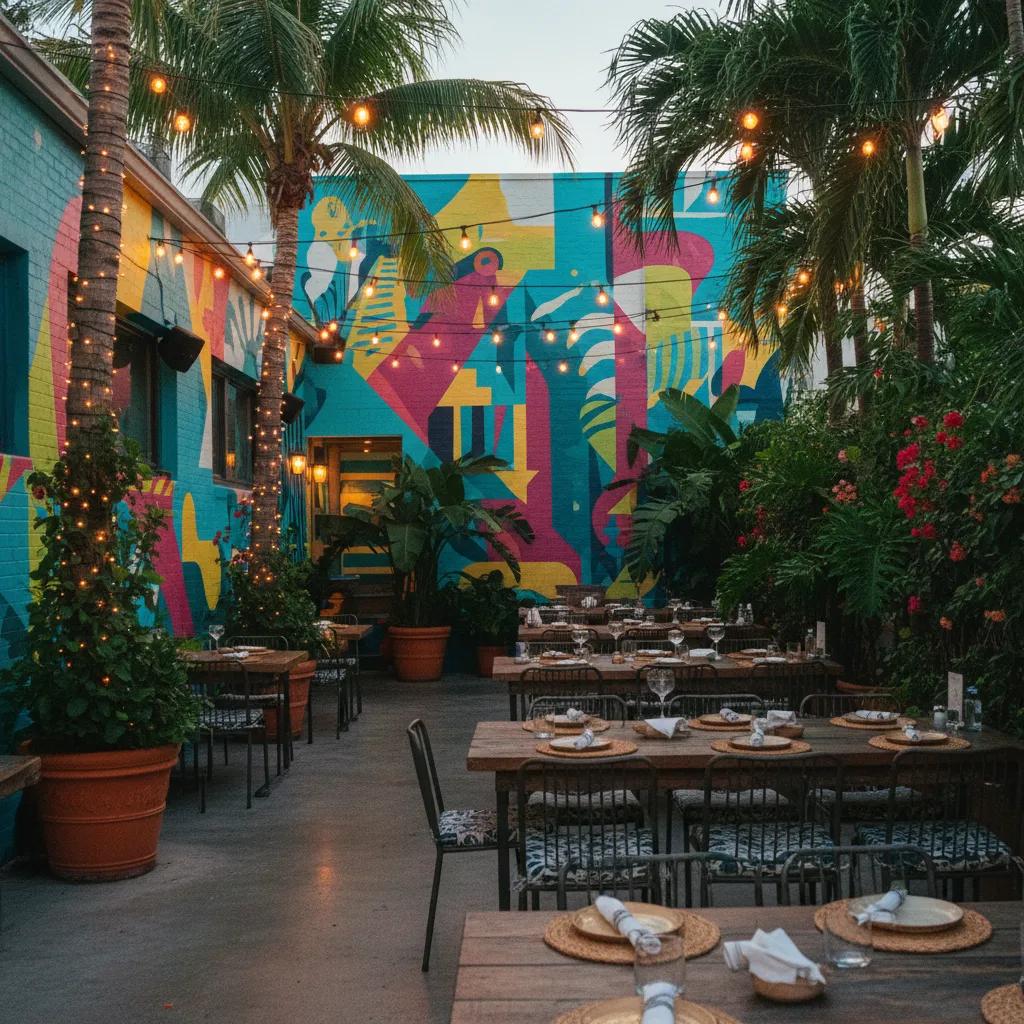
 Wynwood Mofongo Dinner Picker: Arts District Evening Plates
Restaurants
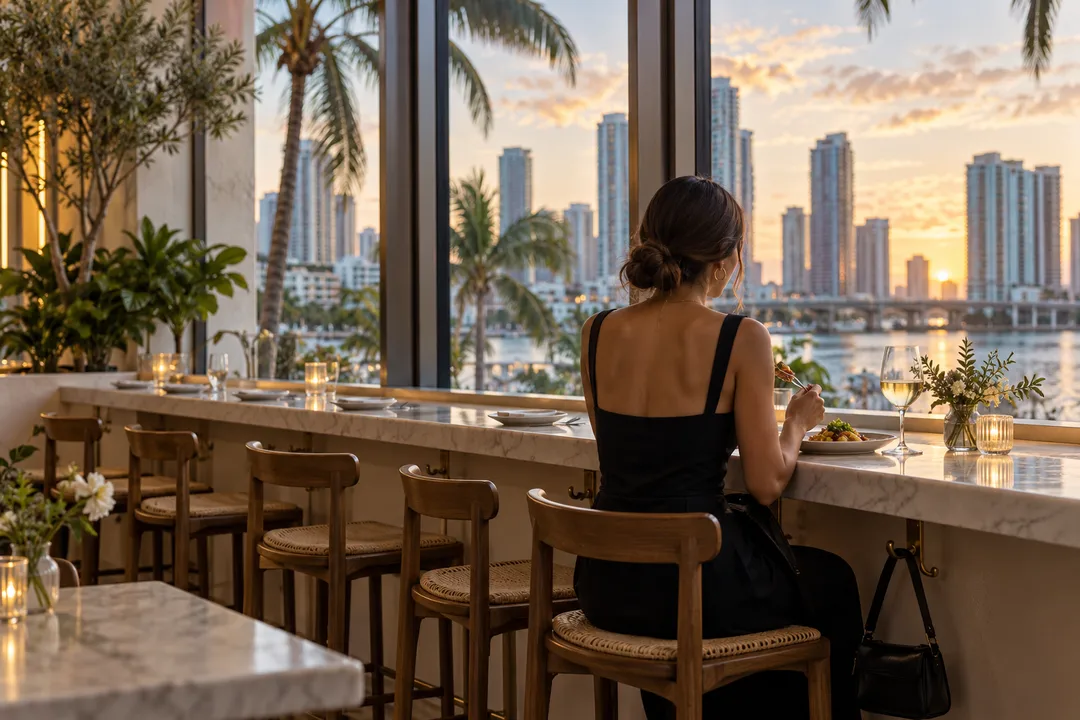
Miami Dinner Shortlist Builder: Eat Between Two Fixed Plans
Fit a Miami meal between appointments by protecting your arrival deadline first. Compare the detour, ordering format and exit plan before choosing dinner.
You have finished one appointment and have another later, with just enough space for dinner if the plan behaves. The tempting move is to search around the midpoint. A Miami dinner shortlist builder works better when you begin with the deadline at the far end. In Karpo APP, describe both stops, the gap between them, and how you intend to travel. Ask for meal possibilities that respect the second commitment. The planning method here helps you judge those suggestions without mistaking a nearby map pin for a dinner that fits your evening.
Protect the second arrival before searching for food
Start with the time you need to be ready at the next destination. That might differ from the advertised start of an event or the time written on an appointment. You may need time to find the entrance, store a bag, or meet someone in the lobby. Work backward from being ready, and include the parts that apply to you. This gives the meal a real boundary instead of a vague promise to eat quickly once you are seated.
Write the first commitment separately. When will you realistically be free to leave, and what would happen if it ran longer? A tentative finish is not the same as an open block of time. If the first appointment is uncertain, describe that uncertainty in your brief. You can then compare dinner choices with different levels of commitment. A full table-service meal and a simple individual order expose you to different risks when the beginning of the gap can move.
Measure the detour rather than the midpoint
A restaurant halfway between two pins can still require an awkward journey. Think in sequence: leave the first place, reach dinner, order and eat, pay, and continue to the second destination. Include the walking segments and any parking or pickup steps you expect. The point is to compare complete routes. Do not assign exact travel minutes from the apparent distance alone, and do not assume Karpo is monitoring the traffic or the progress of your appointment.
For a hypothetical evening from Brickell to a later commitment in Coral Gables, you could ask whether eating near the beginning, near the end, or along the route offers the simpler plan. That question does not assert any particular journey time. It gives the comparison a useful shape. Dinner near the final stop can reduce the number of unknown steps after you eat, while dinner near the first stop might be easier if you already know that immediate area.
Explain how much of the gap belongs to dinner
Separate total available time from the time you want to spend at the table. Travel, ordering, waiting, paying, and finding the next entrance all draw from the same gap. Build your own buffer before deciding what remains for eating. If the remainder does not support the meal you want, simplify the food plan or move dinner until after the second commitment. A squeezed schedule is not improved by pretending that every transition will happen immediately.
Your request could read: I leave a meeting in my starting neighborhood and must be ready at my next destination later this evening. I am traveling by my stated method, carrying a small bag, and want a straightforward seated meal. Compare three possible dinner stops with the extra journey each would introduce. Treat any service-duration information as something that needs actual support. This wording asks for practical comparison without claiming that a venue will deliver your food within a promised number of minutes.
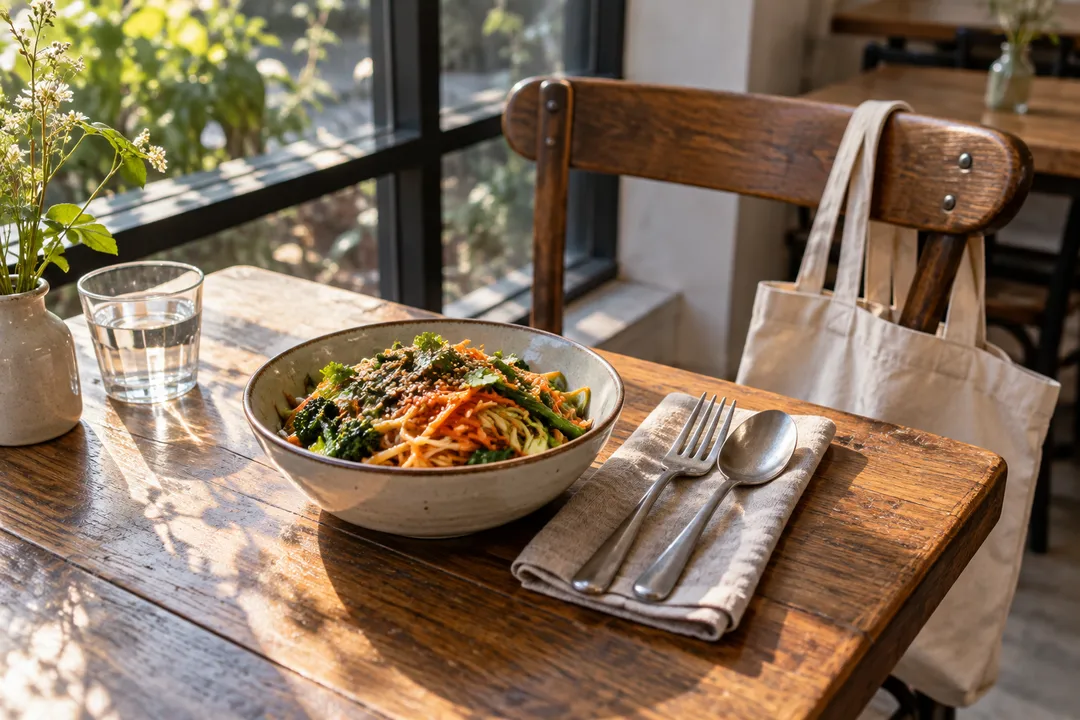
Match the meal format to your exit needs
Consider how much control each dining format gives you. An individual counter order can be easier to define in advance than a long sequence of shared courses, but a queue can still take time. Table service can be comfortable when you have enough room in the schedule, while a set menu can be a poor fit if you cannot stay for its full experience. Use the real format of a candidate rather than deciding from its cuisine or photographs.
Choose a meal that does not depend on a long ordering discussion. If dining with a colleague, agree on the kind of food and whether you expect separate payments before arriving. Consider luggage, clothing, and anything you must carry into the next appointment. A quick bite that leaves you balancing containers and a laptop bag may be less useful than a slightly simpler route. These details belong in the brief because they affect the evening even when the menu looks appealing.
Ask for a reason each candidate belongs on the route
For every suggestion, request an explanation tied to the journey: why this area, why this serving style, and what makes departure manageable. A statement such as popular with visitors does not answer your scheduling problem. The useful answer connects the dinner to your two existing commitments. It should distinguish supported facts about the restaurant from an estimate or a preference. If the explanation depends on an exact waiting time with no evidence, do not use that number as your scheduling foundation.
Limit the shortlist to a few serious alternatives. You might keep one near the first appointment, one closer to the second, and one simple fallback. Give each a role rather than allowing three equally vague recommendations to compete. Ask Karpo a focused follow-up if two appear similar: which one requires fewer separate travel steps after the meal? That is easier to assess than asking which is generally better, because the answer follows from the evening you actually described.
Set a decision point for changing the plan
Choose in advance when you will abandon the sit-down meal if the first appointment runs late. This is your personal rule, not a prediction about restaurant service. Knowing the rule saves you from repeatedly shaving minutes off the buffer while hoping dinner will speed up. A fallback can be a lighter meal before the appointment and a proper dinner afterward, provided that arrangement suits your needs. Keep it appealing enough that using it does not feel like the evening failed.
At the restaurant, explain any departure requirement before committing to a meal whose pace matters. The response from the staff is more relevant than an assumption based on the menu's length. If the dining format cannot accommodate the gap, use your fallback. A reservation secures only what its terms actually state. It does not turn your available time into a guaranteed service window or eliminate the need to pay and travel onward when dinner is over.
Practical notes for an evening with two anchors
Keep a compact itinerary containing both destination names, the required arrival at the second, your travel method, and the point at which dinner must change. Add the chosen restaurant only after it has earned its place in that sequence. Use precise destination details in the private planning conversation where needed, and share only what your dining companion needs. The final message should tell them where to meet and what the timing allows, without exposing an unrelated appointment's private details.
Bring that itinerary into Karpo APP and request dinner ideas that fit between your anchors. Adjust the brief if the appointments move rather than treating an earlier suggestion as permanently suitable. The result should make the next step easier to see: eat near the first stop, continue toward the second, or save the longer meal for later. A good dinner in this situation lets you enjoy the food while remaining clear about the commitment you have already made for the rest of the night.
Ask Karpo for more information.
Keep reading
- Wynwood Mofongo Dinner Picker: Arts District Evening Plates
 Allapattah Mofongo Dinner Picker: Dominican Heritage Plates
 Little Havana Mofongo Dinner Picker: Calle Ocho Sunset Bowls