 Wynwood Domino Set Gift Browsing Walk: Acrylic Designs
Hidden Gems & Odd Finds
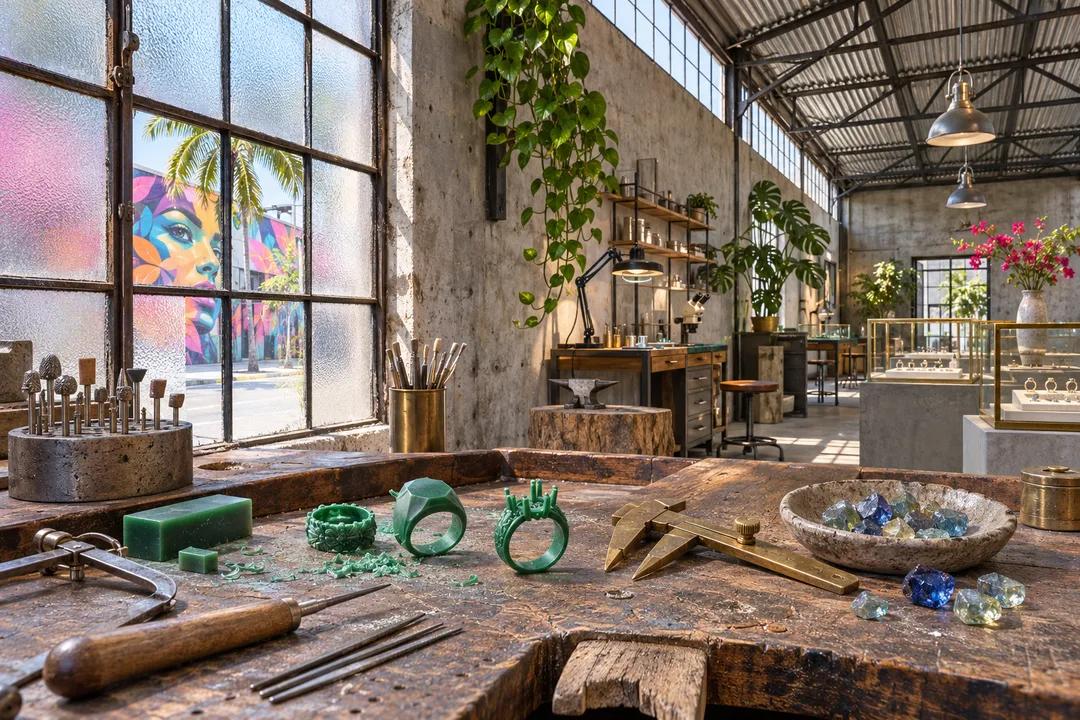
Wynwood Custom Jewelry Studio: 3 Sculptural Wax Consults
Explore a Wynwood custom jewelry studio along NW Second Avenue in Miami. Compare lost-wax silver casting, brutalist gold bands, and industrial studio walks.
Behind the sun-drenched concrete facades and towering mural walls of central Miami, visiting a custom jewelry studio in Wynwood introduces a distinctly sculptural approach to personal adornment. Ever since the neighborhood evolved from a mid-century garment and warehouse zone into an international arts destination following the 2009 debut of Wynwood Walls, independent metalsmiths and lost-wax casters have claimed quiet side-street workrooms just off NW Second Avenue. Rather than browsing velvet-lined glass counters stocked with mass-produced engagement mounts, visitors enter working industrial bays where rolling mills, centrifugal casting kilns, and steel anvils occupy center stage. Natural subtropical light pours through high factory transoms onto timber benches dusted with jewelers rouge and blue carving wax shavings.
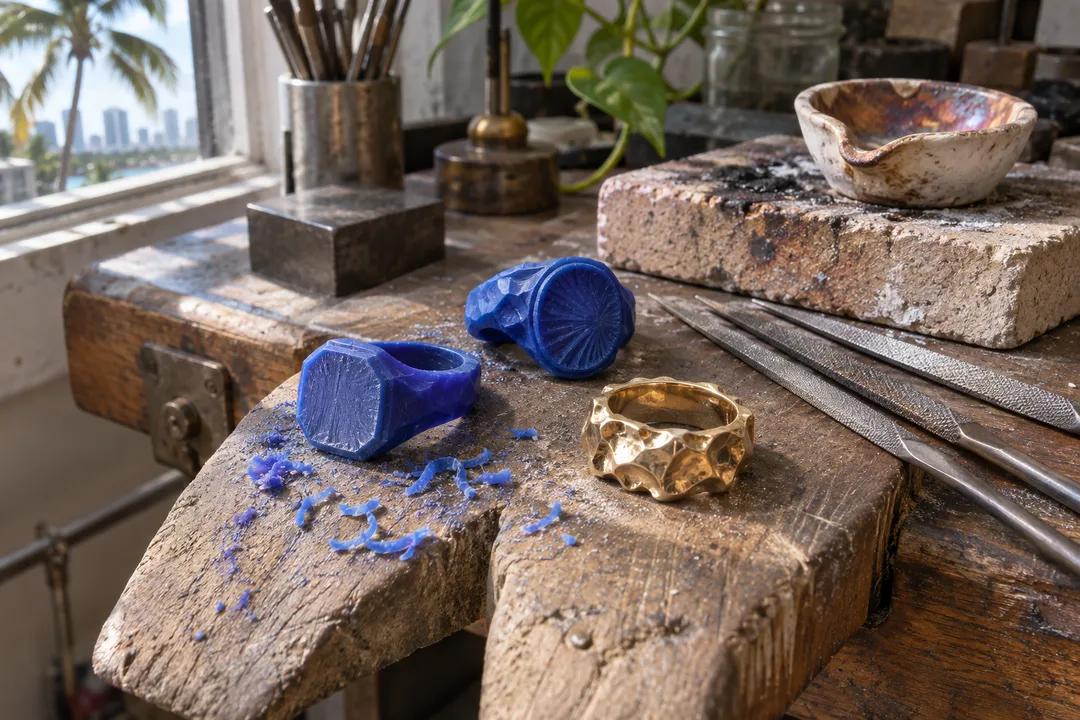
Three Core Bespoke Consultations Across Wynwood Warehouse Ateliers
Commissioning a piece in this creative district generally revolves around three foundational studio workflows tailored to how hands-on you want the design journey to feel. First, hand-carved lost-wax sessions invite clients to sit beside a bench smith and shape microcrystalline green or blue jeweler wax using heated spatulas, wolf burs, and saw frames. Because wax captures every subtle thumbprint, faceted plane, and knife-edge bevel, the resulting investment casting in recycled sterling silver or fourteen-karat gold preserves an unmistakable organic texture that computer-milled molds rarely replicate.
Second, brutalist and architectural metal fabrication appeals to collectors who favor clean geometric tension over ornate filigree. In these consultations, smiths forge heavy-gauge square wire and flat sheet stock directly under an oxygen-propane torch, annealing and hammering the metal over steel mandrels to build chunky signet silhouettes, asymmetrical cuff bracelets, and hinged collar necklaces. Clients test different mill thicknesses against their fingers to balance visual presence with comfortable daily ergonomics in humid South Florida weather.
Third, unconventional gemstone sourcing and flush-setting consultations focus on stones with strong geological personality. Instead of uniform colorless rounds, Wynwood studio trays frequently highlight bi-color Montana sapphires, salt-and-pepper diamond slices, tourmalines with natural rutile needles, and cabochon chrysoprase. Makers demonstrate how low-profile gypsy settings, heavy rubbed-over bezels, and tension-inspired channel mounts protect irregular stone girdles while keeping the ring silhouette snag-free for active studio artists, architects, and musicians.
Inside the Lost-Wax Casting and Metal Finishing Workflow
Understanding the physical transformation from raw concept to finished metal helps you ask sharper questions during your initial design review. Once your hand-carved wax model or hybrid resin prototype passes a finger-fit check, the jeweler attaches a wax sprue tree and encases the form inside a perforated steel flask filled with liquid gypsum investment plaster. After the plaster cures, the flask enters a programmable burnout kiln where hours of rising heat vaporize the wax completely, leaving a crisp negative cavity ready to receive molten alloy.
When the glowing metal is poured under vacuum or centrifugal force and quenched, the raw casting emerges with a matte, crystalline skin known as fire-scale. During your intermediate fitting, you can decide how much of that raw casting character to keep. Many Wynwood makers pair a satin-brushed or sandblasted recess with mirror-burnished inside shanks and high-polished bezel rims, creating high-contrast shadow play when you step from shaded warehouse interiors into bright Miami afternoon sun.
For clients commissioning wedding bands or milestone rings intended for decades of ocean swims and tropical heat, alloy selection deserves careful discussion at the bench. Smiths explain why palladium-white gold resists yellowish rhodium wear better than standard nickel-white blends, how eighteen-karat yellow gold develops a warm buttery patina over time, and why argentium silver offers superior tarnish resistance against coastal salt air compared with traditional copper-heavy sterling.
How to Prepare for a Productive Studio Design Session
Because independent Wynwood workrooms operate around kiln firing schedules, acid pickle baths, and stone-setting concentration blocks, drop-in browsing is far less common than focused one-on-one consultations. Before heading to the district, gather visual references that communicate structural proportion rather than copying another maker piece: architectural concrete reliefs, vintage industrial hardware, or close-up photographs of textures you admire. Bringing two or three rings you already wear daily allows the smith to measure your preferred band width, inner comfort-fit curvature, and dome height with digital calipers.
Finger sizing in Miami requires a practical climate adjustment that experienced local jewelers always emphasize. Walking several blocks across sun-baked pavement between NW Twenty-Fourth Street and NW Twenty-Eighth Street naturally causes fingers to swell slightly compared with sitting in an air-conditioned room. Plan to arrive fifteen minutes early so your hands cool down to a neutral baseline before testing wide-shank sizers, as a six-millimeter cigar band fits noticeably tighter than a slender two-millimeter stacking wire.
During the consultation, you can also explore custom interior hallmarking and hand-pushed graver inscriptions. Many Wynwood bench jewelers use binocular microscopes and high-speed pneumatic gravers to carve architectural line motifs, coordinates, or personal monograms along the inner gallery rail of a ring, ensuring the exterior silhouette stays bold and unadorned while holding private meaning against the skin.
Pairing Your Studio Visit with a Wynwood Art Corridor Walk
A major advantage of commissioning custom metalwork in Wynwood is how naturally the studio visit pairs with an unhurried pedestrian loop through the surrounding creative blocks. After reviewing wax models or loose stone parcels near NW Second Avenue, you can stroll through the pedestrianized lanes around NW Twenty-Fifth Street and NW Twenty-Sixth Street to study large-scale chromatic murals, contemporary sculpture courtyards, and independent printmaking spaces. Observing how muralists balance bold color blocking and negative space often sparks fresh ideas for enamel inlays or multi-stone cluster layouts.
When you want to plan a full half-day creative route without juggling scattered browser tabs, open the Karpo APP to explore neighborhood context and nearby cultural stops across Wynwood. In the Karpo APP, you can ask conversational questions about shaded courtyard cafes for reviewing sketch notes, compare the industrial gallery vibe of Wynwood with neighboring Allapattah or the Design District, and piece together a relaxed walking sequence before or after your studio consultation.
Practical Transit, Timing, and Climate Notes for Wynwood
Midweek mornings between Tuesday and Thursday offer the calmest atmosphere along the side streets flanking NW Second Avenue and North Miami Avenue. Street mural photography crowds peak on weekend afternoons and during monthly art walk evenings, whereas weekday morning light gives you quiet sidewalks, easier curb access, and steady northern daylight for inspecting subtle pleochroism in loose sapphires and tourmalines.
Reaching the district is straightforward without relying on expressway parking lots. The free City of Miami Wynwood Trolley loops through the neighborhood corridors and links directly with the Adrienne Arsht Center Metromover station to the south, while Miami-Dade Metrobus Route 2 runs north-south along NW Second Avenue. Wear breathable linen or cotton layers and closed-toe shoes suitable for industrial studio floors, and carry a small padded pouch if you are bringing loose family stones or existing rings for measurement.
Ask Karpo for more information.
Keep reading
- Wynwood Domino Set Gift Browsing Walk: Acrylic Designs
 Coral Gables Domino Set Gift Browsing Walk: Wood Sets
 Little Havana Domino Set Gift Browsing Walk: Clay Tiles