 Wynwood Domino Set Gift Browsing Walk: Acrylic Designs
Hidden Gems & Odd Finds
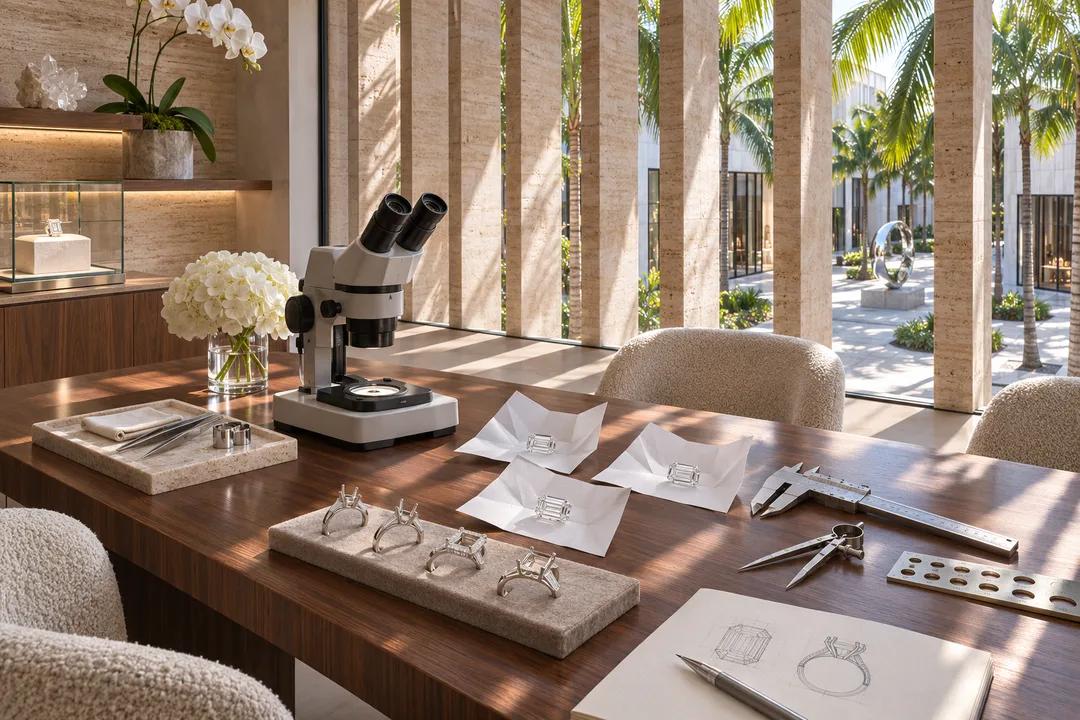
Design District Custom Jewelry Studio: 3 Platinum Steps
Plan a Miami Design District custom jewelry studio visit along Paseo Ponti. Compare CAD matrix modeling, platinum tension mounts, and Palm Court walks.
Framed by fluted travertine facades, cantilevered glass canopies, and public sculpture plazas north of Wynwood, visiting a custom jewelry studio in the Miami Design District feels like stepping into an architectural laboratory for fine high jewelry. Since the neighborhood transformed from historical pineapple fields and mid-century furniture showrooms—anchored by landmarks like the 1921 Moore Building and the 2014 installation of Buckminster Fuller Flys Eye Dome in Palm Court—upper-level ateliers along Paseo Ponti and Jade Alley have specialized in ultra-precise platinum engineering and geometric stone cutting. Here, master gemologists and computer-aided matrix designers collaborate with clients who treat wearable jewelry as miniature structural design.
Step One: Optical Stone Auditing and Proportion Mapping
Every high-precision commission around Paseo Ponti begins with an optical evaluation of loose gemstones under daylight-balanced LED lamps and ten-power triplet loupes. Rather than relying solely on paper grading certificates, studio gemologists place step-cut emeralds, Asscher-cut diamonds, padparadscha sapphires, and precision-faceted spinels under a binocular microscope so you can observe table reflection, crown pavilion angles, and internal silk inclusions firsthand. Seeing how a stone handles intense South Florida zenith sunlight versus shaded interior lighting determines how open the underneath gallery rail should be.
During this initial mapping phase, the designer measures the exact length-to-width ratio and pavilion depth of your center stone to establish visual equilibrium on the hand. Long finger proportions often suit elongated radiant or emerald cuts flanked by tapered baguettes, while compact hands gain striking presence from east-west horizontal bezel orientations or floating knife-edge solitaires that leave maximum skin visible on either side of the gem.
Step Two: Parametric CAD Modeling and Castable Resin Fittings
Once the structural direction is chosen, Design District studios utilize parametric three-dimensional CAD modeling to engineer tolerances down to a tenth of a millimeter. On a calibrated display, you can rotate a digital wireframe of your ring, bracelet link, or pendant gallery to inspect how the bridge clears a flush wedding band, how low the culet sits above your finger, and where hidden structural struts reinforce open cathedral shoulders.
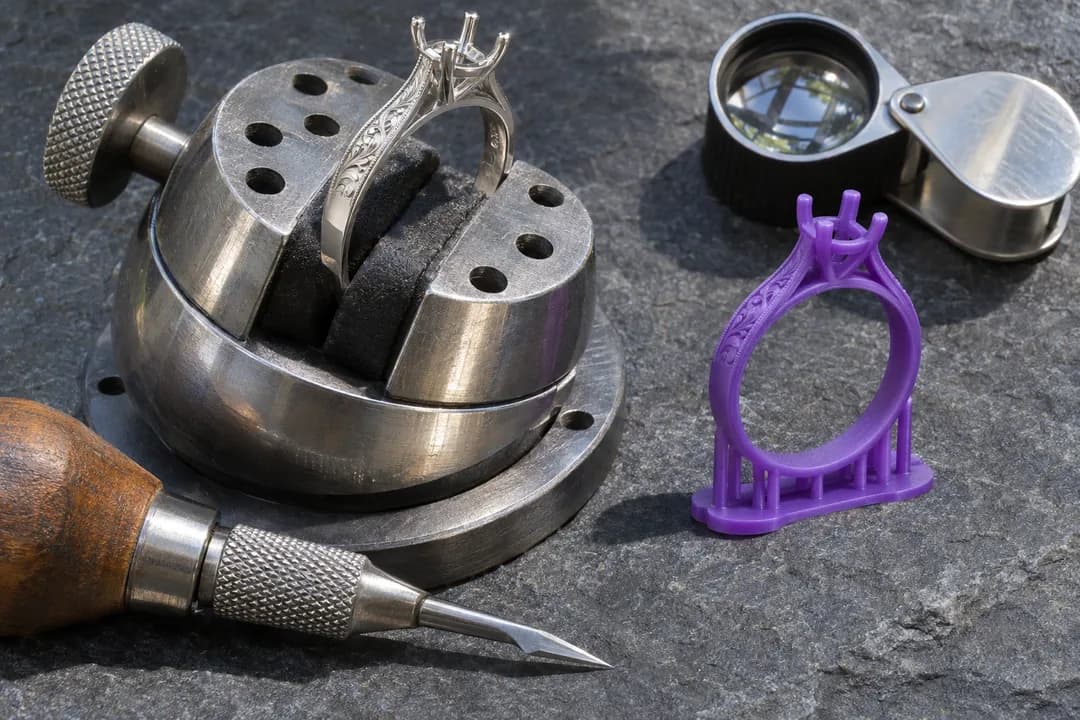
Before a single gram of platinum or eighteen-karat gold is melted, the studio outputs a physical prototype on a high-resolution stereolithography resin printer. Slipping this lightweight resin model onto your finger during a second consultation removes all guesswork regarding scale and ergonomics. You can close your fingers together, test whether the outer prongs brush against neighboring knuckles, and request immediate sub-millimeter adjustments to the gallery height or band taper before final casting begins.
Step Three: Platinum 950 Metallurgy and Microscope Setting
Ateliers in the Miami Design District are particularly renowned for working in ninety-five percent pure platinum alloyed with ruthenium or iridium. Unlike white gold, which relies on surface plating to mask its natural warm hue, platinum is naturally white all the way through and displaces rather than wears away when scratched. For cantilevered tension-style mounts, razor-thin French-cut pavé shanks, and articulated tennis bracelets, ruthenium-hardened platinum provides the tensile rigidity needed to hold crisp architectural lines over decades of wear.
Stone setting at this tier takes place entirely under high-magnification stereoscopic microscopes. Master setters use pneumatic graver chisels to carve microscopic V-notches inside eagle-claw prongs or split tiny beads of metal around melee diamonds in fishtail and Castle-set galleries. When executed with surgical accuracy, the surrounding metal virtually disappears from view, allowing light to enter the pavilion from all four sides and return crisp scintillation across the table facet.
Alongside microscopic graver work, studios in the district employ pulsed-arc laser welders to join intricate platinum gallery components without heating heat-sensitive gemstones like emeralds or paraiba tourmalines. Because the laser beam concentrates energy onto a pinpoint spot smaller than a human hair, the jeweler can tack-weld a custom bezel or articulated earring hinge right next to a finished stone while keeping the surrounding metal cool to the touch.
Architectural Motifs Inspired by Paseo Ponti and Palm Court
Many collectors visiting a custom jewelry studio in this enclave draw visual cues directly from the surrounding streetscape between NE Thirty-Eighth Street and NE Forty-Second Street. The folded geometric facades of the Museum Garage, the honeycomb geodesic apertures of Palm Court, and the rhythmic colonnades along NE Fortieth Street frequently inspire custom gallery under-bezels, perforated trellis ring shanks, and geometric clasp locks.
Translating architectural geometry into fine jewelry requires careful attention to interior comfort. Even when a ring exterior features sharp octagonal facets, pyramid studs, or recessed channel grooves, skilled bench finishers hand-burnish the inside court profile into a silky, rounded contour. That contrast between crisp exterior geometry and liquid-smooth interior ergonomics defines modern luxury metalwork.
How to Structure a Design District Paseo Walk Around Your Visit
Because the core blocks of the Miami Design District are linked by shaded, pedestrian-only promenades, a private studio appointment blends effortlessly into a broader architectural and cultural walk. After stepping out of an upstairs salon near Paseo Ponti, you can stroll north into Palm Court to examine public sculptures under towering royal palms, continue through Jade Alley toward the historic 1921 Moore Building atrium, or view contemporary installations tucked along NE Thirty-Ninth Street.
When organizing your afternoon across these pedestrian plazas, open the Karpo APP to explore neighborhood highlights and nearby architectural stops. With the Karpo APP, you can ask natural-language questions to compare the serene courtyard cafes of Palm Court with nearby Buena Vista bistros, learn about public art installations along Paseo Ponti, and map out a relaxed walking sequence that fits around your bespoke studio consultation.
Practical Transit, Attire, and Timing Tips for the District
Weekday mornings between ten and noon offer the most tranquil environment along Paseo Ponti and NE Fortieth Street, well before late-afternoon shoppers and dinner crowds arrive. Morning sunlight filtering vertically through the open courtyard canopies provides clean, neutral illumination when you step outside to see how a resin prototype or loose gemstone sample looks in natural outdoor brightness.
Arriving without driving expressway loops is easy via the free City of Miami Biscayne Trolley, which runs along Biscayne Boulevard just east of the district pedestrian grid, or Miami-Dade Metrobus routes serving NE Second Avenue and NE Thirty-Sixth Street. Because indoor studio salons keep their climate control noticeably cool to protect sensitive optical and 3D-printing equipment, bring a light linen blazer or wrap alongside your gemological paperwork and inspiration sketches.
Ask Karpo for more information.
Keep reading
- Wynwood Domino Set Gift Browsing Walk: Acrylic Designs
 Coral Gables Domino Set Gift Browsing Walk: Wood Sets
 Little Havana Domino Set Gift Browsing Walk: Clay Tiles