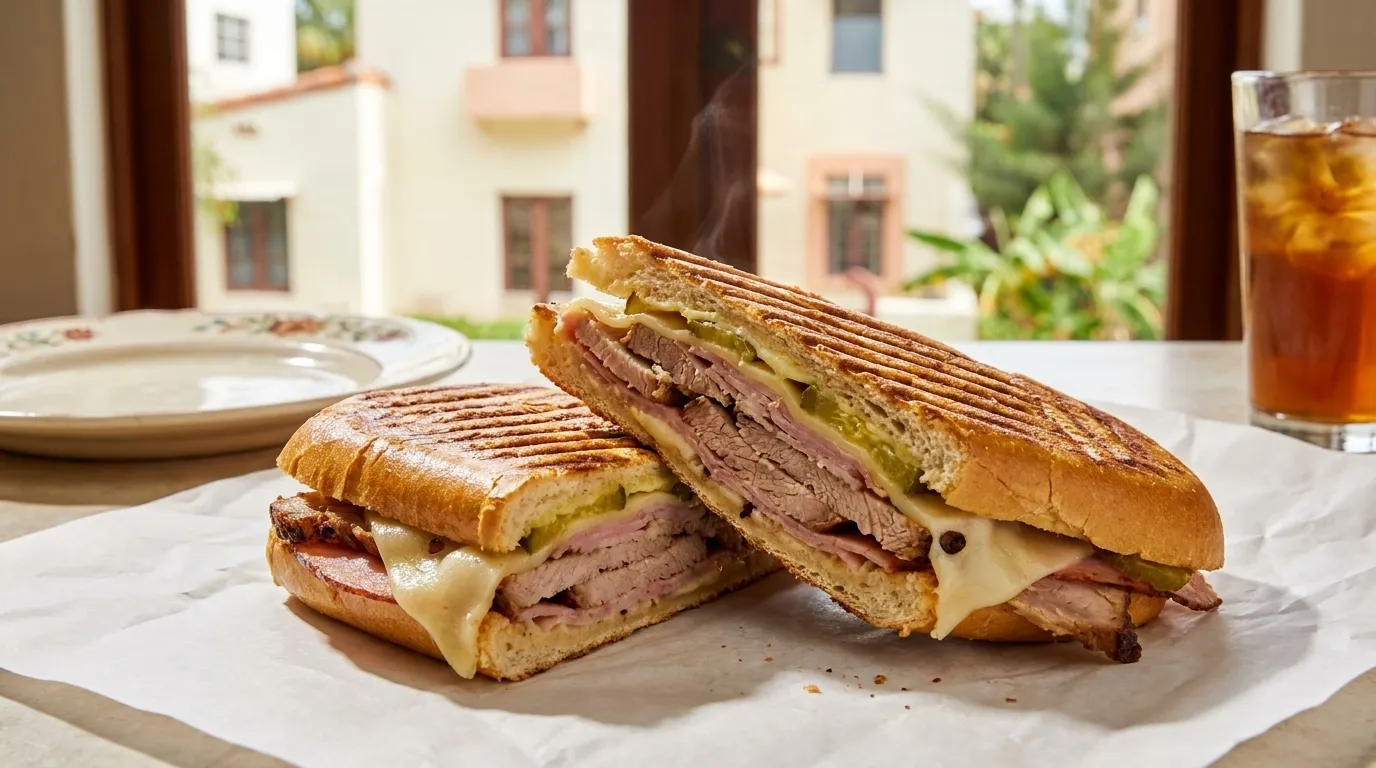
Miami doesn't do food consensus. The city runs on immigration waves, neighborhood pride, and the certainty that your block makes it better than the next one over. Nowhere is this truer than the Cuban sandwich, a pressed stack of pork, ham, Swiss, pickles, and mustard on Cuban bread that every shop tweaks just enough to claim the title. You'll hear Sarussi invented it in 1962. You'll hear Versailles perfected it for the masses. You'll hear Enriqueta's does it better than both, tucked into Wynwood where nobody expects it. Walk all three and you'll understand why this argument never ends.
Karpo tracks which of these three is closest to you right now, checks current wait times, and suggests the next stop if you want to compare two in one afternoon.

Sarussi: the 1962 origin story
Sarussi sits on Flagler Street downtown, a stretch that feels more transit hub than dining destination. The shop opened in 1962, the same year the Cuban Missile Crisis made headlines, and it's been pressing the same sandwich ever since. The owner's family will tell you they didn't invent the Cuban—Tampa and Key West both have older claims—but they'll argue Sarussi standardized it for Miami, turning a dockworker lunch into a citywide obsession. The dining room is narrow, fluorescent-lit, with a long counter and maybe a dozen stools. You order at the register, take a number, and wait while the plancha hisses behind the glass.
What arrives is compact, almost austere. The bread is thinner than Versailles', the pork leaner, the cheese barely melted. Locals who grew up on this version swear it's the only one that doesn't drown the meat in grease. The pickle ratio is high, the mustard sharp enough to cut through the fat. It tastes like efficiency, like something built to fuel a long shift rather than impress a food tour. Go before noon if you want elbow room; lunchtime packs the counter with courthouse clerks and bus drivers who've been coming here for decades. A sandwich runs around eight dollars, and you can add a guarapo or a cortadito for another two.
Versailles: the one everyone knows
Versailles on Calle Ocho is the Cuban restaurant tourists photograph and locals defend anyway. The mirrors, chandeliers, and wraparound windows make it look like a European ballroom dropped into Little Havana. It opened in 1971 and became the default spot for political speeches, family birthdays, and anyone who wanted a Cuban sandwich without doing research. The bakery counter up front sells pastries and cafecito to go; the dining room in back serves full plates of ropa vieja and lechón. The Cuban sandwich here is thicker, wetter, more generous with the pork and cheese.
The bread comes from their own bakery, baked fresh every morning, and it holds up under the press better than most. The pork is slow-roasted, the ham sliced thick, the pickles sweet rather than sour. It's a richer, heavier sandwich than Sarussi's, one that leans into abundance rather than restraint. Some purists call it oversized or touristy, but the line at lunch tells a different story. Order at the bakery counter if you're taking it to go, or sit in the dining room if you want table service and a side of maduros. Expect to pay around twelve dollars for the sandwich alone, closer to eighteen if you add fries and a drink. The best time to go is mid-afternoon, after the lunch crush and before the dinner families arrive.
Enriqueta's: the Wynwood underdog
Enriqueta's Sandwich Shop sits on Northwest Second Avenue in Wynwood, wedged between murals and design studios in a neighborhood better known for brunch and craft beer. It's a small counter operation with a few outdoor tables, no frills, and a menu that lists maybe ten items. The Cuban sandwich here doesn't try to be historic or Instagram-famous. It just tastes better than it has any right to, which is why kitchen crews and gallery workers stop by on their way to work.
The bread is sourced from a local bakery, pressed until the crust shatters, and the interior goes soft. The pork is marinated overnight with garlic and citrus, roasted slow, and sliced thick enough to give the sandwich structure. The Swiss melts into the meat rather than pooling at the bottom, and the mustard is applied with a light hand. It's balanced in a way that feels intentional, like someone thought hard about proportions rather than just piling on more. Order the Cuban with a side of tostones if you're staying, or grab it to go and eat it on the curb before it cools. It runs around ten dollars, and the owner will remember your face if you come back twice.
What the differences actually mean
These three shops represent three different Miami timelines. Sarussi is the immigrant generation, the one that arrived with nothing and built a business on consistency and low margins. Versailles is the second wave, the establishment phase, when Little Havana became a destination and Cuban food became exportable culture. Enriqueta's is the third act, the kids of immigrants who grew up eating at Versailles but learned technique from working in Wynwood kitchens with chefs who care about sourcing and seasoning. None of them is wrong. They're just optimizing for different things.
If you want history and the sandwich that fed a generation of exiles, go to Sarussi. If you want the full Little Havana experience with pastries and people-watching, go to Versailles. If you want the best version of the sandwich right now, made by someone who grew up in this argument and decided to end it quietly, go to Enriqueta's. Or do all three in one afternoon and pick your own side. That's what locals do when they're showing off the city to someone who actually cares about food.
How to eat your way through the debate
Order half sandwiches if a shop offers them—most will split one for you if you ask. Sarussi and Enriqueta's are small enough that you can walk in and out in fifteen minutes; Versailles can stretch to an hour if you sit down. Bring cash for Sarussi; the other two take cards. Don't order all three back to back; your palate will dull by the second one. Space them out over a day, or hit one for lunch and another for an early dinner. The bread is always better before two PM, when the morning bake is still warm. If you're driving, parking around Versailles is a nightmare; the Metromover stops near Sarussi, and Wynwood has metered street spots that turn over quickly. None of these places take reservations. Show up, order, eat, move on. That's the rhythm.
Tags: #miamifood #cubansandwich #littlehavana #wynwoodmiami #foodnearmemiami #sarussi #versaillesrestaurant #enriquetassandwichshop #miamilunch #cubanfood #miamirestaurants #flaglerstreet #calleocho #miamieats #cubanculture
All trademarks are the property of their respective owners.
Ask Karpo first
Karpo lives in your iMessage and knows which of these three is closest to you right now, whether the line at Versailles is worth it today, and what else is good within two blocks if you want to turn one sandwich into a whole afternoon. It's the friend who's already eaten at all three, remembers which one you liked last time, and won't let you waste a meal on something that's just okay. Next time you're hungry in Miami and the Cuban sandwich debate comes up, ask Karpo. It'll tell you where to go and what to order, no research required.