 Wynwood Mofongo Dinner Picker: Arts District Evening Plates
Restaurants
Creole Restaurant Near Me in Little Haiti: Chef Creole
Chef Creole's Little Haiti location combines Haitian griot, fried seafood, conch fritters, rice, plantains, and lively outdoor seating.
Chef Creole turns a creole restaurant near me search into a vivid Little Haiti meal at 200 Northwest 54th Street. The restaurant is known for Haitian cooking, seafood, griot, rice, plantains, pikliz, and an outdoor setting with tropical energy. Ordering here is less about a formal course sequence than building a complete plate with heat, acidity, starch, and fried texture. The most successful first visit starts with one Haitian meat plate, one seafood item, and enough pikliz to wake up each bite. Avoid ordering several fried proteins before understanding the portion size; the complete plates already carry substantial sides.
Chef Wilkinson Sejour has made the Chef Creole name a recognizable part of Miami's Haitian food landscape, and the Little Haiti location feels connected to the neighborhood rather than installed as a generic Caribbean concept. The menu speaks in familiar local combinations: griot with rice and beans, fried plantains beside seafood, conch prepared for people who already know its texture, and bright cabbage relish cutting through rich pork. The relaxed service style invites families and groups, but first-time visitors should still read the menu in advance. Knowing the difference between a simple protein order and a complete meal prevents accidental duplication.
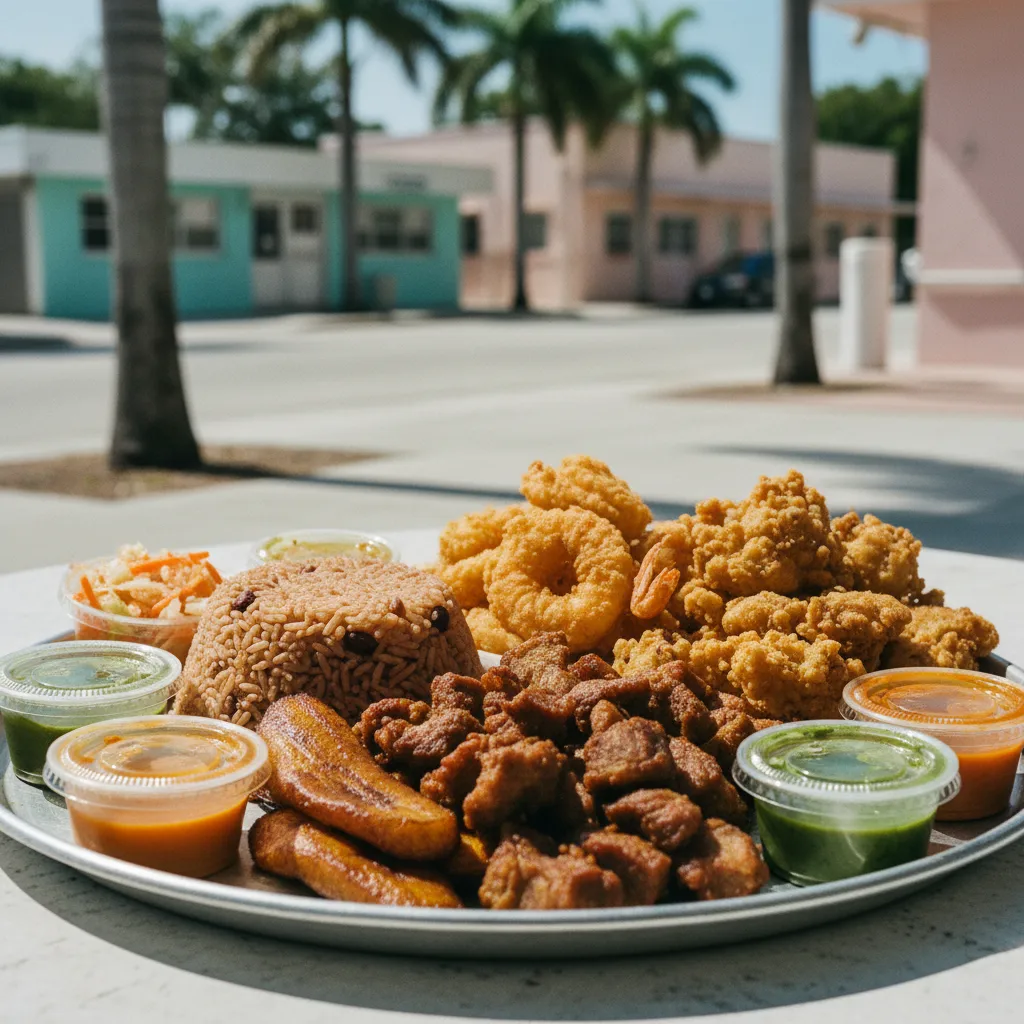
The current ordering menu lists a griot complete meal at $13.50. That plate is the clearest introduction because fried pork, rice, beans, plantains, and pikliz show how Haitian components balance one another. Do not treat the pikliz as decoration. Its vinegar, cabbage, carrot, and chile are designed to interrupt the pork's richness. Take alternating bites rather than mixing everything into one pile. If two people are sharing, add another protein instead of a second identical complete plate, then divide rice and plantains. The table learns more while spending less space on repeated sides.
Fried shrimp is offered at $10 for six pieces, $17 for twelve, and $30 for twenty-five. Conch fritters are $6, while baked chicken is $12 and fried pork is $13.50 on the current menu. Those price steps make portion control possible. Six shrimp and an order of fritters can supplement griot for a small table; twenty-five shrimp belong to a group. Conch has a firmer chew than many first-time diners expect, so fritters provide a forgiving entry. Pair seafood with the complete meal's rice and pikliz instead of adding another entire plate of starch.
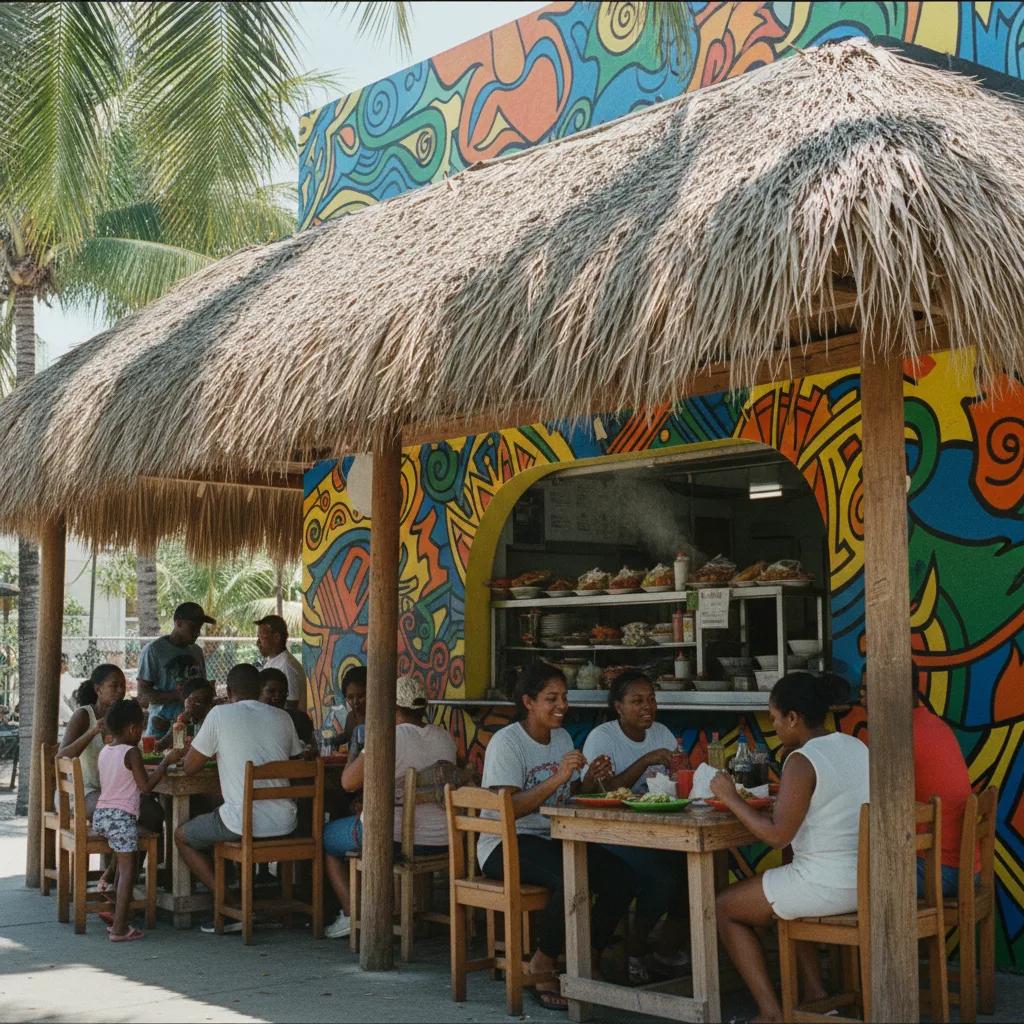
The outdoor atmosphere changes how the food feels. Miami heat, shaded seating, music, and the movement of a busy neighborhood can make the meal lively, but they also reward practical choices. Keep cold drinks nearby, do not leave seafood sitting in direct sun, and secure napkins before opening containers. Casual surroundings are not an invitation to scatter a large order across multiple tables. Claim a comfortable space, distribute food once, and keep sauces where everyone can reach them. Families should order children one familiar element first, then offer small tastes of pikliz and Creole seasoning rather than overwhelming the plate.
Lines move more smoothly when the party agrees on complete versus simple orders before reaching the counter. The restaurant's popularity and multiple locations can create confusion, so confirm that online pickup is assigned to Northwest 54th Street. Read the receipt while still at the counter, especially when several complete meals use similar containers. Anyone avoiding shellfish, pork, or shared-fryer exposure should ask direct questions before ordering; shrimp, conch, fish, pork, and fried preparations are central to the operation. Delivery protects convenience, but eating on site captures the crispness and neighborhood atmosphere that define the experience.
Little Haiti Cultural Complex is the natural neighborhood companion to the meal, along with the area's galleries, markets, murals, and Caribbean businesses. Build a daytime route rather than racing through the district only for food. A short walk reveals how Haitian identity appears in language, color, music, and commerce beyond the plate. Use ordinary Miami street awareness, stay hydrated, and choose shade when the sun is high. The restaurant can anchor a cultural afternoon that respects the neighborhood as a living community, not simply a backdrop for a plate of griot.
Chef Creole works for adventurous visitors, Haitian families, seafood groups, and anyone who prefers flavor over ceremony. It is less suited to a diner expecting hushed service or delicate tasting portions. The best order has internal contrast: griot for pork richness, shrimp or conch for seafood, rice for steadiness, plantains for sweetness, and pikliz for acid and heat. Start with smaller seafood counts because more can be added. That restraint leaves room to notice seasoning instead of reducing the experience to quantity. A casual counter can still reward careful eating when every component has a purpose.
Practical notes: Chef Creole's Little Haiti restaurant is at 200 Northwest 54th Street, Miami, FL 33127. Current online prices include a griot complete meal at $13.50, fried shrimp at $10 for six, $17 for twelve, or $30 for twenty-five, conch fritters at $6, baked chicken at $12, and fried pork at $13.50. Confirm the Little Haiti pickup location, share the larger shrimp count, and keep pikliz in the rotation from the first bite. The result is a Miami meal that feels specific to its neighborhood and culinary community.
Photographs and colorful surroundings can tempt visitors to treat the stop as a quick spectacle, but the food deserves the same patience as a quieter dining room. Break open one fritter, taste the interior before adding sauce, and compare the crisp edge of griot with the softer center. Use rice to capture juices rather than leaving it untouched as decoration. If music or conversation is loud, repeat pickup names clearly and check the bag without blocking the counter. These small habits allow the casual environment to stay joyful while protecting the details that make Haitian frying, seasoning, and pickling worth the trip.
Before leaving Little Haiti, look back at which component disappeared first. If it was pikliz, buy or order extra next time; if it was rice, choose another complete meal; if seafood dominated, return for a pork-centered plate. Repeat visits can be built from that observation.
Ask Karpo for more information.
Keep reading
- Wynwood Mofongo Dinner Picker: Arts District Evening Plates
 Allapattah Mofongo Dinner Picker: Dominican Heritage Plates
 Little Havana Mofongo Dinner Picker: Calle Ocho Sunset Bowls