 Wynwood Domino Set Gift Browsing Walk: Acrylic Designs
Hidden Gems & Odd Finds

MiMo District Comic Shop Crawl Planner: Back Issue Bin Dig
The MiMo District suits a comic shop crawl for back issues: dig through longboxes for childhood favourites, then admire the 1950s motel signs along the strip.
The MiMo District, short for Miami Modern, is a stretch of 1950s and 1960s motels and shops with boomerang rooflines, angled canopies and big signs that glow at dusk. It is a fitting backdrop for a comic shop crawl built around back issues. Plan this one as a slow dig through longboxes for the comics you read as a kid, the covers you remember from a cousin's bedroom, and the runs you never finished.
Why Back Issues Fit the MiMo Strip
Walking the MiMo strip feels like stepping into a different decade. The motels have survived redevelopment pressure partly because people fought to protect them, and that spirit of keeping old things alive matches the back-issue hobby. Collectors are, in a sense, preservationists of cheap paper. The mood of the neighbourhood makes a slow, nostalgic hunt feel natural rather than like a chore.
Plan the day around a short wishlist rather than a vague urge to find something old. Write down three or four comics or runs you remember, even if you only recall a cover image or a villain. Back-issue hunting rewards specific questions. A shop worker can do much more with a half-remembered cover than with a general request for vintage stuff.
Building a Wishlist From Memory
Spend twenty minutes the night before jogging your memory. Think about the comics you borrowed, the ones a sibling owned, and the ones bought at a supermarket rack during a family trip. Note the characters, roughly when you read them, and any images that stuck. Even a detail like a green cover with a giant robot is useful to someone who has sorted thousands of issues.
If you are digging with a parent or older friend, ask them for their list too. Hunting for someone else's childhood comics is a surprisingly moving way to spend an afternoon, and hearing why a particular issue mattered to them adds stories to the trip. Agree on whose list comes first at each stop so nobody spends the whole day waiting.
How to Dig Through Longboxes
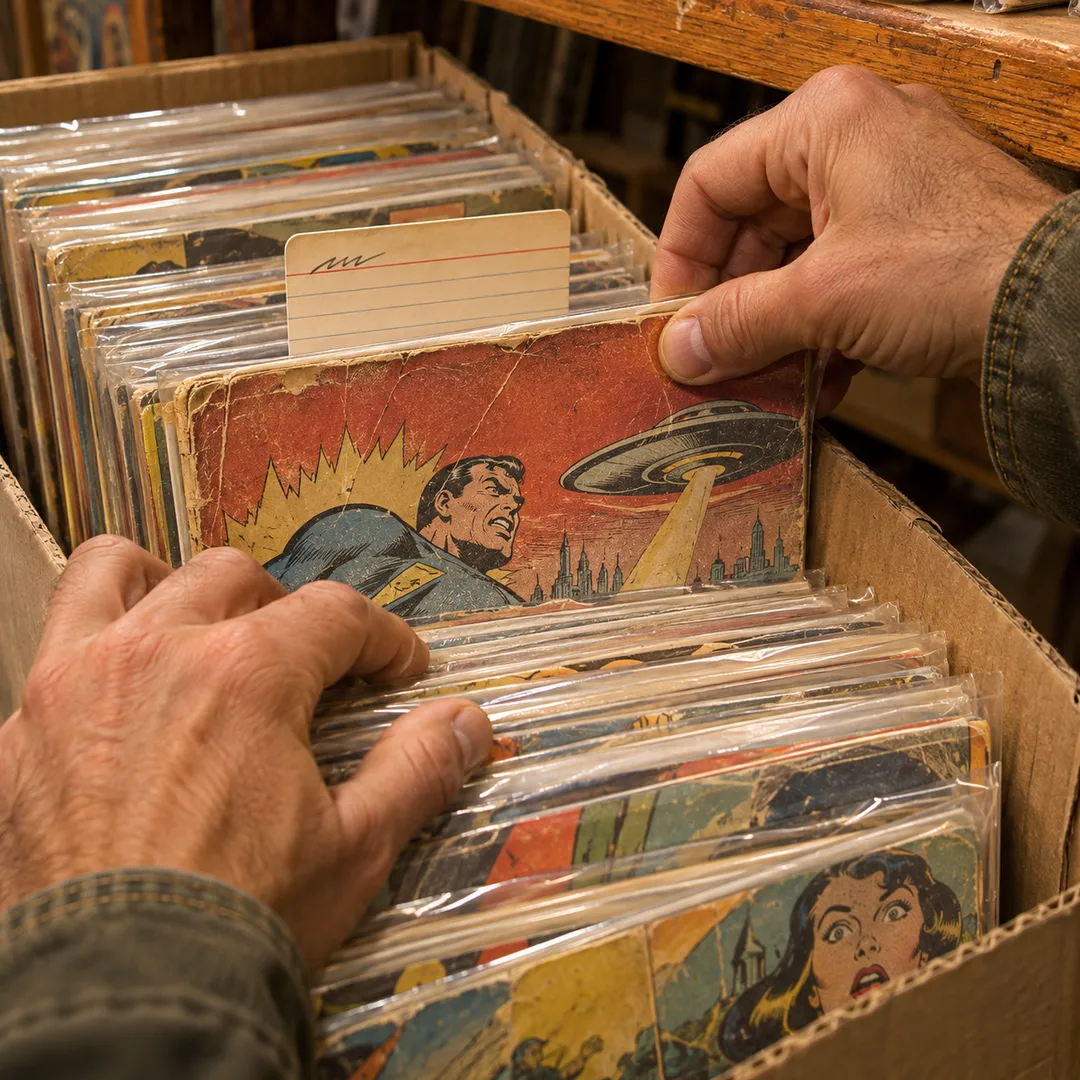
Most shops with back-issue stock keep them in long cardboard boxes, filed alphabetically by title and then by issue number, often with handwritten dividers. Flip from the back of each comic toward the front, keeping the stack upright, and never pull issues out by their top edge. Put everything back exactly where you found it. Staff notice careful diggers, and it makes them more willing to help.
Separate the dig into two passes. On the first pass, pull anything on your wishlist and set it aside. On the second pass, browse the neighbouring titles for surprises, since comics from the same years often share artists and style. Many of the best finds on a back-issue day are things you did not know you wanted until you saw the cover.
Reading Condition Without Being an Expert
You do not need to be a grader to judge condition well enough for a personal collection. Look at the spine for creases and colour breaks, the corners for rounding, and the cover for fading or tears. Check that the staples are not rusty and that the pages are not brittle or yellow at the edges. Hold the comic flat and look along it in the light.
Decide in advance what matters to you. If you want to read and enjoy these comics, a worn copy with a tight spine is perfect and usually much cheaper than a crisp one. If you want display pieces, be choosier. Ask staff to explain any grading terms on the bag, and do not be embarrassed to say you are buying for nostalgia rather than investment.
Pacing the Hunt Along the Strip
Back-issue days run long because digging is absorbing. Plan no more than two shops, with a break between them to walk the strip and look at the architecture. Some of the old motels have been restored with fresh paint and bright signage, and the stretch of the strip around the historic district is pleasant to wander at a slow pace.
Go in the late afternoon if you can. Shops are often calmer before the evening, and you will leave just as the light softens and the signs begin to glow. Photographing your finds against a neon sign or a curved concrete canopy is a small ritual that many collectors enjoy, and the MiMo backdrop gives the pictures a fitting period feel.
What to Skip on a Nostalgia Dig
Skip the glass case of high-value keys unless you are seriously collecting. Those books are fun to look at, but they can pull the day toward price talk and away from the comics you actually remember. Skip buying an entire run in one go, too. Pick the two or three issues that meant most to you and leave the rest for another visit.
Also skip graded slabs if you want to read what you buy. Professionally graded comics are sealed in hard plastic, which is perfect for display and useless for reading. If a cover you loved only appears slabbed, look for a reprint collection instead. You will get the story, often with better paper, and keep the original memory intact.
Protecting Your Finds in Miami Humidity
Old paper hates humidity. Make sure every comic you buy goes into a bag with a backing board, and carry them flat in a sturdy tote or a small comic box rather than a backpack. Keep them out of a hot car, especially on a sunny afternoon, and get them into air conditioning soon after you leave the shop.
At home, store back issues upright in a box away from windows and bathrooms. A few silica gel packets in the box help in Miami's damp months. If you plan to read them often, keep a separate reading copy or a reprint collection, and save the original for the occasional careful flip when a friend asks to see it.
Talking Shop With Collectors
Back-issue counters attract regulars who can talk for hours about printing quirks, artist runs and the price of a single issue they missed decades ago. Listen first. If you ask a question, be specific, for example which issue introduced a certain character, or which years an artist you loved drew a title. Regulars and staff are usually generous when the question is genuine.
Bring your wishlist on paper or in a note so you can hand it over. If a shop cannot help today, ask whether they keep a want list for customers or whether they buy collections from the public, since new stock often arrives that way. Do not expect promises, but a friendly connection can turn into a call months later.
Who This Crawl Suits
This plan suits adults who grew up with comics and want to reconnect, parents who want to share the books they loved with their kids, and couples where one partner collects and the other enjoys mid-century architecture. It also suits anyone who likes slow, tactile shopping, the same people who enjoy record bins and secondhand bookshops.
It is less suited to someone after the newest releases, who will find more choice on a regular new comic day elsewhere in Miami. It is also not a quick outing. Give yourself a whole afternoon and an evening stroll, and let the dig take as long as it takes. That patience is half of the pleasure.
Plan the Dig in the Karpo APP
Open the Karpo APP and describe what you want, for example a back-issue comic shop crawl in the MiMo District with time to walk past the old motel signs at dusk. Karpo suggests nearby comic shops worth checking and helps arrange them with a break for the architecture, so you can concentrate on the boxes instead of juggling directions.
Karpo does not know what is in any shop's longboxes or hold issues for you, so carry your wishlist and let the staff do the expert work. Save the plan and your list together. Collecting back issues is a slow hobby, and having the route ready makes it easy to come back when the next free afternoon arrives.
Ask Karpo for more information.
Keep reading
- Wynwood Domino Set Gift Browsing Walk: Acrylic Designs
 Coral Gables Domino Set Gift Browsing Walk: Wood Sets
 Little Havana Domino Set Gift Browsing Walk: Clay Tiles